
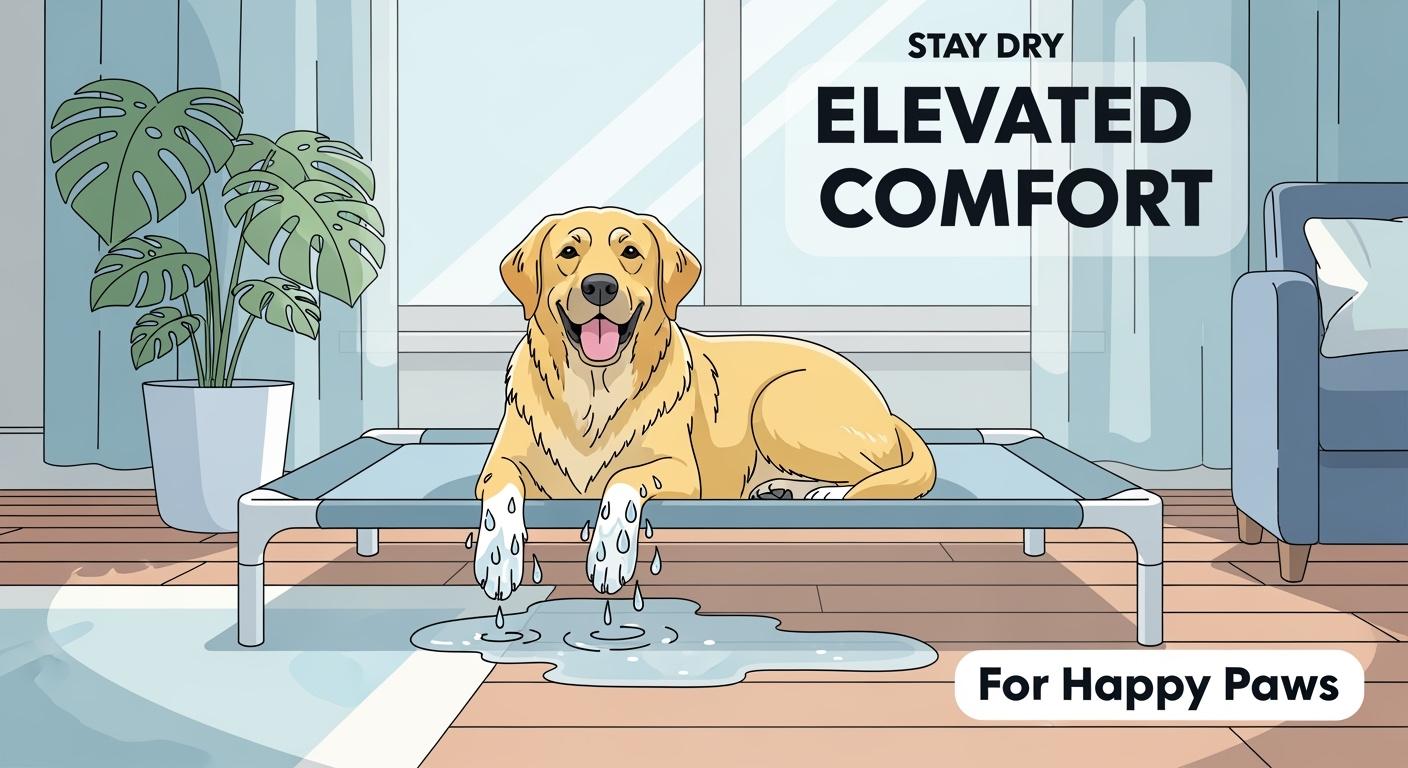
After a walk through wet grass, a large dog that climbs onto a floor-level bed brings moisture into a fabric surface that can take hours to dry. An extra large elevated dog bed changes that by lifting the sleeping surface off the floor, letting air move underneath, and helping damp paws dry faster.
The better question is not whether an elevated bed looks cooler or feels tougher. It is whether the frame fits your room, whether your dog steps onto it easily, and whether the suspended surface still feels stable once daily use starts.
Note: This article covers fit, placement, and daily use for extra large elevated dog beds. It does not replace veterinary advice when your dog has joint pain, mobility limits, or skin conditions that affect bed choice.
Key Takeaways
- An extra large elevated dog bed improves airflow and speeds drying after wet walks, but the frame footprint needs open floor space to work well.
- Room layout matters almost as much as bed size. A large frame that blocks walkways or sits tight against walls often becomes harder to use than expected.
- If the bed goes unused or your dog stays near one edge, treat that as a fit or placement problem first, not a fixed surface preference.
When an Elevated Bed Works Better Than a Floor Bed
Airflow under the sleeping surface is the main reason an elevated bed works so differently from a padded floor bed. After wet walks, moisture usually leaves a suspended surface faster than it leaves dense padding. That can make everyday cleanup easier and reduce the stale, damp feeling that some floor beds develop in warmer months.
The same fit and stability questions show up in an elevated outdoor bed fit and stability setup too, especially when the bed has to handle damp paws, open space, and repeat use without shifting.
When a raised frame is usually the better match
An elevated cot-style bed usually makes more sense when your dog runs warm, comes in damp, or already likes open, cooler resting spots. It also tends to work well in rooms where you have enough clearance around the frame and enough floor space to keep it from becoming an obstacle.
When a floor bed is often easier to live with
A padded floor bed usually fits better in small rooms, tight corners, or homes where the dog likes to press against furniture and settle quickly without stepping up. If your dog burrows into blankets, leans into a wall, or avoids raised surfaces entirely, a floor-level setup often matches that habit better.
| Feature | Extra Large Elevated Dog Bed | Padded Floor Bed | Outdoor Quick Dry Cot | What to Watch |
|---|---|---|---|---|
| Drying speed | Fast; air circulates underneath | Slow; moisture absorbs into padding | Fast; mesh releases moisture quickly | Hair and dirt can still collect on the surface |
| Frame footprint | Large; needs open floor area | Small; fits corners more easily | Medium; often easier to move | Measure room clearance before deciding |
| Fit in real spaces | Best in open rooms or patios | Best in tighter rooms | Useful where indoor and outdoor use overlap | Large frames can block doors and walkways |
| Cleaning ease | Easy underneath; frame wipes down fast | Depends on cover and fill | Usually easy to rinse and dry | Under-bed floor access still matters |
| Cooling airflow | Yes; consistent underneath | No; padding traps more heat | Yes; mesh usually maximizes airflow | Corner placement reduces the airflow benefit |
For dogs that split time between house and patio, many outdoor dog bed designs use the same raised-frame logic for exactly this reason: faster drying, easier sweeping underneath, and less damp fabric against the body.
Large frames also behave differently depending on placement. The same room layout issues that show up in large dog elevated bed fit mistakes often matter here too, especially when the bed fits the dog but not the room around it.
What Changes in Daily Use
Switching to an extra large elevated dog bed changes three parts of the routine quickly: how fast the bed dries, how much room the frame takes up, and how easy it is to clean around and under it. Those everyday details usually decide whether the bed keeps working or slowly becomes something you work around.
The same room-size and weather questions also matter in outdoor dog bed size and support, where airflow and frame size can help or hurt depending on where the bed actually sits.
Pass or fail signs in your room
| Check | Pass Signal | Fail Signal | Fix |
|---|---|---|---|
| Bed fits in space | Room to walk around all sides of the frame | Blocks doorway or normal foot traffic | Reposition or choose a smaller frame |
| Dog uses full sleeping surface | Settles near center and uses most of the bed | Stays near one edge or avoids the bed | Reassess size, step height, and surface tension |
| Easy to clean under bed | Broom or vacuum reaches under the frame | Corners are too tight to reach | Adjust position or use a frame with more clearance |
| Wet paws dry fast after walks | No damp spots stay visible for long | Moisture lingers on the surface | Check airflow and move the bed farther from the wall |
If two or more checks fail, the issue is usually size or placement rather than the bed type itself. In many homes, moving the bed works better than replacing the whole setup right away.
Why some beds look right but still get ignored
A bed can look large enough and still fail because the dog does not like the step up, the center feels too loose, or the frame sounds unstable on entry. Dogs often tell you this early by sleeping at one end, stepping on and off without settling, or avoiding the bed unless prompted.
Failure Signs That Matter
An elevated bed that is not working usually shows a small set of repeated patterns: the dog avoids the center, the frame wobbles during entry, cleanup around the bed takes longer than expected, or the surface keeps feeling damp longer than it should.
| Symptom | Likely Cause | Fast Check | Fix |
|---|---|---|---|
| Dog avoids the bed | Entry feels too high or frame wobbles on contact | Watch how the dog approaches and steps on | Lower the frame if possible or add an easier entry point |
| Frame wobbles or shifts | Loose joints or uneven floor contact | Push the frame from one corner and check all legs | Retighten joints and use non-slip pads |
| Surface sags or feels loose | Suspension tension has dropped | Press the center and check for too much give | Re-tension the fabric or replace the worn surface |
| Dog sleeps near one edge only | Center feels unstable or too narrow for the dog’s rest posture | Compare the dog’s stretch length with the usable bed area | Reassess width and check that tension is even |
| Dog seems too warm | Placement blocks airflow under the bed | Check airflow around and under the frame | Move the bed to a more open area |
Tip: Give a new elevated bed at least 3 nights before deciding it is not working. Many dogs need a short adjustment period with a firmer, more suspended surface.
Cleaning routine and maintenance
Most maintenance problems are easier to fix than fit problems. Wash the surface when odor or visible fur buildup starts affecting use, not only when it looks dirty. The same timing usually matters in how often to wash a dog bed, especially when a bed handles wet paws, shedding, and repeat use.
- Wash the fabric surface with mild, fragrance-free detergent.
- Air dry it fully before putting the bed back into use.
- Wipe the frame legs and crossbars with a damp cloth.
- Check all frame joints again before the dog climbs back on.
Disclaimer: Bed choice can support comfort, but it does not treat joint disease, skin conditions, or mobility problems. If your dog shows persistent reluctance to step up or use any resting surface, talk to your veterinarian before making another change.
How to Decide if It Fits Your Routine
An extra large elevated dog bed works best when the room gives the frame space to breathe, your dog steps up without hesitation, and the surface tension stays firm enough to keep the dog centered. Those three things usually matter more than the product description.
If the dog clearly needs more cushioning, lower effort on entry, or a softer support surface, an orthopedic dog bed setup often fits better than forcing an elevated frame to solve a problem it was never built to solve.
- Choose the raised frame when airflow, faster drying, and easier cleanup matter most.
- Choose a softer or lower setup when step-up hesitation, edge sleeping, or avoidance keep showing up.
- Change placement before changing bed type if the room itself is creating most of the friction.
FAQ
How do you clean an extra large elevated dog bed?
Wash the fabric surface with mild, fragrance-free detergent, air dry it fully, and wipe the frame with a damp cloth after each use cycle.
Will an elevated dog bed help your dog dry faster after wet walks?
Yes. Air circulates underneath the suspended surface, so moisture usually evaporates faster than it does on a floor-level fabric bed.
Can you use an extra large elevated dog bed outdoors?
Most cot-style elevated beds work well on patios, porches, and in backyards as long as the frame stays stable on the ground and the dog has access to shade and water.
What size elevated dog bed does an extra large dog need?
Measure your dog’s full resting length and make sure the usable surface gives enough room to stretch without hanging over the edge.
An extra large elevated dog bed usually pays off when your dog uses the center comfortably, the frame fits the room, and daily cleanup actually gets easier. If the bed keeps creating hesitation, edge sleeping, or awkward room flow, the issue is often the setup around it, not just the bed itself.
Disclaimer: An elevated dog bed is a comfort and hygiene tool, not a medical treatment. For dogs with diagnosed orthopedic conditions, chronic skin issues, or significant mobility problems, bed choice should be guided by a veterinarian rather than general buying criteria.






