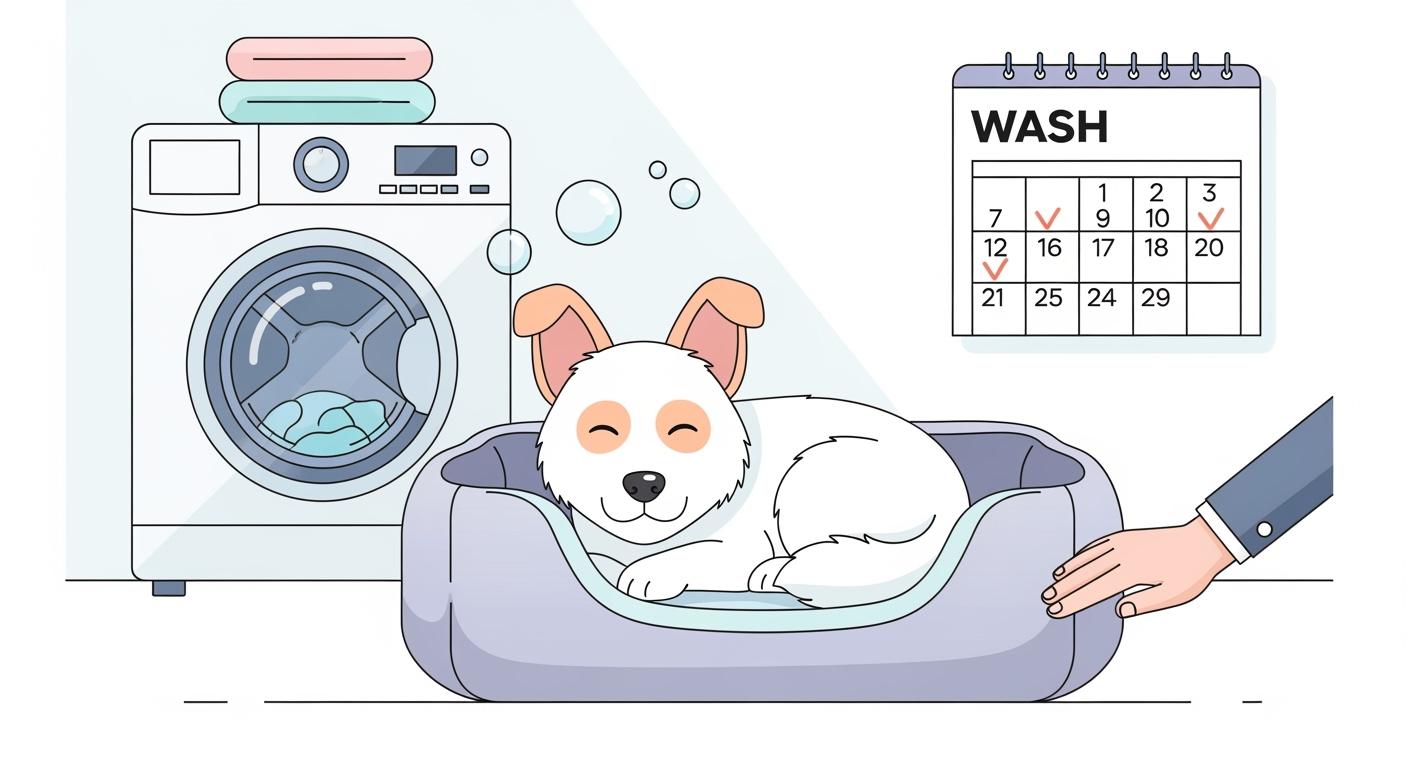
Wondering how often to wash dog bed items? A weekly wash is a practical baseline for most homes, and you should wash sooner when the bed looks dirty, smells off, gets damp, or has been soiled by accidents, illness, or flea-related mess. The goal is not to follow one rigid calendar no matter what. It is to keep your dog’s sleeping surface clean, dry, and realistic to maintain. Always follow the care label, use a mild pet-safe detergent, and make sure every part of the bed is fully dry before your dog uses it again.
Key Takeaways
- Wash your dog’s bed weekly as a practical routine in most homes.
- Wash sooner when you notice dirt, odor, dampness, accidents, illness, fleas, or heavy outdoor mess.
- Use the right level of cleaning for the situation: spot clean for small messes, full wash for routine care, and deeper cleaning when odor or contamination keeps coming back.
How Often to Wash Dog Bed: Weekly vs Sooner
Weekly Cleaning Baseline
A weekly wash is a useful baseline because dog beds collect fur, dander, body oils, dirt, and outdoor residue faster than many owners realize. Even in a clean home, a bed that looks “mostly fine” can still feel stale, hold onto odor, or stay dirtier around seams and sleeping spots than you expect. Weekly washing is often enough to keep buildup manageable before it becomes harder to remove.
This matters even more if your dog spends a lot of time in the bed during the day, sleeps there overnight, or rotates between indoor and outdoor spaces. Regular washing keeps the bed more comfortable and makes deep cleaning less of a rescue job later.
A weekly wash is usually easier than waiting until the bed smells bad or feels obviously dirty. Once buildup sits longer, cleanup usually takes more effort.
When to Wash Sooner
Sometimes the bed needs attention before the weekly mark. The best trigger is not a calendar alone. It is what the bed is telling you.
- visible stains, paw marks, or tracked-in dirt
- an odor that returns quickly or stays after airing out
- dampness from wet coats, drool, or weather
- urine, vomit, or other accidents
- recent illness, skin problems, or flea concerns
- heavy outdoor activity that leaves the bed gritty or muddy
If your dog has been sick, had an accident, or brought fleas or heavy dirt into the bed, wash the bed right away rather than waiting for the normal routine.
Cleaning Methods: Full Wash, Spot Clean, Deep Reset
Different messes need different cleaning responses. A quick spot clean is not the same as a full wash, and a full wash is not always enough when odor or contamination has moved beyond the surface.
- Weekly wash: your standard routine for normal dirt, fur, and everyday odor control.
- Spot clean: for minor spills or small stains between washes.
- Deep reset: for heavy buildup, recurring odor, illness, flea issues, or a bed that still feels dirty after routine washing.
Use this table to decide what level of cleaning fits the situation:
| Cleaning Method | Use Case | Benefit | Watchout | When Is It Enough? |
|---|---|---|---|---|
| Weekly Wash | Routine care | Keeps dirt, dander, and odor under control | The bed must dry fully before reuse | Enough for most healthy dogs in normal home conditions |
| Spot Clean | Small stains or quick messes | Fast and useful between full washes | Can miss deeper odor or hidden damp | Enough for minor surface messes only |
| Deep Reset | Persistent odor, illness, fleas, or repeated buildup | Gets beyond the outer surface | Takes more time and needs closer attention to labels and drying | Needed when normal washing is no longer solving the problem |
A weekly cleaning schedule helps you manage how often to wash dog bed items without waiting for the bed to become unpleasant. Then you can move sooner when the bed clearly needs it.
Tip: Always check the care label before washing. Use a fragrance-free or mild detergent when possible, and let the bed dry completely before putting it back into use.
What Changes the Schedule
Coat Type and Shedding
Dogs that shed heavily usually leave behind more hair, dander, and trapped dirt, so their beds often need faster cleanup. Double-coated breeds can especially overload a bed during seasonal shedding. Short-coated dogs may leave less visible buildup, but that does not mean the bed stays clean much longer.
- heavy shedders usually need more brushing and more vacuuming between washes
- thick coats can trap dirt that later transfers onto the bed
- vacuuming between washes helps the weekly routine work better
Outdoor Activity and Messes
Dogs that spend a lot of time outdoors bring in more than loose fur. Mud, grass, dust, pollen, road grit, and damp paw residue all shorten the time a bed stays fresh. Even if the dog looks mostly clean, the bed can still pick up a lot after repeated outdoor trips.
- active outdoor dogs usually need sooner washing after muddy or wet days
- frequent dirt exposure can make odor build faster than expected
- quick cleanup after messy outings often prevents the need for a deeper reset later
Odor, Dampness, and Accidents
Smell and moisture are two of the clearest “wash sooner” signals. A bed that stays damp too long can start feeling stale even if it does not look very dirty. Accidents such as urine or vomit should be cleaned right away rather than left for the next routine wash.
- persistent odor means the bed needs attention, not just airing out
- damp spots should be dried fully and usually cleaned sooner
- accidents should be washed promptly to keep the bed usable and hygienic
If your dog has allergies, skin issues, parasites, or recent illness, talk with your veterinarian for guidance. This article does not replace medical advice.
Troubleshooting Common Issues
| Symptom | Likely Cause | Fast Check | Fix |
|---|---|---|---|
| Persistent odor | Moisture, trapped residue, or incomplete cleaning | Smell the bed again after it dries | Wash more thoroughly and make sure every layer dries fully |
| Visible stains | Dirt, body oils, or accidents | Inspect usual sleeping spots and seam areas | Spot clean early or do a full wash if the mess spreads |
| Excess hair | Heavy shedding | Run your hand or vacuum over the surface | Brush, vacuum, then wash on schedule |
| Dampness | Wet coat, drool, or incomplete drying | Check inner corners and thicker sections | Dry fully before reuse and wash if odor or grime remains |
| Flea or parasite concern | Outdoor exposure or infestation risk | Inspect the bed closely and check for repeated scratching | Wash immediately and follow veterinary advice if needed |
Pass/Fail Checklist: When to Wash
| Question | Yes | No |
|---|---|---|
| Does the bed smell bad? | ✅ | |
| Is there visible dirt or staining? | ✅ | |
| Is the bed damp or recently soiled? | ✅ | |
| Has your dog been sick or had an accident on it? | ✅ | |
| Has it been about a week since the last wash? | ✅ |
If you answer “Yes” to any question, the bed likely needs washing soon.
What to Wash Each Time
Covers vs Full Bed
You should always check whether your dog bed has a removable cover. Covers are easier to wash often, and they usually take most of the daily dirt, fur, and odor. But sometimes the inside of the bed also needs attention, especially if the smell seems trapped deeper than the outer fabric or if an accident soaked through the cover.
| Aspect | Washing Covers | Washing Full Bed |
|---|---|---|
| Dirt and surface odor | Usually handles most routine mess | Better when odor or dirt has moved deeper |
| Maintenance convenience | Easier and faster to wash often | Takes more time and drying space |
| Routine care | Best first step in many homes | Needed when the whole bed is affected |
| Deep reset value | Limited if the inside still smells stale | More complete when contamination goes beyond the cover |
Washing Inserts and Foam
If your dog bed has inserts or foam, clean them carefully and only as the care label allows. Vacuum first to remove loose fur and dirt. If the insert is washable, use a mild detergent and rinse thoroughly. If it is not machine-wash safe, spot clean and air it out instead of forcing a full wash that may damage the structure.
Foam and thicker inserts need extra drying time. Press out moisture with towels if needed, and do not put the bed back together until the inside is fully dry.
Step-by-Step Guide
Follow these steps each time you wash the bed:
- Remove loose fur, dirt, and debris with a vacuum or lint roller.
- Pre-treat stains if needed with a pet-safe cleaner or mild stain treatment.
- Wash covers and inserts only as the care label allows.
- Use a mild detergent and avoid anything likely to leave heavy residue or fragrance.
- Rinse thoroughly so leftover soap does not stay in the fabric.
- Dry every layer completely before reuse.
Tip: Smell the bed, check for trapped hair, and feel for dampness before putting it back into rotation. If odor or moisture is still there, it is not ready yet.
Tips for Freshness Between Washes
- Vacuum or brush off loose hair regularly.
- Spot clean small messes before they set in.
- Air the bed out when it starts feeling stale, but do not use airing out as a substitute for washing when the bed clearly needs it.
Common Mistakes and Consequences
- Putting the bed back into use while it is still damp can leave odor and invite more buildup.
- Using harsh detergents may irritate some dogs or leave residue behind.
- Washing only the cover every time may miss deeper odor inside the insert.
- Waiting too long between washes usually makes stains and smells harder to remove.
Note: Always follow the care label for the specific bed material and construction.
You now know how often to wash dog bed items: weekly is a practical baseline, but sooner is better when dirt, odor, accidents, illness, dampness, or fleas change the situation. A good cleaning routine is not just about frequency. It is about noticing when the bed has stopped feeling clean and resetting it before that becomes a bigger problem.
Always check care labels and dry the bed fully before reuse to keep the sleeping area more comfortable and practical.
- Use the checklist and troubleshooting table to decide when weekly care is enough and when sooner cleaning makes more sense.
- Regular washing helps keep the bed cleaner, drier, and easier to live with over time.
FAQ
How often should you wash your dog’s bed if your dog sheds a lot?
Weekly is still a practical baseline, but heavy shedding often means more vacuuming between washes and more frequent washing whenever the bed starts collecting obvious hair, grit, or odor sooner.
Can you spot clean between full washes?
Yes. Spot cleaning works well for small stains or quick messes, but it does not replace a full wash when odor, dampness, or deeper grime is already sitting in the bed.
What should you do if the bed smells bad before the weekly wash?
Wash it right away. Persistent odor usually means the bed has trapped enough residue or moisture that waiting longer will only make cleanup harder.