
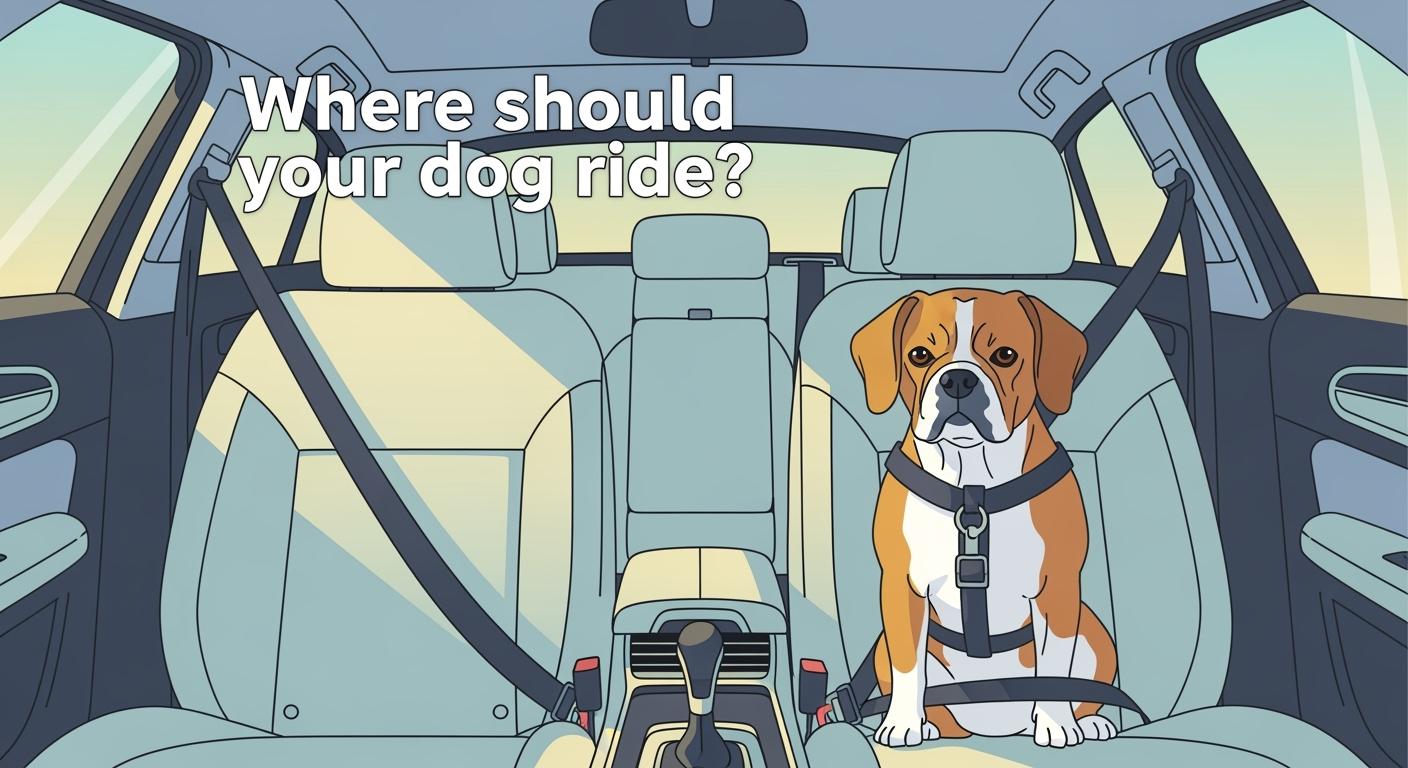
A medium dog console car seat sounds convenient because it keeps your dog close and uses space that is already there. In real use, the setup only works when the seat base stays level on the console, your dog can actually settle inside it, and the dog does not crowd your arm or block how you drive.
That is why this decision is usually less about the label on the product and more about fit in your specific vehicle. Many medium dogs, especially once they get above the lower end of the range, do better in the rear seat simply because there is more room, a steadier base, and fewer compromises around driver space.
Note: This article focuses on fit, driver clearance, restraint path, and comfort checks for a medium dog console car seat. It does not replace veterinary advice when motion sickness, anxiety, pain, or breathing problems are involved.
Key Takeaways
- A console seat usually works best for compact, calmer medium dogs that curl up during rides.
- For many dogs over about 25 to 30 pounds, the rear seat is usually easier to fit and easier to keep stable.
- If the seat tips, the tether twists, the dog leans out, or your armrest and gear access are compromised, the console setup is not the right answer.
When a Console Seat Works and When the Rear Seat Makes More Sense
Some medium dogs really can use a console seat
The dogs most likely to do well in this setup are compact in build, calm once the car starts moving, and comfortable sitting or curling rather than stretching tall or leaning outward. Those details matter more than weight alone. A dog can fall inside the listed weight range and still be too long, too upright in posture, or too active for the console space to work well.
Most larger medium dogs fit the rear seat more naturally
Once a dog starts filling the seat edge-to-edge, the setup usually stops feeling stable. Rear seat options give more room for the dog to sit or lie down without hanging over the edge, and they usually create a cleaner restraint path too. A rear seat booster for medium dogs often solves the exact problem that makes a console setup feel cramped in the first place.
Carriers can make more sense for dogs that lunge or panic
Some dogs do not need more visibility or closer contact to the driver. They need more containment. Dogs that lunge, scramble, or stay highly aroused during travel often do better in a more enclosed setup than in an open console perch.
That same tradeoff shows up across rear seat booster sizing and fit, and it is also why the balance between open seats, tethers, and enclosed travel setups matters in car seats, seat belts, and carriers rather than in any one product type by itself.
| Seat Type | Usually Best For | Main Advantage | What to Watch |
|---|---|---|---|
| Console seat | Compact, calm medium dogs | Keeps the dog close and visible | Limited space and driver clearance problems |
| Rear seat booster | Most medium dogs needing more room | Better base support and more usable space | Still needs a clean tether setup |
| Enclosed carrier | Dogs that lunge, panic, or need stronger containment | More enclosure during sudden movement | Some dogs dislike the confined feel |
Disclaimer: A console seat is not a substitute for a properly restrained rear-seat setup when the fit is marginal. If the dog barely fits, the rear seat is usually the safer choice.
What Actually Changes in a Console Setup
Console width matters more than most owners expect
The usable console surface is the first limit. If the seat base does not sit level on that surface, nothing else matters much because the dog will spend the drive correcting for movement. A setup that looks acceptable while parked can still tip or shift once you turn or brake.
That is why car seat measurements that prevent tipping and sliding matter before the first drive, not after the dog is already leaning over the edge.
Posture tells you more than the weight rating
A dog that settles with all four paws inside, a relaxed body, and no constant repositioning is giving you a much better fit signal than the packaging ever will. A dog that braces, hangs over the edge, keeps changing posture, or crowds your side is telling you the space is too tight or too unstable.
Driver space is part of the safety check
A console seat can fit the dog and still fail the drive. If your arm cannot rest normally, your hand cannot reach the gear selector cleanly, or the dog takes up too much of the console area you rely on, the setup is already compromised. That is not a comfort issue. It is a control issue.
The tether route matters as much as the tether length
A short tether is not automatically a good tether if it twists, bends around the seat, or crosses the dog at a bad angle. The restraint path should run cleanly from the anchor point to the harness clip without wrapping around the dog or the seat structure.
The practical side of that setup becomes clearer in dog car seat restraint installation and anchor selection, because a clean restraint path usually matters more than simply clipping the tether to the nearest point.
| Check Item | Pass Signal | Fail Signal | Fix |
|---|---|---|---|
| Seat base stays level | Does not rock or tip when pressed | Shifts or tilts easily | Reposition or stop using the console spot |
| Dog fits inside the seat | Paws, chest, and hips stay supported | Dog hangs over the edge or leans out | Move to a larger rear seat setup |
| Tether path stays clear | Runs straight and untwisted to the harness | Twists, wraps, or runs too long | Shorten or reroute the tether |
| Driver space stays usable | Armrest and gear access stay normal | Dog blocks your reach or movement | Shift setup or use the rear seat |
| Dog settles quickly | Sits or lies down within a few minutes | Keeps shifting, whining, or panting | Try a rear booster or enclosed carrier |
Failure Signs That Matter Right Away
Most console seat failures show up fast. They usually do not take a long road trip to reveal themselves. If the dog is too large for the seat, the driver is crowded, or the tether path is messy, the signs are often visible in the first few minutes.
Crowded paws and leaning out usually mean the seat is too small
If the paws hang over the edge or the dog keeps shifting forward to find support, the base is not giving enough usable room. Leaning out usually follows because the dog is constantly trying to redistribute weight in a space that does not fit the body well.
A twisted tether creates more movement than expected
A tether that looks acceptable while parked can still wrap, tighten unevenly, or let the dog move farther than you intended once the vehicle turns or brakes. That extra motion often makes the dog less stable and more restless.
Blocked armrest access is enough to fail the setup
If the dog or seat forces you to drive around the setup instead of naturally around it, the console position is already wrong for that vehicle and dog combination.
| Symptom | Likely Cause | Fast Check | Fix |
|---|---|---|---|
| Paws hang over the edge | Seat is too small or too narrow | Watch posture after 2 minutes of settling | Move to a larger rear seat setup |
| Trembling or repeated yawning | Space feels cramped or unstable | Watch the first 10 minutes of the drive | Try a steadier rear-seat option |
| Seat slides or tips | Base does not match the console surface | Press the seat sideways before driving | Add grip or stop using that position |
| Tether twists or tangles | Path is too long or routed poorly | Trace anchor to harness before moving | Shorten or reroute it cleanly |
| Armrest or gear area is blocked | Seat sits too far toward the driver | Test reach with dog seated and tethered | Shift setup or use the rear seat |
If the console setup keeps failing on space or stability, the broader range of pet car seat options usually makes more sense in the rear seat than forcing a front-area fit that never really settles down.
Tip: One of the most common mistakes is trusting the weight range on the product without checking how your dog actually sits, curls, or stretches in the seat. Real posture matters more than the number on the label.
Three Drives Before You Decide
A console setup should prove itself across more than one short ride. The dog may tolerate the first drive and still show stress, instability, or poor fit once the routine repeats.
For the first three drives, it helps to record:
- whether the base stayed level or tipped
- whether the dog kept all paws inside or leaned out
- whether the tether stayed short and untwisted
- whether your armrest and gear access stayed clear
- whether the dog settled within a few minutes or stayed restless
If the setup fails any of those points repeatedly, the console seat is probably the wrong match. For most medium dogs in the upper half of the size range, the rear seat usually gives a better answer on room, restraint path, and driver safety at the same time.
FAQ
Can a medium dog use a console car seat safely?
Sometimes, yes, but usually only when the dog is compact, calm, and fully supported inside the seat without crowding the driver area.
How do I know if my dog feels cramped?
Watch for paws hanging over the edge, leaning out, repeated repositioning, yawning, lip licking, or restlessness that does not settle quickly.
What is the safest way to secure a medium dog during travel?
A short, clean, untwisted restraint path connected to a well-fitted harness is usually the practical minimum, though rear-seat setups usually give more room for that to work well.
Should I choose a console seat or a rear seat booster?
For most medium dogs once they are past the smaller end of the range, the rear seat booster is usually the better fit for space, stability, and driver clearance.
A medium dog console car seat only works when the seat base stays level, the dog truly fits inside it, the tether path stays clean, and you can still drive normally. When any of those conditions feel marginal, the rear seat is usually the better choice before the first close call forces the decision for you.






