
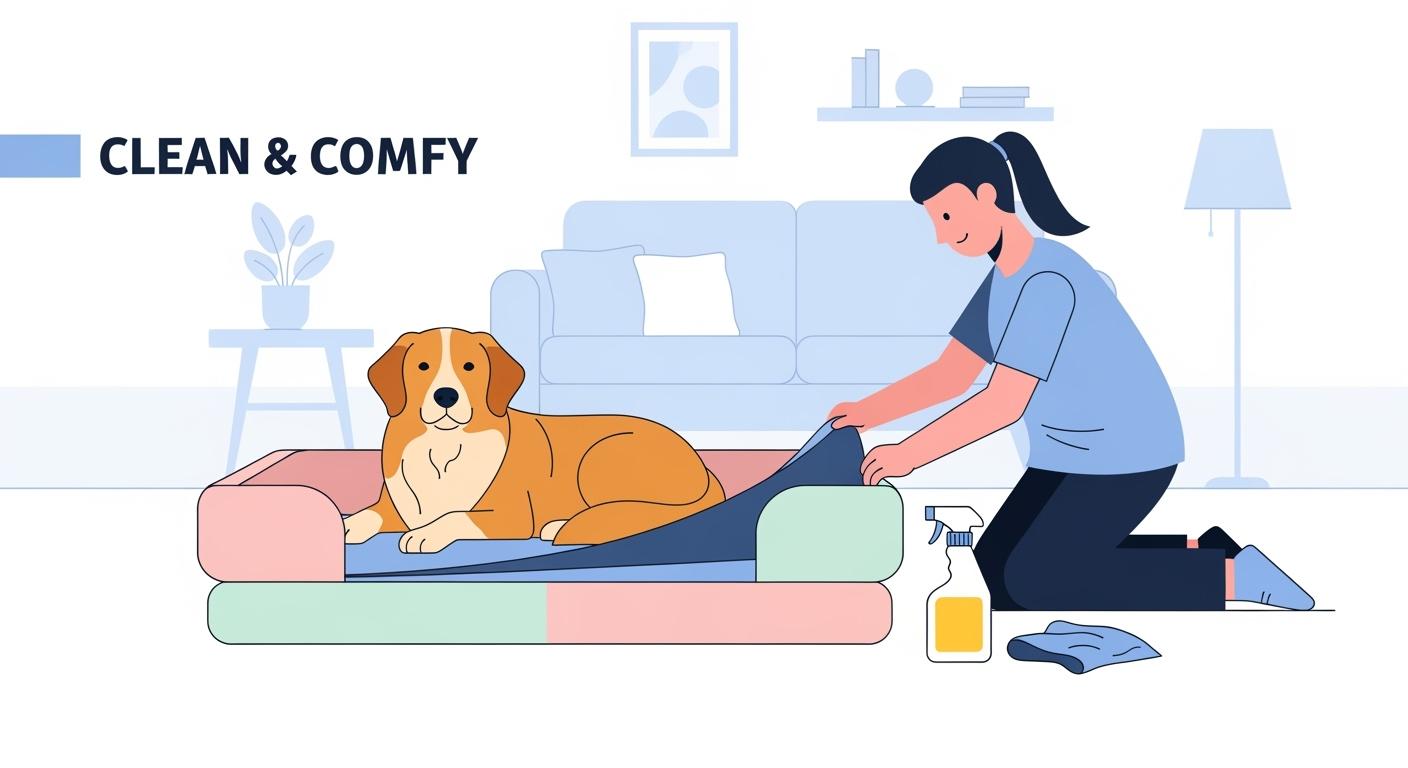
You want your dog to sleep well and move easily. An orthopedic dog bed gives support and comfort every day. It helps dogs with stiff joints or trouble moving.
Dogs who sleep on a good bed move better and play more.
Hard floors or old beds can cause joint pain and less movement.
Size, where you put the bed, and keeping it dry are important every day. Watch how your dog sleeps and moves before picking a bed. These beds make your dog feel better, but they do not take the place of a vet visit if your dog has pain or gets stiff suddenly.
Key Takeaways
Choose the right orthopedic dog bed by observing your dog’s sleeping habits. Match the bed’s shape and features to their needs for better comfort and support.
Keep your dog’s bed clean and dry with washable covers and waterproof liners. Regular cleaning helps maintain hygiene and comfort for your pet.
Place the orthopedic bed in a quiet, low-draft area to reduce stress. A calm environment helps your dog sleep better and feel more secure.
Pick the right orthopedic dog bed for your dog’s comfort and easy cleaning
To find the best orthopedic pet bed, first watch how your dog sleeps and moves. Match the bed’s shape and features to your dog’s habits. This makes your dog’s bed comfy and simple to clean. It also helps your dog stay healthy every day.
Flat, bolster, or low-entry: best bed types for dogs
Dogs sleep in different ways. Some stretch out, some curl up, and some lean on edges. There are three main orthopedic dog bed types:
Flat beds are good for dogs who like to stretch out. These beds give your dog room to move and relax.
Bolster beds support your dog’s head and neck. Dogs who curl up or lean often like bolsters. These beds help your dog feel safe.
Low-entry beds are easier for older dogs or dogs who have trouble moving. These beds make it simple to get on and off.
Cleaning is important for every bed. Waterproof liners and covers you can wash keep the bed fresh. Older dogs and dogs with joint pain need beds that stay dry and clean.
If your dog lies on a thin or old bed, their body weight puts pressure on their hips, elbows, and shoulders. Over time, this pressure can make their joints worse and cause problems like hip dysplasia, elbow arthritis, shoulder issues, spine problems, and sore muscles. Dogs need deep sleep to heal and think clearly. If they are not comfortable, they move around a lot and never get the REM sleep needed for healing and joint recovery.
Use the table below to help you pick the best orthopedic dog bed for your dog:
Dog and household scenario | Preferred bed type or feature | Main risk | First thing to check |
|---|---|---|---|
Senior dogs | Low-entry, firm support, waterproof | Hard to get in bed | Entry height and stability |
Dogs with mobility issues | Low-entry, stable base, waterproof | Slipping, hard access | Floor grip and easy entry |
Dogs who sweat a lot | Breathable, waterproof cover | Dampness, odor | Moisture management |
Dogs who have accidents | Waterproof liner, washable cover | Wet bedding, bacteria | Cover removal and washability |
Large dogs | Flat, thick orthopedic pet bed | Sagging, uneven support | Bed thickness and firmness |
Small dogs | Low-entry, soft orthopedic bed | Hard-to-reach, cold floor | Entry height and warmth |
Dogs who lean on edges | Bolster, wraparound orthopedic bed | No head support | Bolster firmness and placement |
Fit and sizing for orthopedic pet bed support
Fit the orthopedic dog bed to how your dog really sleeps. Watch your dog lie down, stretch, curl, and lean. The best bed lets your dog get in, turn, and stand up easily. If the bed is too small or too big, your dog may not use it or may sleep badly.
If your dog lies on a thin or old bed, their body weight puts pressure on their hips, elbows, and shoulders. Over time, this pressure can make their joints worse and cause problems like hip dysplasia, elbow arthritis, shoulder issues, spine problems, and sore muscles. Dogs need deep sleep to heal and think clearly. If they are not comfortable, they move around a lot and never get the REM sleep needed for healing and joint recovery.
Check the fit by watching your dog use the bed. Make sure your dog can stretch out and turn easily. The bed should support your dog’s joints and keep them off hard floors. If your dog avoids the bed or seems restless, try a different size or style.
Washable and waterproof features for daily cleaning
Keeping your dog’s orthopedic dog bed clean is important for health and comfort. Waterproof liners keep the foam dry. Washable covers make cleaning simple. Dogs drool, bring in wet paws, or have accidents. Beds ready for moisture help you handle these problems.
You should wash your dog’s bed at least once a week to keep germs away. If your dog has allergies or skin problems, you may need to wash it more often.
Set up a simple wash routine. Keep an extra cover so your dog always has a place to rest. Dry the bed fully before using it again. Waterproof features help you avoid wet bedding and make cleaning easier. This keeps your dog’s bed comfy and safe.
Common issues: sagging, hard-to-clean covers, slippery base
You may face some common problems with orthopedic dog beds:
Sagging happens when the foam gets flat or the bed loses firmness. This makes the bed less comfy and supportive.
Hard-to-clean covers make daily care tough. Pick beds with covers you can remove and wash, plus waterproof liners.
Slippery bases make the bed slide on the floor. This can make it hard for your dog to get on and off safely.
Check the bed often. Press down to see if it feels even and firm. Make sure the cover is easy to take off and wash. Put the bed on a stable, non-slip surface. These steps help you keep the best orthopedic dog bed setup for your dog.
Tip: If your dog avoids the bed or seems uncomfortable, check for sagging, dampness, or slippery placement. Change the setup to make it more comfy and safe.
Set up the orthopedic dog bed for indoor comfort and stress-free cleaning
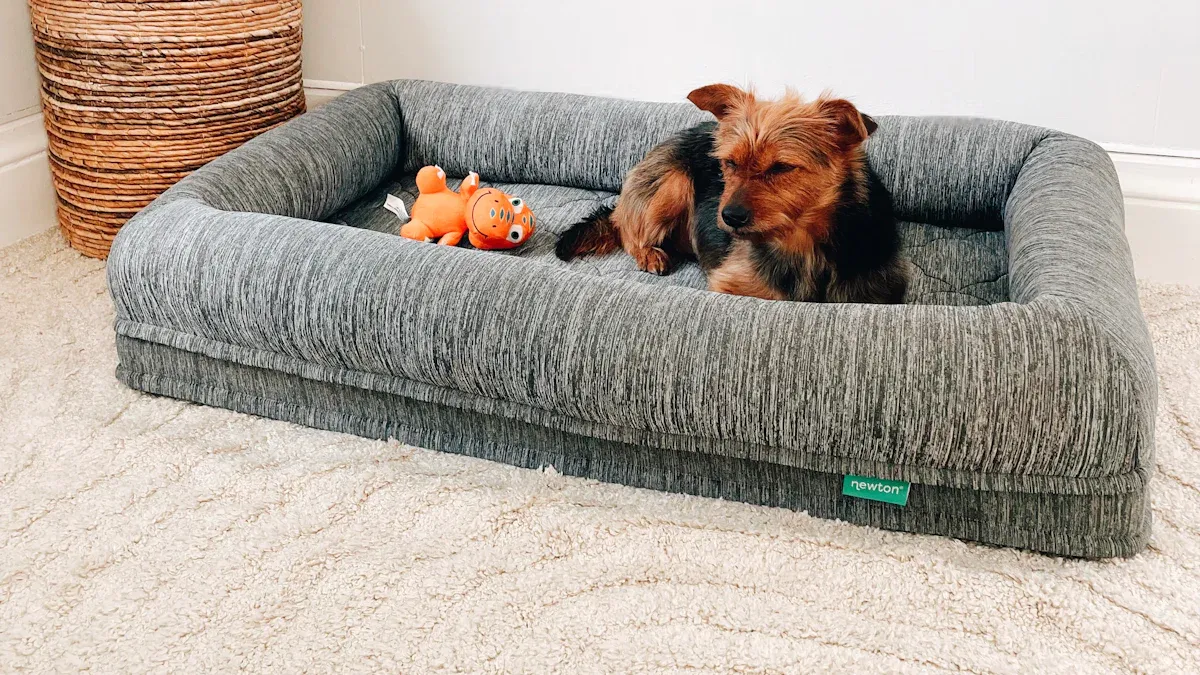
Best placement for dog bed: quiet, low-draft, easy access
You help your dog sleep better when you place the orthopedic bed in a quiet spot. Pick an area with low drafts and little noise. This reduces stress and keeps your dog calm.
The bed buffers household sounds and cuts down on noise disruptions.
It minimizes visual distractions, making sleep easier.
The spot helps regulate temperature, keeping your dog cool in summer and sheltered in winter.
Entry height, floor grip, and safe access for dogs
Check the entry height of the orthopedic bed. Dogs with stiff joints need low-entry beds for easy access. Place the bed on a stable surface. Use anti-slip pads if the floor is slippery. This prevents sliding and supports safe movement. Your dog should step onto the bed without trouble.
Washable cover plan and waterproof protection
Choose a washable pet bed with waterproof liners and sealed seams. Removable washable covers make cleaning easy. After accidents or wet paws, take off the cover and dry all parts. Use a liner system with a washable outer cover and waterproof inner liner. This protects the orthopedic bed from moisture and keeps comfort high.
Setup checks before regular use
Follow these steps for a safe and easy cleaning setup:
Observe your dog’s sleep habits and movement.
Select the orthopedic bed that fits your dog’s needs.
Place the bed in a quiet, low-draft area.
Add anti-slip pads under the bed if needed.
Install washable covers and waterproof liners.
Check your dog’s comfort and activity on the bed.
Inspect the bed daily before use.
Check item | Pass behavior | Fail behavior | Solution |
|---|---|---|---|
Entry | Dog steps in easily | Dog struggles to enter | Lower bed height |
Comfort | Dog relaxes and stretches | Dog avoids or seems restless | Adjust bed size or placement |
Stability | Bed stays in place | Bed slides or tips | Add anti-slip pads |
Cover position | Cover fits snugly | Cover bunches or slips | Refit or replace cover |
Placement | Bed in quiet, low-draft area | Bed in noisy or drafty spot | Move bed to better location |
Cleaning layer | Surface stays dry | Surface feels damp | Dry all parts, check liners |
Tip: Check the orthopedic bed daily for moisture, stability, and comfort. This keeps your dog safe and makes easy cleaning possible.
Prevent bed avoidance and support issues in dogs
Why dogs avoid orthopedic pet beds: size, height, heat, placement
Dogs sometimes stay away from an orthopedic pet bed for easy reasons. Your dog might not use the bed if it feels too small or too high. The bed can also feel too hot. Where you put the bed matters a lot. If the bed is in a loud or drafty place, your dog may sleep on the floor.
Beds that are too small stop your dog from stretching or turning.
High sides or thick edges make it hard for dogs with joint pain to get in.
Hot or cold materials can make the bed feel bad.
Busy or drafty spots can bother your dog’s rest.
Recommended methods:
Pick a bed that fits your dog’s sleep style and size.
Choose fabrics that let air move for more comfort.
Put the orthopedic bed in a quiet spot with little wind.
Support failures: compressed foam, uneven surface
Support problems happen when the orthopedic pet bed foam gets flat or the top gets bumpy. This can cause more joint pain and less comfort. Dogs need steady support to help their joints.
Dog Size Category | Recommended Foam Density (PCF) | Expected Longevity |
|---|---|---|
Small dogs (<20 lbs) | 3.5-4.0 | Retains shape longer |
Medium dogs (20-60 lbs) | 4.0-4.5 | Balanced support |
Large & senior dogs (>60 lbs) | 4.5-5.0 | Prevents bottoming out |
Foam that is not dense can get flat fast. Bad covers can trap heat or stop the foam from getting bigger. Zippers can catch fur or break.
Recommended methods:
Look at the orthopedic bed for flat spots or bumps.
Get a new bed if you see lumps or less support.
Pick covers that let air in and are easy to take off.
Cleaning problems: slow-dry covers, moisture traps, no wash rotation
Wetness and dirt can build up in an orthopedic pet bed. Covers that dry slowly or trap water can smell and feel bad. Dogs with joint pain need a dry, clean bed to feel better.
Recommended methods:
Wipe up spills right away with a soft towel.
Vacuum the bed often to get rid of dander.
Wash covers in cold water and dry them in the sun.
Keep an extra cover for fast changes.
Mistakes: forcing use, slick floors, ignoring mobility changes
You may want your dog to use the new orthopedic pet bed, but making your dog use it can cause stress. Slippery floors or not seeing changes in your dog’s movement can make the bed less useful.
Forcing your dog onto the bed can make them not want to use it.
Slippery floors under the bed can make your dog slip.
Not watching for joint or movement changes can stop you from fixing problems.
Recommended methods:
Let your dog check out the bed when they want.
Put anti-slip pads under the bed.
Watch for changes in how your dog moves or rests.
Solution framework: An orthopedic pet bed helps with joint comfort, but it does not replace a vet. Always talk to your vet if your dog has new or bad joint pain or movement problems.
Problem | Cause | Immediate action | Next improvement |
|---|---|---|---|
Avoidance | Size, height, placement | Change bed or spot | Pick better fit and features |
Stiffness | Compressed foam | Check and change foam | Pick higher-density orthopedic |
Heat | Bad fabric, trapped air | Change cover, add airflow | Use breathable orthopedic cover |
Wet covers | Wetness, slow drying | Dry and clean right away | Switch washable covers |
Sliding | Slippery floor | Add anti-slip pads | Move bed to stable spot |
Sagging | Old or thin foam | Get a new bed | Pick orthopedic with better support |
Edge sleeping | No bolster or edge | Add bolster or edge | Pick orthopedic with bolsters |
Watching how your dog moves helps you change the orthopedic bed setup for better use and joint comfort. Look for changes in how your dog walks or rests, and fix the setup if needed.
Maintain your orthopedic dog bed with checklists and troubleshooting
Fit, access, stability, and placement checklist
You want your dog to feel safe and comfy on a supportive orthopedic bed. Use this checklist to check the quality of materials and features in your bed setup:
Feature | Description |
|---|---|
Waterproofing | The bed cover is waterproof. It is easy to clean and lasts longer. |
Bolsters | The bed has a bolster. It gives support for dogs who like to curl up. |
Covers | The cover is washable. It looks nice in your home. |
Pre-use setup checklist:
Put the bed in a quiet place.
Check the entry height so your dog can get in easily.
Add anti-slip pads under the bed.
Match the bed to your dog’s sleep style.
Look at seams and surface for good quality.
Daily cleaning/support checklist:
Take off and wash covers for easy care.
Check for wet spots or bad smells.
Look for flat spots or worn seams.
Switch covers to keep the pet bed strong.
Cleaning routine for washable and waterproof beds
You keep your dog’s bed clean by using a simple routine. Take off the cover and wash it every week. Dry the cover all the way before putting it back. Wipe the waterproof liner with a damp cloth. Change covers so your dog always has a clean place. This routine keeps the bed nice and makes cleaning easy.
Troubleshooting: bed ignored, too hot, rubbing, wet cover
Dogs sometimes stay away from their bed or seem uncomfortable. Use this troubleshooting table to find quick fixes:
Problem | Possible cause | Immediate solution | Prevention for next time |
|---|---|---|---|
Edge use | No bolster | Add bolster | Pick bed with bolsters |
Bolster block | Bolster too high | Adjust bolster | Choose lower bolster |
Foam shifting | Loose insert | Move foam back in place | Pick better materials |
Odor after wash | Damp cover | Dry cover fully | Use covers that dry fast |
Long drying time | Thick fabric | Air dry in sun | Pick thinner cover |
Moisture in core | Wet liner | Dry liner and foam | Use waterproof liner |
Slipping | Slick floor | Add anti-slip pads | Put bed on stable surface |
When to reassess or consult a veterinarian
Watch for changes in your dog’s behavior or comfort. Ask a veterinarian if you notice:
Changes in eating or drinking
Not wanting to be touched
Lots of panting, drooling, or shaking
Aggression near the bed
Trouble getting in or out from under the bed
Other strange behaviors or signs
Tip: Regular checks and easy cleaning help you keep a good bed setup. If you see signs of discomfort or less support, check the features and quality of materials again.
You help your dog most when you choose a bed that fits well, place it in a quiet spot, and check support often. Use washable covers and waterproof liners for easy cleaning. Watch how your dog sleeps. Adjust the setup if you see changes. Your care keeps your dog comfortable.
FAQ
How often should you wash your dog’s orthopedic bed cover?
You should wash the cover once a week. If your dog sheds a lot or has allergies, wash it more often to keep the bed fresh.
What if your dog will not use the new orthopedic bed?
Place the bed in a quiet spot. Add a favorite blanket or toy. Let your dog explore the bed at their own pace.
How do you know when to replace the orthopedic bed?
Check for sagging, lumps, or loss of support. If your dog seems uncomfortable or avoids the bed, it may be time for a new one.
