
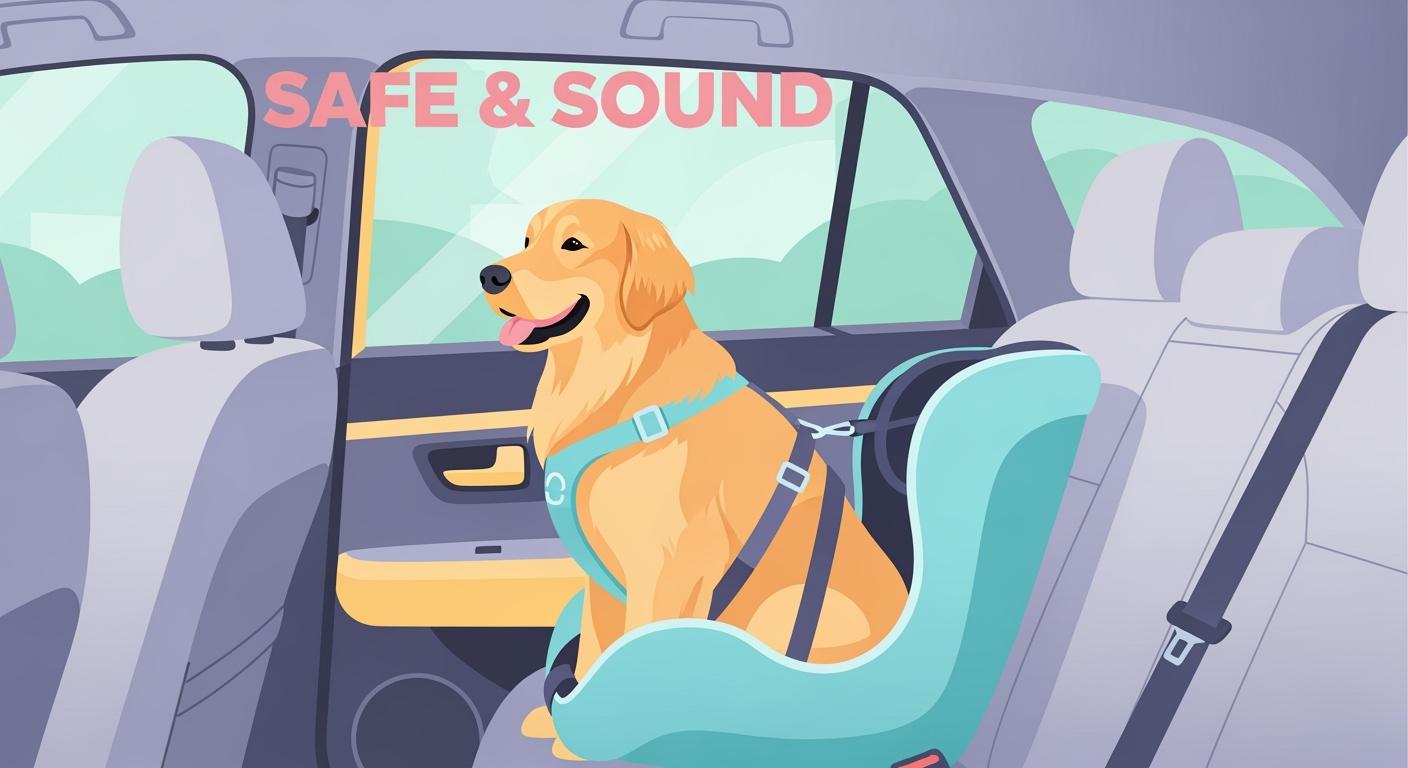
You want your dog to ride safely, but a dog car seat and a harness do not do the same job. A car seat mainly helps with position, boundaries, and day-to-day settling. A harness mainly helps limit movement when it is connected correctly to the vehicle. Some dogs do best with both. Others are better served by a harness alone, or by a crate instead of a seat. The right answer depends on your dog’s size, behavior, and what usually goes wrong during real trips.
| Tool | Main Job | Main Limit |
|---|---|---|
| Dog Car Seat | Gives the dog a defined ride space and helps with settling | Does not replace restraint by itself |
| Harness | Helps limit movement when attached correctly | May not create enough comfort or boundaries for some small or anxious dogs |
| Crate or Carrier | Provides containment and a more enclosed travel zone | Needs space and proper securing |
Key Takeaways
- Using a dog car seat and harness gives the best safety. In practice, this usually makes the most sense for smaller dogs, anxious dogs, or dogs that keep standing, turning, or trying to leave their spot.
- A harness by itself often works better for bigger, calmer dogs that do not need a raised or enclosed seat to stay settled.
- Always check your dog’s setup before every drive. The biggest problems are usually loose routing, twisted straps, unstable seat bases, and too much slack.
Dog Car Seat and Harness: When to Use Both or One
Choosing the right setup can feel confusing because people often talk about all travel gear as if it does the same thing. It does not. A dog car seat and harness solve different parts of the same travel problem. One helps your dog stay positioned and calmer. The other helps reduce free movement. Once you separate those jobs, the choice gets easier.
Best Scenarios for Using Both
You should use both a dog car seat and harness when your dog needs help staying in one place and also needs movement limited. This setup usually makes the most sense for small dogs, dogs that feel insecure on the seat, dogs that keep standing up, and dogs that turn every stop or curve into a full-body shuffle.
Using both can also help when your dog rides often and the goal is not only restraint, but a more repeatable routine. A stable seat gives the dog a defined space. A properly fitted harness helps keep that space from turning into loose roaming.
Here is a quick look at what this combined setup does best:
| Feature | Benefit |
|---|---|
| Defined ride space | Helps smaller or nervous dogs settle instead of pacing or climbing |
| Movement control | Reduces how far the dog can move around the seat area |
| More consistent routine | Makes entry, settling, and short trips easier to repeat the same way |
When a Harness Alone Works
A harness alone can work well for medium to large dogs who stay calm during travel and do not need a booster-style position or extra side support to settle. This is often the more practical choice when the dog is too large for a car seat to be useful or when a seat adds clutter without solving a real problem.
Here are some situations where a harness-only setup makes more sense:
- Your dog is medium or large and rides calmly.
- Your dog does not try to climb forward or change spots constantly.
- You take short local trips and your dog settles quickly.
- You want a simpler setup with fewer parts to manage.
A harness-only setup becomes a weaker choice when the dog keeps standing, pacing, circling, or trying to reach the front. In those cases, restraint alone may not create a calm ride.
Car Seat Only: Limits and Risks
Using only a dog car seat without a harness has real limits. A dog car seat helps position your dog and can make them feel more settled. However, position is not the same thing as restraint. A dog can still climb out, shift too far, or get thrown around the seat area if the setup does not also limit movement.
Some seats are more stable than others, but stability of the seat base is only one part of the whole system. A stable seat without a proper harness connection may still leave too much free movement in turns, stops, or sudden braking.
Comparison Table: Car Seat Plus Harness vs Harness-Only vs Crate/Carrier
| Setup | Use Case | Main Benefit | Main Watchout | Who Should Skip It |
|---|---|---|---|---|
| Car seat + harness | Small or medium dogs, anxious dogs, frequent travel | Better boundaries plus movement control | Needs careful fit and correct routing | Very large dogs or dogs who clearly do better with a crate |
| Harness-only | Medium or large calm dogs, simpler travel setups | Cleaner, easier restraint setup | Does not create a settled seat space by itself | Small restless dogs or dogs that keep trying to roam |
| Crate/carrier | Anxious dogs, chewers, long trips, dogs needing containment | Full enclosure and lower roaming risk | Needs space and proper securing | Dogs that panic in enclosed travel setups |
Common Mistakes and Real-World Consequences
Many owners make mistakes when installing or choosing dog car seats and harnesses. These mistakes usually do not look dramatic at first. They show up as wobble, too much slack, blocked buckles, twisted webbing, or a dog that keeps ending up outside the intended restraint zone.
- Incorrect installation of the seat or harness connection reduces control of movement.
- Twisted straps change how force and pressure travel through the setup.
- Using worn or damaged restraints increases failure risk.
- Using a regular walking harness without checking car-use compatibility can leave the setup too loose or awkward.
- Leaving a crate unsecured creates a different kind of travel risk.
Tip: Always check your setup before every trip. Make sure the harness fits snugly, the seat is anchored, and all straps are untwisted. Replace any worn or damaged gear right away.
How Each Setup Works: Positioning and Restraint
Car Seat for Position and Settling
You want your dog to feel safe in the car. A dog car seat gives your dog a defined ride space and can make travel feel less chaotic. If you set up the seat right, it helps the dog stay in one place and settle faster. Soft sides and padding can also make nervous dogs feel less exposed.
But a seat does not do the full job alone. It helps with position and comfort more than direct restraint. That is why some dogs feel calmer in the seat, but still need a harness to keep the overall setup controlled.
Harness for Restraint and Movement Control
A harness matters because it is the part that helps limit how far your dog can move. You clip it into the vehicle connection and use it to reduce roaming, climbing, and sudden forward movement. This is the part of the system that handles restraint more than comfort.
- Harnesses help limit excess movement in the vehicle.
- They work best when fitted correctly and connected without twist or excess slack.
- A poor fit or poor routing can weaken the whole setup, even if the seat itself looks stable.
Comfort and Anxiety Factors
Dogs can get nervous or uncomfortable in the car for many reasons. Infrequent travel, bad associations, poor footing, motion discomfort, and too much movement all make the ride harder. A defined seat can help some dogs feel calmer. A simpler harness-only setup can be better for others, especially if extra walls, straps, or booster height make them more restless.
Tip: Use the right dog safety gear to help your dog feel calmer and stay easier to manage, but do not assume calmness and restraint are the same thing.
Working Together or Alone
Dog car seats and harnesses do different things. The car seat gives your dog a steadier place to ride and may improve settling. The harness helps keep your dog from moving too much. Using both makes sense when your dog needs both jobs solved. Some dogs only need restraint. Other dogs clearly do better when they also have a defined seat space.
Pass/Fail Checklist for Setup
| Check Item | Pass Signal | Fail Signal | Fix |
|---|---|---|---|
| Car seat does not slide or tip | Stays stable after turns and light push tests | Moves or tips easily | Recheck installation and anchors |
| Harness fits snugly | Close fit without pinch or slack | Straps hang loose or pinch | Adjust harness for proper fit |
| Harness connection stays clean | Clip is secure and webbing is flat | Clip loose, blocked, or twisted | Reroute and retighten connection |
| Dog settles quickly after entry | Calm, relaxed posture | Pacing, whining, chewing, or repeated standing | Reassess whether the dog needs both seat and harness |
| All straps untwisted and flat | Straps lie flat on the body and seat | Twisted or bunched straps | Untwist and smooth out straps |
Check these things before every drive. This keeps the setup more repeatable and helps you catch problems before the dog is already moving around the car.
Spotting Failures: Signs and Fixes
Twisted Tether and Blocked Buckle
You may notice your dog fighting against the harness or seat belt connection. This often means the tether is twisted or the buckle area is blocked. These problems reduce control and can make the dog more restless. Always check that the tether lays flat and the buckle engages cleanly. If you see your dog struggling with webbing or ending up outside the intended ride zone, stop and check the setup.
Unstable Seat Base and False Security
Dog car seats and dog car booster seats must stay stable during every ride. If the seat wobbles or tips, your dog may not be secure even if the harness is attached. Push the seat side to side with your hand to test stability. Loose belts or poor routing often cause this problem. Tighten all straps and recheck the anchor points. Never trust a seat that moves easily.
Troubleshooting Common Issues
Use this table to solve common problems with dog restraints and dog safety gear:
| Symptom | Likely Cause | Fast Check | Fix |
|---|---|---|---|
| Seat wobbles on turns | Loose belt or anchor | Push seat side to side | Tighten belt or resecure anchor |
| Dog moves outside restraint zone | Too much slack in the connection or poor fit | Pull on harness and tether | Shorten slack and recheck fit |
| Buckle blocked or hard to engage | Seat misaligned or side wall in the way | Try buckling with dog out of the seat | Reposition the seat |
| Tether attached poorly | Wrong attachment point or twisted routing | Check where the connection lands on the harness | Reconnect and flatten the path |
| Frayed straps or cracked buckles | Wear from use or storage | Inspect all straps and hardware | Replace damaged gear |
| Dog escapes the restraint zone | Harness too loose or too much travel length | Check fit and slack together | Refit harness and shorten movement range |
Who Should Avoid Certain Setups
Some dogs need different travel setups. Dogs that chew, claw, destroy soft sides, or keep trying to break out may do better in a properly secured crate than in a soft booster-style seat. Dogs that panic in enclosed travel setups may do worse in a crate and better with a simpler harness-based solution. Always match the system to the dog’s real behavior, not just to the product category.
Travel tip: Inspect all dog safety gear regularly. Make sure the harness fits snugly, position your dog in the back seat, and use short practice trips if your dog feels anxious. Always follow the manufacturer’s cleaning and installation instructions.
You should use both a dog car seat and harness when your dog needs both a defined seat space and better movement control. Use a harness alone when your dog is calm, larger, and does not need the extra settling support of a seat. Avoid setups that look secure but still wobble, twist, or leave too much slack.
- A good travel setup solves the right problem: positioning, restraint, or containment.
- Regular checks of belt routing, tether attachment, and base stability matter as much as product choice.
- Always measure your dog for fit and inspect straps, buckles, and anchors before driving.
To test your setup:
- Place the seat in the rear and press down to check stability.
- Route the belt flat and keep the webbing untwisted.
- Attach the tether to the harness correctly and remove excess slack.
- Run a short test drive to see if your dog stays within the intended ride space.
Consistent use of a correctly fitted setup improves safety and comfort for everyday trips.
FAQ
How do you know if your dog needs both a car seat and harness?
You check your dog’s behavior during travel. If your dog keeps standing, turning, climbing, or acting anxious, both tools usually work better than one.
What is the role of testing in choosing dog travel gear?
Testing matters when you want to understand how a restraint performs, but for everyday setup decisions you still need to check fit, routing, stability, and how your own dog behaves in the car.
Can testing help prevent common mistakes with dog car safety?
Testing can show whether a product was evaluated, but it does not replace correct installation. Most everyday failures still come from loose routing, twisted straps, poor fit, or unstable seat placement.
Is testing important for dogs with motion discomfort or breathing stress?
Testing does not solve those issues by itself. Dogs with motion discomfort, breathing stress, or unusual travel reactions need a setup that also matches comfort and behavior needs. For medical concerns, consult your veterinarian.
Note: You consult your veterinarian for medical advice.






