Choosing a large dog elevated bed starts with two practical checks: how your dog actually rests and how high your dog has to step to get on and off. A good elevated bed should let your dog stretch, turn, and settle without crowding the edges, and it should stay stable when your dog shifts weight.
Key Takeaways
- Measure your dog’s relaxed lying length and the space your dog actually uses when resting. The bed should let your dog lie fully on the surface and change position without hanging off the edges.
- Check entry height and stability before you buy. A large dog should be able to step on and off without jumping, slipping, or making the frame rock.
- If your dog needs softer, lower-entry support for stiffness or joint discomfort, compare the setup with an orthopedic dog bed instead of assuming an elevated bed is always the better choice.
Large Dog Elevated Bed Fit and Comfort Tips
Measuring for Proper Fit
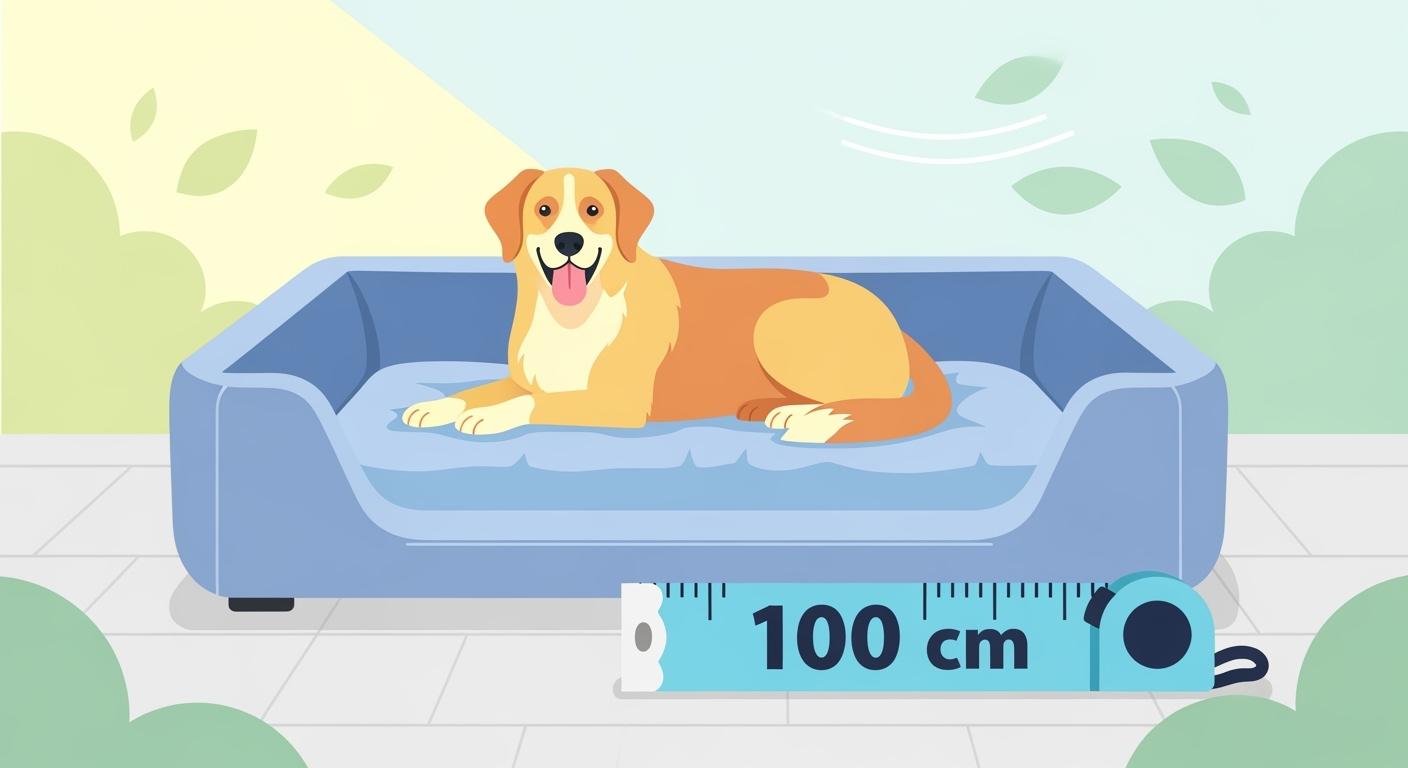
A large dog elevated bed should match how your dog actually sleeps, not just a weight label. Watch whether your dog stretches long, curls tightly, or likes to rest with the chin over an edge. Then measure the relaxed body length and the width your dog uses while lying down.
Common measuring mistakes include checking size while the dog is sitting, choosing by breed name alone, or focusing only on body weight. Those shortcuts often create beds that are either too short for stretching or too narrow for turning.
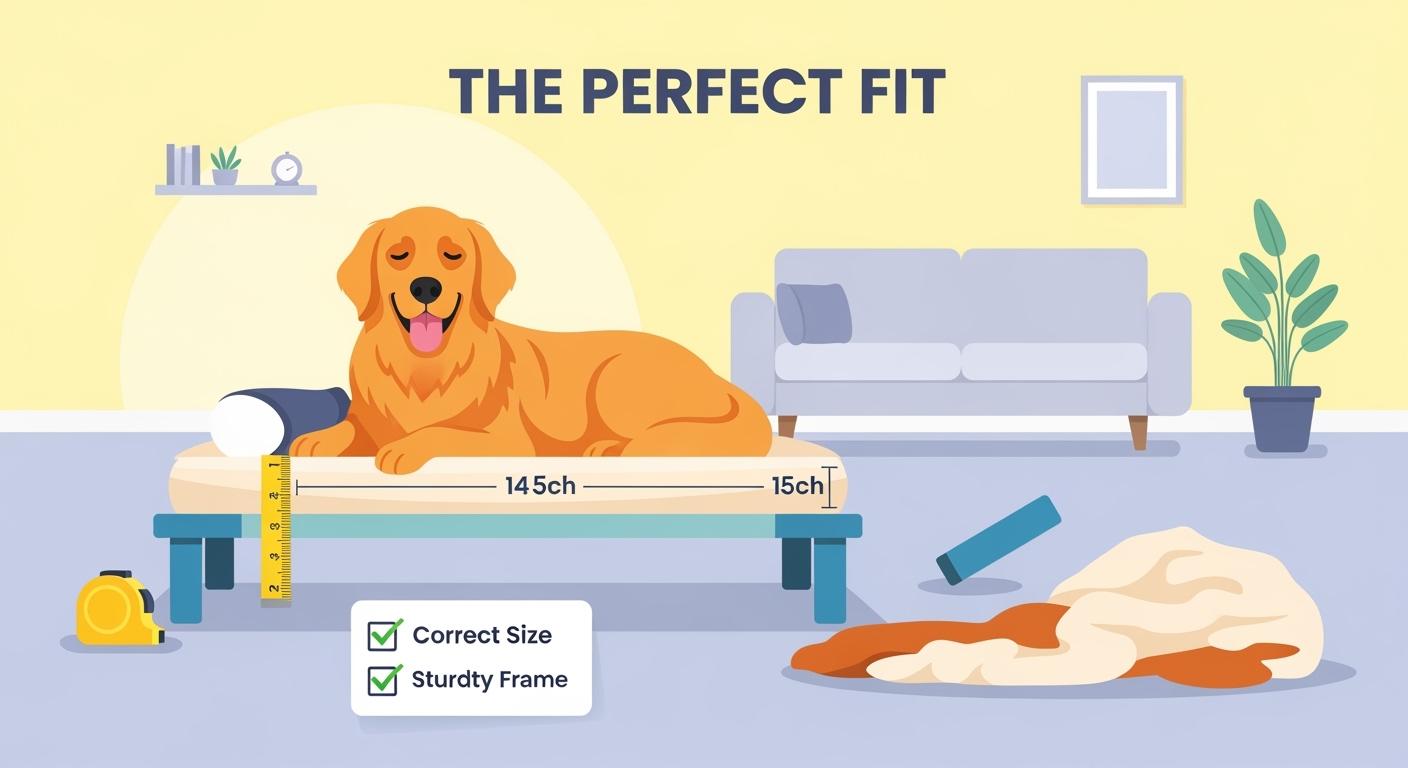
A good fit means your dog can lie fully on the bed, turn without stepping off the side, and settle without sliding toward the middle or crowding the corners.
Step-Up Height, Stability, and Daily Use
Before regular use, check how your dog gets on and off the bed. The step-up should feel easy and predictable. If your dog hesitates, braces, or hops off awkwardly, the bed may be too high or too unstable for comfortable daily use.
| Check | Pass signal | Fail signal |
|---|---|---|
| Entry and exit | Dog steps on and off smoothly | Dog jumps, slips, or braces before stepping up |
| Frame stability | Bed stays level during turns and weight shift | Frame rocks, tips, or clicks under load |
| Surface tension | Fabric stays evenly supportive | Center sags or pulls dog toward one side |
2-minute settle test: let your dog get on, turn once, lie down, and stand back up. If the bed shifts, sags, or makes your dog hesitate, the setup still needs work.
When an Elevated Bed Is Not the Best Match
An elevated bed can work well for airflow and easier cleanup, but it is not the best answer for every dog. Some large dogs with stiffness, obvious mobility limits, or a strong preference for softer, lower surfaces may do better on a supportive ground-level bed. The safest choice is the one your dog can use comfortably and consistently.
That is especially important for older dogs who dislike stepping up or who struggle to push up from a stretched position. If the dog repeatedly avoids the elevated bed, tries to sleep beside it, or looks awkward when getting on and off, the bed may not match that dog’s needs well enough.
Materials and Construction for Daily Use
Frame Strength, Fabric Tension, and Airflow
The main job of the frame is to stay steady under repeated use. Look for a frame that resists wobble, keeps the sleep surface level, and does not twist when a large dog climbs on from one side. The sleep fabric should stay supportive across the middle instead of bowing deeply under weight.
Outdoor dog bed size and weather-ready checks matter even more when you plan to use the bed in covered patios, garages, or warm rooms. Airflow is one advantage of an elevated bed, but that only helps if the fabric stays taut and the bed still feels stable when your dog moves.
| Material or feature | What it helps with | What to watch for |
|---|---|---|
| Taut woven or mesh sleep surface | Airflow and easier brushing off fur | Loose fabric can sag or feel unstable |
| Rigid frame with solid joints | Better daily stability | Weak joints can wobble or loosen over time |
| Non-slip feet or grippy contact points | Keeps the bed from sliding on hard floors | Hard smooth feet may skate on tile or wood |
Cleaning, Drying, and Real-World Use
One reason people choose an elevated bed is easier cleanup. Fur, dust, and light moisture are often easier to remove from a taut raised surface than from thick fill. But easy cleanup only helps if you can actually wipe, rinse, or dry the bed without the surface staying damp for too long.
Check how the fabric handles muddy paws, drool, and repeated wiping. Also check whether hair gets trapped around seams, corners, or frame connections. A bed that looks durable but becomes annoying to clean usually gets used less often and maintained less consistently.

Common Mistakes and Troubleshooting Tips
Sizing and Stability Errors
The most common buying mistakes are choosing by size label only, ignoring how the dog sleeps, and assuming any elevated bed is suitable for a large dog as long as the weight limit sounds high enough. The real test is whether the bed stays level and usable once your dog actually gets on it.
| Check item | Pass signal | Fail signal | Fix |
|---|---|---|---|
| Dog fits when stretched | Full body stays on the bed | Limbs or hips hang over the edge | Choose a larger sleep surface |
| Bed stays level | No rocking or tilt | Frame wobbles on entry or turning | Move to a flatter surface or improve frame stability |
| Surface stays supportive | No deep middle sag | Dog slides into the center | Retension or replace the surface |
| Easy daily use | Dog chooses the bed and uses it easily | Dog avoids the bed or gets off awkwardly | Recheck height, fit, and whether a lower bed suits the dog better |
Elevated Bed vs Orthopedic Foam Bed
| Option | Best for | Watch-outs | Comfort note |
|---|---|---|---|
| Elevated bed | Airflow, easier brushing off debris, raised sleeping surface | Entry height, frame wobble, surface sag | Often works best when the dog likes a taut, cooler surface |
| Orthopedic foam bed | Lower entry, softer support, dogs who avoid raised cots | Can trap more heat and collect more debris | Often easier for dogs who dislike stepping up |
Troubleshooting Table
| Symptom | Likely cause | Fast check | Fix |
|---|---|---|---|
| Bed wobbles | Loose frame or uneven floor contact | Push down on each corner by hand | Tighten the frame or move it to a flatter surface |
| Surface sags | Fabric stretched or under-supported | Press the center and watch how quickly it rebounds | Retension or replace the sleep surface |
| Bed slides | Low floor grip | Push the empty bed lightly across the floor | Add grippier contact points or move to a better surface |
| Dog avoids the bed | Poor fit, unstable feel, or unsuitable height | Watch entry, turning, and how long the dog stays on it | Recheck fit or compare a lower-support option |
Push-corner test: press each corner, then the center. A good bed should feel boringly stable, not springy, twisted, or loose.
A quality large dog elevated bed should help your dog rest comfortably, stay cooler in warm conditions, and keep cleanup simple. But if the dog cannot use it smoothly, the bed is still the wrong fit no matter how durable it looks.
FAQ About Large Dog Elevated Beds
Sizing and Fit Questions
Q: How do you know if a large dog elevated bed fits your dog?
Measure your dog in a relaxed resting position and make sure the bed gives enough room to stretch and turn without hanging off the edges. Then test whether your dog can get on and off without jumping or slipping.
Q: What are signs the bed is too small or too high?
Common signs include limbs hanging off the edge, repeated repositioning, hesitation before stepping up, awkward exits, or the dog choosing the floor next to the bed instead.
Wobble, Sag, and Stability
Q: Why does my dog’s bed wobble or sag?
Wobble often comes from loose frame connections or uneven floor contact. Sagging usually comes from a stretched or weak sleep surface. Check both before assuming the dog simply dislikes the bed.
Q: How do you keep the bed stable for a large dog?
Use a stable frame, good floor contact, and a surface that stays taut across the middle. Then test it with the dog actually on it, not only while it is empty.
Older Dogs and Daily Comfort
Q: Is an elevated bed always best for older dogs?
No. Some older dogs like the airflow and raised surface, while others do better on a lower, softer bed that is easier to enter. Judge the setup by how easily your dog gets on, lies down, and stands back up.
Outdoor and Warm-Weather Use
Q: Can you use a large dog elevated bed outdoors?
Yes, for supervised outdoor use in suitable conditions. Check shade, heat, wet ground, and surface drying time. A raised bed can help keep the dog off hot or damp ground, but it is not a reason to ignore weather risk.
Cleaning and Maintenance
Q: What is the best way to clean a large dog elevated bed?
Brush or vacuum off loose hair first, then wipe or wash the surface based on the material. Let the bed dry fully before the next use and check corners, seams, and frame joints where dirt and moisture collect.