
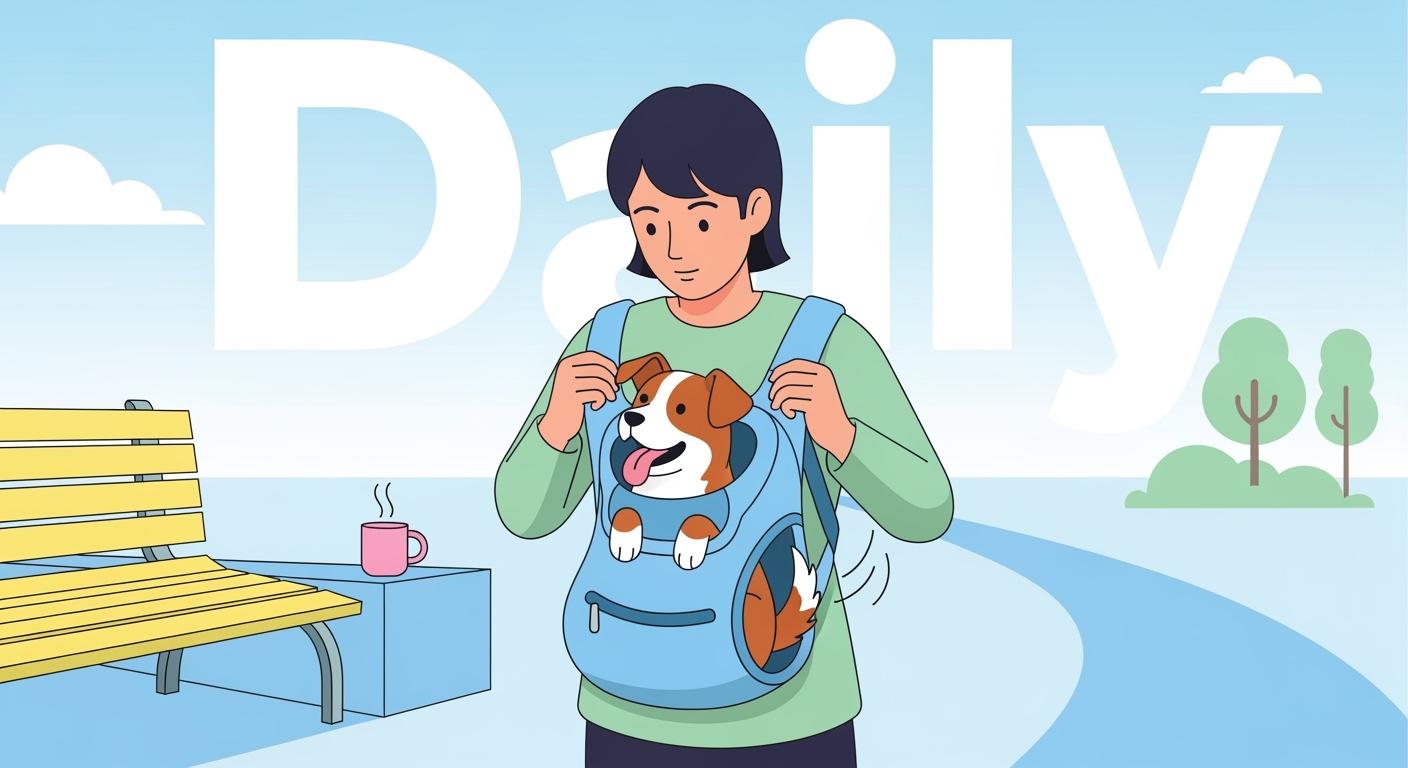
A front backpack dog carrier can suit a dachshund on short outings when the load stays steady, airflow stays open, and you can watch posture and stress without guessing.
The real question is not whether front carry is fashionable or convenient. It is whether the carrier supports a long-backed dog well enough for the kind of outing you actually do. For dachshunds, level base support, clear breathing space, and low sway usually matter more than extra pockets or a trendy shape.
Note: This article is about choosing and checking a carrier setup, not about diagnosing pain, breathing trouble, or spinal disease.
The same visibility versus effort tradeoff is part of a front carry versus back carry decision too. What changes the answer is usually route length, body support, and how much monitoring you really need while moving.
Key Takeaways
- A front carry setup usually works best when the route is short, the dog is light enough to stay steady, and you need a clear view of breathing and posture.
- For dachshunds, base support and neutral posture usually matter more than extra storage or a fashionable carrier shape.
- If the carrier changes your stride, traps heat, or makes your dog curl, lean, or paw at openings, a back carrier or sling often becomes the better match.
When Front Carry Works Best
Front carry usually helps when visibility matters more than storage. You can check your dachshund’s face, chest movement, and body position without stopping, which is often useful in busy places, short transitions, or crowded sidewalks.
This style also makes more sense when your dog settles better with body contact and when the outing is short enough that weight in front of your torso does not change your walk too much. Once distance, storage, or handler fatigue start to matter more, the balance usually shifts.
Front carry, back carry, or sling
| Style | Best Use Case | Why It Helps | What to Watch |
|---|---|---|---|
| Front carry backpack | Short outings, close monitoring | Easy view of breathing and posture | Can shorten stride and trap warmth |
| Back carry backpack | Longer walks, more gear | Usually spreads load more evenly | Harder to read stress signals quickly |
| Sling carrier | Quick errands, very calm small dogs | Fast access and soft contact | Often gives less structure and less back support |
That is also why some dog sling carriers feel fine for very short errands and still become a weak match for a long-backed dog that needs more level support. For most dachshunds, front carry is usually the better starting point when monitoring and structure matter more than distance.
Why front carry helps some dachshunds settle faster
Some small dogs settle better when they stay close to your body and can see the environment without feeling exposed. A front carrier can make that easier, but only if the base stays level and the carrier sits high enough to avoid pulling downward as you walk.
Why the same setup can stop working fast
The same closeness that helps with monitoring can also add heat and strain if the outing gets longer. If you keep readjusting the bag, shorten your stride, or hold one hand against the carrier to steady it, the setup is already becoming less practical than it first looked.
What to Check Before You Use It on Real Outings
The easiest way to judge a front backpack dog carrier is to test it in stages instead of trusting one quick fitting. A dachshund can look fine while standing still and still lose posture once motion, warmth, and time in the carrier increase.
- Indoor fit check. Load the carrier at home, let your dachshund settle, and watch whether the base stays level, the chest stays open, and the dog can rest without folding.
- Loaded home walk. Use a brief route with turns, doorways, and a few stops, then watch for sway, rubbing, handler strain, and any change in breathing or alertness.
- Real outing check. Use the carrier on a normal errand or short outdoor session on a later day, then compare whether the same fit still works once heat, distractions, and time on your feet increase.
Tip: Use the same route and the same strap settings across several tries. A setup that feels fine at home can still fail once motion, warmth, and distraction rise.
Pass and fail checks that matter most
| Check Item | Pass Signal | Fail Signal | Improvement Plan |
|---|---|---|---|
| Base support | Dog stays upright and settled | Curled spine or slumping | Use a firmer insert or switch styles |
| Chest level | Carrier sits close and level | Carrier hangs low or tips forward | Raise strap setting and retighten evenly |
| Airflow | Breathing stays easy and calm | Panting builds in mild conditions | Open mesh zones or shorten the outing |
| Stride freedom | You walk naturally | You lean back or shorten steps | Move the load higher or choose back carry |
| Security | Dog stays quiet at openings | Pawing, climbing, escape effort | Recheck fit, closure path, and harness clip |
When a front setup passes these checks, it usually feels calm rather than merely secure. When two or more rows fail in the same outing, that is often enough reason to stop testing and change styles.
Body length, opening height, and base support often matter more than people expect. The same size mismatch is part of a carrier backpack size checklist too, especially when the dog fits on paper but not once posture and movement are added back into the picture.
What often goes wrong first
The first problem is usually not a full meltdown. It is small instability that keeps repeating, such as slumping, forward tip, panting that builds too early, or a handler who keeps tightening one strap but never gets the carry to feel balanced.
| Symptom | Likely Cause | Fast Check | What to Watch | Improvement Plan |
|---|---|---|---|---|
| Sway or bounce | Loose strap setting | Walk a short loop and watch from the side | Carrier drifts away from chest | Retighten and reduce extra items |
| Slumping | Weak base or too much room | Set the carrier down and watch posture | Body folds instead of resting level | Add support or size down |
| Heavy panting | Heat or poor airflow | Stop in shade and reassess mesh exposure | Panting does not settle quickly | End the carry and cool down |
| Pawing at opening | Stress, poor fit, weak closure path | Watch the first minute after loading | Repeated push toward one side | Shorten session and reload more calmly |
| Owner strain | Low carry position or uneven straps | Stand still and feel shoulder pull | One side takes most of the load | Reset both straps or switch carry style |
Disclaimer: A carrier is a transport tool, not a treatment. If your dachshund shows pain, weakness, repeated stumbling, or distress that does not settle after you stop, contact your veterinarian before continuing.
Signs the Setup Is Not Working
Stop the outing when your dachshund stays tense, keeps trying to climb out, pants hard in mild conditions, or cannot find a settled position. Stop sooner if your own balance changes enough that curbs, steps, or sitting down feel awkward.
Switch styles when the problem is structural rather than emotional. If you repeatedly see slumping, forward tip, or shortened handler stride, a back carrier or a more structured setup usually makes more sense than forcing more practice.
The same comfort-versus-control question also matters in a travel safety setup during car transitions, where the carrier or restraint has to stay stable through movement rather than just look secure while standing still.
Common mistakes that lead to a bad carry
- Choosing extra room over body support, which often lets a dachshund curl or slide instead of resting in neutral posture.
- Judging the carrier while standing still only, even though sway and handler strain usually appear once the route includes turns, curbs, or stairs.
- Assuming visible mesh means enough airflow, even when the mesh sits blocked against your clothing or the dog’s body.
- Keeping the outing going after repeated pawing, panting, or readjustment, which often turns a small fit problem into a strong negative association.
Tip: The most common mistake is buying for closeness alone. For most dachshunds, closeness only helps when the base stays supportive and your own stride still feels natural.
Care and cleaning
Cleaning matters because grit, damp fabric, and stiff seams can quietly make a usable carrier feel harsh on the next outing. Keep the routine simple enough that you actually repeat it.
- Shake out debris and inspect the base, seams, and closure path after each outing.
- Remove washable liners or pads and clean them with mild soap as the care label allows.
- Let every layer dry fully before the next use so support, airflow, and skin comfort stay more consistent.
FAQ
Can a front backpack dog carrier work for a long walk?
It can, but for most owners it usually works best for shorter outings where visibility matters more than storage and load balance.
What fit signal matters most for a dachshund?
Neutral posture usually matters most, because a dachshund should look supported and level rather than curled, folded, or braced against one side.
When should I switch to a back carrier?
Switch when the front load changes your stride, traps heat, or needs constant readjustment even after you correct the fit.
How do I know a sling is not enough structure?
If your dog keeps slumping, leaning, or twisting to stay upright, a more structured carrier is usually the better match.
- Choose visibility when the trip is short and you need to read posture often.
- Choose support when your dachshund tends to curl, lean, or fatigue in a soft setup.
- Choose another style when your own movement becomes awkward before your dog settles.
Disclaimer: This guide helps you choose a front backpack dog carrier more honestly, but it will not tell you whether pain, breathing issues, or neurologic signs are safe to carry through. For those questions, ask your veterinarian or a canine rehab specialist.






