
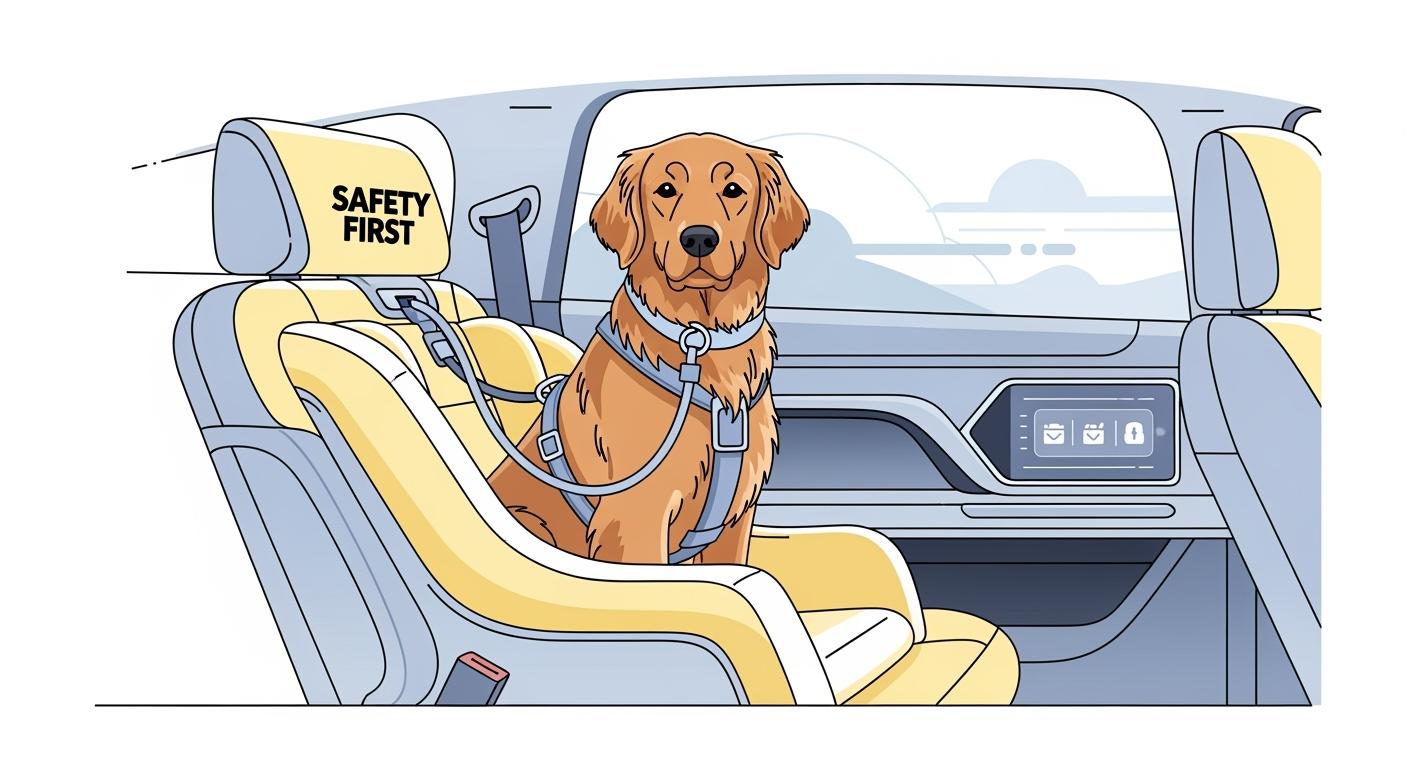
A dog car seat with a safety tether looks like it solves the restraint problem. Clip the dog in, tighten the strap, done. But what happens mid-turn tells a different story. When forward force enters a tether anchored off-center, the pull vector does not align with the dog’s chest. It creates a rotational moment at the harness attachment point. Instead of distributing load evenly across the chest plate, the off-axis force twists the dog’s torso toward the anchor, driving sliding and leaning inward — even when the strap length is technically correct. The tether is not failing because it is too long. It is failing because the anchor point, strap angle, and seat walls were never designed to work as one restraint geometry.
Why a Safety Tether Can Still Allow Too Much Movement
Loose Tether, Wrong Anchor — What Actually Happens
Attaching a dog to a tether inside a car seat does not automatically produce stability. A loose tether anchored to a weak point lets the dog slide forward, rotate sideways, or step over the strap entirely. The restraint becomes cosmetic — present but not functional. Connect the tether to a collar instead of a harness and the risk shifts from instability to injury. The neck absorbs force that the chest and shoulders are built to take.
The anchor point itself is often the hidden culprit. If the tether attaches to a clip sewn into thin seat fabric, the anchor migrates under load. After a few hard stops, what started as a centered connection drifts toward one side. The dog now pulls against an angled strap, which encourages rotation rather than resisting it. A tether that stays exactly where it was installed after a drive and a harness that spreads load across the chest and shoulders form the baseline — without both, the seat is a padded box with a strap, not a restraint system.
Sliding, Rotating, and Leaning — Movement Patterns Inside the Seat
Dogs shift posture during travel. That is normal. The question is whether the tether system limits that movement to a safe zone or lets the dog migrate toward the edge of the seat. When the tether is too long, the dog can slide to one side, rotate 90 degrees, and lean over the seat wall. Over-tightening creates the opposite problem. A tether pulled too short forces the dog into an awkward posture — unable to sit fully, unable to lie down, pulling against the strap just to find a tolerable position.
The seat wall, cushion base, and tether anchor form three sides of a stability triangle. If any one is misconfigured, the other two cannot compensate. A tall seat wall does nothing if the tether anchor sits too far forward and the dog’s weight pulls them toward the front edge. A deep cushion base does nothing if the tether is so short the dog cannot settle into it. In-car seating that treats restraint as a geometry problem rather than a strap-length problem tends to hold up better across different dog sizes and driving conditions.
A car seat or harness that limits loose internal movement reduces the risk of injury during sudden stops and cuts driver distraction on routine trips.
Where Crash-Testing Claims Fall Short
Not all crash-tested dog car seats perform the same way in real conditions. Some pass tests that measure only forward restraint while ignoring lateral movement. A dog that stays in the seat during a frontal-impact sled test can still slide and rotate during a sharp turn or evasive maneuver. The test is not necessarily invalid — it is just narrow. The design it validates may not address side-to-side stability at all.
After a 15-minute drive with several turns, check whether the tether anchor has drifted more than an inch from its starting position. Anchor creep signals that the mount is absorbing force rather than transmitting it through the seat structure. Also watch the dog’s rear legs during a turn. If the hips slide outward before the seat wall stops them, the tether length combined with anchor placement is allowing too much lateral travel.
| Tether Problem | What Happens Inside the Seat | Better Design Direction |
|---|---|---|
| Too much slack | Dog slides, rotates, leans, steps over | Controlled comfort boundary |
| Poor anchor position | Unstable pull, unsafe posture | Centered anchor, stable strap angle |
| Over-tightened tether | Awkward posture, unable to settle | Adjustable length, posture flexibility |
The goal is not zero movement. A rigidly fixed dog fights the restraint, which creates its own stress and distraction. The goal is a comfort boundary: enough room to sit and lie down, not enough to slide to the edge or rotate past the seat wall. That balance depends on tether geometry more than tether length.
Anchor Position and Strap Angle — Why Placement Matters as Much as Length
How a Wrong Anchor Point Destabilizes the Seat
Anchor position determines the direction of tether pull relative to the dog’s body. When the anchor sits high and centered at the seat back, the tether pulls roughly parallel to the dog’s spine when they are sitting. This aligns with natural posture. When the anchor is low or offset, the pull vector angles across the dog’s chest or shoulder. Every brake application or sharp turn sends force through that skewed vector, rotating the dog toward the side of the anchor.
Strap angle matters the same way. A tether that runs nearly horizontal across the dog’s back keeps the force path short and predictable. A tether that angles steeply upward from a low anchor lifts the harness at the chest — the same direction the dog needs to move to step out of the restraint. Booster seat designs that raise the seating position change the effective anchor angle, so a tether setup that works in one seat geometry may fail in another.
| Design Difference | Why It Matters | Where It Falls Short |
|---|---|---|
| Centered high anchor | Pull parallel to spine, resists rotation | Less effective for dogs that lie flat rather than sit |
| Offset or low anchor | Skewed pull rotates dog toward anchor side | Works only with very short tether, limits postural change |
| Adjustable anchor point | Adapts to different dog heights and sitting postures | Adds complexity — more points that can be set wrong |
What Discomfort Looks Like — and How to Check
A tether that pulls at the wrong angle shows up in the dog’s behavior before it shows up as a safety problem. Common signs: the dog keeps shifting weight from one hip to the other, the dog tucks the tail and refuses to settle after five minutes, the dog repeatedly turns the head toward the anchor side as if checking what is pulling. These are not quirks. They are feedback about tether geometry.
After the dog has been in the seat for about 10 minutes, run a hand under the harness straps at the chest and shoulders. Hot spots — areas that feel warmer than surrounding skin — indicate concentrated pressure from uneven tether pull. A correctly angled tether spreads force across the full width of the chest plate. An angled tether concentrates it on one edge. The dog feels that difference long before any visible chafing appears.
In practice: If the dog cannot hold a relaxed sitting posture for the duration of a short drive, the restraint has crossed from comfort boundary into confinement. The distinction matters — one reduces movement, the other just restricts it.
When a Controlled Comfort Boundary Works — and When It Does Not
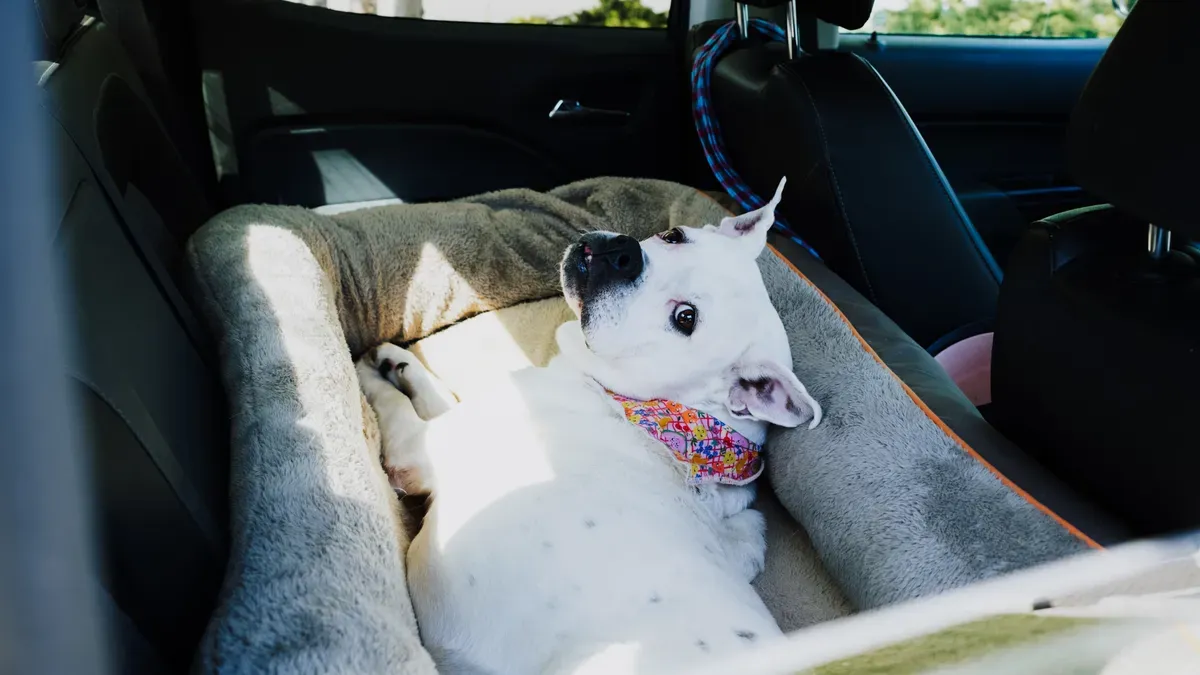
Where the System Excels
A dog car seat that combines a centered anchor, a stable seat wall, and a non-slip cushion base creates a restraint zone that works with the dog’s natural posture rather than fighting it. The tether limits forward and lateral travel. The seat wall catches rotation before it becomes leaning. The cushion base prevents the dog’s weight from shifting and pulling the tether into a new angle mid-drive. Car seats built with a structured internal frame hold this geometry across repeated trips — the anchor stays put, the walls do not collapse, and the cushion does not compress into a tilted platform.
This design works best for dogs that naturally sit or lie down during car rides. When the dog’s default travel posture matches the seat’s intended posture zone, the tether operates in its designed force path. The dog barely notices the restraint because it is not pulling them out of a comfortable position — it is only active when movement exceeds the boundary.
Where the Advantage Disappears
The same design that holds a sitting dog stable can fail a dog that prefers to stand or pace. A comfort boundary calibrated for sitting leaves too much slack when the dog is standing, because the harness attachment point is several inches higher. The effective tether length changes with posture, and few designs account for this.
Barrel-chested breeds with a deep keel and narrow waist present a different challenge. The harness chest plate sits higher relative to the center of mass, which shifts the pull vector upward. A tether that runs straight across a square-chested dog angles diagonally on a deep-chested dog. The same anchor position produces a different force path. Harness selection matters as much as tether design in these cases — a harness that fits the dog’s chest shape correctly keeps the tether attachment point where the design expects it to be.
Very small dogs that fit entirely within a single seat contour may not trigger the seat wall at all during lateral movement. The wall is far enough away that the dog slides within the tether radius but never contacts the wall. In that scenario, the tether is doing all the work — the seat wall has become decorative. Whether that matters depends on the tether length. A short tether with a centered anchor can still limit movement to a small zone. But the system is now operating on one constraint rather than three, and the margin for error shrinks.
Disclaimer: These stability checks assume a dog that can sit and lie down independently inside the car seat. Dogs with orthopedic conditions, recent surgery, or extreme travel anxiety may not settle into the comfort boundary described here even when tether geometry is correct. If the dog cannot maintain a relaxed sitting posture for the duration of a short drive, the car seat and tether alone may not address the underlying issue.
FAQ
Does a shorter tether always mean better restraint?
No. A tether that is too short forces the dog into an unnatural posture and can create concentrated pressure at the harness attachment point. The dog fights the restraint instead of settling into it. The right length allows the dog to sit and lie down but prevents stepping over the strap or leaning past the seat wall.
Can the safety tether attach to a collar?
Attaching the tether to a collar routes crash and braking forces through the neck — a structure with no skeletal protection for this type of load. A harness distributes force across the chest and shoulders, where the ribcage and musculature can absorb it more evenly.
How can you tell if the anchor position is wrong?
Check whether the anchor point has moved after a drive with turns and stops. If it drifts more than an inch from its starting position, the mount is absorbing force rather than transmitting it to the seat structure. Also watch whether the dog consistently rotates toward one side of the seat — that direction points to the anchor offset.
What is the most overlooked factor in tether performance?
Strap angle change with dog posture. When a dog shifts from sitting to lying down, the harness attachment point drops several inches. If the anchor is fixed, the tether angle steepens. That changes the force path and can introduce rotational pull that was not present when the dog was sitting. Designs with adjustable anchor height address this; fixed anchors rely on the dog staying in one posture.






