
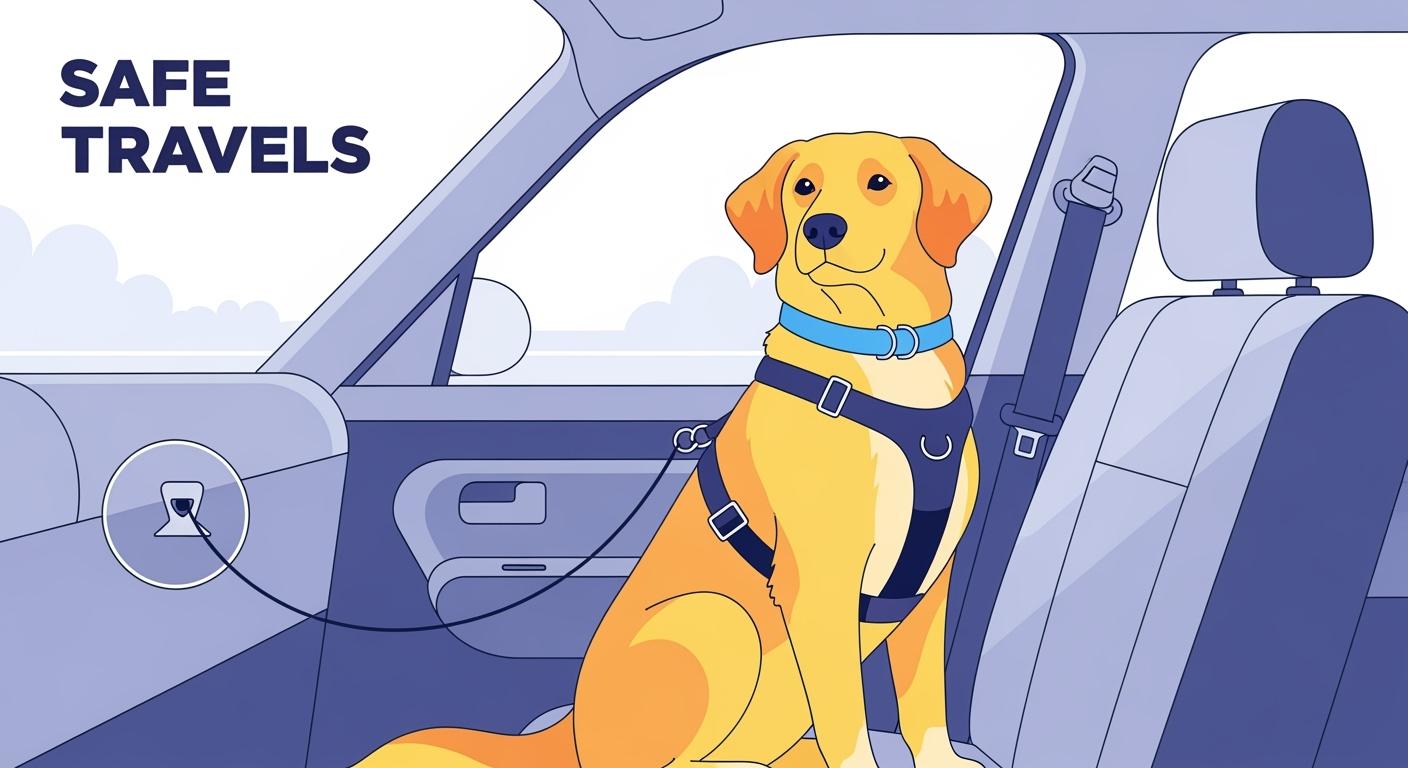
A car tether for dogs should control movement without pulling on the neck. When the tether clips to a collar, sits on the wrong anchor point, or leaves too much loose length, the dog can twist, tangle, lean into the front seat, or take sudden force through the throat. A better setup starts with a fitted harness, a stable anchor, and a tether length that allows sitting and lying down without free roaming.
If you’re choosing car travel gear more broadly, start here: Pet Car Travel.
Quick checks before every trip
- Harness-only: collars are for ID, not restraint.
- Back attachment point: use the harness back point unless the harness instructions say otherwise.
- Anchor fit: make sure the tether connects cleanly to your vehicle anchor (no forced fit, no wobble).
- Length rule: your dog can sit/lie down, but cannot reach the front-seat area.
- Stop rule: end the trip setup if hardware is damaged, mounting shifts, or tangles happen repeatedly.
Harness vs collar: why the collar option fails
A collar tether can feel “fine” until a sudden event happens: a hard brake, a quick turn, or a dog jumping up. That’s when neck force, twisting, and choking risk show up. If your goal is a calmer ride with fewer scary moments, harness-only is the safer choice.
| Factor | Collar attachment | Harness attachment |
|---|---|---|
| Force location | Neck / throat | Chest / shoulders |
| Twist risk | Higher | Lower (with stable fit) |
| Common problem | Coughing, panic, “unsafe” feel | Length, anchor compatibility, or harness fit |
Harness fit matters more than people think
A tether can “work” only if the harness stays aligned under tension. Use a fast fit routine before you trust the setup:
- Two-finger rule: snug straps, no pinching, no gaping.
- Slip-out check: a gentle backward pull doesn’t let the harness ride up toward the neck.
- Rub-zone check: straps stay behind the front legs; no armpit migration.
- Alignment: the back attachment point stays centered when your dog turns.
Choose the right tether type for your vehicle
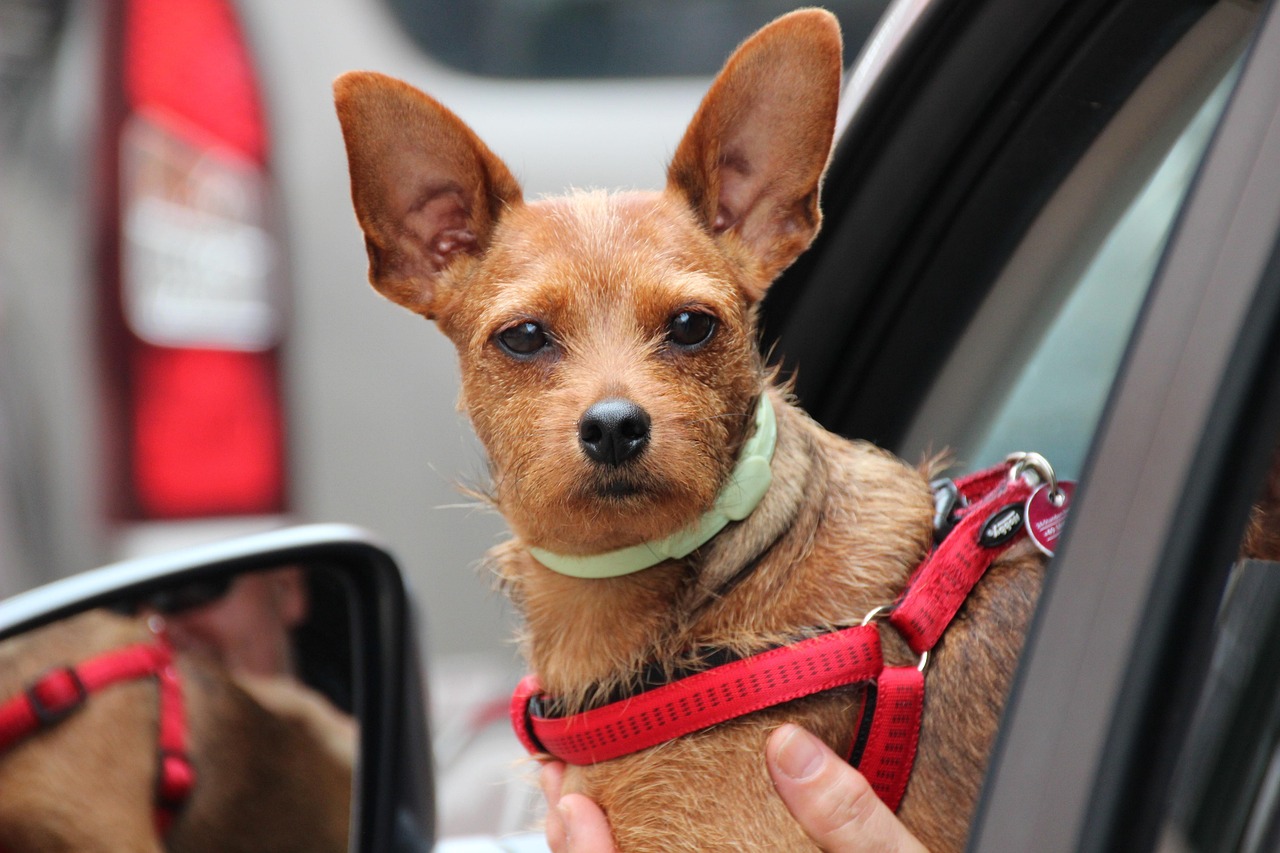
Most problems here are “does not fit” or “feels unstable” issues. The fix is matching tether style to the anchor you actually have.
| Tether style | Connects to | Best for | Common issue |
|---|---|---|---|
| Buckle clip | Seat-belt receiver | Quick setup when it fits your receiver | Not compatible with some receivers |
| Headrest loop | Headrest posts | Back-seat positioning | Headrest design not compatible; loop not tightened |
| Fixed anchor strap | Fixed anchor point | Stable positioning | Incorrect routing or hard-to-find anchors |
Set a safer length (comfort + no front-seat access)
Length is where most real-world problems happen. Too long increases tangles and allows roaming. Too short pulls the harness upward and creates twisting.
2-minute length test
- Clip the tether to the harness back point.
- Place your dog in the back seat in the intended position.
- Shorten until your dog cannot reach the front-seat area or footwell.
- Confirm your dog can still sit and lie down naturally.
- Do a short roll (parking lot) and re-check for twist or tangles.
Red flags after a short drive
| Red flag | What it usually means | What to do |
|---|---|---|
| Harness rotates or rides up | Tether too short or pull angle is wrong | Adjust length; re-check fit alignment |
| Dog reaches the front-seat area | Tether too long | Shorten and re-test sit/lie comfort |
| Tether tangles around a leg | Too much slack or poor routing | Shorten; re-route to keep slack away from legs |
| Clip gate sticks or doesn’t close | Hardware damage or debris | Stop using; replace hardware/tether |
Be careful with “crash-safe” assumptions
Many tethers are designed to limit roaming and reduce distraction—not to protect in every accident. If you need a step-by-step setup with pass/fail checks (anchor fit, length, and restraint positioning), use this secure dog in car setup guide.
FAQ
Can I attach a car tether to a collar if my dog is calm?
It’s safer to use a harness. Calm behavior can change instantly during braking or sharp turns, and collar attachment concentrates force on the neck.
Where should the tether connect on the harness?
Use the back attachment point unless the harness instructions say otherwise. This usually reduces twisting and helps keep your dog facing forward.
How tight should the tether be?
Short enough to prevent front-seat access, long enough for natural sit/lie positions. Use the 2-minute length test and re-check after a short drive.
My buckle clip doesn’t fit my seat belt receiver. Now what?
That’s a compatibility issue, not a “wrong installation.” Switch to a headrest loop or fixed anchor strap style that matches your vehicle.
What if we also use a booster seat?
Use this dog car booster seat buying guide to align fit and anchoring expectations across your car travel setup.






