
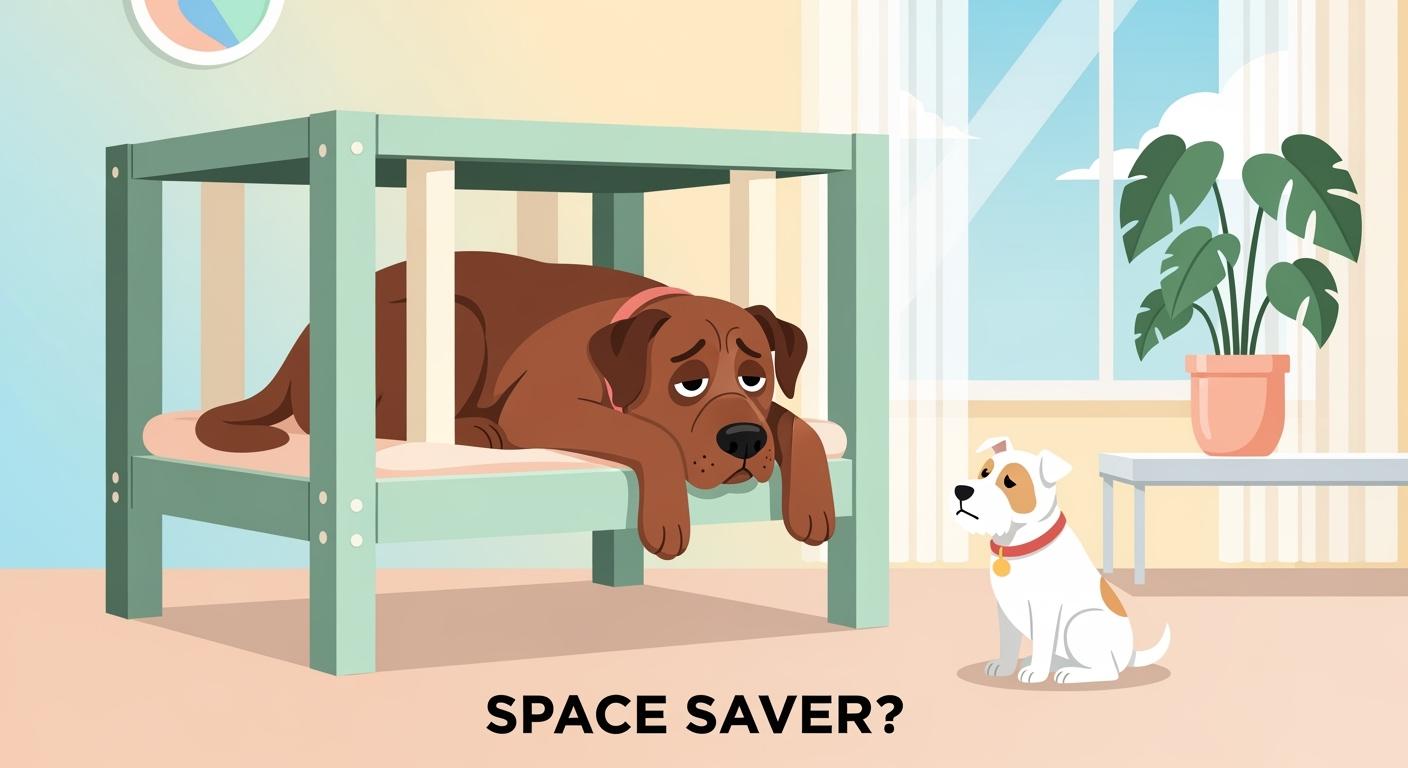
You bring home an elevated dog bed large enough for your retriever to stretch out on, and within minutes your dog is circling, stepping off, or hanging halfway over the edge. The frame measures plenty wide. The label says large. But your dog treats it like a tightrope. The mismatch is not in your dog’s preferences. It is in the gap between the outer dimensions and the actual flat surface a dog can use. When rails, corner joints, and fabric behavior eat into the center, a bed that looks roomy on paper delivers far less rest space than a big dog needs to settle and stay asleep.
When a “Large” Elevated Bed Still Leaves Your Dog Crowded
Signs the Sleep Surface Is Too Small, Not the Dog Too Picky
A dog that steps onto an elevated bed, circles repeatedly, and then lies down with legs dangling off the edge is not being indecisive. The bed is failing to offer enough usable surface. Other common signals: the dog presses against the frame rails rather than settling in the center, shifts position every few minutes, or abandons the bed for the floor after a short rest. These behaviors trace back to the sleep surface itself, not to the dog’s temperament.
Owners of large breeds often report the same set of frustrations:
- The bed wobbles or shifts when the dog turns or stands up.
- The frame bows under a weight it is supposedly rated for.
- Chew-prone dogs find weak points at corner joints or seams within weeks.
When a dog cannot stretch out without bumping into rails or feeling the edge drop away, the real sleep area is undersized regardless of what the tag says. A dog forced into a tight curl on a bed meant for sprawling is losing the very benefit an elevated surface is supposed to provide.
Usable Area Matters More Than the Size Label
A bed labeled “elevated dog bed large” can carry a frame measurement that looks generous. The problem is that rails, corner brackets, and raised seams all occupy space along the perimeter. What remains in the center is the only surface a dog can actually use. On top of that, fabric stretched across a frame tends to sag toward the middle under weight, pulling the dog’s body inward and making the outer edges feel sloped or unstable. Large breeds that sleep on their side or sprawl need a flat, open center that stays firm edge to edge.
The way these failures show up in daily use points to specific design shortcomings:
| Failure Signal | Likely Design Reason | Better Product Direction |
|---|---|---|
| Dog sleeps half off the bed | Usable center too small, edge pressure from high rails | Open, flat center with low-interference edges |
| Dog avoids the center | Fabric sags, edges feel unstable or sloped | Taut sleep surface with support bars that resist dipping |
| Dog refuses to settle or leaves quickly | Frame wobbles, bed shifts under movement | Rigid frame with stable floor contact, no rocking |
An elevated bed should keep a dog off hard or cold ground while still providing a stable, flat rest surface. When the design turns it into a sagging hammock or a narrow platform ringed with hard rails, it stops serving that purpose for large dogs. The difference between usable center space and advertised outer dimensions is often the single biggest reason a bed gets returned or abandoned.
Where the Usable Sleep Surface Actually Disappears
Frame Rails and Corner Joints Steal Space
A frame built with thick rails and oversized corner connectors gains strength at a cost. Every inch of rail width and every bulky corner joint eats into the flat area where a dog can actually lie down. On a bed marketed for large dogs, the cumulative loss around all four sides can turn a nominally spacious frame into a sleep surface closer to medium-dog dimensions.
- Wide top rails crowd the usable center and leave less room for a dog to turn.
- Raised corner hardware or protruding bolts create pressure points that large dogs feel through the fabric.
- The outer frame may match the listed dimensions while the inner sleep area runs several inches smaller in both directions.
For a dog that sprawls or shifts positions through the night, those lost inches are the difference between staying on the bed and crowding an edge. The most usable outdoor dog beds keep the frame low-profile so the sleep surface, not the structure, dominates the footprint.
Tip: Compare the inner sleep surface dimensions, not the outer frame measurement. A frame can look large while the flat center runs much narrower than a big dog’s resting length.
Fabric Sag Turns a Flat Bed into a Hammock
Stretched fabric under tension works well when it is new. Under the sustained weight of a large dog, most fabrics relax. The center dips. The edges rise. The bed gradually becomes a shallow hammock that pulls the dog toward the middle and makes the perimeter feel like a slope. This sag reduces the flat area a dog can use and changes how the surface supports joints.
- A dipping center forces the dog’s body into a curled posture even when the dog tries to stretch out.
- Raised edges from center sag press against shoulders and hips instead of supporting them evenly.
- Dogs that feel unstable on a sloped surface may avoid the center entirely or refuse the bed after a few uses.
A taut, even surface that stays flat under load keeps the bed functional over months of daily use. The better elevated bed designs use cross-supports or tensioning systems that resist center dip so the dog gets the same surface day after day.
Edge Pressure and Frame Instability
A bed that wobbles when a large dog steps onto it does not feel like a safe place to sleep. If the frame rocks on uneven flooring or shifts when the dog turns, the dog is likely to hesitate, avoid the edges, or leave the bed altogether. Hard rails or high side walls add another problem: they create pressure against hips, elbows, and paws when the dog tries to use the full surface.
- An unstable frame signals insecurity with every movement, especially for older or anxious dogs.
- High or rigid edges act as barriers that prevent a dog from stretching out naturally.
- Beds that creak or flex under weight changes can startle a dog out of rest.
A stable frame with low-interference edges gives a dog the confidence to turn, reposition, and sleep in any orientation. The bed should feel solid underfoot and stay quiet through normal shifts in weight.
What a Better Elevated Bed Design Ought to Solve
An Open, Usable Center and a Frame That Does Not Move
A large dog needs enough flat, unobstructed surface to stretch to full length and turn around without touching rails or slipping toward an edge. The frame under that surface should stay put on the floor and resist twisting when the dog shifts weight. When these two things are right, the bed tends to get used rather than avoided.
| Feature | Performance Difference |
|---|---|
| Open, flat center with low rails | Allows a dog to stretch and turn without bumping into hard frame edges |
| Rigid, stable frame | Prevents wobble and rocking that make a bed feel unsafe under a heavy dog |
| Elevated platform height | Keeps the dog off cold or damp ground and allows airflow underneath |
| Tensioned mesh or reinforced center fabric | Resists sagging over time; holds its shape under sustained weight |
| Powder-coated or rust-resistant frame | Survives outdoor use, damp conditions, and frequent cleaning without corroding |
A bed built with these priorities serves large dogs better than one that optimizes for folded size or price point alone. The tradeoff between drying speed and a heavier, more rigid build matters most for dogs over 70 pounds, where fabric tension and frame stability become the hard requirements.
Taut Sleep Surface and Low-Interference Edges
The fabric that holds a large dog needs to stay flat over months of use. When a bed uses strong tensioning and cross-supports, the surface resists the center sag that makes a dog feel like it is sliding into a ditch. Low-profile edges that do not rise above the sleep surface remove the pressure points that discourage dogs from using the full area. A dog that can spread out across the entire platform without hitting a rail or feeling a slope is far more likely to stay on the bed through the night.
When an Elevated Bed Is the Wrong Tool for the Job
Fit Scenarios Where Elevated Beds Work Best
Elevated beds are not universal solutions. They match a specific set of dog behaviors and use conditions:
- The dog naturally sprawls or sleeps on its side rather than curling into a tight ball.
- The dog runs warm or lives in a climate where ground-level airflow matters for comfort.
- The bed is used on hard surfaces, patios, or areas where padding would trap moisture and dirt.
- The dog is heavy enough that a cushioned bed would flatten within weeks.
- Easy wipe-down cleaning matters more than plush softness.
When these conditions hold, an elevated bed with a taut center and stable frame tends to outperform padded alternatives. When they do not, forcing an elevated bed can leave a dog restless.
When to Step Away from an Elevated Design
A dog that consistently curls into a nest or seeks out soft, enclosed spots is signaling that an open, taut surface does not match its sleep style. Senior dogs with arthritis or hip dysplasia often need the pressure redistribution that comes from thick orthopedic foam rather than the firm tension of a stretched mesh. A dog that struggles with a high step-over height or seems unsettled by the slight give of fabric underfoot may do better on a low-profile cushioned bed.
The key is matching the bed to how the dog actually rests. An elevated bed excels at airflow, cleanliness, and durability on hard surfaces. It does a poor job of providing the soft enclosure that some dogs need to feel secure. Dogs that consistently avoid a raised bed are usually telling you the design does not align with their sleep posture or comfort needs, and switching bed types is more likely to help than switching brands within the same category.
Elevated vs. Padded: What the Difference Means in Daily Use
The choice between an elevated bed and a traditional padded bed comes down to which tradeoffs matter more for a specific dog’s daily use pattern:
| Performance Difference | Elevated Dog Beds | Traditional Padded Beds |
|---|---|---|
| Airflow and heat dissipation | Open underside allows continuous airflow, reducing heat buildup | Limited airflow; foam and fabric layers can retain body heat |
| Joint pressure distribution | Flat taut surface provides even support; may feel too firm for arthritic dogs | Conforming foam redistributes pressure; can bottom out under heavy dogs |
| Cleaning and moisture resistance | Wipe-clean surface; moisture passes through mesh, reducing odor buildup | Absorbent covers trap moisture; require removal and machine washing |
| Main limitation | No cushioning for dogs that need soft, enveloping support | Retains heat and moisture; foam compresses permanently over time |
For dogs that run hot, live in humid environments, or spend time on patios and hard floors, the airflow and easy cleaning of an elevated bed offset the lack of cushioning. For dogs that need soft support to relieve joint pressure or prefer enclosed sleeping spaces, a padded bed is the better match regardless of how well an elevated bed is built. The right indoor sleep setup depends more on how the dog actually rests than on any single feature list.
FAQ
How do I tell if an elevated bed is large enough for my dog before buying?
Measure your dog from nose to base of tail while lying in its natural sleep position, then add 6 to 8 inches. Compare that number to the inner sleep surface dimensions, not the outer frame. If the inner measurement is shorter than your dog’s stretched length, the bed will force a curled posture even if the frame looks generous.
Why does my dog avoid the center of an elevated bed and sleep on the edge?
Center avoidance usually means the fabric sags too much, making the middle feel unstable or sloped. It can also mean the edges are the only firm reference point on a surface that gives too much under the dog’s weight. A taut, well-supported center tends to draw a dog in rather than push it to the perimeter.
Does an elevated bed actually help a dog stay cooler?
Yes, but the effect depends on environment. Elevated beds allow air to circulate under the dog, which helps dissipate body heat on warm days and prevents heat from building up in the sleep surface itself. This matters most outdoors or in rooms without air conditioning. The cooling benefit does not replace shade and water in hot weather.
What weight can a large elevated dog bed realistically support?
Most well-built large elevated beds are rated between 100 and 150 pounds, but frame rigidity matters more than the published number. A bed that flexes under a 90-pound dog is not supporting weight effectively regardless of the rating. Look for cross-bracing or reinforced corner joints that keep the frame from twisting under load.
Are elevated beds a good choice for senior large-breed dogs?
They can be, but the surface firmness is a deciding factor. An elevated bed keeps a senior dog off cold or damp ground and is easier to clean than a padded bed, which matters for incontinence. However, the taut surface provides less pressure redistribution than orthopedic foam. If a senior dog shows signs of joint stiffness after resting on an elevated bed, switching to a thick orthopedic bed is usually the right move.






