
You clip the lead to the harness, everything looks centered, and the chest panel sits flat. Ten steps later the harness has rotated toward one shoulder, the girth strap has drifted, and your dog is taking shorter, uneven strides to avoid the rubbing. The harness itself may be sized correctly, but the way the lead attaches and transfers force through the set is pulling it out of position.
Why a Harness Set Rotates During a Walk
Signs the Harness Is Already Shifting
A twisting harness often shows itself before you see the rotation. Your dog may shorten its stride because the chest strap is dragging sideways across the shoulder. Some dogs toss their head or lean into the lead to counter the uneven pull. Others lift their legs higher than normal or move with stiff shoulders, guarding against straps that have crept into the underarm area. These signs mean the harness has already lost its center, even if the chest panel still looks straight from above.
When the Harness Looks Fine but Still Moves
A harness can pass every static fit check and still rotate once the lead is clipped on and tension enters the system. The chest panel may sit perfectly flat before the walk, with the girth strap snug and the back piece centered. Once you attach the lead and begin moving, the clip pulls at an angle that the harness was not built to handle. The front of the harness dips, the girth strap loosens incrementally with each stride, and the whole set drifts sideways. A soft chest panel accelerates this because it folds under load instead of distributing force. Even a harness that fits well at a standstill can twist if the lead attachment does not stay aligned with the dog’s center of mass as the dog turns, pauses, or pulls forward.
Movement Patterns That Trigger Rotation
Every change in direction or speed sends force through the lead at a new angle. When your dog lunges forward, the lead snaps taut and jerks the attachment point. When your dog stops suddenly, the clip swings and drags the front panel downward. Quick turns load one side of the harness more than the other. If the lead is too long, it adds slack that lets the clip swing freely before the next tension spike hits at an unpredictable angle. A heavy clip on a lightweight harness magnifies every one of these forces, especially for smaller dogs where the clip can weigh nearly as much as the hardware it is attached to. The way a dog harness and leash set handles these forces determines whether the harness stays centered or walks itself off to one side within the first block.
What Design Details Pull the Harness Off-Center
Lead Angle and the Force Path
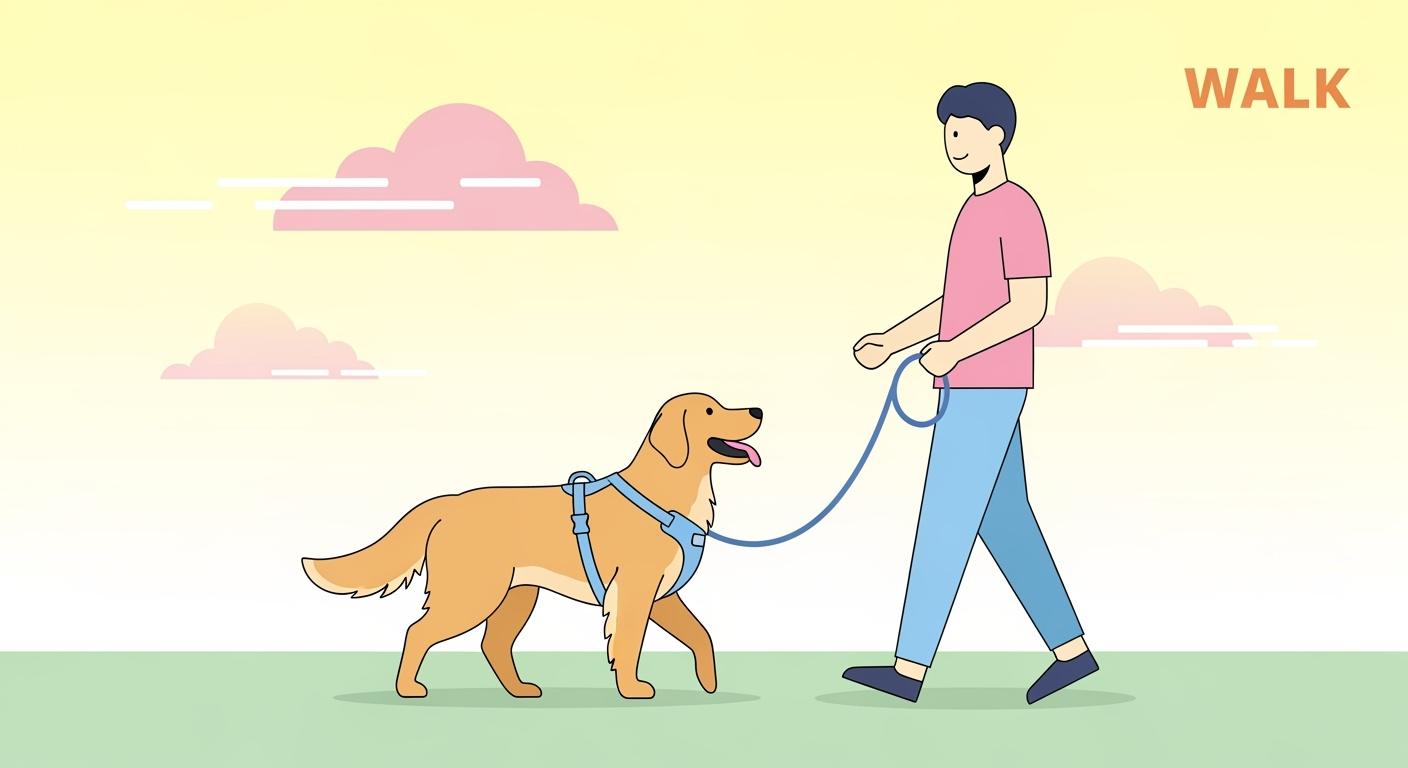
The lead does not just connect you to the dog; it steers every pound of force into a single attachment point. When that force arrives at an angle instead of straight along the dog’s line of travel, the harness rotates toward the side with more tension. A back-clip harness can handle a straight-ahead pull reasonably well, but if the dog veers to one side or the handler walks off-angle, the D-ring becomes a pivot point that torques the whole harness. A front-clip harness redirects the dog’s body angle when they pull, but the same front attachment can lever the chest panel sideways if the girth is not tight enough or the panel is not rigid enough to resist folding. Matching a dog harness and leash so the clip direction stays consistent through turns, stops, and speed changes reduces the off-axis force that starts rotation.
Clip Weight and Lead Length
The hardware at the end of the lead matters more than it seems. A heavy metal clip on a small harness pulls the front panel down and to the side with every step. For a dog under 15 pounds, an oversized clip can be the single reason the harness will not stay centered. For larger dogs, the opposite problem shows up: a narrow lead with a small clip can feel unsteady when the dog leans into it, and the handler may compensate by pulling at an angle that rotates the harness. Lead length also changes how force reaches the attachment point. A 4-foot lead keeps the clip closer to the handler’s hand and gives less room for the lead to swing wide before tension hits. A 6-foot lead allows more freedom but lets the clip drift farther off-center between corrections. Neither is universally better — the length that works depends on whether the harness can stabilize the attachment point through the range of motion each length allows.
D-Ring Position and Stability
Where the D-ring sits and how firmly it is anchored determines whether the lead pulls the harness or pulls it apart.
| D-Ring Position | Effect on Harness Stability | Main Limitation |
|---|---|---|
| Back D-Ring | Aligns with spine muscles for neutral forward pull; less leverage for rotation | Offers limited steering control if the dog lunges sideways |
| Front D-Ring | Redirects the dog’s body angle when they pull forward; reduces forward dragging | Can lever the chest panel sideways if the girth is loose or the panel lacks structure |
A D-ring that is sewn into a narrow webbing loop rather than anchored into a structured panel will shift under load, turning what should be a stable connection into a moving pivot. The best-performing sets anchor the D-ring into a reinforced section of the chest or back panel so the ring itself does not wander when force changes direction.
Strap Tension and Chest Panel Behavior Under Load
A chest panel that sits flat at rest can behave differently under tension. When the lead pulls forward, the load travels through the straps and into the panel. If the thoracic strap sits too close to the elbow, the dog shortens its stride. If the chest panel is cut too narrow or made from fabric that stretches under load, it folds inward and concentrates pressure on a smaller area. The table below shows how these factors interact once the dog is moving.
| Factor | Pass Signal | Fail Signal |
|---|---|---|
| Thoracic strap clearance | Dog extends full stride without the strap touching the elbow | Stride visibly shortens; dog lifts legs higher to clear the strap |
| Chest panel rigidity | Panel holds its shape under lead tension, distributes force across the sternum | Panel folds or bunches, concentrating pressure into a narrow band |
| Girth strap tension | Strap stays at set length through a full walk; harness does not rotate | Strap loosens after a few minutes; harness drifts sideways or rides up |
Strap tension that feels right at a standstill can be wrong after five minutes of walking. Fabric settles, hardware seats differently, and the dog’s movement works straps looser. A harness that requires frequent re-tightening mid-walk has a structural problem, not just an adjustment problem.
Loose or Soft Harness Structure
A harness built from soft, unstructured fabric may feel gentle on the hands but cannot resist the torsional force that a lead applies during a walk. Without a firm chest panel or reinforced strap paths, the harness folds and rotates as soon as tension enters from an angle. This is especially common in lightweight mesh harnesses where the entire body piece can bunch up under one strap. The harness needs enough internal structure to hold its shape when the dog changes direction, not just enough softness to feel comfortable at rest.
Oversized Clips on Small Harnesses
On a dog under 20 pounds, the clip at the end of the lead often weighs more than the D-ring it attaches to. That weight imbalance pulls the attachment point downward with every step. Over the course of a walk, that steady downward drag rotates the harness toward the clipped side. The problem compounds if the harness itself is lightweight — there is not enough mass or structure in the harness to counter the clip’s leverage. A small dog needs a clip and hardware scaled to its size, not the same heavy-duty hardware that works on a 60-pound dog.
What Keeps a Harness-and-Lead Set Centered
Centered D-Ring and Balanced Clip Size
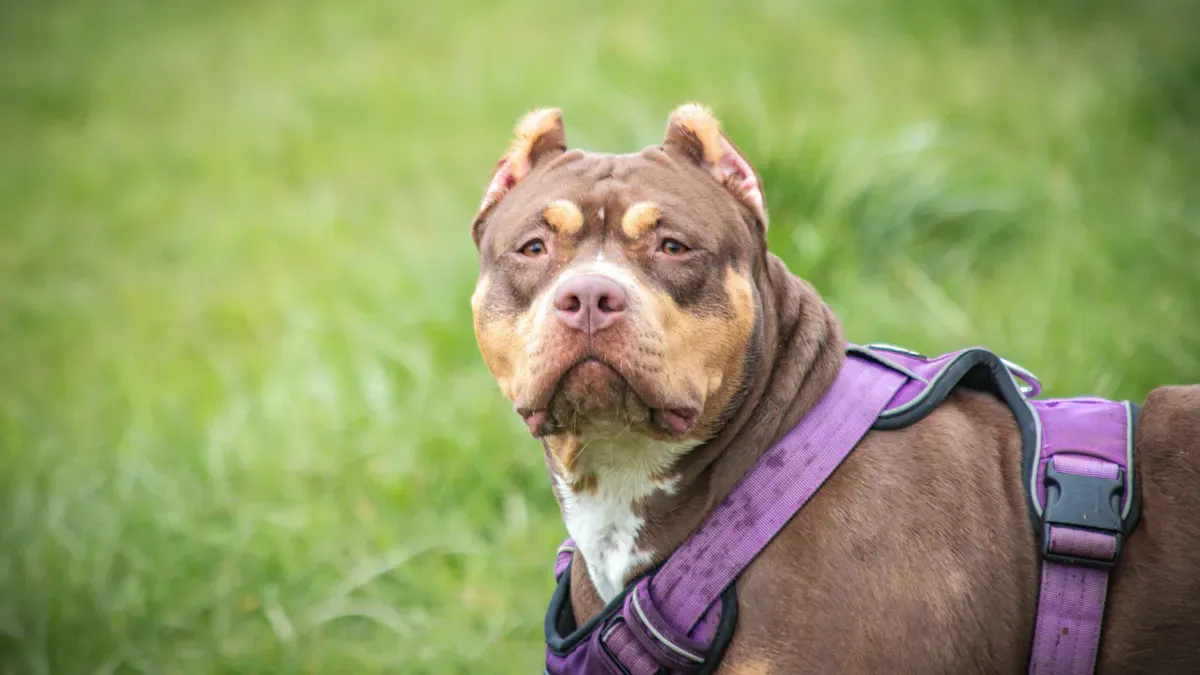
The attachment point works best when it lines up with the dog’s center of mass and stays there under load. A D-ring anchored into a reinforced back or chest panel resists the side-to-side drift that starts rotation. When the clip is sized proportionally to the harness — light enough not to drag the panel down, but substantial enough not to flex open under load — the lead transfers force along a predictable path instead of pulling the harness in unintended directions.
Some harnesses use a two-axis control layout where the back attachment handles forward pull while a front ring manages steering. This split keeps each attachment point doing one job instead of asking a single D-ring to handle both forward and lateral forces. A pressure-balanced design routes strap tension through the dog’s natural center of gravity rather than pulling against it, which helps the harness resist rotation even when the lead angle changes.
| Design Feature | What It Does | Where It Works |
|---|---|---|
| Two-axis control layout | Separates forward pull from steering force across two attachment points | Dogs that pull and change direction frequently |
| Pressure-balanced strap routing | Distributes lead tension through the dog’s center of gravity rather than a single point | Dogs with deep chests or broad builds |
| Reinforced panel-anchored D-ring | Prevents the attachment ring from shifting position under load | Any dog where the harness tends to rotate after a few minutes of walking |
| Corrosion-resistant hardware | Maintains consistent clip action through wet conditions without seizing or degrading | Dogs walked in rain, snow, or near water |
A front-clip harness can help reduce pulling, but it only stays effective if the chest panel is firm enough to hold the D-ring in place when the dog pulls to the side. If the panel twists under lateral load, the front clip stops doing its job and starts contributing to the rotation problem instead. Choosing a harness and leash combination where the clip stays aligned through turns makes the difference between a set that drifts and one that holds.
Adjustable Girth and Chest Panel That Stays Put
A girth strap that adjusts at both sides, not just one, lets you center the harness on the dog’s body instead of pulling it asymmetrically tight. An adjustable neck opening does the same for the front of the harness, preventing the chest panel from riding up into the throat when the dog lowers its head or pulls forward.
The chest panel itself needs enough structure to resist folding under lead tension. A panel that collapses inward when the lead pulls concentrates force into a narrow line across the sternum. A panel that holds its shape spreads that same force across a broader area and keeps the attachment centered. The difference shows up most clearly when the dog lunges or changes direction suddenly — a structured panel stays flat while a soft one crumples and rotates.
A dog harness and leash set that fits well when the lead is not attached can still fail the moment tension enters the system. The only reliable check is to clip the lead, walk a few minutes, and watch whether the girth strap stays at its set position and the chest panel remains centered. If either shifts, the adjustment is not the problem — the harness structure is.
Shoulder Clearance and Low-Friction Strap Paths
The straps that wrap behind the front legs need to clear the shoulder blades and stay out of the underarm pocket. When a strap sits too close to the shoulder joint, it rubs with every stride. The dog compensates by shortening its gait, which changes the tension pattern on the lead and can start a rotation cycle. A strap path that angles away from the underarm and stays behind the point of the shoulder lets the dog extend fully without the harness interfering.
Strap edges matter too. Folded webbing with finished seams creates a softer contact surface than raw-cut nylon edges. Padded sleeves over the chest and girth straps reduce friction further, but padding alone does not fix a strap path that runs through the wrong anatomical zone. The strap needs to sit in the right place first; padding makes it tolerable to stay there.
Smooth Lead Movement Through the Full Walk
A lead that drags or catches on itself introduces slack at unpredictable moments, and slack that snaps taut at an angle is what rotates a harness. A smooth lead — one with a swivel clip that rotates freely, without a stiff or sticky mechanism — follows the dog’s movement without fighting it. When the lead glides instead of jerking, the attachment point receives force gradually rather than in sudden spikes that can kick the harness sideways.
Lead material affects this more than is often acknowledged. A stiff, new nylon lead resists bending and can lever the clip when the dog turns. A rope lead or a broken-in nylon lead drapes more naturally and transmits less sideways force to the attachment point. The difference is small at the start of a walk but compounds over distance as the harness gradually works its way off-center.
When a Standard Set Runs Into Limits
Some dogs need more than a well-balanced single-clip harness. A dog that pulls hard and unpredictably can overwhelm even a well-designed front-clip setup, especially if the chest panel lacks the structure to handle sudden lateral loads. Dogs with very narrow or very broad builds may find that standard strap layouts do not anchor securely on their body shape, leaving gaps that allow rotation.
A double-ended lead paired with a harness that has both front and back clips can split the load across two attachment points, reducing the rotational force at any single point. This setup works for dogs that torque a single-clip harness no matter how well it is adjusted. For dogs with leash reactivity that translates into sudden direction changes, a harness with stable front and back attachment points can help by keeping the lead force distributed even when the dog moves unpredictably. Some dogs do better with a padded chest panel that adds structure without bulk; others need a harness that sits higher on the body so the strap path clears a broader range of shoulder motion.
A properly fitted harness-and-leash combination matched to the dog’s build and walking style prevents the small rotational problems from compounding into a harness that walks itself off the shoulders. When a standard set is not enough, the issue is rarely that the concept is wrong — it is that the specific combination of clip weight, strap path, panel structure, and attachment position does not match how that particular dog moves.
FAQ
Why does a harness twist during walks even when the straps are adjusted correctly?
Correct strap adjustment at rest does not guarantee the harness stays centered under load. The lead can pull at an angle that torques the attachment point, the clip weight can drag the front panel down, or the chest panel can fold under tension. A harness that passes a static fit check can still rotate once the dog is moving if the panel lacks structure or the D-ring is not anchored firmly enough to resist off-axis force.
Does a front-clip harness stop twisting?
A front-clip harness can help with pulling by redirecting the dog’s body angle, but it does not inherently prevent twisting. If the chest panel lacks rigidity, the front D-ring can lever the entire panel sideways when the dog pulls at an angle. A front-clip harness needs a structured chest panel and a snug girth strap to keep the attachment centered under lateral load.
What lead length helps keep a harness stable?
A lead between 4 and 6 feet works well for most daily walks. Shorter leads reduce the distance the clip can swing off-center before tension hits, which helps the harness stay aligned. Longer leads give the dog more freedom but allow the clip to drift farther from center, increasing the chance that the next tension spike arrives at a rotation-triggering angle. The right length depends partly on how structured the harness is — a harness with a firm panel tolerates a longer lead better than a soft harness that relies on even tension to stay in place.
How do I know if the clip is too heavy for the harness?
Watch the front of the harness when the lead is attached but slack. If the clip visibly pulls the D-ring or chest panel downward before any tension is applied, the clip is too heavy for the harness. This is most common on dogs under 20 pounds. A clip that drags the harness down at rest will rotate it further with every step once walking starts.
Can a harness that twists on walks be fixed without replacing the whole set?
Sometimes. Check whether the girth strap loosens during the walk — if it does, the harness structure or strap hardware cannot hold tension under load, and adjustment alone will not fix it. If the girth stays tight but the harness still rotates, try using a different attachment point if the harness has both front and back D-rings. A harness with a soft or unstructured chest panel that folds under load generally cannot be fixed through adjustment and needs to be replaced with a more structured design.






