

A dog that sniffs the bed, then lies on the concrete beside it instead, is telling you something the spec sheet will not. An outdoor dog bed with cover can look like the right setup for shaded backyard rest, but if the cover sits too low or the sides are closed, the space underneath traps heat and holds moisture long after the sun comes out. Dogs avoid these beds because the rest zone feels warmer than the surrounding air or stays damp to the touch. The problem is rarely the idea of shade. It is almost always how the cover, frame, and sleep surface manage airflow and water together.
Why a Covered Bed Feels Hot and Stays Wet Even in the Shade
Signs the rest zone is failing
A dog that walks onto the bed and steps right off, or circles and then settles on the ground nearby, is often reacting to trapped heat or residual moisture. You may notice the sleep surface feels clammy when the air around it is dry, or that a musty smell develops within days of rain. These are not cleaning problems. They are design signals: the cover is blocking airflow instead of directing it, and the surface is holding water instead of letting it drain through.
Shade without airflow makes things worse
A canopy blocks direct sun, but if it sits low and the sides are enclosed, it also blocks the breeze that would otherwise carry heat and moisture away. Stale air builds up under a boxed-in cover. After rain, the combination of damp fabric and still air creates a microclimate that feels warmer and wetter than the open yard. A dog may pant inside the shaded area or leave it within minutes. The cover that was supposed to help becomes the reason the bed is unusable.
The boxed-in cover mistake
Many covered outdoor dog beds use a wrap-around or low-profile canopy that looks protective in product photos but works against cooling and drying in real use. The closed sides trap air, thick padding holds water, and seams that run across the sleep surface collect puddles instead of shedding them. The same design that looks “sheltered” in a listing is what keeps the bed damp hours after an open-sided bed would already be dry.
| Failure Signal | Likely Product Cause | Better Design Detail |
|---|---|---|
| Bed stays damp hours after rain | Low cover with closed sides | Raised mesh base, open sides |
| Shaded area feels stuffy and warm | Boxed-in canopy, no cross-ventilation | Tall cover with breathable mesh panels |
| Dog avoids the covered zone entirely | Thick padding that holds moisture | Quick-dry sleep surface, minimal padding |
| Musty odor develops within days | Seams that trap water on the sleep area | Side-seam placement, mesh drainage panels |
Each of these failures traces back to the same root cause: the design blocks what should be escaping. In an outdoor bed a dog actually uses, the cover, frame, and sleep surface must work together to release heat and water rather than contain them. The next section breaks down which cover details make that possible and which ones guarantee the bed stays wet.
The Cover Details That Decide Whether Air and Moisture Escape
Cover height and side openness
A cover that sits close to the sleep surface shades the bed but leaves almost no room for air to move. Your dog ends up resting in a pocket of still, humid air. A taller canopy with open sides creates a chimney effect: warm air rises and escapes, pulling cooler air in from the sides. The difference in how quickly the bed dries after rain can be measured in hours rather than minutes.
The frame height matters for what happens underneath, too. An elevated frame lifts the sleep surface off the ground so air circulates below, where a ground-level bed would sit against cool, damp concrete or soil. Beds that combine a tall, open-sided cover with a raised frame dry from above and below simultaneously.
Breathable top material and mesh sleep surface
The fabric on top of the cover and the surface your dog lies on determine whether moisture evaporates or soaks in. Cotton covers allow more airflow than polyester but dry more slowly when they do get wet. Mesh sleep surfaces let water pass straight through instead of pooling. The combination that works best in most conditions is a breathable mesh bed surface with a canopy material that blocks rain from above without sealing the sides.
Cooling performance is not just about shade. A dog releases heat through panting and through paw pads. When the sleep surface is mesh, body heat dissipates downward rather than reflecting back up. A solid fabric surface, even in full shade, can still feel warm because body heat has nowhere to go.
Tip: After rain, touch the sleep surface and the ground underneath. If the surface is dry but the ground is still wet, drainage is working. If both are wet, the frame height or surface material is not doing its job.
Seam placement and where water collects
Seams are where two pieces of fabric join, and they create a natural catchment point for water. If a seam runs across the center of the sleep surface, water pools there after rain and takes far longer to evaporate than water on a flat, uninterrupted panel. The same logic applies to seams along the bottom edge of a cover: they collect runoff and drip it back onto the bed instead of directing it away.
Beds designed for fast drying place seams on the sides or use bonded construction that eliminates stitched seams on the sleep area entirely. Mesh panels with fewer seams naturally drain faster. Raised frames help because water that passes through the mesh drips to the ground instead of soaking into padding. Some designs add a slight slope or perforations to the sleep surface to speed drainage, though these features matter less than the basic choice of mesh over solid fabric.
What to check when evaluating seam and drainage design:
- Seams placed on the sides, not across the middle of the sleep area
- Mesh or quick-dry panels with minimal stitching on the surface your dog lies on
- Raised frame height sufficient for water to drip through and air to pass underneath
- No thick padding that holds water at seam intersections
What Keeps a Shaded Outdoor Rest Spot Dry and Usable
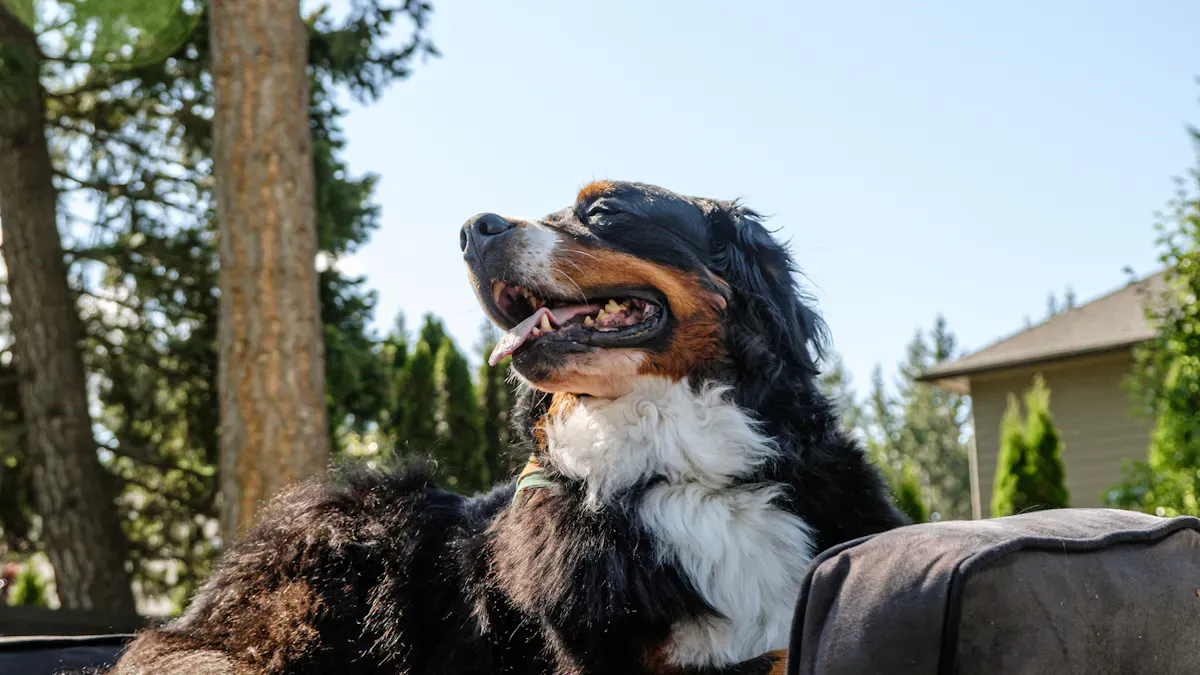
Open-sided shade with an elevated base
An open-sided canopy blocks overhead sun without trapping air around the dog. Because the sides are open, whatever breeze is present moves through the rest zone. The elevated base creates a gap underneath where air can circulate and where water drains away rather than soaking upward from the ground.
This setup works because it separates two jobs that a boxed-in cover combines badly. The canopy handles sun. The raised frame handles ground moisture and airflow. When a single closed cover tries to do both, it usually fails at both. The result is a bed your dog uses, even after a storm, because the surface is dry and the air underneath the canopy does not feel stale.
Mesh sleep surface and quick-dry materials
What your dog lies on matters at least as much as what is overhead. Mesh lets air and water pass through. Quick-dry fabrics do not hold moisture against the dog’s coat. Together, they prevent the damp, warm conditions that make a dog abandon the bed for the patio floor.
Thick padded beds, even when labeled “outdoor,” tend to hold water deep in the fill where airflow cannot reach it. A dog lying on that padding compresses it, forcing moisture up toward the surface. Mesh beds avoid this entirely because there is nothing to saturate. The trade-off is less cushioning, but for outdoor rest where staying dry and cool is the priority, that trade-off is usually worth making.
Washable cover and frame stability
A removable, machine-washable cover keeps the bed free of the dirt, pollen, and dried slobber that build up with outdoor use. Regular washing also prevents the musty odor that develops when organic material sits in damp fabric. Air-drying in sunlight helps maintain the quick-dry performance of the cover material.
The frame needs to hold its shape through repeated use, including dogs jumping on and off. A frame that flexes too much can cause the mesh to sag, which creates low spots where water collects. Checking for frayed stitching, cracks in plastic joints, or rust on metal fittings should be part of monthly maintenance.
| Maintenance Task | Frequency | Why It Matters for Dryness |
|---|---|---|
| Shake out debris and fur | Daily to weekly | Prevents organic buildup that traps moisture |
| Wipe down frame and mesh | Weekly | Removes surface grime before it embeds |
| Machine wash removable cover | Monthly or as needed | Eliminates odor-causing bacteria in fabric |
| Inspect frame joints and seams | Monthly | Catches sag points before they create water-collecting dips |
Drainage-friendly placement on patios, decks, and yards
Where you place the bed determines whether the design features actually work. A raised bed on flat concrete can still sit in a puddle if the patio has poor drainage. On grass, ground moisture rises overnight even without rain, and a bed placed directly on turf can feel damp by morning even if the frame is elevated.
For patios, a rubber mat with drainage holes placed under the bed creates an additional gap for water to escape. On decks, natural gaps between boards handle drainage well, though you need to check that the bed’s feet do not slip into the gaps. In yards, a slight slope away from the bed prevents runoff from pooling underneath. After a storm, check the ground under the bed: if it is still wet while the sleep surface is dry, the drainage setup is working. If both are wet, the placement or the frame height needs adjustment.
| Location | Drainage Solution | What to Watch |
|---|---|---|
| Patio | Rubber mat with drainage holes under the bed | Flat concrete may still allow puddling at mat edges |
| Deck | Natural gaps between boards | Bed feet slipping into wide gaps |
| Yard | Raised frame on slight slope | Ground moisture rising overnight without rain |
When an outdoor covered bed is the wrong choice
An outdoor dog bed with features built for weather exposure handles sun and moderate rain, but it is not a shelter. In extreme heat, no amount of shade and airflow keeps a bed safe for extended outdoor rest. Dogs with heavy coats, brachycephalic breeds, or older dogs with heat sensitivity should not be left outside on any bed during high temperatures.
Heavy, sustained rain overwhelms most covered beds. The mesh will drain, but the dog is still exposed to falling water if the canopy is open-sided. If your yard floods regularly, even a raised bed becomes unusable because standing water underneath creates a humidity problem the mesh cannot solve. In these conditions, a weatherproof outdoor house with solid walls and a raised floor is the more appropriate choice.
A covered outdoor bed also will not suit a dog that prefers enclosed, den-like spaces. Some dogs feel exposed under an open canopy and will not settle. The design works best for dogs that already choose to rest in open shade outdoors. Quick checks before committing:
- Your dog already rests willingly in open shaded spots outside
- You have a location with natural drainage or can add a drainage mat
- You can check the bed after rain to confirm it is drying as expected
- Your local climate does not involve frequent sustained heavy rain or extreme heat
An outdoor dog bed with a cover works when the canopy blocks sun without trapping air, and the sleep surface drains faster than it absorbs. Raised mesh beds with open-sided covers check both boxes. The design that looks more protective in a photo, the low boxed-in canopy with thick padding, is often the one that stays damp and unused. If a bed is going to sit outside, what matters is not how much cover it has. It is whether anything is blocking the exit path for heat and water.
FAQ
How fast should the bed dry after rain?
With a raised mesh surface and an open-sided cover, the sleep area should feel dry to the touch within 30 to 60 minutes after rain stops, assuming moderate air movement. A bed that stays damp for hours typically has one of three problems: the cover blocks cross-breezes, the sleep surface is solid rather than mesh, or the frame sits too low for air to pass underneath. If puddles remain on the surface after an hour, seam placement or surface slope is likely the cause.
Will the cover hold up if the bed stays outside year-round?
Most outdoor bed covers are built for seasonal use, not permanent outdoor exposure. UV breaks down canopy fabric over time, and constant wet-dry cycles weaken stitching at stress points. Even quick-dry mesh can develop mildew if organic debris accumulates in the weave. Bringing the bed under cover during extended wet periods or storing it indoors during winter extends its usable life significantly.
Is a covered bed enough shade for a hot climate?
A canopy alone is not enough for sustained outdoor rest in high heat. The cover blocks direct sun, but if the air temperature is above 90 degrees Fahrenheit, the shaded area still heats up. Dogs cool themselves primarily through panting, and the efficiency of that cooling drops as humidity rises, regardless of shade. In hot climates, a covered bed works best for short rest periods during cooler parts of the day, paired with unlimited access to fresh water and an indoor cooling option.
How does cleaning affect how quickly the bed dries?
Fabric softeners and dryer sheets leave a residue that reduces the breathability of mesh and quick-dry materials. Machine washing with mild detergent and air-drying in sunlight preserves the surface’s ability to release moisture. If a previously fast-drying bed starts holding water, residue buildup on the mesh is one of the first things to check. Rinsing the bare frame and mesh with a hose between deeper washes removes the pollen and dust that can clog the weave.






