
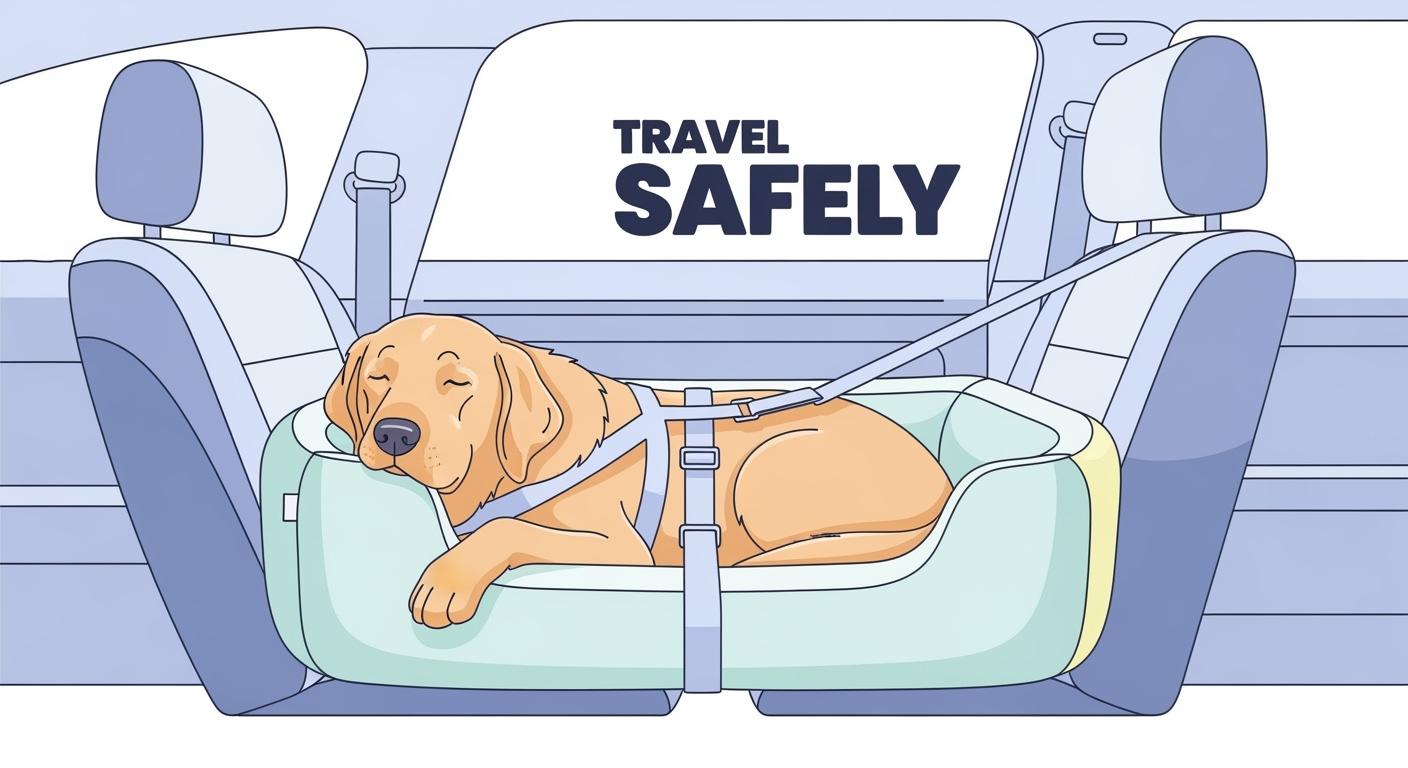
You brake at an intersection and your 75-pound dog slides forward, front paws dropping into the seat gap. The car seat bed you bought for its thick padding has compressed into a slope. Your dog braces stiff-legged for the rest of the drive. A dog car seat bed large enough for a big dog can still fail the moment the base gives way under weight. The problem is rarely the size label. It is what happens to the base structure, the front edge, and the underside grip once a heavy dog settles in and the car starts moving. Senior dogs and large breeds are especially affected because they press harder into the seat surface, and any soft spot in the bed becomes a slide path within the first few stops. A dog car seat bed large needs more than generous dimensions. It needs a base that does not collapse, an edge that does not fold, and an underside that does not drift across the seat.
Why big dogs slide toward the seat gap in a large car seat bed
What sliding looks like during a drive
A dog that shifts forward every time you brake is not just restless. The bed surface is tilting under their weight. Large dogs often try to brace with their front legs against the seat back or stand up instead of lying flat. Some end up with their chest pressed against the front edge of the bed, paws dangling into the footwell. The bed base compresses unevenly, so one side dips lower than the other. The dog compensates by leaning, which makes the whole bed creep forward or twist on the seat. These behaviors signal that the bed is not holding its shape under a big dog’s weight — it is transferring movement directly to the dog instead of absorbing it. Every braking event, turn, or acceleration shifts the dog a little more toward the gap.
The seat gap as a stability failure point
The open space between the back seat cushion and the front footwell is the weakest zone for large dogs. When a car seat bed does not bridge or cover this gap, a heavy dog’s weight pushes the unsupported section downward. The dog slides forward into the depression, and the bed follows. Several factors make this worse for big dogs:
- Greater body mass means more forward momentum during braking, which concentrates pressure exactly where the gap leaves the bed unsupported.
- Shedding, dirt, and moisture collect in the gap and make the seat surface slicker under the bed, reducing what little grip the underside has left.
- A bed that sags into the gap pulls its anchors out of position, so the whole setup loosens during the trip.
Once the bed loses its seat contact across the gap zone, the dog can no longer reset to a stable position on their own. Restraint access through the buckle area also becomes harder to reach, which matters for dogs that need in-car safety seating that works with a harness tether.
Why a larger size label does not prevent sliding
A bigger bed is not the same as a more stable bed. Some covers marketed for large dogs sag between the seat cushions because the base panel is too flexible. Others tear at the seams or collapse at the front wall once a dog over 70 pounds settles in. The issue is not the length or width measurement printed on the tag. It is whether the internal base structure resists compression under a concentrated load, whether the front edge holds its angle when the dog leans into it during a stop, and whether the underside material maintains friction against the seat fabric when weight shifts. Extra cushion without a firm substrate underneath creates a deeper slide path, not a safer one. A dog car seat bed large in label only — with wide bolsters but a soft unsupported floor — often performs worse than a smaller bed with a rigid base and a reinforced front wall. Flat, stable floor space matters more for real-world stability than thick padding or tall sidewalls.
What makes a large dog car seat bed lose support under a heavy dog
Soft fill and cushion compression
Thick padding looks comfortable in product photos. On the road, it compresses under a large dog’s weight and creates a sloped surface. When a dog sits or lies down, the fill flattens unevenly — deeper where the hips and chest press, shallower everywhere else. This uneven compression tilts the bed toward the seat gap. The dog slides forward, braces with their legs, or refuses to settle. Low-density foam and loose polyfill are especially prone to collapsing after a few trips, and once the fill loses its rebound, the bed never returns to its original shape. Stitching that cuts through compressed fill also becomes a tear point, because the fabric now carries tension the fill was supposed to distribute.
- Low-density fill compresses permanently and creates a downhill slope toward the gap.
- Sagging foam makes the bed surface feel unpredictable, so the dog stays rigid instead of relaxing.
- Seams under tension from shifted fill can fray and separate within weeks of regular use.
Weak front-edge structure and a base that is too narrow
The front wall of the bed is what stops a dog from sliding into the footwell during braking. If that edge is made of the same soft fill as the cushion, or if the base underneath it is too narrow, the front wall folds forward under pressure. The bed effectively turns into a ramp. A dog that weighs 80 pounds and shifts forward during a moderate stop generates enough force to collapse a front edge that lacks a rigid internal panel or structural reinforcement. The table below shows how specific bed failures translate to what the dog experiences:
| What the dog does | What the bed is failing to do | Main limitation |
|---|---|---|
| Slides or rocks after braking | Base does not anchor or grip the seat | Slick underside or no anchor straps |
| Braces on one side through turns | No lateral containment under weight shift | Bolsters too soft or base too narrow |
| Catches a paw on entry or exit | Front wall height or stiffness mismatch | Wall too high, too soft, or both |
| Stands rigid instead of lying down | Surface instability under shifting load | Fill compression or base flex |
A reinforced front edge and a base wide enough to span the seat distribute the dog’s weight across more of the seat surface, which reduces concentrated pressure at the gap. For large breeds the same principles that determine whether a large dog car bed provides comfort through turns or fights the dog for space apply directly to how the front wall holds up during real drives.
Slick underside and loose anchoring
A bed with a smooth nylon or polyester bottom slides on most seat fabrics. Every braking event moves the bed forward half an inch. Over a 20-minute drive, the bed creeps far enough that the dog ends up partly off the cushion and partly on the bare seat. The cover wrinkles, the buckle openings shift out of alignment, and the dog braces against the slide instead of settling. Non-slip backing — usually a silicone or rubberized dot pattern — resists this creep by increasing friction against the seat material without adhesives that could transfer residue to the upholstery. Anchor straps that loop around the seat base or headrest posts add a second line of defense by keeping the bed from lifting or rotating during turns. A bed with both a high-friction underside and secure anchor points stays flat and in position, which keeps the buckle area accessible for restraint use.
- A slick underside lets the bed creep forward incrementally with every stop, so the dog never gets a stable surface.
- Loose or missing anchor straps allow rotation during turns, which shifts the dog’s weight to one side and increases the chance of the bed flipping at the edge.
- Non-slip backing paired with tensioned anchor straps keeps the bed flat and the buckle openings aligned with the seat belt receivers.
Buckle-side sag and seat-crease collapse
The side of the bed closest to the seat belt buckle often sags first. This happens because the seat cushion itself is softer near the buckle receiver — the foam is cut away to accommodate the hardware — and the bed base has less support in that zone. When the dog shifts weight during a drive, the buckle side compresses more than the rest of the bed. The surface tilts toward the door, and the dog instinctively moves away from the low side toward the center. On a bench seat, this pushes the dog toward the middle passenger area. On a split seat, the dog may end up straddling the seat crease.
The seat crease where the backrest meets the bottom cushion creates another failure point. If the bed base lacks enough rigidity to bridge this crease, it sinks in and forms a trough. A dog’s paw or leg can get caught in the depression, which is especially concerning for senior dogs with limited joint mobility. A bed that stays flat across both the buckle-side depression and the seat crease keeps the dog on a single stable plane regardless of where they shift their weight.
Tip: Before a trip, check that the bed covers the buckle area without burying the receiver under fabric. If you cannot reach the buckle to clip a harness tether without lifting or shifting the bed, the buckle-side fit is off.
Why thick padding can make sliding worse
Extra-thick padding is often marketed as a premium feature for large dog car seat beds. For heavy dogs, too much uncompressed cushion depth creates an unstable surface that acts more like a waterbed than a platform. The dog’s paws and hips sink into the padding at different rates, so the body tilts and the dog engages core and leg muscles just to stay level — the opposite of resting. During braking, the dog’s weight drives deeper into the padding, which shifts forward independently of the bed’s base. The dog slides inside the bed even when the bed itself stays anchored to the seat. A firm substrate with a thinner comfort layer on top keeps the support structure under the padding, so the dog’s weight transfers to the stable base instead of displacing the cushion material. For large dogs on road trips, less cushion depth over a rigid platform nearly always provides better real-world stability than deep pillowy padding over a flexible base.
What design keeps a large dog steadier on the back seat
A firmer layered base with a reinforced front edge
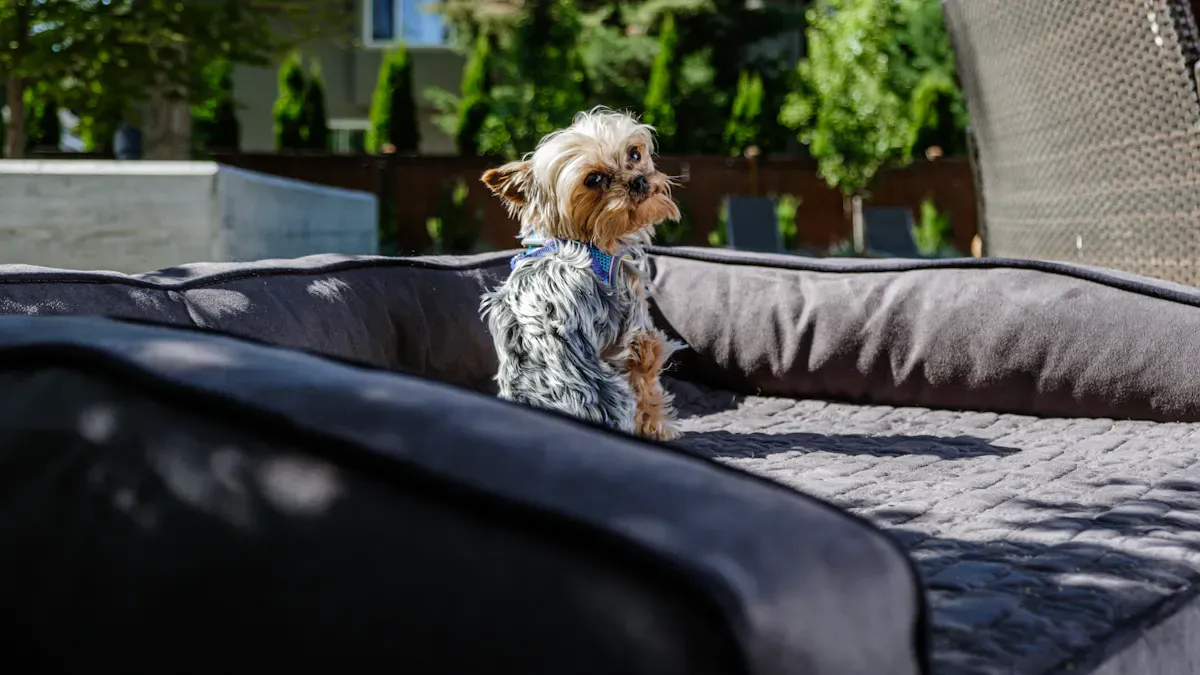
A stable dog car seat bed large enough for a heavy dog starts with the base construction. The most effective design uses a rigid or semi-rigid bottom panel — typically a dense foam board, a structured plastic insert, or a multi-layer composite — that resists bending across the seat gap. This hard bottom prevents the bed from folding into the footwell and keeps the surface flat even when a 70-to-90-pound dog shifts position. A reinforced front edge that holds its angle under forward pressure is the second essential piece. Without it, the front wall becomes a folding ramp during braking regardless of how firm the base is. The reinforcement is usually a denser foam insert sewn into the front wall or a vertical panel that ties into the base structure.
The tradeoff every design faces is between flat floor space and raised bolsters. Bolsters give dogs a headrest and a sense of enclosure, but they eat into the usable lying area. A dog that needs room to stretch out or turn around benefits more from a wider flat floor than from taller sidewalls. The interior flat space is what determines whether the dog can find a comfortable position and hold it through a long drive. When car seat bed choices go wrong, the most common mistake is prioritizing bolster height over usable floor area, which leaves the dog cramped on a surface too small to settle on.
Tip: Look for a removable waterproof cover that is machine-washable. Mud, wet fur, and road grime work into fabric fast, and a non-removable cover means the whole bed stays dirty or requires spot-cleaning that never fully removes embedded odor.
Anti-slip underside and anchor points that hold
The underside of the bed determines whether it stays put or creeps across the seat. Non-slip silicone or rubberized backing — usually applied as a dot pattern or a full-coverage coating — grips seat fabric and leather without leaving residue. This friction layer works against the forward momentum the dog generates during braking.
Anchor straps add mechanical security. Straps that wrap around the seat base or connect to the headrest posts prevent the bed from lifting during turns and from sliding forward during hard stops. The hardware matters: metal buckles and reinforced attachment points hold tension more reliably than plastic clips, which can crack or release under the sustained load of a large dog shifting against the bed. A bed that combines high-friction backing with well-placed anchor straps stays flat through an entire trip instead of needing repositioning at every rest stop.
| Material or feature | What it does under a large dog | Where it works |
|---|---|---|
| Structured hard bottom panel | Resists bending across the seat gap, stays flat under weight | Bench seats, SUVs, any vehicle with a gap between cushions |
| Non-slip silicone backing | Prevents creep on cloth and leather without transferring residue | Most seat materials; performs consistently wet or dry |
| Reinforced straps with metal buckles | Maintain tension and resist release under sustained load | Long drives with frequent braking and turns |
| Durable Oxford or similar woven outer fabric | Resists tearing when the dog shifts, holds shape under friction | Active dogs that reposition frequently during drives |
| Silicone dot pattern on leather seats | Grips the smooth surface without sticking or marring the finish | Leather and leatherette upholstery |
Clear buckle openings and enough flat floor space
Buckle access is non-negotiable if you use a harness tether or seat belt restraint. The bed must leave the seat belt receiver exposed and reachable without lifting, folding, or shifting the bed. Some designs place a zippered or Velcro flap over the buckle area. That works only if the opening aligns with the receiver position in your specific vehicle — and receiver positions vary across car models. A wide, uninterrupted opening across the buckle zone is more adaptable to different vehicles than a small cutout that matches only one receiver placement.
Flat interior floor space is what lets a large dog lie down, stretch out, and turn around without stepping off the bed. For senior dogs or dogs with hip and joint issues, a stable flat surface that covers the seat crease and eliminates the gap depression can make the difference between a dog that settles within minutes and one that stands rigid for the entire drive. The same design elements that determine whether a car booster seat fits and supports correctly — buckle clearance, base rigidity, and flat platform space — apply equally to bed-style seats for large dogs.
Note: Always check that the bed does not bury the seat belt receiver under fabric. If the buckle is covered, a harness tether cannot be clipped in without disassembling part of the setup, which defeats the purpose of using a restraint.
Where this design works — and where it does not
Trips and dogs that suit a firm-base car seat bed
A car seat bed with a rigid base, reinforced front edge, and non-slip underside performs best in specific use conditions. Long road trips where the dog needs to rest for hours reward the flat stable platform, because the dog can shift position without losing their footing. Senior dogs with joint pain or reduced mobility benefit from a surface that does not slope or sag, since an unstable bed forces them to engage muscles constantly just to stay level. Large dogs that move around actively during drives — repositioning, turning, sitting up to look out the window — need a base that resists deformation under a shifting load rather than one that compresses every time the dog changes position.
- Multi-hour highway drives where the dog needs to lie down and stay down.
- Senior or arthritic dogs that struggle with uneven or tilting surfaces.
- Heavy dogs above 60 pounds whose weight concentrates enough to compress soft fill.
- Dogs that stand, turn, and reposition frequently during the drive.
- Families who want a washable, removable cover to manage fur, mud, and road grime.
When this design is a poor match
Some vehicles and dogs make a rigid-base car seat bed impractical. Small cars with short rear seat cushions may not have enough depth for the bed to sit fully on the seat — the front edge hangs over the footwell unsupported, which creates a forward tilt even with a firm base. Fold-down or 60/40 split seats create uneven surfaces and seams that a flat-base bed cannot bridge cleanly. Dogs that chew or dig at fabric can destroy a bed cover within a single trip, and no design feature prevents that kind of mechanical damage.
| Situation | Why the bed may not work | What to watch |
|---|---|---|
| Very small cars or narrow rear seats | Bed base overhangs the seat and tilts forward | Measure seat depth before choosing a size |
| Fold-down or split-folding rear seats | Uneven surface prevents the base from sitting flat | Test fit on the seat in both upright and folded positions |
| Dogs that chew or dig persistently | Fabric cover may not survive mechanical abuse | No bed design fully prevents this; a hammock-style cover may last longer |
| Frequent vehicle changes | Anchor placement and seat dimensions vary across cars | Expect to re-adjust or re-fit each time the bed moves to a different vehicle |
| Need to keep a seat open for a passenger | Bed occupies most of the seat width on a bench | Check whether a narrower design or a single-seat style fits the available space and still provides enough flat area for the dog |
Note: Measure your rear seat depth, width, and the distance from the seat crease to the front edge before selecting a bed. A bed that overhangs the seat by more than an inch or two will tilt forward under weight no matter how rigid the base is.
A dog car seat bed large enough for a heavy dog needs more than generous dimensions. The three things that determine whether it holds up during real drives are:
- A firm base that resists compression and stays flat across the seat gap instead of sagging into the footwell.
- Non-slip backing and secure anchor straps that keep the bed in position through braking and turns.
- Clear buckle access so you can use a harness tether without disassembling the setup.
When the base compresses, the front edge folds, or the underside slips, the dog spends the drive bracing instead of resting. A bed that solves these three failure points turns the back seat into a surface the dog can actually settle on — which means fewer distractions, a calmer dog, and a cleaner car. For large breeds, the 3-in-1 pet travel seat design with a structured base and a washable cover addresses the core stability problems that generic cushioned mats ignore.
FAQ
Can a car seat bed stay put on a leather back seat?
Leather and leatherette are slicker than cloth, so non-slip backing matters even more on these surfaces. Silicone dot-pattern undersides grip leather effectively without leaving marks or residue. Anchor straps that loop around the headrest posts or seat base add the mechanical hold that friction alone cannot provide on a smooth surface. A bed with only a fabric underside will slide on leather regardless of how much the dog weighs.
Is a car seat bed or a hammock-style cover better for a large dog?
They solve different problems. A hammock cover spans from the front headrests to the rear headrests and creates a suspended sling that blocks access to the footwell entirely. It protects the seat and prevents falls into the gap, but the sling surface moves with the dog and offers less structural support for a dog with joint issues. A rigid-base car seat bed provides a flat, stable platform but covers only part of the seat. Large dogs that need orthopedic-level stability do better on a firm bed. Dogs that simply need gap protection and seat coverage do fine with a hammock.
How do I stop a dog from chewing the car seat bed while I am driving?
Chewing during drives is often a stress behavior tied to instability. A dog that feels unsteady may redirect anxiety onto the nearest fabric. A firmer, more stable bed can reduce the underlying trigger by giving the dog a surface they do not need to brace against. For determined chewers, short-term management — a chew toy within reach, a familiar blanket over the bed — helps while the dog adjusts to the new setup. No bed fabric is fully chew-proof, but heavy-duty Oxford weaves resist surface damage longer than soft fleece or quilted cotton covers.
Can I use the same car seat bed in different vehicles?
Maybe, but it depends on seat dimensions and buckle positions. The bed’s base must sit fully on the seat cushion without overhang. If the second vehicle has a shorter seat depth, the front edge will tilt forward. Buckle receiver placement also varies by car model, so a bed with a wide buckle opening adapts more easily than one with a small, position-specific cutout. Expect to test fit and re-anchor the bed each time it moves between vehicles. If you switch cars frequently, a bed with adjustable strap lengths and a broad buckle-access zone saves setup time.






