
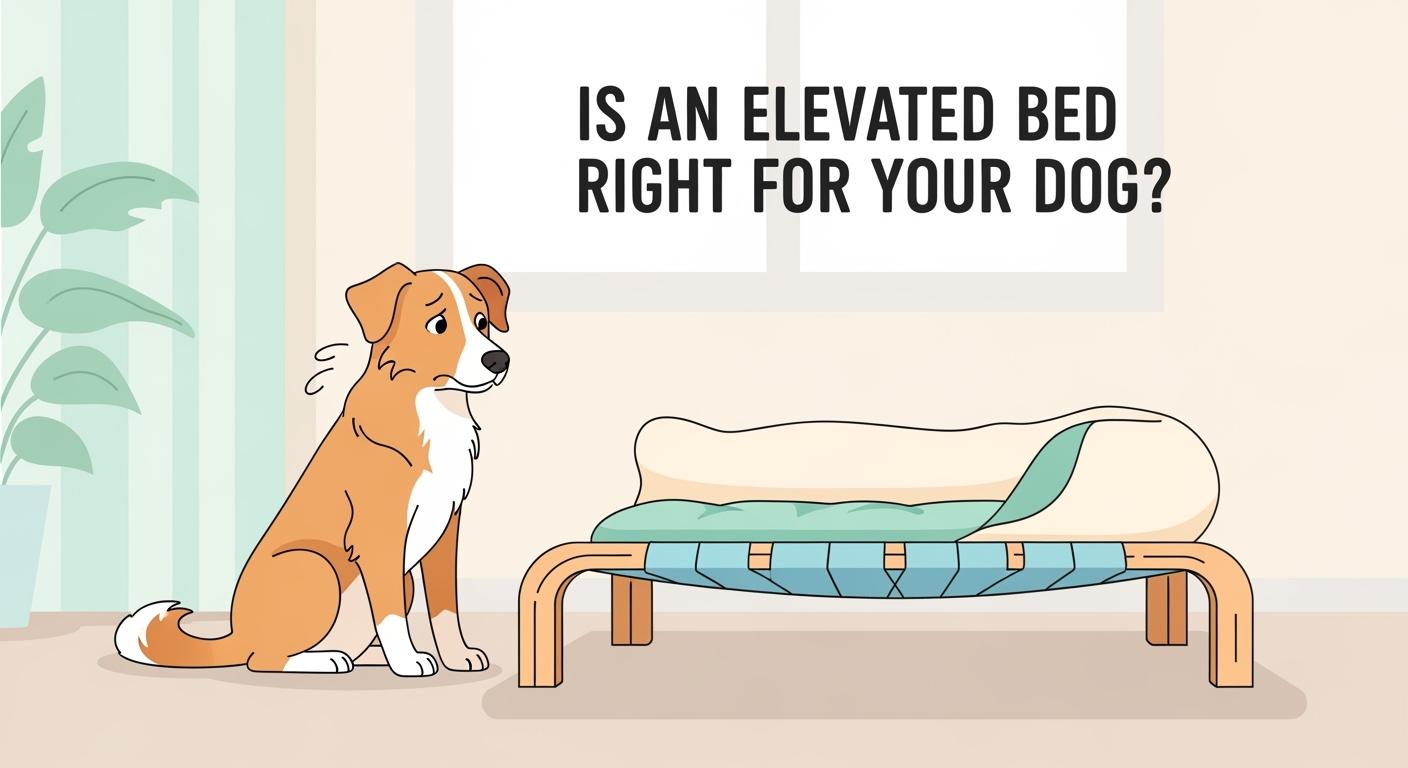
Some dogs avoid an elevated bed because the raised surface feels unfamiliar, unstable, too firm, or hard to step onto. Others avoid it because the location is noisy, the fabric sags, or the dog already has trouble lying down and getting up. Do not assume the bed is wrong after one sniff, but do not ignore repeated hesitation either. Watch how your dog approaches, steps on, turns, lies down, and gets off. Those small signals usually tell you whether the issue is fear, fit, surface feel, placement, or mobility.
Key Takeaways
- Watch how your dog approaches the elevated bed. Hesitation, backing away, edge-sitting, or stepping off quickly often points to height, wobble, surface feel, or location problems.
- Think about what your dog likes before picking a bed. Some dogs like soft floor beds, while others prefer the airflow and cleaner outdoor setup of a raised bed.
- Make small changes before giving up. Try a quieter location, a firmer surface, a familiar blanket, or an easier entry path, then watch whether your dog chooses the bed again.
Why Dogs Avoid an Elevated Bed at First
Common first-reaction problems
When you bring home an elevated bed dog setup, your dog may not settle right away. The bed feels different from a floor cushion. It may move slightly, sound different under the paws, or create a small height step that your dog has to trust before lying down. Some dogs only need a slow introduction. Others are telling you the bed does not match their body, confidence, or rest habits.
Look at the first few minutes carefully. A dog that sniffs, steps on, steps off, and comes back later may simply be exploring. A dog that freezes, backs away, crowds the edge, or refuses to put weight on the surface may need a setup change before more practice.
Tip: Do not force your dog onto the raised bed. If the first experience feels unstable or stressful, the bed becomes harder to accept later.
Comfort, fear, or mobility?
Elevated bed avoidance usually comes from one of three places. The first is comfort: the surface may feel too tight, too loose, too firm, or too warm in that spot. The second is confidence: the bed may wobble, sit too high, or make noise when the dog steps on it. The third is mobility: the dog may be reluctant to climb, turn, or lie down because the movement itself is uncomfortable.
If your dog is older, stiff after rest, reluctant to climb, or hesitant to lie down, treat the bed reaction as more than a preference issue. The bed may be exposing a movement problem that was already there.
Comparison Table: Elevated Bed Dog vs Floor Cushion vs Bolster Bed
Picking the best bed depends on what your dog is trying to avoid and what kind of rest they prefer.
| Bed Type | Use Case | Main Benefit | Main Watchout | Who Should Skip It |
|---|---|---|---|---|
| Elevated Bed Dog | Warm weather, patio use, dogs that like airflow | Keeps the dog off damp or hot ground and allows air under the bed | Height, wobble, or firm surface may bother some dogs | Dogs with strong height fear, severe mobility limits, or a need for deep cushioning |
| Floor Cushion | Indoor rest, easy access, dogs that dislike height | Soft, familiar, and easy to step onto | Can hold heat, moisture, odor, or flatten with use | Dogs that need more airflow or a cleaner patio setup |
| Bolster Bed | Dogs that curl, lean, or want edges | Gives side support and a more enclosed rest feel | Can feel warmer and harder to clean | Dogs that sprawl, overheat, or dislike enclosed edges |
Elevated beds help keep your dog cool and off the ground. That benefit matters most when your dog actually likes the raised surface and can step on and off without stress.
Pass/Fail Checklist Table: Comfort Signals
Use this checklist to read your dog’s first reactions. The goal is not to make the dog use the bed at any cost. The goal is to find out what is blocking comfort.
| Check Item | Pass Signal | Fail Signal | Fix |
|---|---|---|---|
| Steps onto bed willingly | Walks on with relaxed body and explores calmly | Hesitates, backs away, or avoids stepping on | Place the bed lower, steady the frame, and reward calm approach |
| Settles or lies down | Lies down, stretches, or rests without repeated reset | Stands, paces, or immediately steps off | Add a familiar blanket or try a softer cover |
| Shows relaxed posture | Loose body, slow breathing, head resting | Tense muscles, tucked tail, alert posture | Move the bed to a quieter spot and reduce pressure |
| Returns to bed on own | Chooses the bed again after leaving | Ignores bed and chooses floor or another spot | Check temperature, location, surface feel, and bed height |
| Moves on and off easily | Steps up and down without bracing or slipping | Stumbles, avoids entry, or hesitates to get down | Lower the bed or choose an easier-access bed style |
If your dog does not show comfort signals, try easy fixes. Move the bed, reduce wobble, add a familiar surface, or compare it with a floor cushion. If avoidance continues, the raised bed may not be the right match.
Note: If your dog seems painful, fearful, stiff, or reluctant to lie down for more than a short adjustment period, talk to your veterinarian. This article is for bed-use judgment, not medical diagnosis.
What to Check Before You Blame the Bed
Troubleshooting Table: Symptoms and Fixes
Dogs show discomfort in small ways before they completely reject a bed. Use the table below to decide whether the fix is simple or whether another bed type is more realistic.
| Symptom | Likely Cause | Fast Check | Fix |
|---|---|---|---|
| Dog avoids bed | Entry feels too high, unstable, or unfamiliar | Watch whether your dog hesitates before the first step | Lower the bed, steady the frame, or practice with rewards nearby |
| Bed wobbles | Loose joints, uneven floor, or frame flex | Push gently on each corner and listen for movement | Retighten, level the bed, or move it to a flatter surface |
| Surface feels too loose | Fabric tension has dropped or center sags | Press the center and compare edge support | Retension or replace the sleeping surface |
| Dog sleeps near the edge | Center does not feel stable or wide enough | See whether your dog avoids the middle repeatedly | Reassess bed width, fabric tension, and frame feel |
| Dog seems too warm | Bed is in a hot spot or the cover traps heat | Check sun, airflow, and surface warmth | Move to a cooler spot or use a more breathable surface |
| Dog hesitates to lie down | Mobility discomfort, surface insecurity, or poor support | Watch for false starts, circling, or aborted lie-down attempts | Try lower access and ask your vet if the pattern continues |
If your dog has joint problems, mobility limits, or seems in pain, talk to your veterinarian before making major changes. This blog does not give medical advice.
Material, height, and location impact
Material changes the whole experience. A tight mesh surface can feel cooler and cleaner but may feel too firm for dogs that like padding. A looser surface may feel unstable. A slick surface can make entry harder if your dog lacks confidence. Watch whether your dog steps onto the bed with full weight or keeps one paw testing the surface.
Height matters too. A raised bed that looks low to you may still feel like a climb to a senior dog, small dog, or dog with sore joints. Lower access can help. Location also matters. A bed placed near foot traffic, direct sun, drafts, or loud appliances may fail even if the bed itself is fine.
Cleaning and safety tips
You keep the bed safer and easier to use by checking it regularly. Cleaning frequency should match real use, not a fixed rule. A patio bed used daily may need more frequent cleaning than a bed that stays indoors in a clean corner.
- Brush off hair, dirt, and debris before they collect in the fabric or frame corners.
- Wash removable covers according to the care label.
- Check for loose screws, cracked frame points, sharp edges, or sagging fabric.
- Place the bed in shade during warm weather and keep fresh water nearby.
- Watch for heat signs such as heavy panting, restlessness, or repeatedly leaving the bed.
- Move the bed when seasonal changes make the original spot too hot, cold, noisy, or drafty.
Tip: A raised bed should feel stable before your dog gets on it. If it rocks under your hand, many dogs will notice before they ever lie down.
Signs Your Dog Prefers the Floor Over an Elevated Bed
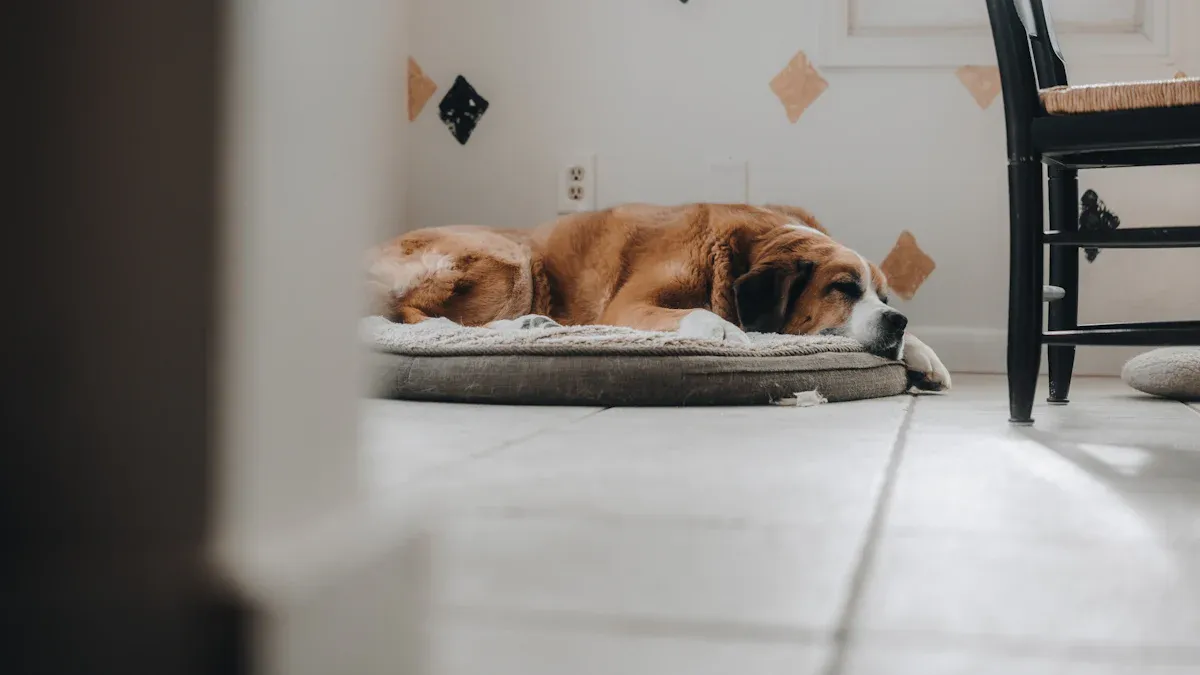
Behavioral signals: hesitation, stepping off, digging
You can spot when your dog prefers the floor by watching what they choose after the first test. If your dog steps onto the raised bed but immediately leaves, lies beside it, or returns to the floor every time, the bed is not yet solving a real comfort need. Digging, pawing, edge-crowding, or repeated turning can also mean the surface does not feel secure enough to settle.
The floor may feel better because it is firmer, cooler, lower, or more familiar. That does not make the elevated bed useless. It tells you what needs to change before your dog will use it naturally.
When to try alternatives or adjustments
Try adjustments first when the problem looks small. Move the bed to a quieter place, level the frame, add a familiar blanket, or make the first step easier. Try alternatives when the same fail signal repeats. A dog that needs deeper cushioning may do better on a floor cushion. A dog that wants an edge may prefer a bolster bed. A dog that mainly wants airflow may still like the elevated bed once the surface and location feel safer.
Tip: Always check with your veterinarian if your dog shows signs of pain, fear, stiffness, or skin irritation. This blog does not give medical advice.
Common mistakes and real consequences
Many owners make simple mistakes when introducing a new bed. Placing the bed in a busy area can make the dog too alert to rest. Ignoring wobble can make the first try feel unsafe. Adding too much pressure or forcing the dog onto the bed can make avoidance worse. Cleaning too rarely can also turn a usable bed into a smell, dirt, or skin-comfort problem.
The biggest mistake is treating avoidance as stubbornness. Your dog may be giving accurate feedback about height, texture, stability, heat, or movement comfort. Read the pattern before deciding whether to keep adjusting or switch bed types.
Your dog might stay away from an elevated bed if it feels strange, unstable, too firm, too hot, or hard to access. Start with small tests: check wobble, surface tension, height, location, and your dog’s movement. If your dog still avoids the bed after practical fixes, a floor cushion or bolster bed may simply be the better match.
- Raised beds work best when the dog likes airflow, open surfaces, and easy cleanup.
- Floor cushions work better when the dog wants softness, low entry, and familiar contact.
- Bolster beds work better when the dog wants edges, leaning support, or a more enclosed rest spot.
FAQ
Why does my dog dig at the elevated bed?
Dogs may dig because the surface feels unfamiliar, too tight, too loose, or not comfortable enough to settle on. Try a familiar blanket, check the surface tension, and watch whether your dog relaxes or keeps pawing.
Tip: Watch for repeated stress signals, not just one curious pawing moment.
How long should I wait for my dog to adjust?
Give your dog a short adjustment period with calm, low-pressure exposure. If your dog still avoids the bed after small fixes to location, height, stability, and surface feel, the bed may not match your dog’s rest style.
What if my dog has joint pain or mobility issues?
You should talk to your veterinarian before changing beds or asking your dog to climb onto a raised surface. A lower, softer, or easier-access bed may be safer for dogs that hesitate to climb, lie down, or get up.






