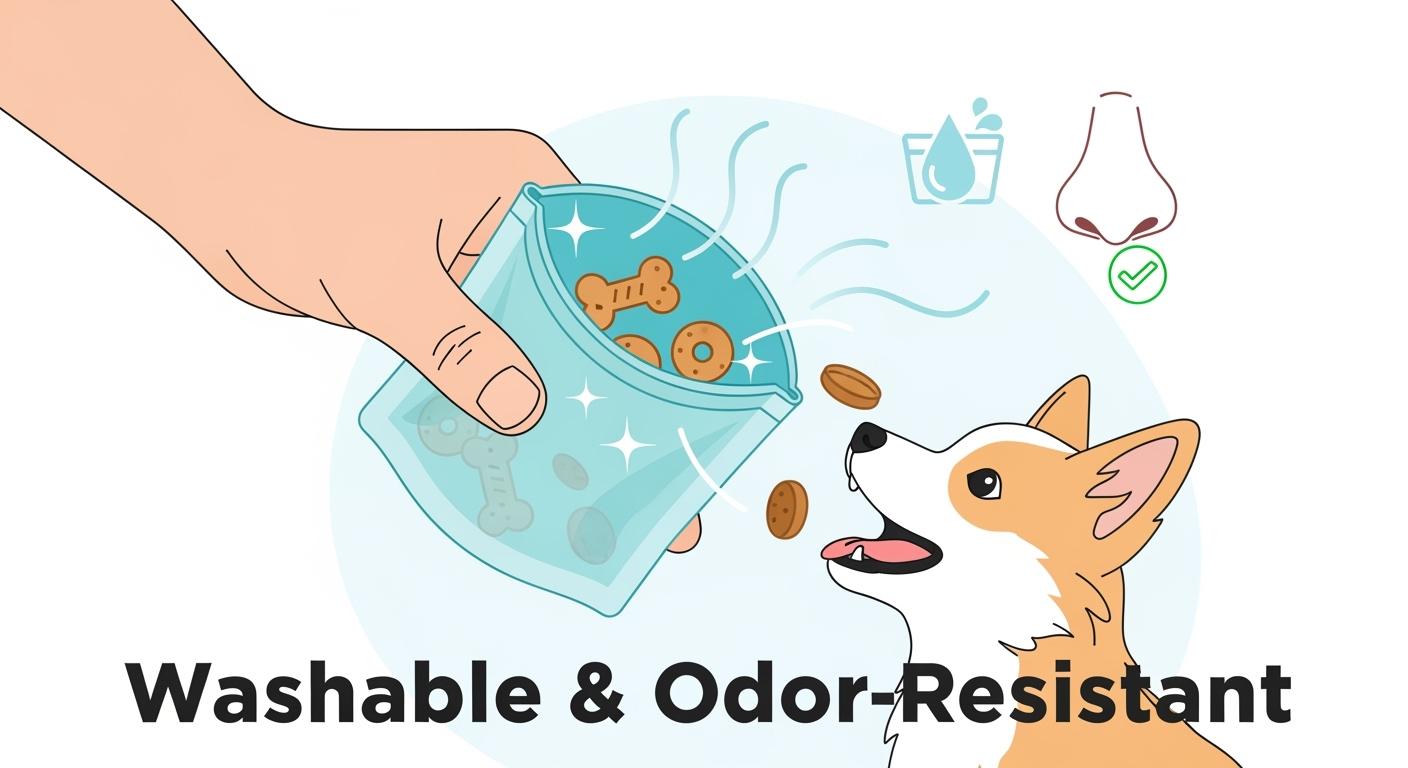
You reach into the pouch mid-walk and your fingers come back greasy. The fabric smells sour even though you rinsed it yesterday. This is not a cleaning-frequency problem. It is a liner-material problem.
Silicone does not absorb oil. Fabric does. That single material difference determines whether cleaning takes a 10-second wipe or a 10-minute scrub with soap, vinegar, and hope. And once oil penetrates fabric fibers, surface washing cannot reach it — the oil sits inside the fiber matrix, oxidizes, and turns rancid. The odor becomes part of the material, not something sitting on top of it.
The opening shape, seam placement, and whether the liner pulls out for a separate rinse all stack on top of that material choice. A fabric-only pouch that takes minutes to scrub is not broken. It is working exactly the way its materials dictate.
Why Oil Sinks In — And Why Silicone Keeps It Out
The Absorption Gap Between Silicone and Fabric
Fabric is a fiber network. At the microscopic level, each fiber has a surface that oil can wet and spread across. When a soft treat presses against the pouch interior, the oil phase separates from the food matrix and wicks into the fiber bundle through capillary action. Once inside, surface-level cleaning — rinsing, wiping, even a quick machine cycle — cannot pull it back out. The oil sits below the fiber surface, shielded from detergent contact. Over hours, it oxidizes. That is the sour smell that returns the morning after you thought the pouch was clean.
Silicone is non-porous at the molecular level. It presents a closed surface — no capillary channels, no fiber gaps. Oil from a treat bead stays on top. A damp cloth lifts it. There is no “inside” for the oil to migrate into.
This is not about cleaning effort. It is about whether the material gives oil a place to hide.
The difference shows up fastest with high-fat treats — cheese cubes, cooked liver, hot dog slices. Dry kibble leaves crumbs that shake out. But rendered fat from a piece of chicken sits on silicone as a visible bead. On fabric, it disappears within seconds, and you will not see it again until the smell develops two days later.
Moisture, Mold, and the Drying Speed Gap
Moisture from treats or outdoor humidity condenses inside any enclosed pouch. What happens next depends on the liner.
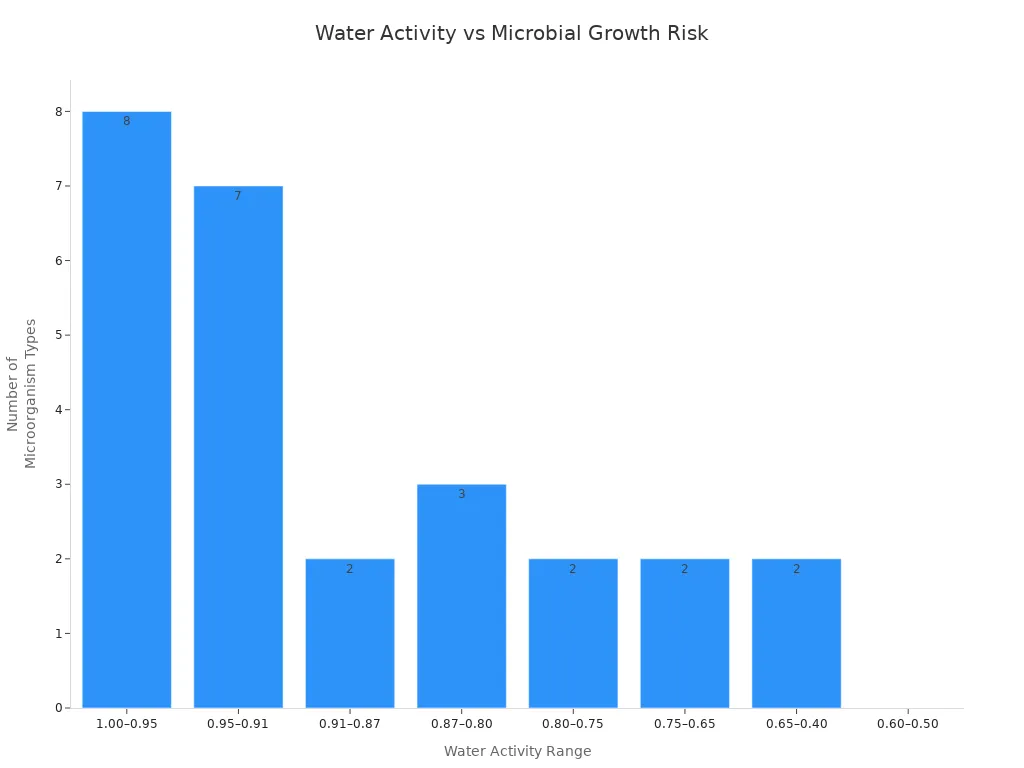
Fabric holds water in the same fiber gaps that trap oil. A damp pouch stuffed into a training bag stays wet for hours — long enough for bacteria to double several times. The result is not just odor. It is a biofilm that makes each subsequent cleaning less effective because detergent has to cut through a layer of bacterial residue before it reaches the fabric.
A silicone liner sheds water during the rinse step. After shaking out excess water, the surface dries in minutes at room temperature. There is no fiber matrix to hold moisture, so there is no window for bacterial colonization.
| Design Difference | Why It Matters | Where It Falls Short |
|---|---|---|
| Silicone liner (removable) | Oil and moisture stay on the surface; one wipe removes both. Liner pulls out for a standalone rinse or dishwasher cycle. | Removable liners add a step — you have to take it out and put it back. Fixed silicone coatings can delaminate from fabric backing after repeated flexing. |
| Odor-resistant treated fabric interior | Antimicrobial treatment slows bacterial growth between washes, extending the window before odor sets in. | Treatments wear off with repeated washing. Once the coating degrades, the underlying fabric absorbs oil like any untreated material. |
| Fabric-only interior (no liner) | Lighter weight, lower production cost, simpler construction. | Oil penetrates within seconds. Odor embeds into the fiber matrix. Each wash removes surface debris but not the oxidized oil locked inside the yarn structure. |
In practice: After wiping out a silicone-lined pouch, press a dry paper towel into the bottom corner for five seconds. Any oil transfer means residue is still present. On fabric pouches, this test will show oil transfer even after a full hand-wash cycle — the oil that migrated below the fiber surface wicks back up under pressure.
Where Pouch Design Makes Cleaning Harder Than It Needs to Be
Deep Seams and the Crumb-Trap Problem
A seam is a fold where two panels of fabric meet and are stitched together. That fold creates a crevice. In a pouch with deep, narrow seams along the bottom corners, treat crumbs pack into the crevice under the pressure of your hand reaching in and out. Each time you grab a treat, you compress crumbs deeper into the seam. After a week of daily use, the crevice holds a compacted layer of oil and food particles that a surface wipe cannot reach.
A pouch with flat-felled seams or a seamless silicone liner tub eliminates this fold entirely. There is no crevice, so there is nowhere for crumbs to pack into. The mechanics are not about “better cleaning technique.” They are about whether the geometry of the pouch creates hiding spots in the first place.
You can check this yourself: after a training session with crumbly treats, turn the pouch inside out and run a fingernail along each seam. If crumbs collect under the nail, that same debris sits inside the seam during every use — and the next batch of treats mixes with it.
Unlined Fabric and Coating Failure
A fabric interior without a liner puts the absorbent material directly against the treats. Every oily treat that touches the wall leaves a deposit. Weak spray-on coatings — common in lower-cost pouches — create a temporary barrier that fails after repeated washing and flexing. Once the coating cracks or peels along the fold lines, the exposed fabric underneath absorbs oil faster than an uncoated surface because the surrounding coated area channels liquid toward the breach.
A separate, removable silicone liner does not have this failure mode. It is solid silicone throughout — no coating to delaminate, no fabric backing exposed when a layer wears off. The liner either works or it is physically torn. There is no in-between state of partial absorption.
Sharp Corners vs. Rounded Interiors
A box-shaped pouch with 90-degree bottom corners creates dead zones. Your fingers cannot press into a sharp corner with enough force to dislodge compacted crumbs. A rounded interior — where the bottom transitions into the sidewall in a continuous curve — gives crumbs nowhere to wedge. A wipe follows the curve. A rinse flushes the entire surface without an eddy in the corner that leaves debris behind.
Design Features That Change How a Pouch Cleans
A Removable Silicone Liner Changes the Cleaning Equation
When the liner pulls out, it becomes a standalone object — a bowl, essentially. You rinse it under a faucet from any angle. You put it in the dishwasher top rack. You scrub it with a brush without worrying about soaking the outer fabric shell. Compare this to a fixed interior: you are cleaning inside a bag, working around the opening, unable to reach the bottom corners from the outside, fighting the pouch’s own structure the whole time.
Removability also enables pre-loading. You fill a second liner with the next session’s treats while the first one dries. This is not a cleaning feature in the narrow sense, but it removes the pressure to rush drying — and incomplete drying is what triggers mold in a pouch that is otherwise well-designed.
Some silicone liners use FDA food-grade material, which means the surface does not leach additives into moist treats during extended contact. That matters for training sessions where treats sit in the pouch for an hour or more in warm weather.
Washable Outer Fabric That Dries Before Mold Starts
The outer shell takes less direct abuse than the liner, but it still gets splattered. A machine-washable outer fabric lets you throw the whole shell into a laundry bag and run a gentle cycle. What matters more than the “machine washable” label is dry time. A thick, padded outer shell holds water in its batting for hours. A single-layer shell with a mesh or lightweight weave dries in under 30 minutes in open air. That speed difference determines whether the pouch is ready for the next walk or still damp in the laundry pile breeding mildew.
Quick-drying fabric also matters for the daily-use pattern where the pouch clips to a waistband or belt. A damp pouch pressed against clothing transfers moisture — and whatever bacteria are still alive in it — to your pants. A dry pouch does not.
Note: After machine washing, turn the pouch inside out and check the seam where the liner attaches to the shell. Water trapped in this seam is the most common starting point for mildew in otherwise well-maintained pouches. Run a dry cloth along the seam edge before air drying.
Wide Openings and the One-Swipe Clean
A wide, structured opening stays open on its own. You do not need one hand to hold the pouch open while the other hand wipes — both hands are free, one to hold the pouch steady and the other to work a cloth or sponge across every surface. A narrow opening that collapses when you let go forces a one-handed wipe inside a dark cavity. You miss corners because you cannot see them and cannot reach them.
Smooth interior walls mean no texture for crumbs to grip. A glossy silicone surface releases debris under running water without scrubbing. A textured fabric interior — even a treated one — provides microscopic anchor points where oil droplets adhere. The difference appears after the rinse step: on silicone, water sheets off and carries particles with it. On textured fabric, water beads up around debris, leaving it stuck in place.
When a Washable Design Still Demands Attention
No pouch design eliminates the need for cleaning. It changes the cleaning burden — from a deep scrub to a quick wipe, from a weekly vinegar soak to a daily rinse. But certain conditions still push even a silicone-lined pouch past what a simple wipe can handle.
High-fat treats in hot weather. When the ambient temperature softens treat oils, they spread faster and coat more surface area. A silicone liner still releases them, but you may need a drop of dish soap to break the oil film rather than just a water rinse.
Extended storage with residue inside. If a pouch goes into a closed drawer or car console with treat residue still in the liner, the enclosed space traps volatile compounds. The pouch itself may be clean after wiping, but the trapped air around it smells. Store the pouch open or with the liner removed.
Double-coated breed owners using fabric pouches. Dog hair, dander, and outdoor dust stick to fabric exteriors and work into seams. A silicone-lined pouch solves the interior problem, but the exterior still collects debris that a wipe cannot fully remove from woven material. A quick pass with a lint roller after each walk keeps the outer shell from becoming a secondary odor source.
Disclaimer: Removable silicone liners rely on a friction fit or snap attachment to the outer shell. Check this connection point after roughly 20 wash cycles — the repeated flexing of insertion and removal can loosen the fit. A liner that shifts during use exposes the inner fabric shell to direct treat contact, which defeats the purpose of the liner entirely. If the liner no longer seats firmly, replace it rather than continuing to use the pouch with a compromised barrier.
You can verify liner integrity with a water test: fill the liner with water while it sits inside the shell, wait 30 seconds, then remove the liner and check the shell interior with a dry paper towel. Any moisture on the shell means the liner-to-shell seal has a gap that treat oils will find.
FAQ
How often should you clean a silicone-lined dog treat pouch?
After each session with moist or oily treats — a 10-second wipe with a damp cloth is enough. With dry kibble only, every two to three sessions suffices. The liner tells you when: if you run a finger across the bottom and feel any texture other than smooth silicone, residue is present regardless of whether it is visible.
Can a fabric-only pouch ever be as clean as a silicone-lined one?
With enough effort, yes — temporarily. A hot-water soak, detergent scrub, and full drying cycle remove surface residues. But the absorb-and-oxidize cycle starts again the moment the next oily treat touches the fabric. The advantage of silicone is not that it achieves a higher peak of cleanliness. It is that the baseline level of residue accumulation stays near zero between wipes because oil never enters the material in the first place.
Does a dishwasher damage silicone liners?
Food-grade silicone tolerates dishwasher temperatures up to roughly 400°F, well above what a residential dishwasher produces. The bigger risk is physical — a liner that rattles against other items during the cycle can develop small tears at the rim. Place it on the top rack away from sharp utensils. If the liner has a fabric tab or attachment loop, hand-wash that section separately.
Why does the pouch still smell after washing the liner?
The odor source is likely the outer fabric shell, not the liner. Treat oils transfer from your fingers to the outside of the pouch during use. If only the liner gets cleaned while the shell goes untouched for weeks, the shell becomes the dominant odor source. Check this by bringing the empty shell close to your nose — if it smells, the shell needs washing regardless of how clean the liner is.