
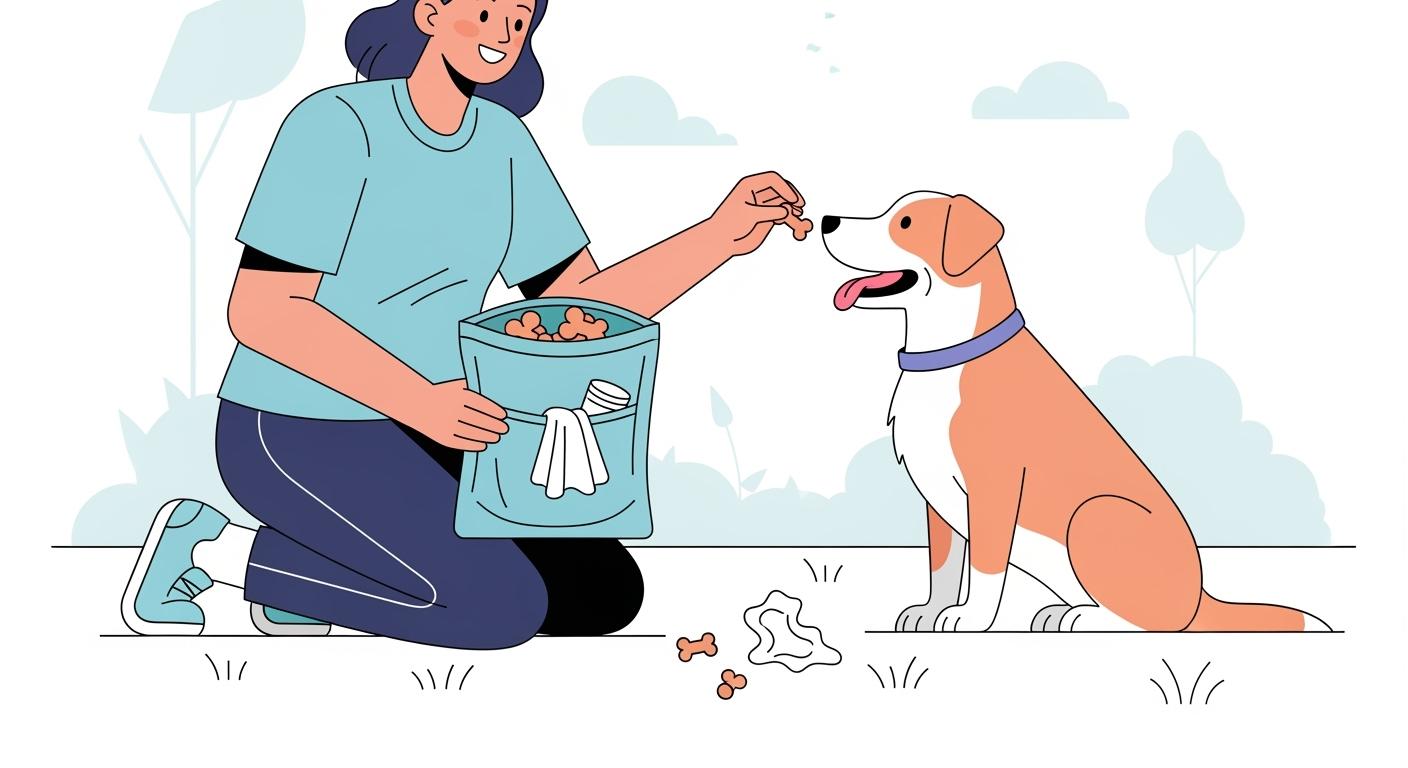
A dog treat bag is easy to overlook until it starts smelling bad, trapping crumbs in the corners, or leaving greasy residue on your hands during training. Washability matters because treat bags are used often, opened constantly, and exposed to oils, moisture, dirt, and crumbs far more than most owners expect. The better choice usually comes from checking lining, opening shape, drying speed, and closure design together instead of choosing only by capacity or clip style.
That is easier when you compare treat pouches inside a broader group of training and activity gear rather than treating cleanup as an afterthought.
Why washability matters more than many buyers expect
Treat bags collect fine crumbs, oily residue, damp treat dust, and hand contact throughout the day. That buildup is what turns a pouch from convenient to unpleasant. A bag that is hard to wipe out or slow to dry often becomes the one people stop using regularly, even if it seemed well designed at first.
What usually creates cleanup trouble
- Sticky or greasy treats leaving residue in the lining.
- Crumbs collecting in seams, corners, and fold lines.
- Openings that are easy to reach into but hard to clean thoroughly.
- Materials that trap odor after repeated daily use.
What a better bag should help you do
- Wipe or rinse the inside quickly after training.
- Dry fully without staying damp in hidden areas.
- Keep closures working even after repeated cleaning.
- Stay clean enough that the pouch still feels practical for everyday use.
Quick rule: if a treat bag feels annoying to clean after one ordinary training session, it will usually feel much worse after a week of real use.
Which materials and construction details clean up faster
The easiest treat bags to live with are usually the ones that combine a simple interior with a practical opening. Smooth inner surfaces, fewer hard-to-reach corners, and closures that do not trap crumbs tend to matter more than decorative extras.
| Feature | What helps cleanup | What often causes trouble |
|---|---|---|
| Inner lining | Smooth wipe-clean surface | Textured fabric that holds residue |
| Opening shape | Wide enough to reach inside fully | Narrow opening with deep corners |
| Closure style | Simple closure with few crumb-trapping gaps | Complex folds, stiff seams, or hard-to-clean edges |
| Drying behavior | Dries quickly after wiping or rinsing | Stays damp around seams or lining joins |
Why lining matters most
A bag can look well made on the outside and still be frustrating if the inner surface grabs treat dust and oils. Smooth, easy-wipe interiors usually save more time than extra pockets or trim details. This becomes even more useful inside a steady walking and training routine, where the pouch is opened often and cleaned often.
Do not ignore the opening and seam layout
Openings that collapse inward or seams that create deep corners often trap small crumbs where a quick wipe cannot reach. A bag that opens clearly and lets you turn the inside out or reach the bottom easily is usually much easier to keep fresh over time.
A simple washability checklist before you buy or keep using one
The quickest way to judge a treat bag is to imagine cleaning it with one damp cloth after a real training session. If you cannot reach the bottom, if the lining feels likely to hold grease, or if the closure looks like a crumb trap, that is usually a strong warning sign.
Use this practical checklist
- Check whether the opening is wide enough to wipe the full interior.
- Look at the bottom corners and see whether crumbs will collect there.
- Feel whether the lining is smooth enough to release oily residue easily.
- Check how the closure is built and whether it has tight folds or hidden gaps.
- Think about how fast the pouch would dry after rinsing or wiping.
Signs the current pouch is already becoming a cleanup problem
- Odor returns soon after cleaning.
- Crumbs remain stuck in the same corners every time.
- The lining feels greasy even after wiping.
- The closure area gets dirty faster than the rest of the bag.
If you want a broader comparison of how access, spill control, and everyday comfort work together, it helps to check a fuller guide to treat pouch access and spill control before replacing your current one too quickly.
Cleaning habits, replacement signs, and what not to ignore
A well-designed treat bag still needs simple routine care. The goal is not deep cleaning after every session. It is regular quick cleanup before residue hardens, odors build up, and the bag becomes less pleasant to use.
Simple habits that usually help
- Empty out leftover treats after each session.
- Wipe the lining before oils and crumbs settle in.
- Let the bag dry fully before sealing it again.
- Inspect closures and seams while cleaning, not only when the pouch already smells bad.
When cleaning is no longer enough
- The pouch keeps smelling even after proper cleaning.
- The lining stays stained or greasy-looking.
- The closure starts collecting dirt in ways that are hard to clear out.
- The material becomes rough, cracked, or annoying to clean around.
A treat bag should make training easier, not add one more messy chore you start avoiding. If the bag stays unpleasant even after normal care, that is usually a sign the design no longer fits your real daily use.
FAQ
What makes a dog treat bag easy to clean?
A smooth inner lining, a wide enough opening to reach the bottom, simple seams, and a closure that does not trap crumbs usually make cleanup much easier.
Why does my treat bag smell bad so quickly?
That usually means oils, crumbs, or moisture are collecting in the lining, seams, or closure area faster than the bag can dry and air out between uses.
Should I wash a treat bag after every use?
Not always, but quick emptying and wiping after each use usually helps a lot. The main goal is to stop buildup before odor and residue become harder to remove.
What is the biggest washability mistake people make?
One of the biggest mistakes is focusing on storage or access features while ignoring how hard the inside will be to wipe and dry after real training use.
When should I replace a treat bag instead of cleaning it again?
Replace it when odor keeps returning, the lining stays greasy or rough, the closure traps dirt too easily, or the pouch has become more trouble to clean than it is worth using.






