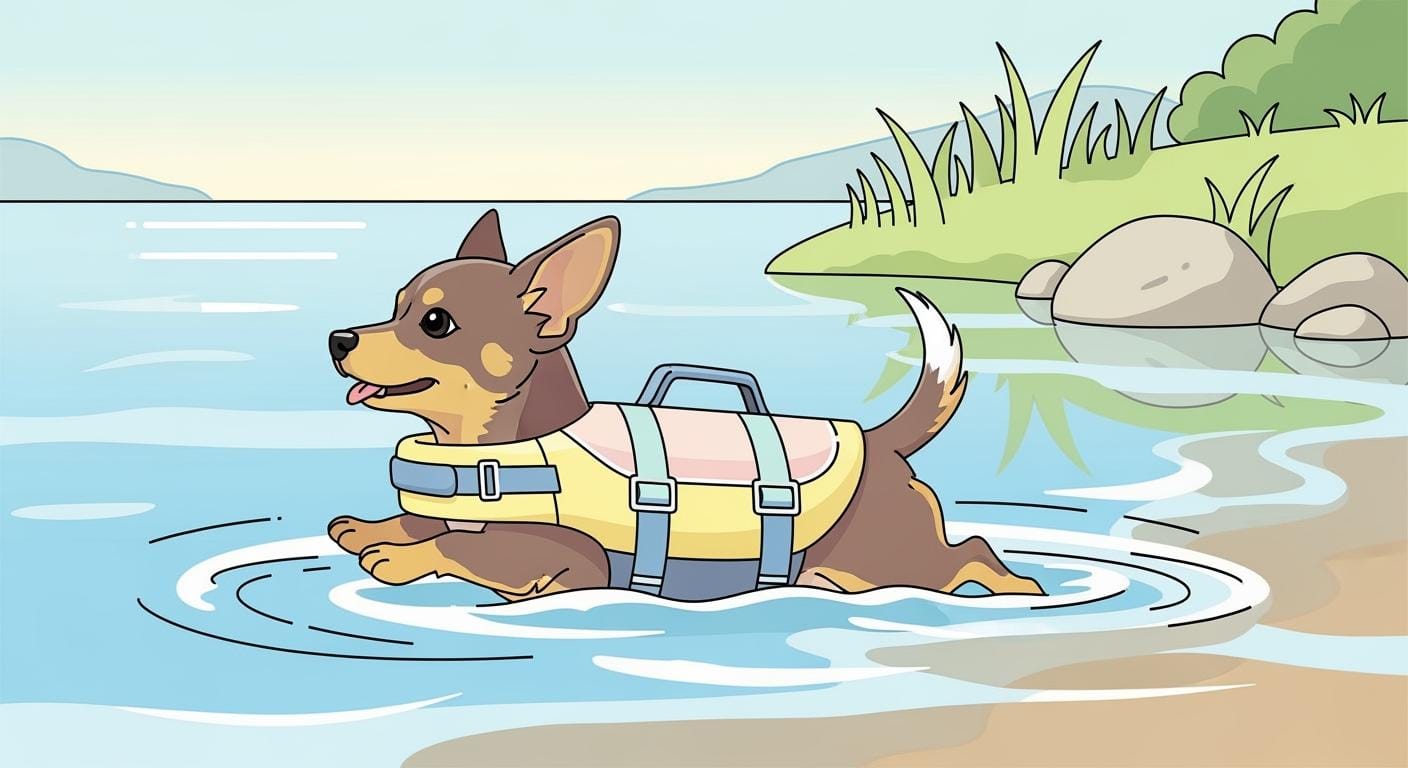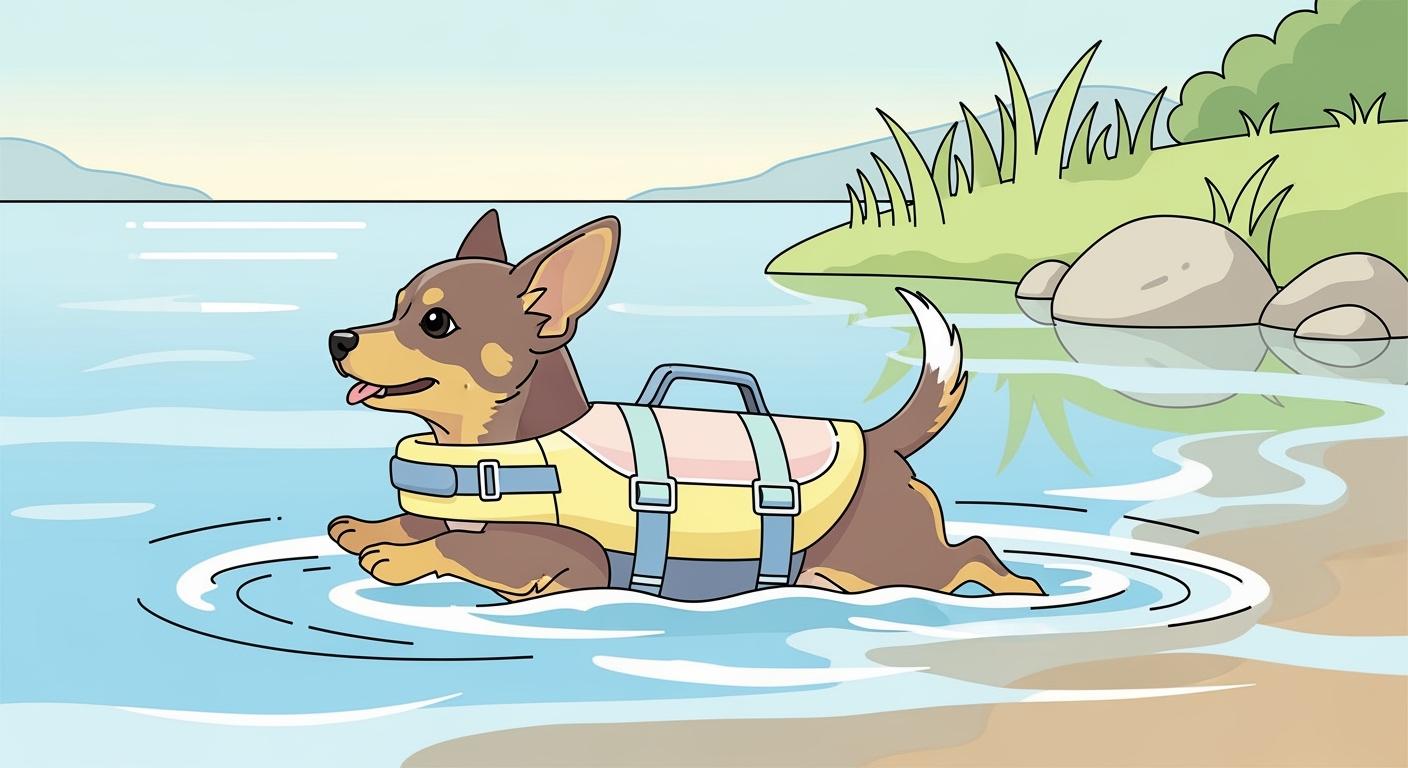
A small dog in a life jacket can look secure on the dock and still paddle like every stroke is fighting the vest once in the water. The issue is rarely the dog’s swimming ability. Most small breeds have compact chests and short necks. When a life jacket packs thick foam across the front and shoulders, the dog loses the front-leg reach it needs to keep a steady stroke. The jacket floats, but the dog paddles short and stiff — and that mismatch is where water confidence starts to drop.
The EzyDog Micro DFD handles this tension differently. Its flotation layout keeps the chest and shoulder area lower in bulk than many traditional jackets, so the dog can extend the front legs through a fuller arc without the foam pushing back. Segmented panels on the Outward Hound jacket bend with the body instead of resisting it. The MTI Adventure Wear Under Dog shifts most buoyancy under the belly, leaving the shoulders open. Each of these designs takes a different path to the same goal: float the dog without locking the stroke. Understanding why that matters — and where jacket design gets in the way — turns a confusing purchase into a product decision you can verify in shallow water.
| Performance Difference | Why It Matters for Small Dogs |
|---|---|
| Lower-bulk chest flotation vs. thick front foam | A thinner front lets the dog reach farther with each stroke; thick foam crowds the shoulders and shortens the paddle |
| Segmented or under-belly panels vs. one-piece vest | Panels that bend with the body or sit under the belly keep the back level without stiffening the torso |
| High-visibility trim and reflective accents | Small dogs disappear fast on the water; bright panels and reflective strips make them easier to track at a distance |
| Secure top grab handle | A stable handle lets you lift a small dog out quickly without the jacket twisting or riding up under load |
Why Small Dogs Need Float That Does Not Block Paddling
The Real Problem in the Water
When a small dog wears a life jacket, you expect the vest to provide buoyancy without changing how the dog moves. The reality is often different. Many jackets use thick, continuous foam sheets across the chest and ribcage. On a Labrador, that volume spreads across a longer torso and barely interferes. On a small dog with a short neck and compact chest, the same foam layout can press against the front of the shoulders and limit how far the front legs can reach forward.
A dog that cannot extend its front legs through a full arc compensates with shorter, faster strokes. The paddle becomes choppy. The body may tilt forward or the back end may sink. These are not signs of a weak swimmer. They are signs that the flotation is placed where the dog needs range of motion instead of where it needs lift. You can usually see the difference within the first minute in calm water: one dog reaches and glides, the other chops and drifts.
Tip: Watch your dog’s first swim in shallow water from the side. A smooth, reaching stroke with a level back is a reliable pass signal. Short, rapid strokes with a forward lean usually point to chest foam crowding the shoulders.
Natural Paddling vs. Restricted Movement
Natural paddling means the front legs travel through a full forward-and-back arc, pulling water smoothly and keeping the head and shoulders level. A small dog needs nearly all of its available reach to generate an efficient stroke. Short necks already reduce how far the front legs can extend compared with longer-necked breeds. A ewe neck or a stout build can narrow that range further. When a life jacket adds a thick foam panel in front of the shoulder joint, it takes away the last portion of the arc that keeps the stroke steady.
Restricted movement does not always look dramatic. You may see the dog swim competently but tire faster than expected. The stroke may shorten gradually over several minutes. The dog may avoid deeper water without obvious fear — it simply knows swimming takes more effort than it should. These are product-fit problems, not training problems, and they trace back to how the jacket distributes flotation around the shoulder and upper chest.
| Anatomical Feature | How It Affects Reach in Water |
|---|---|
| Short neck | Reduces the front-leg stroke arc from the start; any added bulk in front of the shoulder further cuts into an already-limited reach |
| Ewe neck or stout build | Can tip the dog’s balance forward; a jacket that adds foam high on the chest may amplify the forward lean and make level swimming harder |
A jacket that fits well supports the torso without crowding the shoulder joint. The dog can paddle through a fuller range and use its natural stroke rhythm. In that state, most small dogs swim with more confidence and less effort — and they are easier to spot and lift when the jacket also includes bright trim and a secure grab handle.
- A stable jacket helps a small dog avoid the wobbly, side-to-side drift that comes from uneven buoyancy or a shifting fit.
- Good strap balance keeps the jacket from riding up toward the neck when the dog paddles, which is especially important for short-backed breeds.
- Reflective trim and a top handle add safety without adding bulk — the dog stays visible, and you can lift it out without the vest twisting.
Signs the Jacket Is Too Bulky
You can read most fit problems in how the dog moves once it is in the water. Look for these signals:
- Short, stiff paddling strokes — the front legs never fully extend forward
- Front legs lift awkwardly or slap the water instead of pulling through it
- The dog leans forward, back end sinks, or the body tilts to one side
- The jacket shifts upward or twists during paddling
- The dog hesitates to enter water it has entered before, or freezes shortly after starting to swim
These signals usually point to foam that is too thick across the chest, a back panel that is too long for a short torso, or straps that cannot hold the jacket in place once buoyancy kicks in. The table below matches common failure signals to the likely design cause and a better direction.
| Failure Signal | Likely Product Cause | Better Design Direction |
|---|---|---|
| Short, stiff paddling | Chest foam too thick or placed too far forward | Lower-profile front with foam set back from the shoulder joint |
| Jacket shifts upward | Strap balance off or back panel too long for a short torso | Shorter back coverage with wide, adjustable belly straps |
| Dog freezes or leans forward | Foam crowds the neck or upper chest | Softer panel edges and flotation concentrated under the belly and along the sides |
A jacket that fits a small dog well tends to combine low-bulk flotation, a shorter back panel that stops before the tail, and clear space around the shoulders. Those three features do more for swimming confidence than extra padding or heavier hardware ever will. Sizing mistakes — especially jackets that ride up or twist — are a common reason jackets that look fine on land fail in the water; checking how strap placement and panel length affect ride-up can help you catch the problem before the first swim.
Where Bulky Foam Starts to Interfere
Chest Foam and Short Front-Leg Reach
Thick foam across the chest is the single most common reason a small dog paddles short and choppy. The front legs need to swing forward from the shoulder, and any rigid material sitting in front of that joint blocks the first part of the stroke. The dog compensates by paddling faster with a shorter range — more splashing, less forward drive. Over several minutes, the extra effort can cause the dog to tire, dip its head, or stop swimming altogether.
- Foam that extends too far forward across the chest can reduce front-leg extension by enough to change the stroke from a reach to a rapid chop.
- If the dog’s paddling looks rushed and splashy rather than smooth and reaching, the front flotation layout is worth checking before assuming the dog is simply not a strong swimmer.
Moving the flotation lower — under the belly or along the sides — frees the shoulders while keeping the torso supported. A quick in-water fit checklist that covers shoulder clearance and strap stability can help confirm whether the jacket is working with the dog’s stroke or working against it.
Stiff Shoulders and Awkward Body Angles
When foam crowds the shoulder area, the dog cannot rotate the front legs through a natural arc. The shoulders stiffen, the stroke shortens, and the body may tip forward or twist. A dog swimming at an angle — chest high, hindquarters low — is often fighting the jacket’s buoyancy distribution, not the water. The foam is lifting where it should not be, and the dog is adjusting its posture to compensate.
A better layout sets the flotation lower and softer at the edges. Neoprene or flexible foam panels bend with the dog’s movement instead of resisting it. High-cut leg openings and a deeper neckline keep material away from the armpits and throat, so the dog can rotate the shoulders freely. The difference shows in the water: a level back, a reaching stroke, and a dog that looks like it is swimming rather than scrambling.
Oversized Panels and Heavy Hardware
On a small dog, every ounce of hardware and every extra inch of panel length matters once the jacket is wet. A jacket that feels light on land gains weight when soaked, and heavy buckles or metal D-rings pull the vest downward. The dog has to work harder just to stay level. Oversized back panels that extend past the ribcage toward the tail can also interfere — they limit hip movement and make it harder for the dog to steer with its back legs.
| Aspect | On Land | In Water |
|---|---|---|
| Fit feel | Snug but walkable; dog moves without hesitation | Buoyancy distribution determines whether the dog floats level or tips |
| Comfort signals | No rubbing, pinching, or resistance when sitting or turning | Full shoulder rotation and smooth paddling with no mid-stroke hitch |
| Performance | Not measurable on land | Jacket should keep hindquarters from sinking without forcing the chest too high |
In water, a jacket that supports the torso without dragging on the hind legs helps a small dog swim with less effort and more control. Plastic buckles, simple Velcro closures, and light webbing keep the hardware burden low enough that the flotation can do its job.
Land Fit vs. Water Performance
A life jacket can pass every land-based fit check — snug straps, no rubbing, the dog walks and sits comfortably — and still fail in the water. The reason is simple: buoyancy changes how the jacket interacts with the body. Panels that sit flat on land lift and shift once they are submerged. Strap tension that feels right when the dog is dry may not hold the jacket centered when the dog kicks and the foam rises.
Testing in water is not optional. Calm, shallow water gives you a clear read: the jacket either stays in place and lets the dog paddle smoothly, or it rides up, twists, or blocks the stroke. A small dog’s life jacket fit can look fine on the shore and still force short, stiff strokes once the foam engages — the trade-off between more flotation and less bulk plays out differently for compact breeds than for larger dogs.
Tip: Always test a new jacket in calm, shallow water before longer swims. Look for smooth, reaching strokes and a jacket that stays centered without twisting.
| Checkpoint | On Land | In Water |
|---|---|---|
| Strap snugness | Two fingers slide under each strap without forcing | Straps stay secure; jacket does not twist or ride up |
| Shoulder movement | Dog walks, sits, and turns without resistance | Dog paddles with full reach and no mid-stroke hitch |
| Jacket position | Sits flat on back and chest; back panel ends before the tail | Does not ride up toward the neck or shift sideways |
| Dog’s comfort | No rubbing, pinching, or hesitation to move | No freezing, forward leaning, or rushed choppy strokes |
Pass signals in the water:
- Smooth, reaching paddling strokes with a steady rhythm
- Jacket stays centered and level without twisting
- Dog looks relaxed and moves through the water with a level back
If you see stiff strokes, twisting, or a dog that leans forward and struggles to stay level, the jacket is working against the dog’s body. Adjusting strap tension may help, but if the foam layout is too bulky up front or the back panel is too long, a different design is usually the faster fix.
What Small Dog Life Jacket Design Works Better
Lower-Bulk Flotation and Shorter Back Coverage
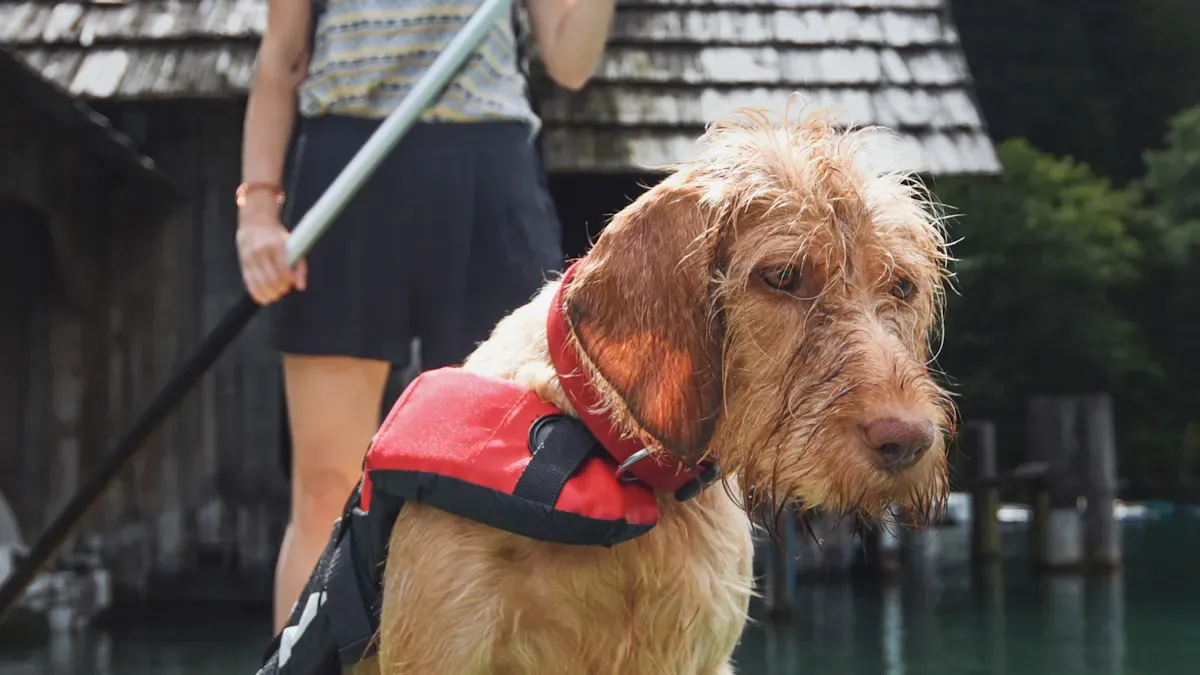
A life jacket designed for a small dog’s body uses flotation differently than a scaled-down large-breed vest. The foam stays thinner and more flexible. It supports the torso without turning the dog into a rigid plank. Shorter back coverage matters just as much: a panel that ends before the tail keeps the back legs and hips free to steer and kick. When the jacket stops at the right point on the ribcage, the dog can use its full body to swim instead of dragging a long panel through the water.
Several jackets illustrate this approach. The Kurgo Surf n Turf uses a contoured shape that follows the dog’s torso curve instead of wrapping it in a straight block. Outward Hound jackets split the flotation into segmented panels that flex independently as the dog moves. The MTI Adventure Wear Under Dog places most of the buoyancy underneath the belly, which lifts the dog from below and leaves the shoulders completely open. These designs share a common logic: float the dog where it needs lift and stay out of the way where it needs motion.
Features to look for in a small dog life jacket:
- Thin, flexible flotation panels that bend with the body
- Back panel short enough to end before the tail base
- Buoyancy concentrated under the belly or along the sides rather than across the chest
- A contoured shape that matches the dog’s body rather than a generic straight vest cut
| Feature | Low-Bulk, Movement-Focused Design | Traditional Bulky Design |
|---|---|---|
| Panel thickness | Thinner, segmented, flexes with the body | Thicker, continuous foam sheets |
| Flotation placement | Under-belly and side panels; front kept low-profile | Evenly distributed, often thick across the chest |
| Shoulder freedom | Open cutouts with soft edges; high-cut leg openings | Material can crowd the shoulder joint and limit rotation |
| Visibility | Bright panels with reflective trim | Often solid colors with minimal reflective accents |
| Where it works | Calm water, pool edges, shoreline play, supervised swims | May work for larger breeds but tends to restrict small-dog strokes |
Clear Shoulder Movement and Soft Edges
Shoulder clearance is the single most important design feature for a small dog’s stroke quality. If the jacket material sits against or in front of the shoulder joint, the dog loses the first portion of every paddle stroke. Neoprene works well here because it is buoyant and flexible — it bends as the dog moves instead of holding a fixed shape. Soft panel edges reduce the friction that can cause chafing during longer swim sessions.
High-cut leg openings and a deeper V-neckline keep the jacket away from the armpits and throat. These cutouts are not cosmetic. They determine whether the dog can rotate its front legs through a full arc or whether each stroke stops short against a foam edge. When checking the fit, make sure the jacket does not press into the front of the shoulders or bunch up near the neck when the dog extends its legs forward.
Stable Belly Straps and Light Hardware
Belly straps anchor the jacket so it does not twist or ride up when the dog paddles. Wide, padded straps spread pressure across a larger surface, which matters for small dogs with narrower ribcages. Narrow straps can dig in or slip out of position as the dog moves. A jacket that stays centered keeps the flotation working where it is designed to work.
Hardware weight matters more for small dogs than for large ones. Plastic buckles and lightweight webbing add minimal burden. Velcro closures, like those on the Outward Hound design, make it easier to dial in the fit without heavy adjusters. A sturdy grab handle on top lets you lift the dog out of the water without the jacket twisting under load — useful at a pool edge, dock, or boat platform.
What to look for in strap and hardware design:
- Wide, padded belly straps that hold the jacket centered
- Light plastic buckles and simple closures that do not add soaking weight
- A secure top handle that stays stable when lifting
- Bright colors and reflective accents for tracking the dog on the water
Tip: Measure the widest part of the ribcage behind the front legs and compare it against the size chart for chest girth. A jacket that fits at the ribcage but rides up in the water often needs a different back panel length, not a tighter strap.
A life jacket built around these details — lower-bulk flotation, clear shoulder space, short back coverage, and light stable straps — tends to let a small dog swim the way it would without a jacket, just with more support. That difference shows up in the stroke quality, the dog’s willingness to enter the water, and how long it can swim before tiring.
Balanced Lift and High-Visibility Panels
Flotation that sits too high on the chest can push the front end up and tip the hindquarters down, forcing the dog into a diagonal swimming posture. Balanced lift keeps the dog level: the chest and belly rise together, and the back stays parallel to the water surface. Spreading the buoyancy lower and wider — under the belly and along the sides — tends to produce a more natural body position than stacking it high on the back and chest.
High-visibility panels add a layer of safety that matters especially for small dogs. A small dog’s head is low to the water and easy to lose against glare, ripples, or shoreline shadows. Bright colors and reflective strips make the dog trackable at a glance. This is not a substitute for supervision, but it shortens the reaction time if the dog drifts farther than expected or slips into the water from a dock edge.
| Feature | How It Affects Safety |
|---|---|
| Reflective accents and bright panel colors | Make a small dog easier to spot in low light, shaded water, or at a distance — especially important when the dog is low to the surface |
| Multiple reflective points (sides and top) | Keep the dog visible from different angles, not just from directly behind |
Tip: A jacket with reflective trim on both sides and the top handle gives you the best chance of spotting a small dog quickly, regardless of which direction it is facing.
Balanced lift keeps the dog swimming level. Visibility keeps the dog within sight. Together they reduce the two most common failure points for small dogs in the water: inefficient body position and delayed spotting. For a broader look at how materials and sizing shape real-world performance, the types of flotation materials and sizing checks that matter most for water safety are worth understanding before committing to a specific jacket.
When This Design Is (and Isn’t) the Right Choice
A low-bulk, flexible life jacket fits the use case most small dog owners are actually in: calm water, supervised swims, pool edges, and shoreline play. It works because it supports the dog’s body without restricting the movement the dog needs to swim efficiently. The jacket stays out of the way of the shoulders, does not drag on the hips, and keeps the dog visible and liftable.
Signs the design is working:
- The dog paddles with long, smooth strokes and a level back
- The jacket stays centered and does not twist or ride up
- The dog enters the water willingly and looks relaxed while swimming
- The handle lets you lift the dog out in one steady motion
This design is not the right tool for every situation. A jacket with more coverage and heavier flotation may be needed if:
- The dog swims in rough water or strong currents where extra buoyancy and a more secure wrap matter more than stroke freedom
- You need a jacket designed for long-distance open-water swimming or boat-overboard recovery
- The dog continues to show stiff paddling or forward leaning even after the jacket is properly adjusted
- The dog panics in water before any gear is introduced — in that case, the priority is building water confidence, not selecting jacket features
| Where It Works | Where It Does Not |
|---|---|
| Calm water, pool edges, shoreline play, supervised lake swims | Rough water, strong currents, open-water boating recovery |
| Small dogs that need buoyancy support while keeping a natural stroke | Dogs that need maximum flotation and full-torso wrap for extended immersion |
| Short-necked or compact-chested breeds | Dogs with persistent movement restriction that is not resolved by lower-bulk designs |
Note: Always check the dog’s stroke in shallow water with a new jacket. A smooth, reaching paddle with the back level is the most reliable indicator that the jacket is supporting the dog rather than interfering with its movement.
A small dog that can paddle freely, stay visible, and be lifted out quickly is safer in the water than a dog wrapped in extra flotation it has to fight. The design principles that get you there — lower-bulk panels, shoulder clearance, short back coverage, stable straps, and balanced lift — apply whether you are choosing a jacket for pool-side confidence or for longer days at the lake. Building water confidence through the right jacket fit, flotation placement, and movement checks starts with matching the jacket design to how a small dog actually swims, not how it looks on the shore. The right jacket for kayaking, paddling, or dock-side play is not necessarily the one with the most foam — it is the one that stays centered, keeps the stroke long, and lets the dog settle into a rhythm.
FAQ
How do I know if my small dog’s life jacket fits correctly?
Slide two fingers under each strap — the fit should be snug but not compressive. Watch the dog paddle in shallow water. A correct fit shows smooth, reaching strokes with the jacket staying centered and the back level. If the jacket rides up, twists, or the dog paddles with short choppy strokes, the jacket likely needs adjustment or a different panel layout. Checking the sizing range and strap configuration of a purpose-built small-dog swim vest can help narrow the options before you test in water.
Why does my dog paddle stiffly with some jackets but not others?
Stiff paddling almost always traces back to foam placement. When flotation sits thick across the chest or in front of the shoulders, it blocks the front-leg extension that drives each stroke. The dog compensates with faster, shorter movements — more splashing, less forward progress. A jacket with lower-bulk chest foam and open shoulder cutouts tends to let the stroke stay longer and smoother.
What features help keep a small dog visible in the water?
Bright panel colors and reflective trim placed on the sides and top of the jacket make the dog easier to track from different angles. A top grab handle also serves as a visual marker. These features shorten the time it takes to locate the dog against glare or shoreline shadows, which is especially useful for small breeds that sit low to the water surface.
Can a life jacket that fits on land still fail in the water?
Yes, and it happens often. Water changes how foam panels and straps behave — buoyancy lifts the jacket, shifts its position, and can expose fit problems that were invisible on land. A jacket that looks centered and snug on the shore can ride up, twist, or crowd the shoulders once the dog starts paddling. The only way to confirm the fit is to test it in shallow water and watch the stroke quality.
Is more flotation always safer for a small dog?
Not necessarily. Extra flotation placed in the wrong areas — especially across the chest and shoulders — can force the dog into an inefficient, tiring stroke. A balanced lift that keeps the dog level and lets it paddle naturally is often safer in practice than maximum buoyancy that the dog has to fight to swim against.