
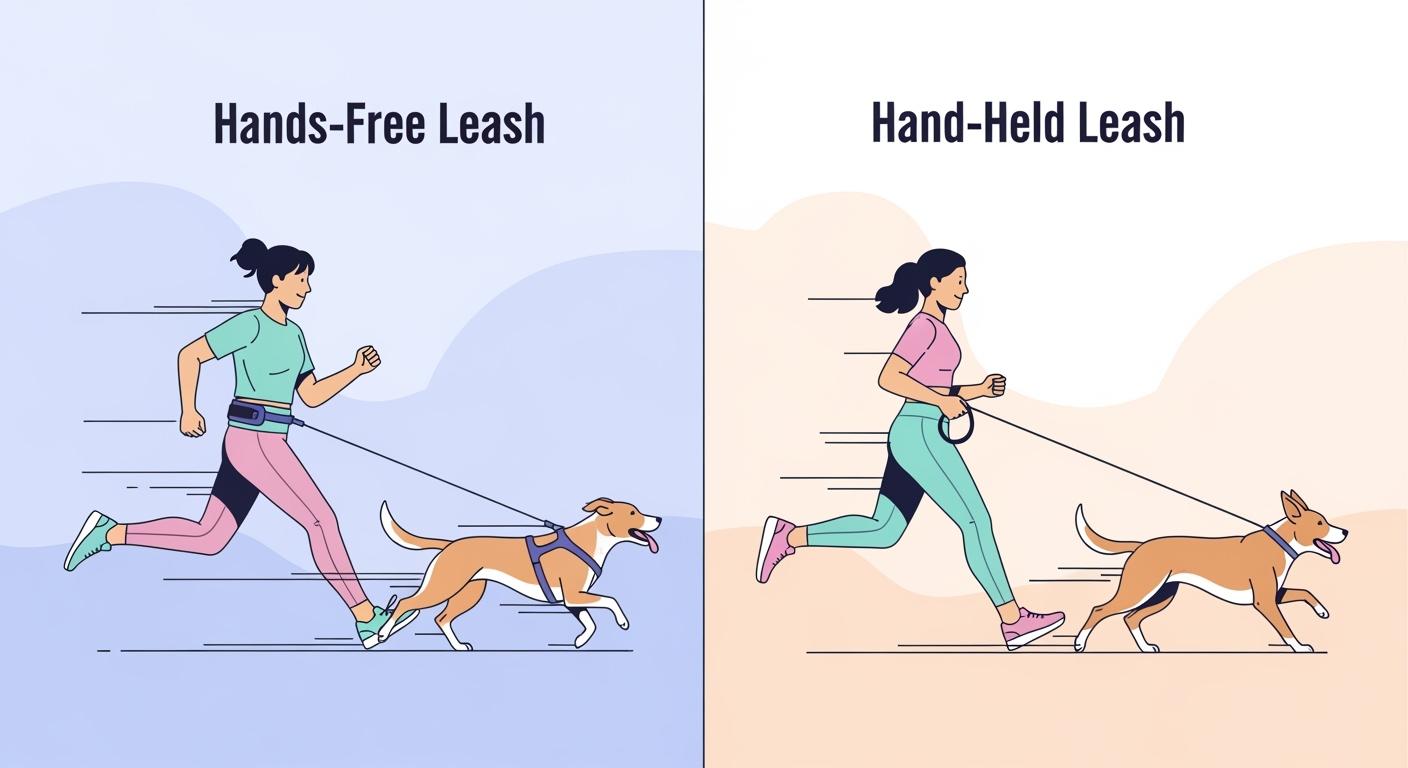
Hands free dog leash running can feel smoother, but only when your dog already runs in a predictable way. A waist setup can free your arms and make your stride feel more natural. A classic hold leash can give you faster pull-in control when your dog surges, crosses in front, or reacts suddenly. The better choice depends less on the leash label and more on what actually happens in the first minutes of your run.
| Type of Leash | Advantages |
|---|---|
| Hands-Free Leash | Provides freedom and comfort for both the runner and the dog when trained. |
| Classic Hold Leash | Offers more control but may restrict movement during running. |
Key Takeaways
- Hands-free dog leashes can give you more freedom and feel more comfortable on steady runs, especially with dogs that hold a line well.
- Classic hold leashes let you control your dog faster. This is more helpful in crowded places, during stop-start runs, or with dogs that are still learning.
- Bungee leashes take in the pulling force. This means less stress on your arms and your dog’s neck. They can help smooth minor surges, but they do not replace training or quick handling when control breaks down.
Hands Free Dog Leash Running vs Classic Hold: When Each Works Best
Comfort and Movement
You want your run to feel natural and easy. Hands free dog leash running can make that easier because your arms swing more freely and your upper body does not need to grip and manage the leash every second. On longer runs, that can make your movement feel cleaner and less cramped.
- Open spaces like parks or wide trails often suit hands-free running better.
- Steady dogs that keep one side and match pace usually feel easier in a waist setup.
- Energetic dogs may still benefit from shock-absorbing sections, but only if they are not repeatedly yanking you off line.
Classic hold changes the feel of the run. You keep one hand engaged, which can reduce arm freedom, but it also gives you a faster way to shorten distance or redirect your dog. For some runners, less comfort is worth the extra control.
Control and Familiarity
You need control when running with your dog. Classic hold leashes give you direct control. You can pull your dog close quickly, shorten the line immediately, or step through busy sections without waiting for the waist system to catch up. This works well if your dog is new to running, gets distracted easily, or changes pace without warning.
Hands free dog leash running gives you less direct control. You rely more on body position, belt setup, and your dog’s existing leash habits. If your dog is trained and listens well, you can enjoy more freedom. If your dog pulls hard, reacts suddenly, or cuts across your path, you may need to switch to a classic hold for better control.
Bungee Leash Benefits
Bungee dog leashes can reduce the sharpness of small pulls and pace changes. That can make running feel smoother when your dog is energetic but not erratic. A bungee section may help with rhythm, but it also adds stretch, which means it is less precise when you need an instant stop or close pull-in.
- Bungee leashes can soften minor jolts during normal running changes.
- They can reduce immediate shock on both the runner and the dog.
- They work best when your dog already runs with some consistency.
- They are a weaker choice when you need very exact, fixed-length control.
Note: Always check your dog’s condition and the weather before running. Avoid running during the hottest part of the day. If your dog has mobility limits or health concerns, adjust your routine. This is not medical advice.
Comparison Table: Hands-Free Waist Leash vs Handheld Running Leash vs Bungee Running Leash
| Leash Type | Use Case | Main Benefit | Main Watchout | Who Should Skip It |
|---|---|---|---|---|
| Hands-Free Waist Leash | Long runs, open spaces, trained dogs | Smoother arm swing and cleaner stride rhythm | Less direct control and slower emergency shortening | Dogs not leash-trained, runners needing instant pull-in-close access |
| Handheld Running Leash | Short runs, busy areas, new dogs | Faster pull-in-close access and more direct handling | Restricted movement and arm fatigue | Runners who want completely free arm swing on steady routes |
| Bungee Running Leash | Energetic dogs, moderate pace variation | Lower shock from minor surges | Stretch can reduce precision in quick-control moments | Dogs needing strict fixed-length control |
You choose the best running setup by matching the leash style to your route, your handling preference, and your dog’s actual habits on runs.
Real Run Changes: Arm Swing, Leash Shortening, Quick Control
Natural Running Form
When you run with a hands-free leash, your arms can swing more naturally. You do not need to keep one hand occupied the whole time, so your running pattern may feel smoother. This matters more on longer runs, where repeated hand grip and one-sided control can become tiring.
Classic hold changes that. You get more control, but you also carry more of the management load in one hand and shoulder. Some runners tolerate that easily. Others notice that it changes rhythm, especially when the dog varies pace often.
Fast Pull-In and Leash Adjustments
You need to shorten the leash quickly in busy spots. With a hands-free system, you usually need an extra motion to grab the line and switch into closer control. That extra step matters when another runner appears, your dog drifts wide, or you need to stop quickly.
Classic hold gives you faster pull-in and faster leash shortening. That makes it easier to handle crossings, turns, passing people, or dogs that hesitate and surge. For hands-free setups, practice switching between hands-free and handheld modes before you run, not during the first real problem.
Handling Checklist Table
| Check Item | Pass Signal | Fail Signal | Fix |
|---|---|---|---|
| Arm swings naturally | Both arms move freely and rhythm stays even | One arm stays stiff or tires quickly | Adjust setup or use hands-free on steadier routes |
| Leash shortens quickly | Dog moves close on cue without delay | Delay in pulling dog in close | Practice quick grab and shorten motion |
| Dog stays by your side | Dog matches pace and holds lane | Dog crosses, drifts, or surges | Shorten the line and rebuild position consistency |
| Easy stops and turns | You and dog stop smoothly together | Jerks, tangles, or delayed turns | Slow down, guide the dog, and reduce slack |
Troubleshooting Table
| Symptom | Likely Cause | Fast Check | Fix |
|---|---|---|---|
| Leash tangles or crosses | Too much slack or poor lane control | Watch the leash during turns | Reel in slack and guide the dog earlier |
| Arm or waist discomfort | Wrong leash setup or poor belt/grip use | Check leash position and where force is landing | Adjust the belt or switch handling style |
| Slow response to dog pulls | Hands-free delay or too much stretch | Test pull-in speed before the run | Practice switching to handheld mode |
| Dog lags or surges | Leash too long, too short, or poor pace matching | Observe the dog’s position over several minutes | Adjust leash length and reward better pacing |
Tip: Always check the weather and your dog’s health before running with your dog. Avoid hot times of day and match your pace to your dog’s needs. This is not medical advice.
Failure Signs and Common Mistakes in Hands Free Dog Leash Running
Recognizing Failure Signs
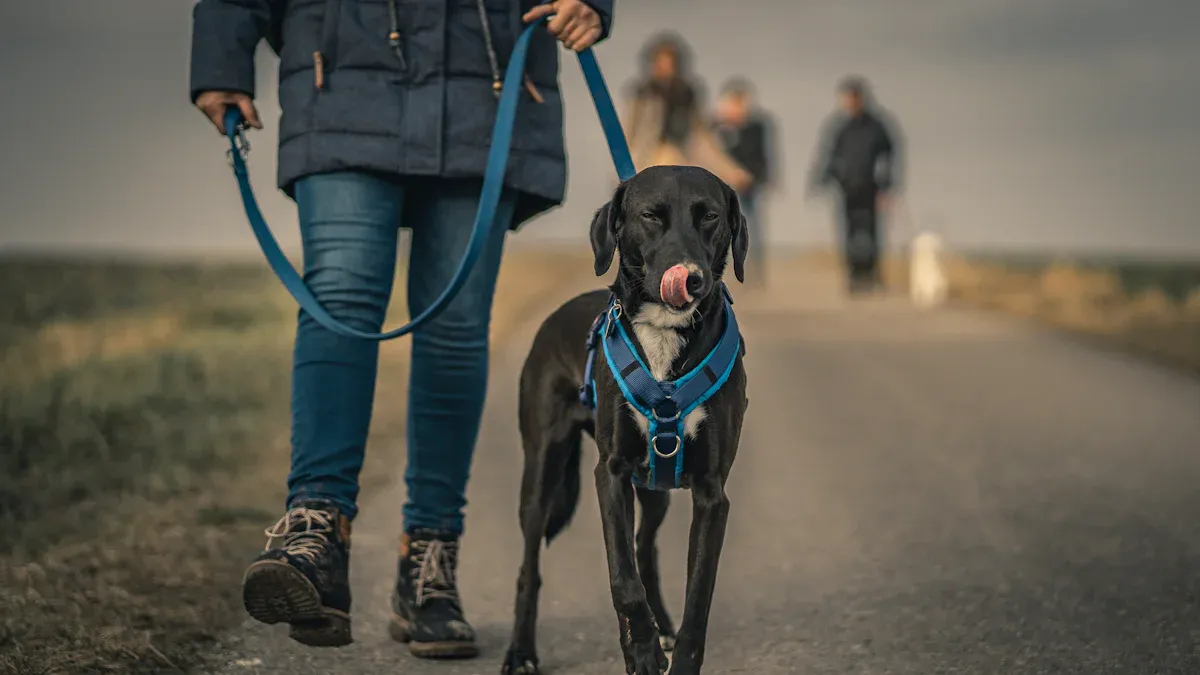
You need to spot trouble early when using a hands-free leash. Common failure signs include repeated arm or waist tension, loss of balance, delayed pull-in, and a dog that keeps crossing your line. These issues turn a comfort setup into a control problem quickly.
| Failure Sign | Impact on Running |
|---|---|
| Tension in arms or shoulders | Shows the setup is not actually freeing movement the way it should |
| Loss of balance | Raises the risk of falls or poor footing for both runner and dog |
| Difficulty maintaining control | Makes turns, passing, and quick adjustments harder than they should be |
Fixes for Line Crossing and Stop-Start Issues
You often face line crossing or sudden stop-start problems with a running leash system. To fix line crossing, keep the leash shorter in busy areas and guide your dog with clear positioning cues. If your dog stops or surges, check the leash length and adjust it quickly. Practice switching between hands-free and handheld modes so you can react faster.
Tip: If your dog pulls hard or changes direction suddenly, grab the leash and use your hand for extra control. This helps prevent falls and keeps both of you safer.
Real Consequences of Common Mistakes
Mistakes in hands-free running can lead to real problems. You might lose control if the leash is too long, too stretchy, or attached to a dog that is not ready for the setup. A loose harness can add discomfort and reduce control. Weak hardware or worn stitching can fail when force spikes suddenly. Over-relying on bungee stretch can also make emergency handling slower if the dog surges at the wrong time.
You must check your gear before every run and stay alert to your dog’s behavior. A hands-free setup should feel smoother, not slower or riskier.
Note: Always match your run to your dog’s health and the weather. Avoid running during hot times. This advice does not replace veterinary guidance.
You find the best running setup by matching the leash style to your route, your dog’s habits, and the level of control you really need. Hands-free can feel better when the run is steady and your dog already understands the job. Classic hold usually feels better when control, pull-in speed, and quick corrections matter more than arm freedom.
FAQ
How do you switch from hands-free to handheld quickly?
You grab the leash near your dog’s harness and hold it firmly. Practice this move before your run so the transition feels automatic when you need it.
Can you run with any dog using a hands-free leash?
You should only use hands-free leashes with dogs that follow running cues well and do not lunge, cross, or surge often. If your dog pulls or reacts suddenly, use a classic hold for better control.
Is it safe to run with your dog in hot weather?
You should avoid running during the hottest part of the day. Always check your dog’s condition and adjust pace, distance, and timing to the weather. This is not medical advice.






