
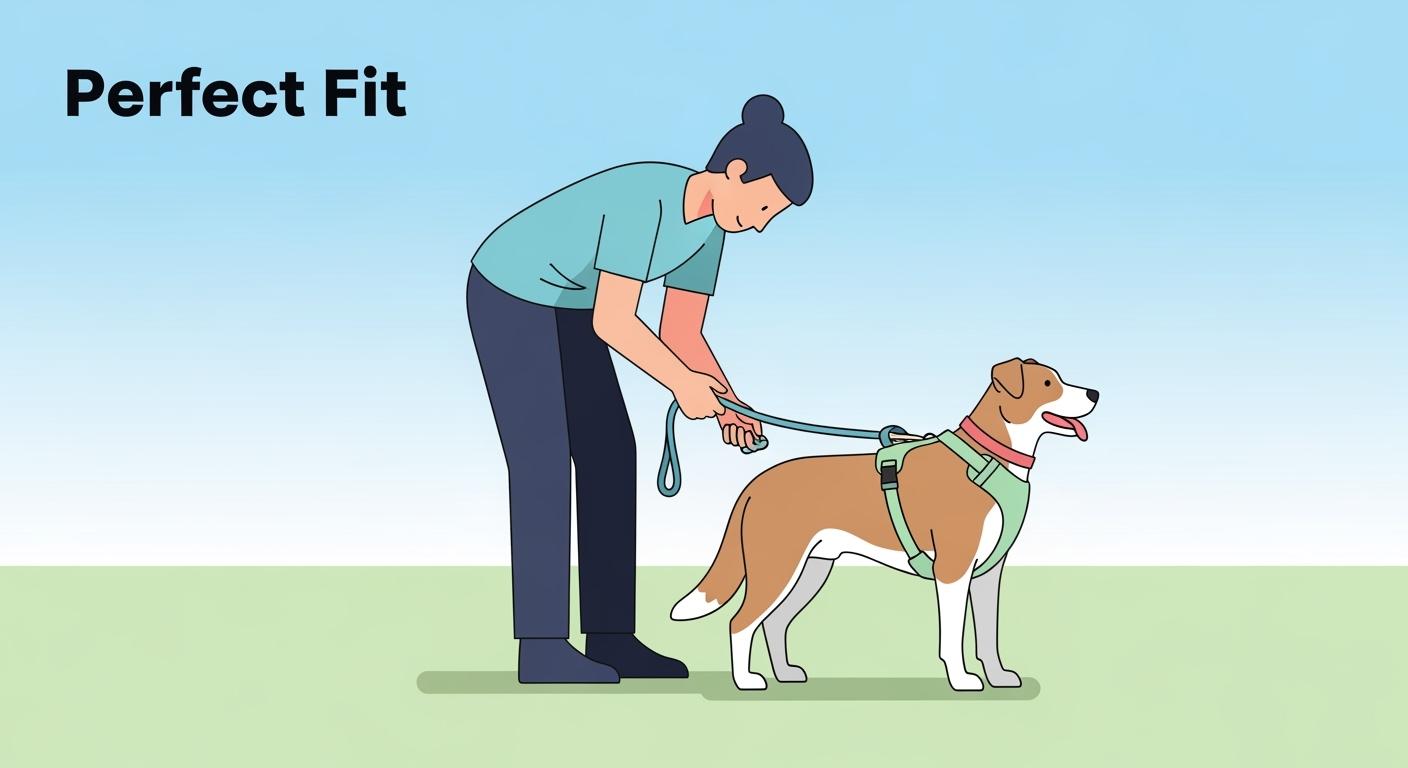
A dog harness and leash set can look simple in a product photo, but the real buying risk is in fit, control, and daily handling. If the harness shifts, rubs behind the front legs, uses hardware that is too heavy, or pairs with the wrong leash length, the set can fail even when the size label looks correct.
For retailers, distributors, pet brands, and OEM/ODM buyers, the goal is not only to choose a matching harness and leash. The goal is to judge whether the set can work across real walking scenarios, different dog body shapes, and repeated daily use without creating avoidable fit failure, escape risk, or control problems.
| Buyer check | Why it matters | Risk if ignored |
|---|---|---|
| Harness shape | Chest coverage and strap placement decide whether the harness stays stable. | Rubbing, twisting, backing out, restricted movement |
| Leash length | The leash must match the walking route and control need. | Too much slack, tangling, poor control in busy spaces |
| Hardware weight | Clips and D-rings should match the dog size and pulling force. | Heavy clips on small dogs or weak clips for stronger dogs |
| Adjustment range | Many dogs do not match a size chart cleanly. | Fit looks correct on paper but fails during turns or pulling |
| Use case clarity | Daily walking, city control, pull-control, and training use need different setups. | Wrong product expectation and poor real-use performance |
Match the set to the walking scenario first
Buyers should start with the walking scenario, not the color, bundle style, or lowest unit cost. A calm daily walker may only need a lightweight back-clip harness and a standard leash. A stronger dog, a busy sidewalk route, or a pull-control use case may require a more stable chest shape, front-clip or dual-clip option, stronger webbing, and a shorter handling zone.
The set should also be judged as a pair. A stable dog harness can still perform poorly if the leash is too long, too thin, too stiff, or uses hardware that does not match the dog size. A good dog leash also depends on the harness attachment point, handle comfort, and the amount of control needed in the actual route.
| Walking scenario | Harness direction | Leash direction | Main failure to check |
|---|---|---|---|
| Calm daily walk | Back-clip or dual-clip | Standard daily leash | Loose fit, rubbing, poor comfort over time |
| Strong puller | Front-clip or dual-clip with stable chest coverage | Shorter control zone or double-handle leash | Harness twisting, throat pressure, weak hardware |
| Small dog | Lightweight harness with soft contact edges | Light clip and narrow but reliable webbing | Hardware feels heavy or shifts the harness |
| Busy sidewalk | Front-clip or stable dual-clip | Short, easy-grip leash | Too much slack, tangling, slow close control |
| Open park or relaxed route | Comfort-focused back-clip or dual-clip | Standard or slightly longer leash if safe for the setting | Poor recall control or leash drag |
| Training transition | Dual-clip or front-clip option | Leash that supports steady handling without harsh correction | Wrong attachment point for the intended control level |
Fit checks that decide whether the harness can work
Fit should not be judged by chest girth alone. A harness and leash set may match the chest measurement but still fail if the neck opening sits too high, the belly strap is too close to the front legs, or the panel shape shifts during pulling and turning. This is where many low-click product pages feel too general: they say “adjustable” but do not explain what the adjustment needs to solve.
For B2B buyers, the key is to look at the parts that affect real walking stability: strap angle, chest coverage, belly strap placement, D-ring position, edge softness, and how much adjustment remains after the harness is fitted. A set that cannot handle broad chests, narrow waists, long bodies, or slim escape-prone dogs may create more mismatch than the size chart suggests.
| Fit checkpoint | Pass sign | Fail sign |
|---|---|---|
| Chest coverage | Harness spreads pressure across the chest without riding into the throat. | Front panel shifts upward or concentrates pressure near the neck. |
| Front-leg clearance | Dog can move naturally without strap contact behind the elbows. | Rubbing, short steps, stiffness, or repeated stopping. |
| Adjustment range | Enough room remains to fine-tune neck, chest, and belly fit. | Straps reach the limit before the harness becomes stable. |
| Escape resistance | Harness stays secure when the dog backs up or turns. | Harness loosens, rotates, or slips over the shoulders. |
| Material contact | Edges feel soft enough for repeated daily use. | Stiff webbing or rough seams press into high-friction areas. |
A useful product page should make these checks clear. For sourcing and custom development, buyers should ask whether the harness has enough adjustment points, whether the pattern supports different body shapes, and whether the size guide explains both measurements and fit boundaries.
Leash length and hardware must match the harness job
Leash length is not just a preference detail. It changes how much control the handler has, how fast slack builds, and how much force reaches the harness attachment point. For many daily walking sets, a standard leash length is easier to explain and easier to use. For crowded sidewalks or stronger dogs, buyers may need a shorter control zone, better grip, or a second handle near the clip.
Hardware matters just as much. A heavy clip can pull a small harness out of position. A light clip or weak stitching can be unsuitable for a stronger dog. A D-ring that twists under tension can make the harness rotate even when the body fit is correct. These details are small in a product photo but important in repeated use.
| Leash or hardware point | What buyers should verify | Why it affects B2B product choice |
|---|---|---|
| Standard leash length | Enough control for daily walking without excessive slack. | Works for a wider range of ordinary walking scenarios. |
| Traffic handle | Placement is close enough for quick control in busy spaces. | Useful for city walking, large dogs, and pull-control sets. |
| Clip size | Clip should match dog size and harness scale. | Avoids heavy hardware on small dogs and weak hardware on strong dogs. |
| Webbing width | Width should balance strength, hand feel, and bulk. | Too thin can feel weak; too wide can feel stiff and heavy. |
| Attachment direction | Front, back, or dual attachment should match the intended control level. | Wrong attachment position can make the set feel ineffective. |
Where harness and leash sets fail in real use

Most failures are easy to predict before sourcing if the product is checked as a complete walking setup. The harness may fit when standing still but rotate when the leash pulls. The leash may look durable but feel hard to grip. The clip may be strong but too heavy for smaller sizes. The size range may look broad but leave too little room for dogs between size labels.
| Failure point | What it looks like in use | What to check before sourcing |
|---|---|---|
| Harness twists under tension | The D-ring pulls to one side and the chest panel rotates. | Chest panel shape, strap angle, and D-ring reinforcement. |
| Rubbing behind elbows | Dog shortens stride, scratches, or shows redness after wear. | Armhole clearance, seam finish, edge binding, and material softness. |
| Backing out | Dog slips shoulders backward through the harness. | Neck opening, belly strap position, and escape-prone body shapes. |
| Leash feels hard to control | Too much slack, hand fatigue, tangling, or slow response. | Length, handle design, grip surface, and second-handle option. |
| Hardware mismatch | Clip drags on a small dog or feels unsafe on a stronger dog. | Hardware sizing by product size, not one clip for every SKU. |
The safer B2B message is not that one harness and leash set fits every dog. The stronger message is that each set should have a clear fit range, use case, and handling boundary so buyers can match the product to the right walking need.
What buyers should verify before placing an order
Before placing an order or starting custom development, buyers should check the product as a full set: harness pattern, leash length, clip size, webbing strength, comfort lining, stitching, size guide, packaging instructions, and stop-use warnings. A matching color set is not enough if the harness and leash do not work together under real walking pressure.
| Sourcing question | Good answer | Risky answer |
|---|---|---|
| Can the harness support different dog body shapes? | Multiple adjustment points and clear fit boundaries. | Only weight-based sizing or vague size labels. |
| Is the leash matched to the harness use case? | Length, handle, clip, and webbing match daily walking or control use. | One generic leash paired with every harness size and purpose. |
| Does the set explain when it is not suitable? | Clear warnings for poor fit, rubbing, escape risk, and unsafe leash use. | Only positive claims with no use boundaries. |
| Can the product support private-label needs? | Logo, color, packaging, size chart, and instruction copy can be customized. | Only product color changes without fit or packaging support. |
| Are MOQ and lead time realistic for the line? | Sample and production timing are clear before inquiry. | Unclear timing, unclear size/color MOQ, or no packaging details. |
StridePaw supports outdoor and walking dog gear programs for OEM/ODM partners, retailers, distributors, and pet brands. For harness and leash set inquiries, buyers can compare fit goals, leash handling needs, size coverage, trim options, packaging requirements, MOQ, and production timing before moving into sample development.
FAQ
What makes a dog harness and leash set suitable for B2B sourcing?
A suitable set should have clear size coverage, stable harness construction, matched leash hardware, practical instructions, and enough customization room for logo, color, packaging, and market-specific use guidance. The set should solve a real walking need rather than only matching visually.
Should buyers choose a front-clip or back-clip harness and leash set?
It depends on the walking scenario. Back-clip sets are usually easier for calm daily walks, while front-clip or dual-clip sets are more relevant when buyers need better control for pulling or busy routes. The important point is whether the harness stays stable when the chosen leash attachment is under tension.
What is the biggest risk when sourcing harness and leash bundles?
The biggest risk is treating the bundle as a style match instead of a functional walking setup. A poor match between harness shape, dog body type, leash length, and hardware weight can lead to rubbing, shifting, backing out, or poor control even if the product looks attractive online.
