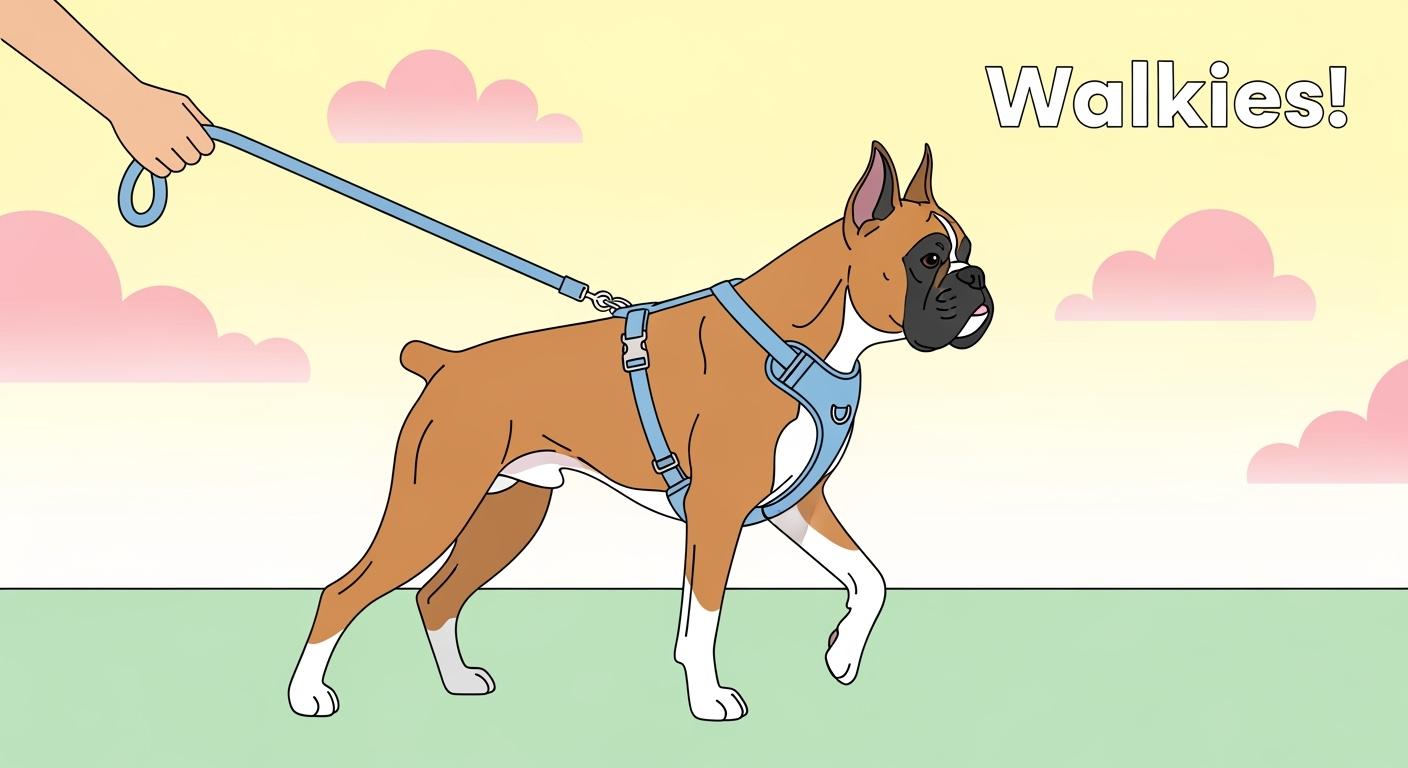
Choosing the best harness for boxer dog walks starts with the breed’s shape. Boxers usually have a deep chest, strong shoulders, and a lot of forward drive, so a harness has to stay low on the chest, leave room for a full stride, and stay steady when your dog turns, pulls, or lunges into the leash.
A harness that only looks sturdy is not enough. If it rides up, twists, or crowds the front of the shoulders, your dog can end up with rubbing, hot spots, or an easier path to slipping out. When leash pulling is the main problem, front-clip harness training steps for dogs that pull usually do more than switching to a thicker harness.
What usually works best for a Boxer
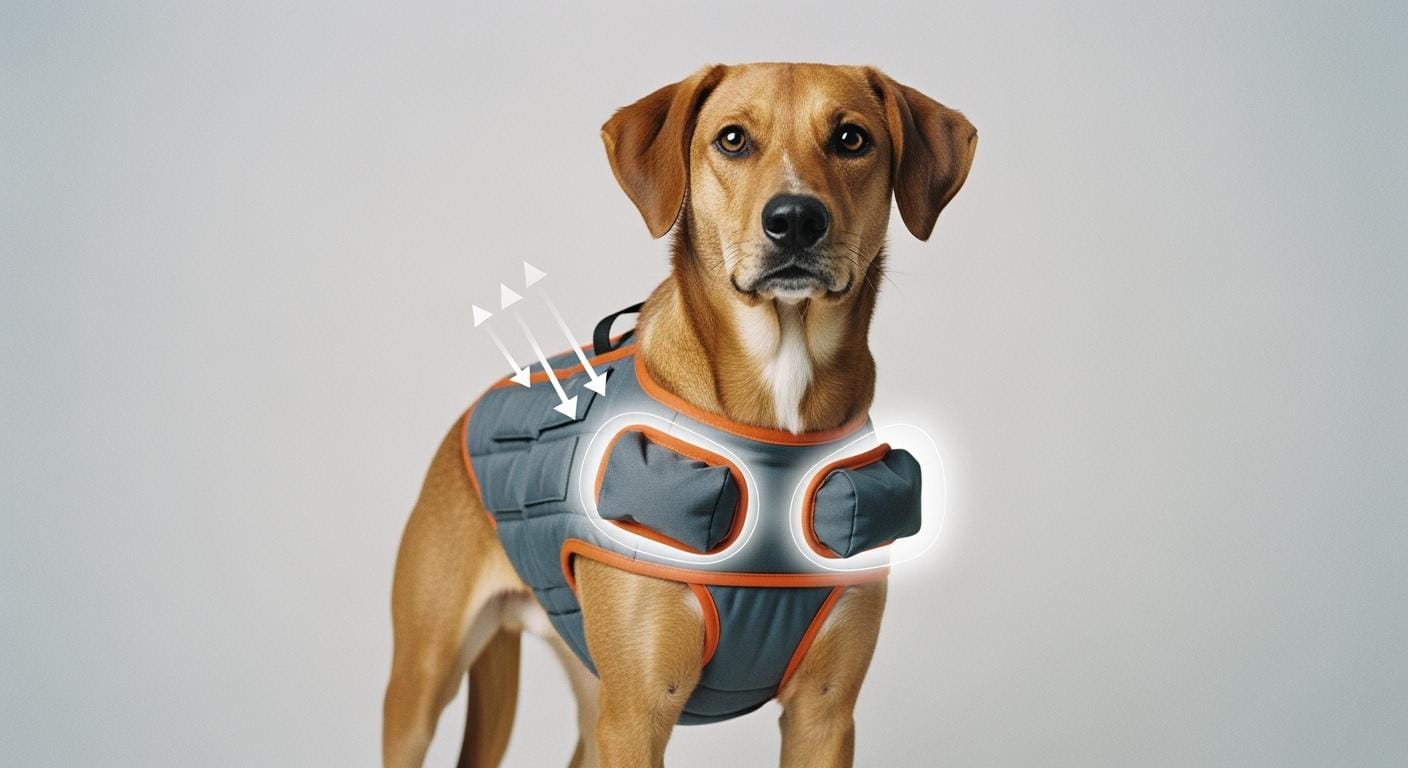
For most Boxers, a Y-front shape is the safest place to start because it tends to sit lower on the chest and leaves the shoulders more open than bulkier vest styles. If you are comparing materials, clip positions, and coverage levels, best dog harnesses for daily walks gives a broader baseline before you narrow the fit to a Boxer’s build.
| Harness style | What it does well | What to watch | Best fit for |
|---|---|---|---|
| Y-front with front clip | Keeps pressure off the throat and can redirect pulling | Can twist if the chest or girth straps are loose | Daily walks, early leash training, strong forward pullers |
| Broader body-coverage harness | Adds stability and often gives handlers more control | Can feel bulky or warm if it covers too much of the chest | Large adult Boxers, longer outings, dogs that surge hard |
| Step-in harness | Easy to put on for dogs that dislike gear over the head | Often shifts more on a deep chest | Calm walkers who need simple on and off |
If you are deciding whether a front attachment is actually worth it, front-clip fit and walk safety is more useful than packaging claims. For a Boxer that pulls in straight lines, the front attachment often helps most when the harness already fits close through the ribcage and does not float at the chest.
- Pick a harness that starts low on the chest instead of high on the throat.
- Prioritize shoulder freedom over thick padding.
- Use front attachment hardware when pulling control matters.
- Skip extra bulk if your dog already walks calmly.
- Judge the harness after a real walk, not just while your dog stands still.
How to fit the harness before the first real walk
Measure first, then adjust. If your Boxer falls between sizes, start with how to size a dog harness using real measurements so chest girth and neck opening drive the decision instead of weight alone.
Once the harness is on, the front should sit on the breastbone rather than creeping toward the neck. The straps should lie flat, and you should be able to slide two flat fingers under them without seeing obvious gaps. Then test movement: walk forward, turn both directions, let your dog lower the head, and watch whether the harness stays centered or starts drifting to one side.
| Fit check | Pass | Fail | What to change |
|---|---|---|---|
| Front panel position | Sits on the chest, below the throat | Rides up toward the neck | Shorten the chest fit or switch to a lower Y-front shape |
| Shoulder movement | Full stride with no hesitation | Short steps or stiff movement | Loosen the front area or try a different cut |
| Side stability | Harness stays centered on turns | Twists or slides sideways | Even out the straps and recheck size |
| After-walk skin check | No heat, redness, or hair disturbance | Warm spots or rubbing behind the legs | Adjust the girth or change styles |
Note: If the harness leaves red marks, makes your Boxer shorten stride, or presses toward the throat, stop using it until the fit is corrected. If soreness or limping continues, contact your veterinarian.
When more coverage helps and when it gets in the way
Some Boxers are powerful enough that a minimalist harness feels too light in the handler’s hands. In those cases, a heavy-duty dog harness can make sense, but only if the extra structure does not block shoulder motion or trap too much heat across the chest.
More coverage helps when your dog is mature, strong, and prone to sudden bursts. It helps less when the added padding makes the harness climb upward or when your Boxer overheats on longer walks. Bigger is not automatically better. The best harness for boxer dog use is the one that stays quiet on the body and predictable on the leash.
Walk-test signs that the harness is working
A good Boxer harness should disappear into the walk. You should not have to stop every few minutes to straighten it, and your dog should not start pawing at the chest panel or shortening stride after the first block. Some Boxer owners get better results by borrowing the same large-dog harness fit checklist used for other broad, powerful breeds.
- The chest piece stays low and centered when your dog moves forward.
- The shoulders stay free when your Boxer trots, turns, and leans into the leash.
- The girth area stays snug without leaving deep strap lines.
- The leash connection gives you cleaner direction changes instead of a constant tug-of-war.
- You finish the walk without heat spots behind the front legs.
If those signs are missing, the harness is not right yet, even if the size label seems correct.
Failure signs that mean the harness is wrong
| Problem | Likely cause | Quick check | Best next step |
|---|---|---|---|
| Harness rides up | Chest fit is too high or too loose | See where the front panel lands when your dog pulls | Retighten or move to a lower-cut front |
| Harness twists | Uneven adjustment or wrong shape for the ribcage | Look for slack on one side | Even the straps and retest on a walk |
| Rubbing behind the legs | Too much movement or rough edge contact | Check for warmth or red skin after walking | Adjust fit or change to a different pattern |
| Pulling gets worse | Back attachment only, or unstable chest fit | Watch whether the leash line stays centered | Try a front attachment and retrain the setup |
| Escape risk | Loose girth fit or oversized neck opening | Check for gaping when your dog backs up | Resize before the next outing |
If you keep fixing the harness mid-walk, treat that as a failure signal. A Boxer’s build is too athletic for a maybe-good-enough fit. The right harness should stay readable, centered, and boring even when the walk is not.
FAQ
What type of harness is usually best for a Boxer?
A Y-front harness is usually the safest starting point because it tends to keep the chest lower, leaves the shoulders freer, and works well with front attachment options for pulling control.
Can a Boxer wear a step-in harness?
Yes, but many Boxers do better in a lower-cut harness because step-in designs can shift more on a deep chest.
How tight should a Boxer harness be?
It should feel snug enough to stay centered, with room for two flat fingers under the straps and no obvious gaping when your dog moves.
How often should you recheck the fit?
Recheck it after the first few walks, then any time your Boxer gains muscle, loses weight, grows, or starts showing rubbing or twisting.
The best harness for boxer dog walks is the one that matches the breed’s chest shape, stays low and stable, and lets your dog move like a Boxer should. Start with fit, confirm it on a real walk, and treat comfort, control, and clean movement as the real test.