
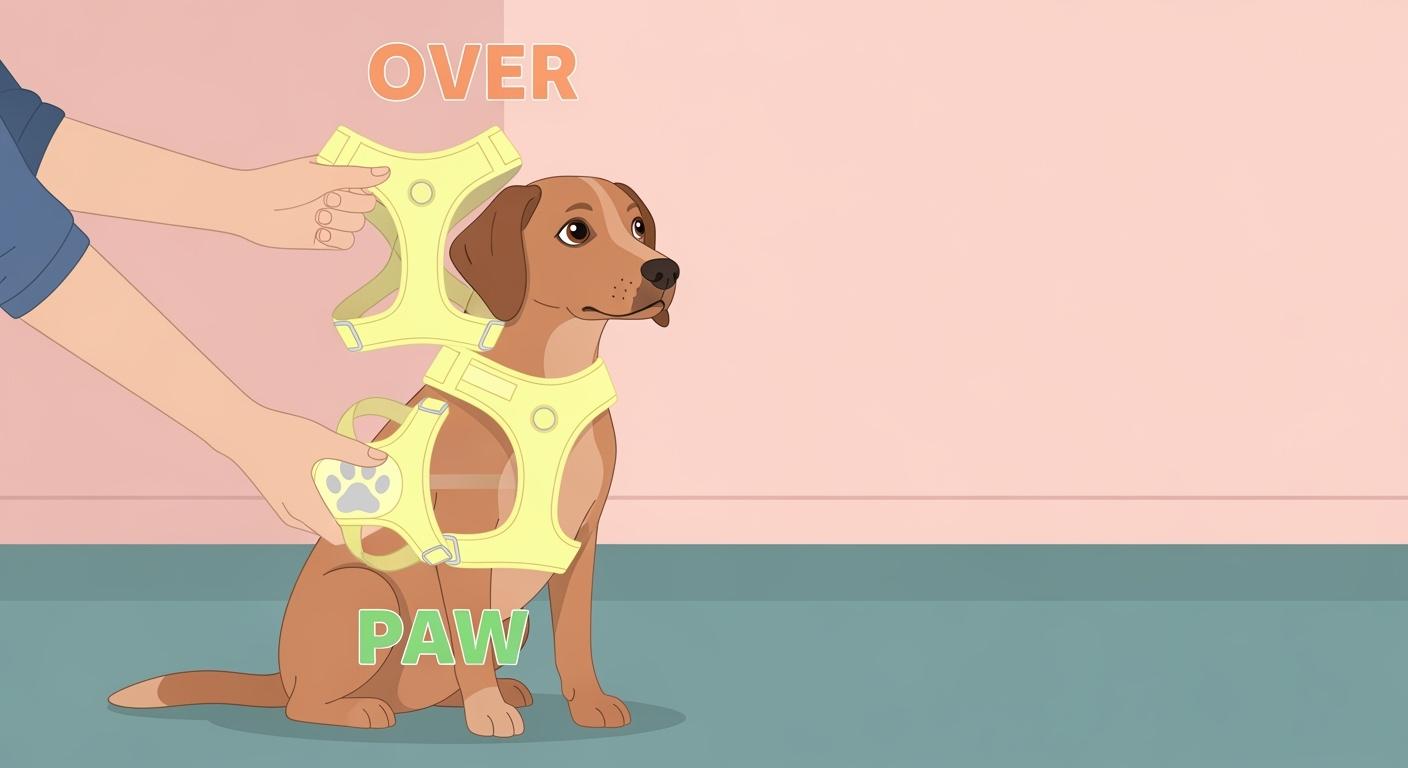
How does a dog harness go on a dog? Usually one of two ways: over the head for most front-clip and back-clip designs, or paws first for step-in styles. The right method depends on how the harness is built, not on guesswork. When the chest panel sits flat, the straps stay untwisted, and the buckles close behind the front legs without pinching fur, your dog is more likely to stay comfortable and secure on the walk.
If you are still choosing gear, compare dog harness size, materials, and everyday walk features before you settle on a style. Dogs that lunge, stop at doorways, or back out of gear often need a setup that matches their walking and control routine, not just a tighter strap.
Head first or paws first?
An overhead harness goes on head first. A step-in harness goes on paws first. That sounds simple, but most fitting mistakes happen in the few seconds before buckling, when one strap flips, the chest piece shifts off center, or the dog steps into the wrong opening.
How to put on an overhead harness
- Lay the harness flat and find the neck opening, chest panel, belly strap, and leash clip.
- Unbuckle the side or belly closure so the harness opens fully.
- Guide the neck opening over your dog’s head with the chest panel facing forward.
- Bring the belly strap under the chest and buckle it behind the front legs.
- Adjust the neck and chest straps evenly on both sides.
- Clip the leash only after the harness sits flat and centered.
This style usually works well for dogs that stay calm during handling. A harness with adjustable neck and belly points, such as an dog training harness set, is often easier to position than a fixed-shape design because you can loosen it first and fine-tune the fit after buckling.
How to put on a step-in harness
- Spread the harness on the floor so the two front leg openings are easy to see.
- Place one front paw into each opening.
- Lift the side panels up along the chest.
- Buckle the harness above the shoulders or across the back, depending on the design.
- Adjust the straps so the harness stays snug without riding into the armpits.
- Walk a few steps and check that the chest section stays centered.
Step-in styles can be easier for dogs that dislike gear passing over the head. Before the first outing, it helps to review putting a harness on before the first walk so you can catch a loose shoulder opening or a twisted chest strap before your dog starts pulling forward.
| Harness style | How it goes on | Usually best for | Watch for |
|---|---|---|---|
| Overhead | Head first, then buckle behind the front legs | Dogs comfortable with handling around the head and neck | Twisted chest panel, throat pressure, uneven strap length |
| Step-in | Paws first, then buckle over the back or shoulders | Dogs that resist overhead gear or need a quicker setup | Wrong paw opening, loose leg holes, harness rotating sideways |
Tip: If you have to force the harness into place, stop and reset it flat on the floor or in your hands. A rushed setup is where most fit problems start.
How to tell if the harness is on correctly
A harness is on correctly when the chest piece stays centered, the straps lie flat, the buckles close cleanly, and your dog can walk, turn, and back up without the harness climbing into the throat or rubbing behind the front legs. If the harness keeps drifting, revisit dog harness sizing and fit checks instead of tightening every strap at random.
| Check item | Pass signal | Fail signal | Fix |
|---|---|---|---|
| Chest piece | Sits flat and centered | Twisted or pulled to one side | Reposition before walking |
| Straps | Lie flat against the coat | Bunched, rolled, or crossing | Untwist and rebuckle |
| Buckles | Close easily without trapping fur | Hard to reach or pinching | Adjust the strap path first |
| Movement | Dog walks and turns naturally | Short stride, hopping, freezing, or coughing | Loosen, reposition, or reassess size |
| Security | Harness stays in place during a short walk | Dog backs out or the neck opening gaps | Tighten evenly or try a different size or shape |
Many dogs tolerate a poor fit for a minute or two and then start showing the real problem once they move. That is why the first few steps matter more than the buckle click.
Common setup problems that matter on a real walk
Twisted straps can rub the skin and shift pressure into a small area. An off-center chest panel can pull the whole harness toward one shoulder. Uneven strap adjustment often causes the buckle to sit crooked and pinch fur. A loose neck or shoulder opening makes it easier for a dog to back out when startled.
If your dog seems calm indoors but resists the harness near the door, the issue is often setup order rather than behavior. Reviewing using a harness without common setup mistakes can help you spot whether the problem starts at the neck opening, the chest panel, or the final adjustment.
Fit checks after the harness is on
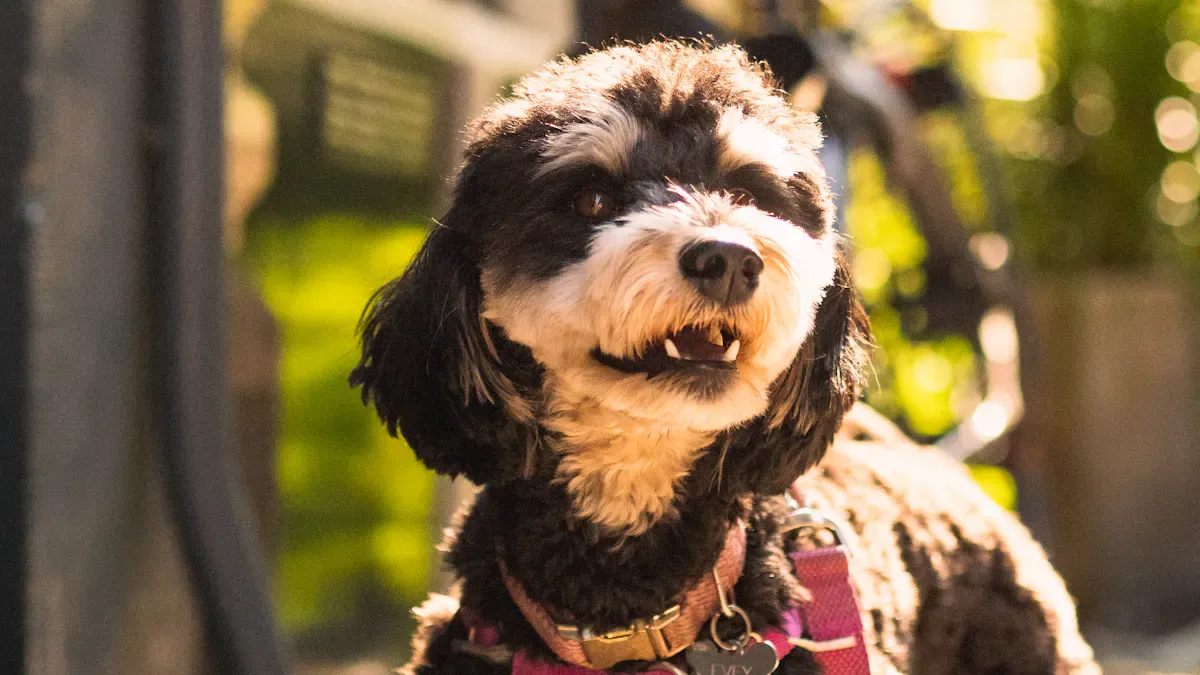
After the harness is buckled, do a short movement check before you head out. Watch your dog walk forward, turn, and back up. Then look for signs that the harness is rubbing, shifting, or restricting the shoulders.
| Symptom | Likely cause | Fast check | Fix |
|---|---|---|---|
| Red marks or chafing | Straps too tight or sitting too close to the armpits | Check the coat and skin after a few minutes | Loosen slightly or reposition the chest section |
| Harness rotates | Uneven strap length or a loose chest area | Look for the back piece drifting sideways | Re-center and tighten both sides evenly |
| Dog backs out | Neck or shoulder opening too loose | Watch for gapping when the dog reverses | Adjust the upper fit or switch shapes |
| Short front stride | Shoulder movement blocked | Watch the front legs during a slow walk | Loosen or choose a design with better shoulder clearance |
| Coughing or throat contact | Harness sitting too far forward | Check whether the front panel rides up when the leash tightens | Reset the fit before continuing |
Note: If your dog keeps coughing, panics during fitting, or develops repeated rubbing even after adjustment, stop using that setup and have the fit checked by your veterinarian or trainer.
A good fit should stay steady without looking tight. Your dog should be able to lower the head, sniff, turn, and move through a normal stride without the harness twisting. Remove the harness after the walk instead of leaving it on all day, especially if it is wet or muddy.
FAQ
Does a dog harness always go over the head?
No. Many harnesses go over the head, but step-in designs go on paws first.
Where should the buckle sit?
On most body harnesses, the buckle should close behind the front legs or over the back, depending on the design, without pinching coat or skin.
How snug should a dog harness be?
It should feel secure without shifting, rubbing, or limiting movement, and the straps should not leave the chest panel twisted or pulled off center.
What if my dog hates putting the harness on?
Slow the process down, match the method to the harness style, and consider whether a step-in design is easier for your dog to accept than an overhead one.
How does a dog harness go on a dog? Match the method to the harness style, center the chest piece before buckling, and check movement before every walk. That sequence does more for comfort and security than simply tightening the straps harder.






