
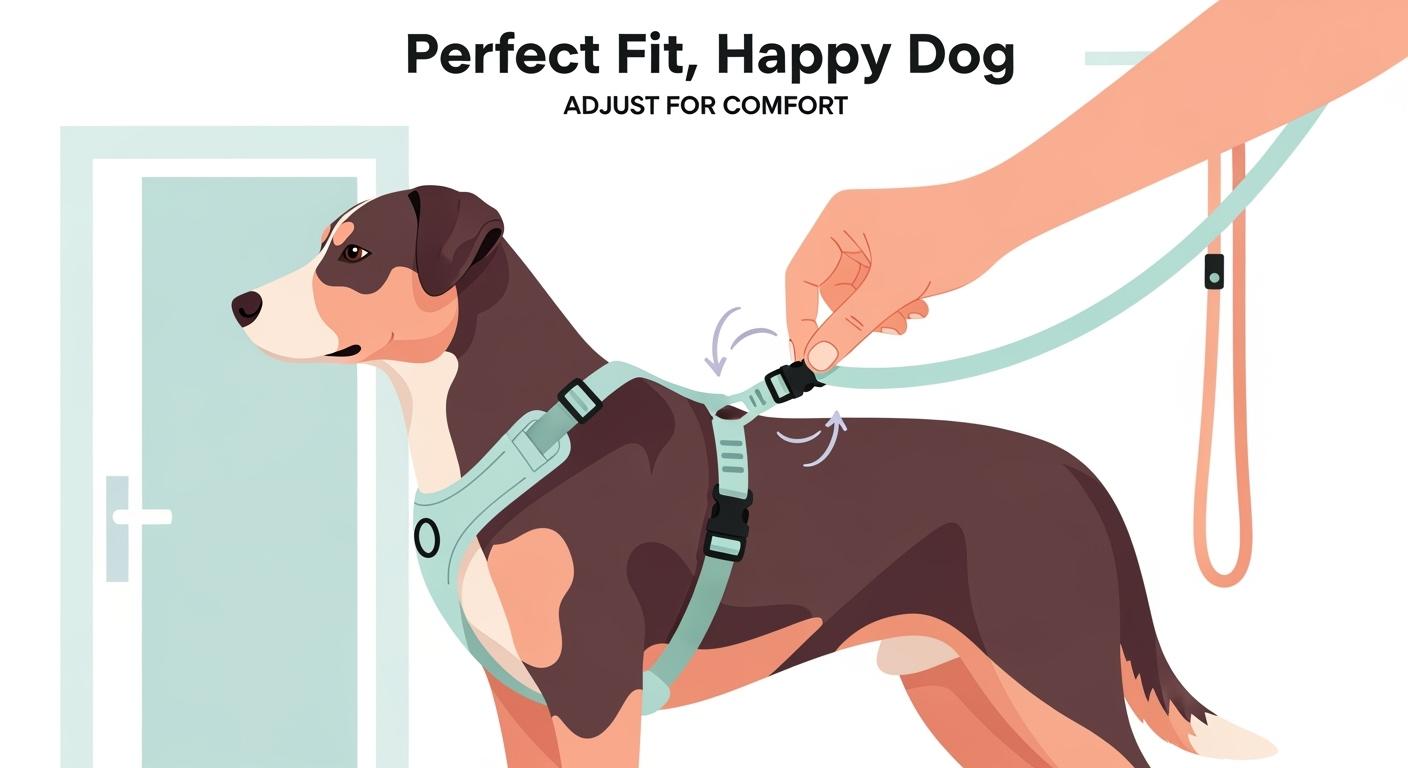
An adjustable harness dog setup suits owners who need a steadier everyday fit and want quick checks that prevent drift, rubbing, and short strides.
Note: Better adjustability usually improves fit control, but only when the chest section stays centered, the sternum area stays clear, and your dog can move without shortening stride.
Extra straps can help when your dog is hard to size, still growing, or between shapes. They can also create daily frustration when you keep tightening one side to fix movement that really comes from the harness shape, not the setting.
Key Takeaways
- More adjustment usually helps dogs with unusual chest shape, coat changes, or ongoing growth, but it only works when both sides stay balanced.
- Real fit shows up in motion, not on the floor, so an indoor check, a short walk, and a repeat test over several days usually reveal the truth faster.
- If the harness keeps drifting, pressing into the axilla area, or riding toward the throat, a simpler layout or different chest shape often works better than more tightening.
When More Strap Control Helps
Adjustable builds versus simpler builds
Fit control matters because dogs rarely match one fixed outline. An adjustable build usually gives you more room to center the chest piece, keep hardware off pressure points, and fine tune a secure feel without forcing one strap to do all the work.
A simpler build often feels better on dogs with a more standard outline and calm walking style. If you are still comparing chest layouts, clip placement, and everyday materials, these everyday harness styles make the tradeoffs easier to judge before you buy.
| Harness Type | Why It Helps | Feel in Use | Best Use Case | What to Watch |
|---|---|---|---|---|
| Low adjustment harness | Fast setup, fewer moving parts | Usually stable when shape match is good | Calm daily walks | Can gap at neck or chest |
| Multi point adjustable harness | Better centering across chest and rib cage | Often easiest to fine tune | Growth, deep chests, coat changes | Needs balanced left right tension |
| Front clip adjustable harness | Adds steering options on walks | Can feel helpful for pullers | Training sessions, busy routes | May twist or crowd shoulder movement |
Hands on walk checks usually show the same pattern, more adjustment helps when the harness shape already suits the dog, and it hurts when you use strap tension to compensate for a poor shape match. If you need a product category with broader chest and neck adjustment ranges, these dog harness options are the most relevant place to compare layouts before narrowing the fit.
Tip: Lay the harness flat before every fitting session, then match left and right strap length visually before you put it on your dog.
Who usually benefits most from extra adjustability
Dogs with broad shoulders, narrow waists, deep chests, dense coats, or puppy growth spurts usually gain the most from extra adjustment points. Senior dogs can also benefit when you need a steadier fit that avoids rubbing without making the harness feel loose.
Brachycephalic dogs, short muzzled dogs, usually do better when load stays low on the chest instead of creeping toward the throat. If you are weighing body measurements against strap placement, these customisable sizing checks show the same fit logic from a sizing first angle.
When a simpler layout is usually the better choice
Less complexity matters because repeated readjustment often means the harness is fighting your dog’s shape. When one side loosens first, the chest panel drifts, or the front keeps lifting after only a short walk, a simpler layout can feel steadier and easier to trust.
| Check Item | Pass Signal | Fail Signal | What to Do Next | What to Watch |
|---|---|---|---|---|
| Chest centering | Stays centered after turns | Slides to one side | Reset both side straps evenly | Recurring drift usually means poor shape match |
| Strap balance | Even tension left and right | One side carries more load | Loosen and restart from neutral | Do not fix twist by over tightening one side |
| Shoulder freedom | Natural reach through front legs | Short steps or stiff turns | Lower or reposition front section | Restriction often appears only after movement |
| Skin contact | No hot spots after walk | Redness, flattened coat, licking | Shift contact points and reassess | Repeated rubbing usually needs a new layout |
| Front height | Sits clear of throat | Rides upward under load | Rebalance chest and neck fit | High front pressure can change breathing effort |
For most dogs, the better choice is the one that stays centered with less correction, not the one with the most straps. If a short indoor test already shows rotation or crowding, the daily walk rarely improves it.
What to Watch on Real Walks
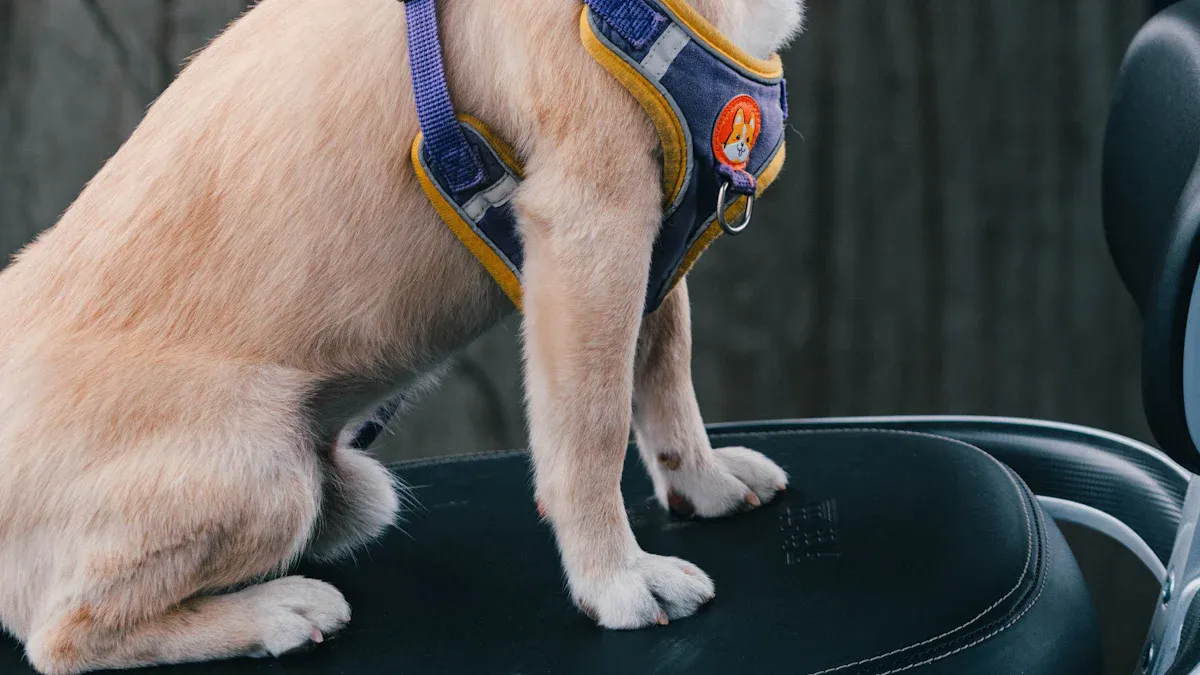
Real walking matters because leash pressure changes everything. A harness that looks centered indoors can start rotating once your dog accelerates, stops suddenly, or leans into the leash through a turn.
Start with three repeatable checks. First, do an indoor fit walk on a loose leash and watch chest position. Second, do a loaded walk where you change pace and direction. Third, repeat the same route over three days so you can tell the difference between one bad setup and a true mismatch. For a measurement first starting point, this measure a dog for a harness routine helps you reset the basics before you judge performance.
| Walk Check | What to Observe | Pass Signal | Fail Signal | What to Watch |
|---|---|---|---|---|
| Indoor reset | First few calm steps | Harness stays flat and quiet | Immediate twist or lift | Bad starting position skews later checks |
| Loaded walk | Turns, stops, mild pull pressure | Chest stays centered | Front rides up or side shifts | Leash angle can expose hidden imbalance |
| Real session repeat | Same route over several days | Stable behavior across walks | Drift returns each outing | Repeat failures usually mean layout mismatch |
Record for 3 days before replacing the harness: chest centering, shoulder reach, rubbing zone, back out attempts, leash response. That five field log gives you enough detail to compare one setup against another without guessing.
Fast fixes for common movement problems
Small problems compound quickly because rubbing and drift tend to repeat in the same place. The fastest reset is usually to loosen the whole harness, re center the chest section, then retighten in a consistent order instead of chasing one symptom at a time.
| Symptom | Likely Cause | Quick Check | Improvement Plan | What to Watch |
|---|---|---|---|---|
| Harness drifts | Uneven strap balance | View from behind during walking | Reset both side straps from neutral | Persistent drift often means wrong chest geometry |
| Rubbing behind legs | Front section sits too far back | Check coat and skin after walk | Move contact point forward or change layout | Padding alone rarely solves repeated rubbing |
| Front rides upward | Loose chest fit or poor front angle | Watch during stop and restart | Rebalance chest first, then neck area | Upward travel can increase throat pressure |
| Shortened stride | Shoulder crowding | Watch from side view on turns | Lower front section or choose simpler shape | Restriction often shows before visible skin marks |
| No better control | Harness and leash mismatch | Check clip location and leash length | Reassess the harness and leash set balance | Good harness fit can still feel poor with the wrong leash setup |
For most everyday walks, the best result is the setup that stays predictable when leash pressure changes, not the one that feels tightest in the house. If your dog moves freely, the chest stays centered, and post walk skin checks stay quiet, the fit is usually heading in the right direction.
Common mistakes that create avoidable problems
- Tightening one side first and then trying to correct the twist with the other side.
- Checking fit only while the dog stands still, then skipping the walking test.
- Letting the front section sit too high because the harness looks neater that way.
- Ignoring repeated coat flattening, pawing, or reluctance to move.
- Keeping a complicated setup that needs fresh correction on nearly every walk.
Tip: The most common mistake is using tightness as proof of safety, when centered contact and free shoulder motion usually matter more.
If your dog resists gear changes, this put on harness dog sequence is useful because calm handling often reveals fit errors you miss when the dog is already frustrated.
Failure Signs and Reset Checks
Early warning signs that usually mean the fit is off
Early warning signs matter because discomfort often shows in behavior before it shows on the skin. Dogs commonly slow down, scratch at the chest area, brace on turns, or hesitate when the harness starts pressing into the wrong place.
- Heavy breathing that begins when the harness rides upward.
- Short steps, stiff turns, or a lower head carriage on walks.
- Flattened coat, redness, or warm spots after removal.
- Repeated backing out attempts when the leash goes tight.
- Sudden refusal to move through doors, stairs, or corners.
| Component | What to Check | When It Usually Needs Rethinking | Best Next Move | What to Watch |
|---|---|---|---|---|
| Buckles | Clean closure and steady hold | Release feels inconsistent | Retire the harness or replace hardware | Minor slip can become full failure under load |
| Webbing | Twisting, thinning, edge wear | Edges feel rough or stretched | Stop using it for regular walks | Rough webbing increases friction fast |
| Stitching | Loose threads near load points | Seams begin separating | Replace before the next heavy walk | Damage usually spreads once it starts |
| Padding | Compression and trapped moisture | Stays flat or irritates skin | Switch to a drier, cleaner contact surface | Old padding can hide rubbing spots |
| Overall fit | Centering, freedom, skin response | Same failure appears after repeated resets | Choose a different layout | Repeated adjustment should not be a permanent routine |
Disclaimer: A walking harness supports fit and control. It is not a diagnosis or treatment for limping, coughing, panic, pain, or ongoing movement change.
If you notice airway pressure, repeated gait change, or stress that does not resolve after a careful reset, professional assessment is usually the safer next move. Fit checks help with equipment decisions, but they do not explain every behavior change.
Simple end of walk summary
Most owners need a short decision frame, not more theory. Keep the harness if it stays centered, keeps pressure off the throat, and does not create new skin or movement issues across repeated walks.
| Dog Type | Usually Better Setup | Main Priority | What to Watch |
|---|---|---|---|
| Puppy or changing weight | Multi point adjustable build | Room to rebalance fit | Recheck often as body shape changes |
| Calm everyday walker | Simpler back clip layout | Stability with less fuss | Do not accept neck or chest gapping |
| Puller in training | Front clip or dual clip layout | Steadier handling under load | Watch for twist and shoulder crowding |
| Short coated or skin sensitive dog | Soft edge chest focused layout | Lower friction on contact points | Check post walk skin every session |
- Choose the harness that stays centered with the least correction.
- Judge fit after motion, not just after buckling.
- Replace a setup that repeats the same failure signs across several walks.
Note: For most dogs, better fit is not more hardware. It is the setup that stays readable, balanced, and comfortable on the walks you actually take.
FAQ
How often should you check fit?
Check before every walk, then judge the result again after movement because many fit problems only appear once leash pressure changes.
What usually shows that the harness is too adjustable for your dog?
If you keep correcting one side, chasing drift, or rebuilding the fit from scratch every outing, the layout is usually too complex or simply the wrong shape.
Can one adjustable model suit every dog?
No, because body shape, coat, gait, and leash style vary enough that the best setup is usually the one that matches your own dog rather than a universal template.






