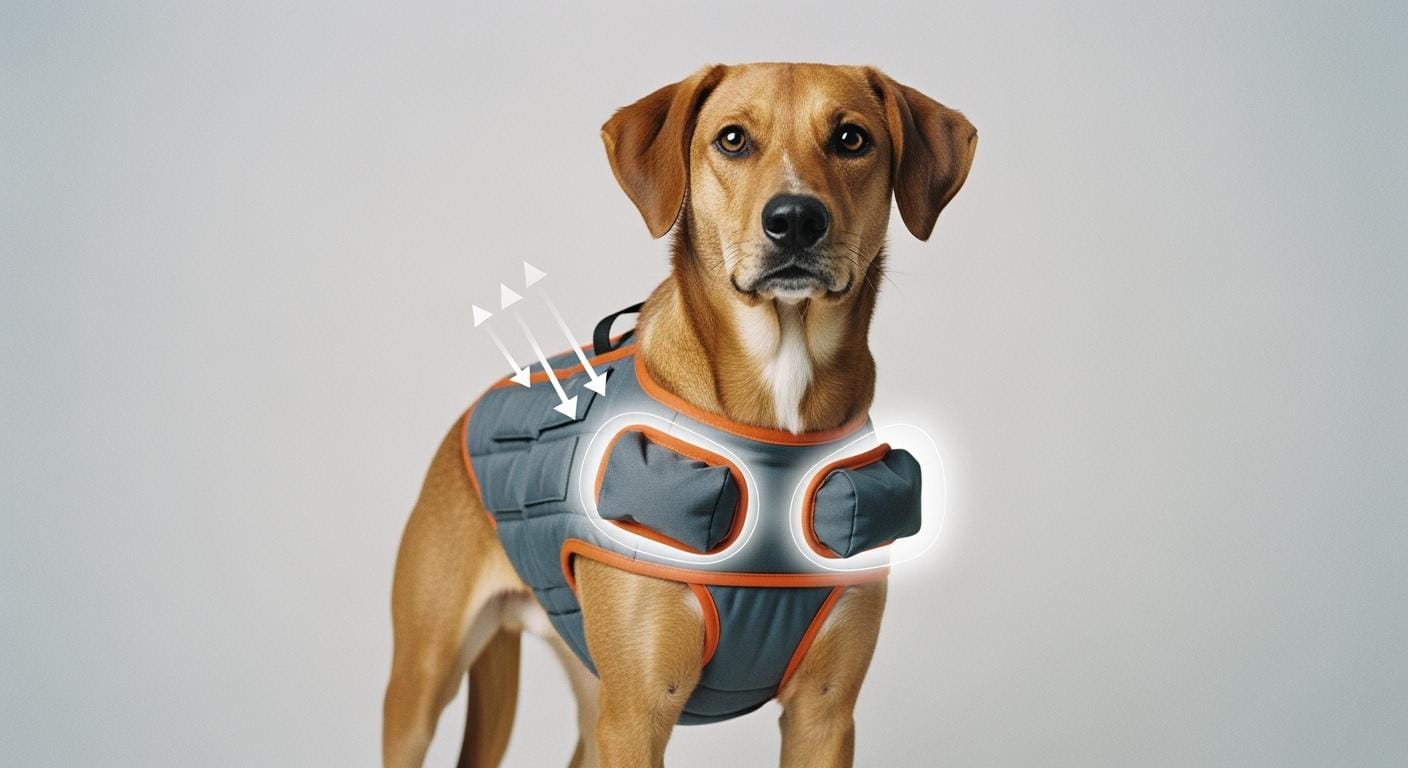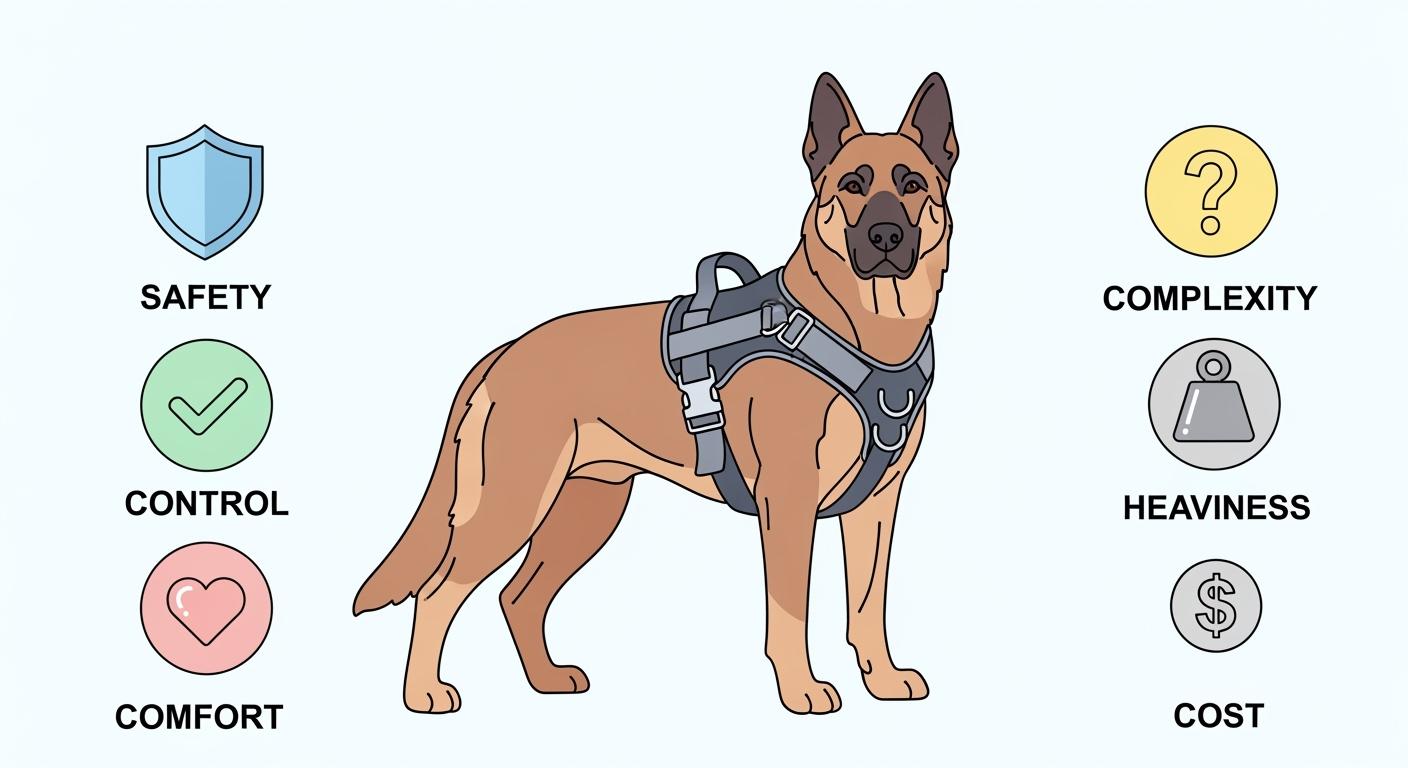
A heavy duty large dog harness makes sense when your dog pulls hard, surges toward distractions, or needs more stability on longer walks. The added structure can spread leash force across the chest instead of concentrating it at the neck, but only if the harness fits well and lets the shoulders move freely. If your dog already walks calmly, the extra bulk may not improve anything.
- Better control for strong pullers and high-distraction walks
- More support for hiking, uneven ground, and assisted lifting
- More risk of rubbing or heat buildup if the fit is off
When a heavy duty large dog harness is the right choice
Best uses for stronger build and more coverage
You usually want a heavy duty large dog harness when a standard harness shifts, twists, or gives you too little leverage. That often happens with big dogs that lunge at squirrels, lean into the leash on city walks, or cover rough ground where you may need a top handle for extra control. A heavier harness can also make sense when you need multiple adjustment points, sturdier buckles, and a chest panel that stays more stable under load.
- Large dogs that pull hard or change direction suddenly
- Trail walks, hiking, and longer outings on uneven terrain
- Training sessions in busy areas where steering matters
- Dogs that need occasional help getting over obstacles or into vehicles
- Owners who want a handle and stronger hardware for better control
A heavier harness should still work with your dog’s movement, not against it. Dogs that surge forward often do better when the equipment is paired with front-clip harness training steps instead of relying on tougher materials alone.
When a lighter harness works better
A simpler harness is often the better choice for calm walkers, short neighborhood walks, and warmer weather. Less material usually means less heat retention, faster drying, and less bulk around the shoulders. If your dog does not pull much and only needs gentle guidance, a lighter design can be easier to put on and more comfortable to wear.
- Your dog stays near you and rarely lunges
- Walks are short and usually happen in low-distraction areas
- Your dog overheats easily or has a short coat
- You want a quick on and off routine for daily use
Going heavier than necessary can create new problems, especially on dogs with shorter torsos or broad shoulders. Before sizing up, measuring a dog for a harness usually tells you more than the size label alone.
Heavy duty, everyday, and escape-focused harnesses compared
| Feature | Heavy duty large dog harness | Everyday harness | Escape-focused harness |
|---|---|---|---|
| Best for | Strong pullers, training, trails | Calm walks, routine daily use | Dogs that back out of standard shapes |
| Weight | Heavier | Light | Medium |
| Control | High | Moderate | High when fitted correctly |
| Freedom of movement | Good if the chest shape is right | Usually high | Depends on strap layout |
| Ease of use | Usually slower to put on | Quick on and off | Moderate |
| Adjustment range | Often wider | Often simpler | Usually wide |
| Main downside | More bulk and more heat | Less stability under hard pulling | Can be fussy to fit |
The best choice depends on your dog’s behavior, body shape, and walking routine. Heavy duty is not automatically better. It is only better when the extra structure solves a real handling problem.
What build details change real-world comfort and control
Buckles, handles, and leash attachment points
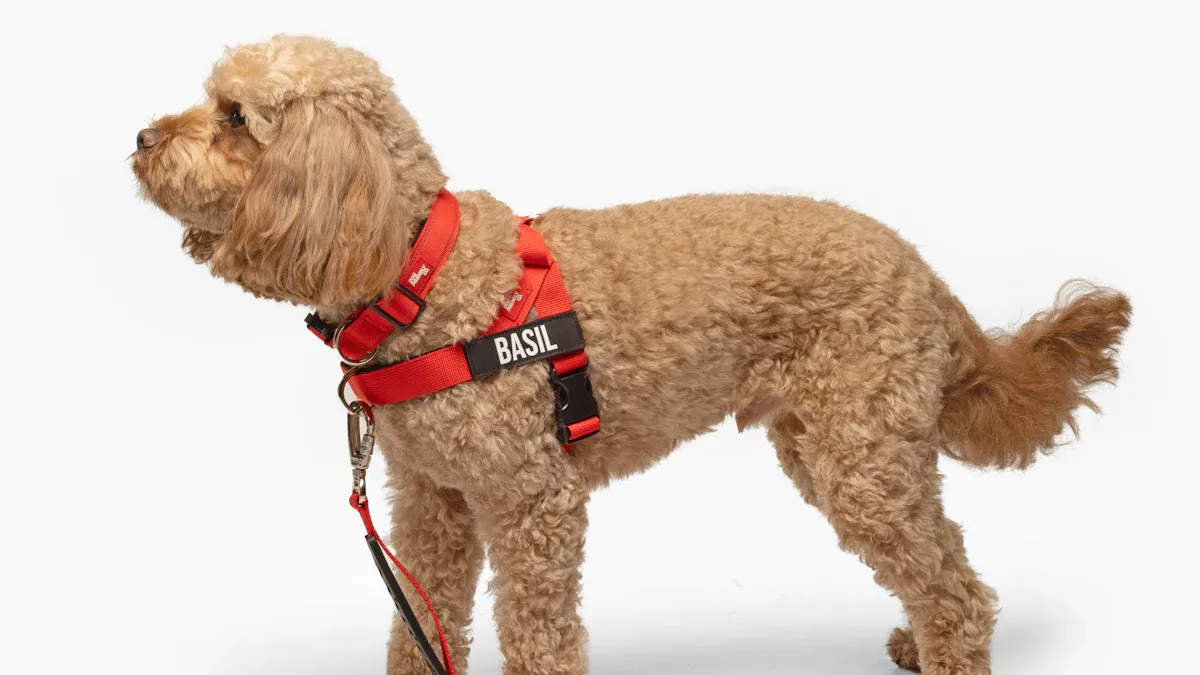
You notice buckle quality every time you gear up for a walk. Large buckles that open smoothly are easier to use when your dog is excited or when your hands are cold, wet, or tired. A sturdy handle can help on stairs, at curbs, or when you need to steady a big dog for a moment, but it should not sit so high or far back that it tips the harness off center. Multiple leash attachment points can also help, especially if you are still working on pulling behavior.
Strap weight, chest coverage, and shoulder freedom
Heavier webbing and thicker padding can make a harness feel more secure, but those same features add warmth and bulk. The chest area should sit on the sternum, stay centered when leash tension starts, and clear the shoulder blades through a full stride. If the front panel crosses too high or the side straps sit too close to the armpits, the harness may rub, shorten the stride, or make the dog move stiffly.
Fit matters more than heavy materials by themselves. Reviewing everyday harness fit and sizing checks can help you judge whether the problem is the size, the shape, or the amount of coverage.
- The chest panel should stay centered during the walk
- The front legs should extend normally without shortening the stride
- The harness should not climb toward the throat when the leash tightens
- The dog should not come back warm and damp under every padded section
Failure signs that matter on real walks
Pass or fail checks after a short walk
| Check item | Pass signal | Fail signal | What to do |
|---|---|---|---|
| Chest panel position | Stays centered on the chest | Slides to one side | Rebalance and tighten evenly |
| Buckle handling | Fastens and releases smoothly | Sticks or jams | Clean or replace worn hardware |
| Shoulder movement | Normal stride and easy turns | Short steps or stiff turning | Loosen and check strap placement |
| Skin contact | No redness or hair loss | Hot spots or rubbing marks | Refit, resize, or change style |
| Harness balance | Stays level during the walk | Drops at the front or twists | Adjust again or switch designs |
Troubleshooting common harness problems
| Symptom | Likely cause | Fast check | Fix |
|---|---|---|---|
| Harness drops at the front | Chest strap is too loose | Check whether the front panel stays centered | Tighten and retest on a short walk |
| Rubbing behind the legs | Strap sits too close to the armpit | Look for redness after ten minutes | Reposition or switch to a different shape |
| Shortened stride | Front shape crosses the shoulder area | Watch the dog turn and trot | Loosen or change harness style |
| Dog feels hotter than usual | Too much padding or coverage | Check under the harness after the walk | Use a lighter harness in warm weather |
| Escape attempt | Wrong size or unsuitable design | Try a controlled pull test indoors | Resize or move to an escape-focused build |
Note: If you see limping, skin damage, throat pressure, or unusual stress, stop using the harness and ask your veterinarian to check the fit and your dog’s movement.
When to switch harness types
Switch when the same problem keeps coming back after careful refitting. If a heavy duty large dog harness still drops forward, traps heat, or limits stride, a lighter or differently shaped harness may suit your dog better. If the current harness feels secure in your hand but looks awkward on the dog’s body, comparing dog harness styles is often more useful than tightening the same straps another notch.
Keep expectations realistic. A harness can improve steering and reduce leash chaos faster than it changes the habit itself, which is why quick results versus training timelines matter when you are deciding whether the setup is helping enough.
| Decision point | Stay with heavy duty | Switch to something lighter or different |
|---|---|---|
| Control | You clearly get better steering and stability | The extra material does not change handling much |
| Comfort | Your dog moves normally and shows no rubbing | You keep seeing heat, stiffness, or hot spots |
| Fit stability | The harness stays centered through the walk | It twists, drops, or pulls off center |
| Daily practicality | The added weight is worth the benefit | The harness feels bulky for your normal routine |
FAQ
How do you know if a dog harness fits correctly?
A good fit stays centered on the chest, clears the armpits and throat, and lets your dog walk, turn, and trot without shortening the stride. You should also be able to slide two fingers under the straps without forcing them.
Can you leave a harness on your dog all day?
Most dogs do better when the harness comes off after walks or training. That reduces the chance of rubbing, trapped heat, and pressure from a strap that shifts while the dog rests.
What is the best way to clean a dog harness?
Follow the care label first. In most cases, hand washing with mild soap, rinsing well, and air drying fully is the safest routine for straps, padding, and hardware.