
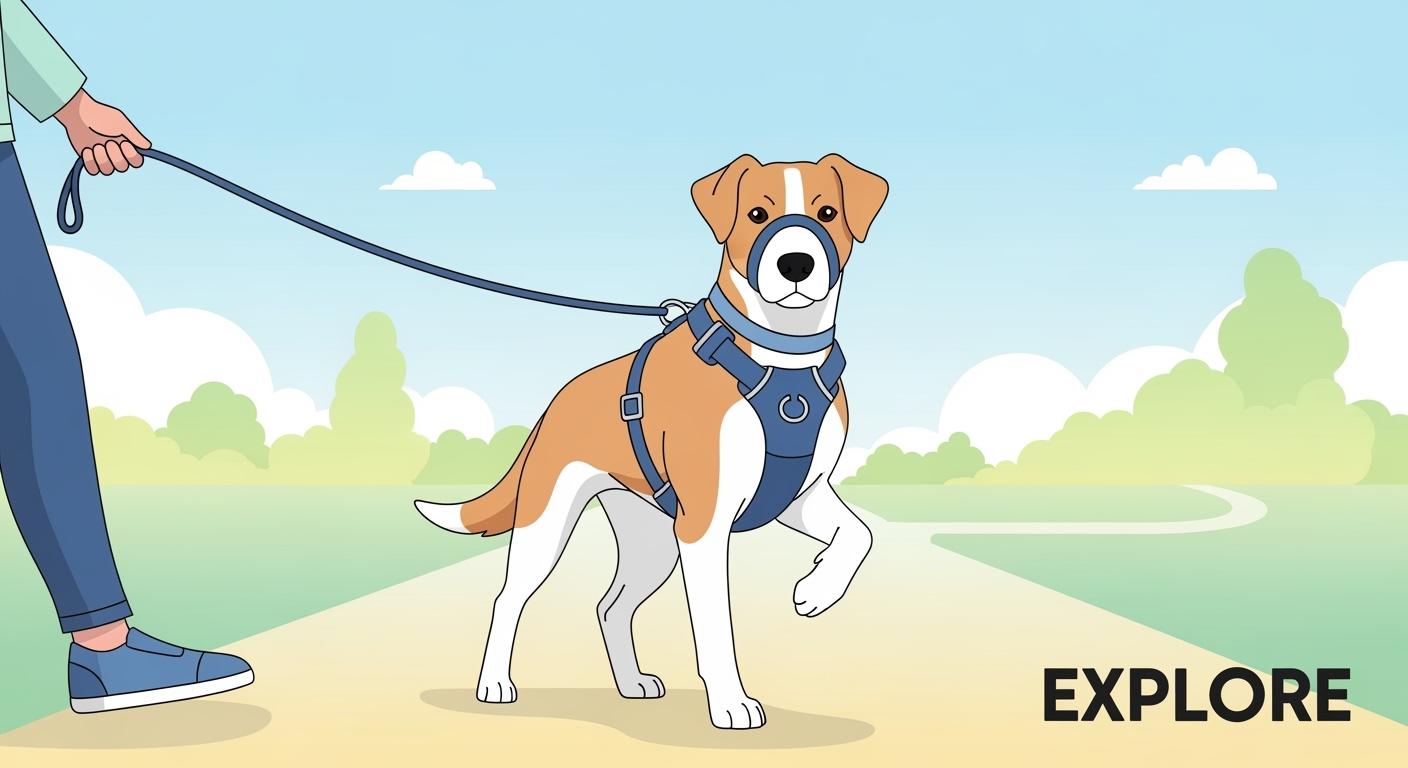
A front dog harness can make walks easier when your dog pulls, lunges, or drifts ahead. The chest clip gives you more steering than a back-clip harness, but it only works well when the fit stays centered and your dog can still move naturally. If the harness twists, rubs, or shortens your dog’s stride, it is usually the wrong size, the wrong shape, or the wrong style for that dog.
Key Takeaways
- A front dog harness usually gives you better steering because the leash attaches at the chest.
- Fit matters as much as clip position, especially around the shoulders, chest, and armpits.
- If the harness twists, rides up, or changes your dog’s gait, another style may work better.
When a Front Dog Harness Works Best
For most people, a front dog harness means a front-clip harness with the leash ring on the chest. That clip placement changes the walk more than the word harness does. It is often a practical choice for leash training, busy sidewalks, and dogs that need a little more turning guidance without pressure on the neck from a collar.
What the front clip changes
When the leash connects at the chest and your dog surges forward, the pull tends to turn the body slightly back toward you instead of letting the dog drive straight ahead. That redirection can make pulling less rewarding and can give you more control in real walking situations.
- The chest ring helps turn the dog instead of letting all the force go straight ahead.
- You can usually guide turns, stops, and changes of direction more easily.
- Many dogs become easier to manage in crowded or distracting places.
A front clip can help, but it is not a shortcut around training. Dogs that lean hard into the leash, ignore the turning effect, or get more frustrated when redirected may still need slower leash work and a different harness setup.
Front-clip, back-clip, and dual-clip at a glance
| Harness Type | How It Feels on Walks | Best Use |
|---|---|---|
| Front-clip | Gives more steering by redirecting forward pull; can twist if the fit is off. | Leash training, stronger pullers, and walks where control matters most. |
| Back-clip | Usually feels simpler and less intrusive during relaxed walks, but does little to discourage pulling. | Dogs that already walk well or need more freedom on casual outings. |
| Dual-clip | Lets you switch between front and back attachment depending on the walk. | Dogs that need training support sometimes but not on every walk. |
When another clip style is easier
Some dogs do not stay comfortable or stable in a front-clip design. Fit problems show up most often on dogs with very deep chests, very narrow fronts, long backs, or other body shapes that make the chest panel slide off center. Some high-drive dogs also pull hard enough to twist the harness instead of responding to it.
- Your dog’s chest panel keeps drifting to one side.
- The leash starts dragging across a front leg during turns.
- Your dog takes shorter steps or looks stiff through the shoulders.
- You keep adjusting straps, but the harness still will not stay in place.
Note: If the harness still shifts after careful adjustment, the shape of the harness is usually the bigger problem than one more strap change.
What to Watch on a Real Walk
Steering and turning power
A front dog harness changes how you guide your dog because the leash starts at the chest instead of the back. If your dog pulls, the harness can help turn the body toward you instead of giving the dog a straight line to lean into. That usually feels different right away on turns, stops, and sidewalk passes.
A quick test is often enough. Walk in a straight line, make one calm turn, then stop. If your dog stays more organized beside you and the harness stays centered, the setup is probably helping. If your dog still powers forward while the harness twists sideways, you are not getting the main benefit of a front clip.
Chest pressure and shoulder room
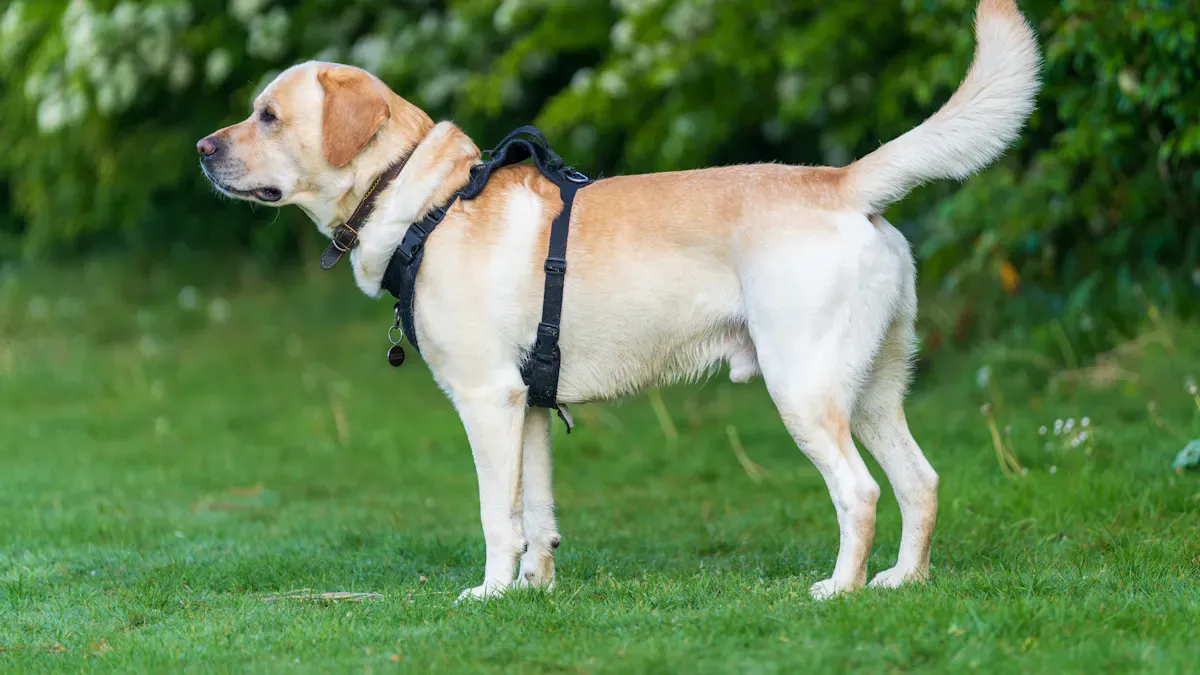
The pressure from a front-clip harness should sit across the chest, not ride up into the throat or dig in behind the front legs. Just as important, the straps should leave enough room for normal shoulder movement. If a strap sits too close to the shoulder blade, some dogs shorten their stride to avoid the contact.
Watch your dog from the side while walking at a normal pace. A comfortable fit usually looks smooth and even. A poor fit often shows up as choppy steps, high stepping, leaning, or repeated head tossing. Those are not small details. They are signs that the harness may be changing movement in a bad way.
Harness twist, off-center clips, and leash drag
One of the most common front-clip problems is twist. The chest ring starts centered, then slides off to one side after a few steps or a stronger pull. When that happens, the leash may brush the shoulder or drag across the front leg. That is annoying for some dogs and distracting for many.
Twist usually points to one of three problems: the harness is too loose, the shape does not match the dog, or the dog is pulling hard enough that the harness cannot stay stable. If you see the chest panel drifting again and again, take that seriously instead of assuming the dog will get used to it.
Fit and function checks
| Check Item | Pass Signal | Fail Signal | What to Do |
|---|---|---|---|
| Overall fit | Snug without pinching; for most dogs you can slide two fingers under the straps. | Too loose, too tight, or shifting during the walk. | Adjust the straps and confirm the size range matches your dog. |
| Chest panel | Stays centered on the chest while walking and turning. | Slides off center or rotates around the body. | Re-adjust first; if it keeps happening, consider another harness shape. |
| Shoulder movement | Normal stride length and relaxed movement. | Short steps, stiffness, or high stepping. | Move straps away from the shoulders or try another design. |
| Leash path | Leash stays clear of the front legs. | Leash drags across a leg or shoulder. | Check chest-ring alignment and overall stability. |
| Skin contact | No hot spots, rubbing, or hair wear after the walk. | Redness, chafing, or rubbing near the armpits or chest. | Stop and re-check fit before the next walk. |
Common problems and quick checks
| Problem | Likely Cause | Fast Check | Fix |
|---|---|---|---|
| Harness shifts or rubs | Too loose or the chest shape is a poor match. | Check whether the straps stay in the same place after a short walk. | Tighten within the proper range or try a different cut. |
| Dog moves stiffly | Straps are too tight or sitting over the shoulder area. | Watch stride length from the side. | Loosen, reposition, or change harness style. |
| Chest panel slides sideways | Loose fit, wrong size, or strong off-balance pulling. | Look at the chest ring after each turn. | Re-center and re-fit; if it repeats, switch designs. |
| Straps twist during the walk | Webbing is not lying flat or the harness is rotating under tension. | Check the harness before and after a few minutes of walking. | Straighten the straps and reassess overall fit. |
| Dog escapes or backs out | Harness is too loose or not secure for that body shape. | Check buckles, strap tension, and rear coverage. | Do not keep using it until the fit issue is fixed. |
Tip: Re-check harness fit after weight changes, coat changes, or a new grooming cut. Small body changes can affect a front clip more than people expect.
Normal adjustment vs real discomfort
Some dogs need a short adjustment period with any new gear, especially during the first few minutes. Real discomfort is different because it keeps showing up after the dog starts moving normally. If your dog repeatedly resists the harness, changes gait, or develops rubbing after walks, the fit needs attention.
- The neck area rides too high and starts pressing toward the throat.
- The chest or belly straps sit so close to the armpits that they rub.
- The strap between the front legs feels too wide and changes the dog’s walk.
- Your dog freezes, scratches at the harness, or tries to shake it off every time.
Disclaimer: If you notice limping, clear pain, breathing changes, or skin injury, stop using the harness and ask your veterinarian what setup is safest.
Mistakes that make a good harness feel bad
- Choosing by color or style before checking fit and body shape.
- Assuming one brand’s size chart will match another brand.
- Pulling the straps extra tight for control and creating pressure instead.
- Skipping a short test walk before using the harness on a long outing.
- Ignoring worn webbing, stretched straps, or damaged buckles.
- Expecting the harness alone to fix pulling without any leash practice.
When to switch styles
If a front dog harness never stays centered, keeps affecting movement, or does not give you meaningful control, it may be time to switch. A back-clip harness is often easier for calm dogs that already walk well and mainly need comfortable everyday gear. A dual-clip harness can make sense when you want a front attachment for training but a back attachment for lower-distraction walks.
The best choice is not the harness that promises the most control. It is the one that keeps your dog moving freely while giving you enough handling confidence for the walk in front of you.
FAQ
How do you know if a front dog harness fits right?
A front dog harness usually fits right when the straps lie flat, the chest panel stays centered, and your dog walks without rubbing, short steps, or twisting.
Can you leave a front-clip harness on your dog all day?
It is usually better to remove it after walks or training so the straps do not rub while your dog rests, sleeps, or plays.
What is the best way to clean a dog harness?
Follow the care label when there is one; otherwise, wash with mild soap and warm water, rinse well, and let it air dry before the next walk.






