
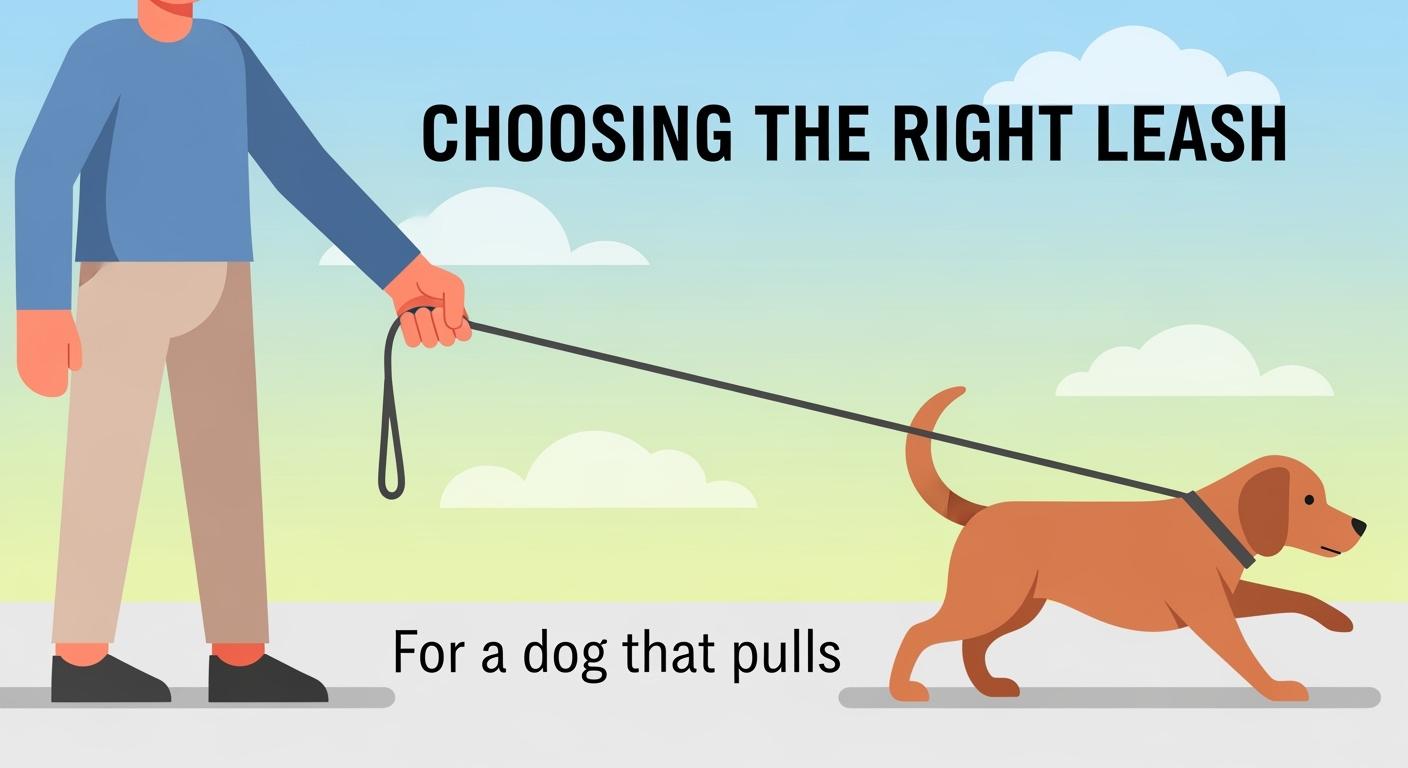
If your dog hits the end of the leash at every curb, squirrel, or passing dog, the best leash for dog that pulls is usually a fixed-length leash with a predictable feel in your hand. For most everyday walks, a 4 to 6 foot leash with sturdy webbing, a comfortable grip, and a reliable clip gives you faster feedback and better control than long retractable cords or stretch-heavy designs.
The biggest tradeoff is often fixed-length or retractable handling, and pullers usually do better with the option that lets you shorten up fast. If the leash stays tight through most of the walk, front-clip harness training steps often help more than changing handle padding alone.
Key Takeaways
- A fixed-length leash is usually the easiest starting point for dogs that pull because it keeps distance and timing consistent.
- For everyday walking, 4 to 6 feet is often the practical range for steering, passing people, and crossing streets.
- Leash choice matters, but pulling usually improves most when the leash, fit, and training all work together.
What Makes a Leash Easier to Control
A good leash for a puller should feel simple, steady, and easy to shorten in one motion. That usually means no complicated reel, no dramatic stretch, and no delay between your dog’s movement and your response. For everyday neighborhood walks, training leash length for loose-leash walking usually lands in the same practical range: long enough for a natural stride, short enough for quick feedback.
When you compare dog leash options, focus on these basics first:
- Fixed length for predictable handling
- Webbing or material that feels sturdy without being bulky
- A clip that closes securely and matches your dog’s collar or harness ring
- A handle you can hold comfortably when your dog surges
- A traffic handle, which is the short extra loop near the clip, if you often walk in tight spaces
That last feature matters more than many people expect. A traffic handle lets you bring your dog close at crosswalks, near parked cars, or when another dog appears suddenly. Instead of gathering slack by hand, you already have a close-control option built in.
Fixed-Length vs Retractable vs Bungee
| Leash Type | Control | Feedback Speed | Drift Risk | Best Use |
|---|---|---|---|---|
| Fixed-length | High | Fast | Low | Daily walking, training, busy sidewalks |
| Retractable | Low | Slow | High | Open space with a dog that already walks well |
| Bungee or dynamic | Medium | Moderate | Medium | Specialized use, not ideal for strong pullers in traffic |
When Extra Length Starts Working Against You
Extra length sounds appealing because it gives a dog room to move, but pullers often turn that freedom into leash lag. By the time you feel the change in direction, your dog may already be wide of your path, wrapping around a signpost, or closing in on another dog. In crowded places, that delay matters.
Retractable leashes can also create mixed signals during training. If forward pressure keeps paying out more line, some dogs learn that pulling is how they get farther. Bungee styles can soften the jolt, but they also soften the feedback you rely on to steer and reset.
Waist-worn setups can work for steady runners, but hands-free leash fit and safety mistakes become obvious fast when a dog cuts sideways, brakes suddenly, or lunges at a trigger. If you need close street control, a standard handheld leash is usually the safer bet.
Features That Matter More Than Looks
Many leash problems start with buying for color, softness, or matching accessories instead of function. A pretty leash is not much help if the clip feels small for your dog’s strength, the handle twists in your grip, or the material gets slippery when wet.
Look harder at the parts that take real stress during a walk:
- Clip size and closure strength
- Stitching around the handle and hardware
- Leash width relative to your dog’s size and pulling force
- Grip comfort during sudden tension, not just at rest
- Whether the leash stays easy to manage when you shorten it quickly
If your dog pulls hard enough to twist your shoulders, cough against the collar, or drag you into turns, it may be time to compare the best dog harness for pullers instead of expecting the leash alone to fix the problem. A leash can improve handling, but it does not replace fit or training.
Note: If your dog shows throat pressure, coughing, or rubbing around the neck, shift pressure away from the throat and ask your veterinarian what walking setup makes sense for your dog.
Failure Signs That Your Setup Is Not Working
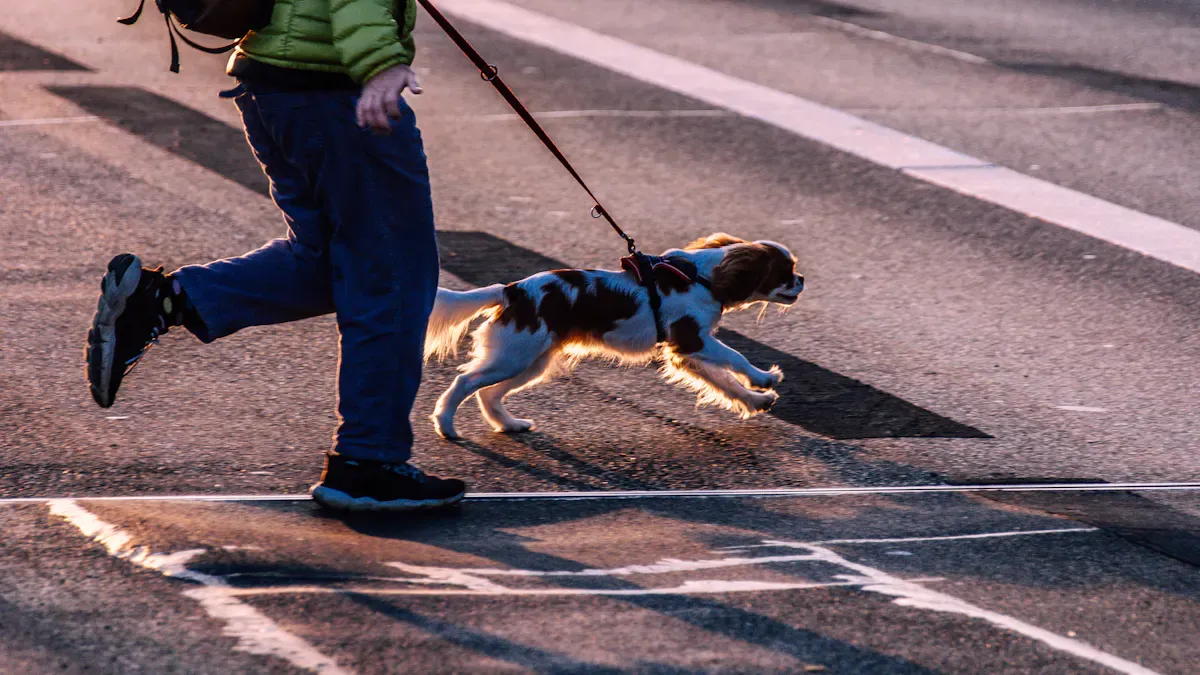
You usually do not need a complicated test to spot a leash setup that is failing. The signs show up during normal walks: late reactions, wrapped legs, sore hands, drifting too far into other people’s space, or constant tension that never resets.
| What You Notice | Likely Cause | What to Change |
|---|---|---|
| Your dog reaches the end of the leash before you can react | Too much length or too much stretch | Move to a fixed-length leash |
| The leash tangles around legs or street furniture | Thin cord, excess slack, or wide drifting | Use shorter, more predictable handling |
| Your hand aches after a short walk | Handle shape or width does not match real pulling force | Choose a more secure grip and better webbing width |
| You cannot bring your dog in close at crossings | No traffic handle or too much slack to gather | Use a leash with a close-control option |
| Pulling keeps getting rewarded | The setup gives more distance when the dog surges | Reset with shorter handling and reward slack |
Another common mistake is choosing by dog weight alone. Two dogs of the same weight can feel very different on leash if one surges suddenly, spins toward triggers, or leans forward through the entire walk. Your walking environment matters too. A leash that feels manageable on an empty trail may feel too long the minute you hit a busy sidewalk.
How to Make Walks Calmer Right Away
- Start every walk with the leash already at a manageable length instead of letting your dog hit full extension first.
- Shorten up before curbs, doorways, parked cars, and other tight spots, not after your dog has already surged.
- Reward slack the moment it appears so your dog learns that staying near you is what keeps the walk moving.
- If the leash goes tight, pause or change direction instead of letting your dog tow you forward.
These small timing changes matter because they turn the leash into clear feedback instead of a rope you are fighting against for twenty minutes. Most pullers improve faster when the rules stay predictable from one walk to the next.
FAQ
What leash length is usually best for a dog that pulls?
For most everyday walks, 4 to 6 feet gives the best balance of control, reaction speed, and enough room for a normal stride.
Is a retractable leash a bad choice for pullers?
Usually yes in busy areas, because the extra distance and delayed feedback can make steering, passing, and quick shortening harder.
Should I use a harness or a collar with a pulling dog?
A harness is often the better option when pulling puts pressure on the neck, but the best choice depends on your dog’s fit, behavior, and comfort.






