
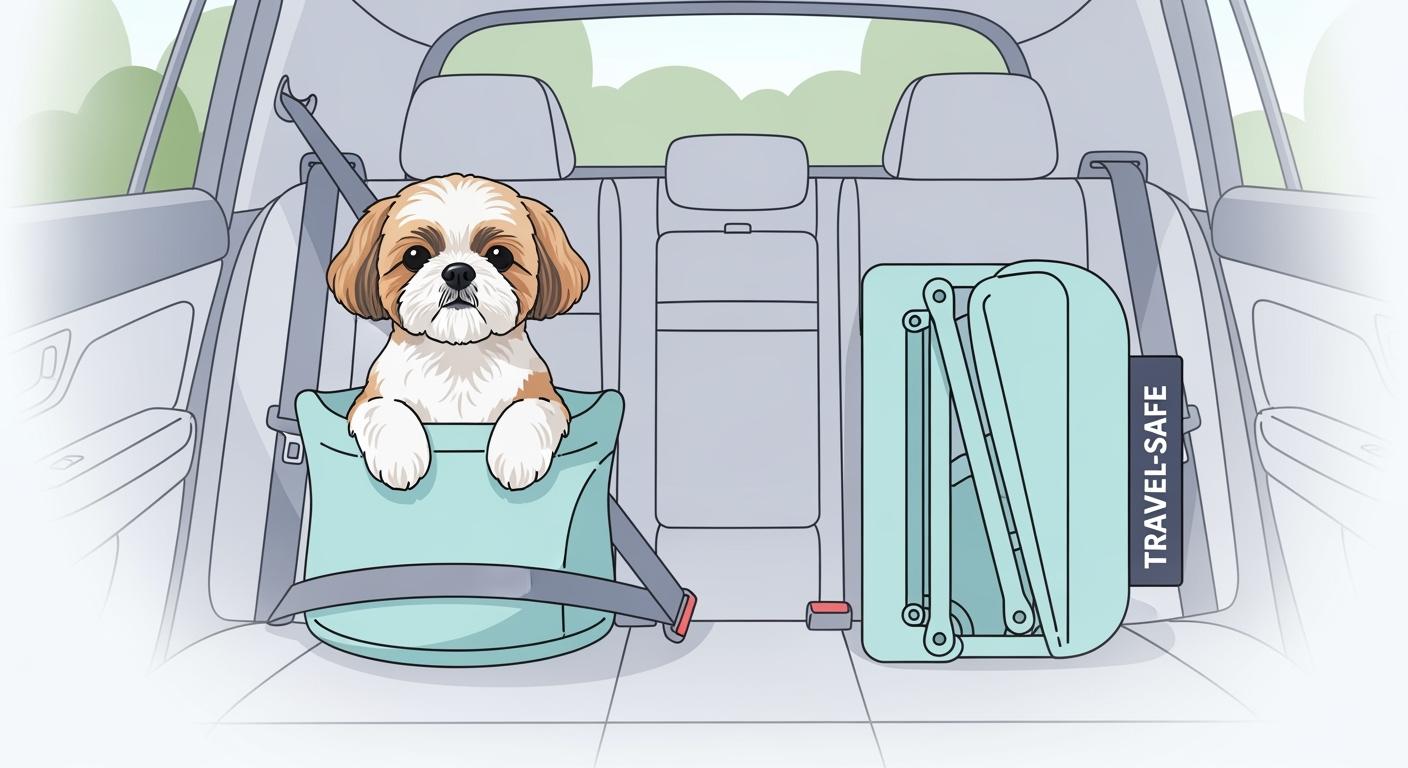
A small dog folding car seat makes the most sense when you need two things at once: a secure riding spot for your dog and a setup that does not take over the whole car when the trip is over. The folding feature is only a real advantage if the seat opens into a stable shape, stays put on the vehicle seat, and supports your dog without sagging once the ride starts.
Key takeaways
- A folding car seat is most useful for small dogs when storage, portability, and quick setup matter.
- The best sign of a good seat is not how flat it stores, but how well it holds its shape after unfolding.
- Wrong sizing, loose belt routing, and a twisted tether are the most common reasons a seat feels unstable.
- If a brand mentions testing, check the dog size, weight range, and installation method behind the claim.
When a folding seat is the right choice
A folding model works well for short daily drives, shared vehicles, taxis, and homes where gear has to be stored between trips. It usually gives a small dog more structure than a soft travel bed, while taking up less long-term space than a rigid booster. If you are comparing options for a toy breed or a compact dog with limited riding space, small dog car seat buying factors usually come down to wall height, base depth, and how centered the tether keeps the dog.
| Option | Best use | Main strength | Main tradeoff |
|---|---|---|---|
| Folding car seat | Shared cars, errands, travel with limited storage | Easy to store and move between vehicles | Needs solid shape retention after unfolding |
| Fixed booster seat | One primary vehicle and frequent use | Usually more rigid once installed | Takes up more space when not in use |
| Soft travel bed | Calm dogs and light comfort use | Soft and simple | Can slide, bunch, or give too little side support |
A fold-flat option such as the small dog folding car seat works best for dogs that want a defined place to settle without the bulk of a permanently mounted booster. If your dog braces against the side wall during turns or likes to curl up instead of perch high, that style can be a better fit than a shallow perch seat.
What to check after the seat unfolds
The folding mechanism matters less than what happens next. Once opened, the seat should sit level, the side walls should stay upright, and the center should not dip under your dog’s weight. If you are deciding between a lower folding model and a deeper perch, dog car booster seat sizing and material choices can act as a second sizing reference.
| Check item | Pass signal | Fail signal | What to do |
|---|---|---|---|
| Base shape | Seat opens flat and stays even | Seat leans, twists, or needs constant reshaping | Re-open it and inspect the frame or insert |
| Side support | Walls stay upright when the dog leans | Walls fold outward or cave in | Check anchor tension and side structure |
| Center support | Dog settles without a deep middle dip | Dog slides toward the center | Recheck fit, padding, and base stiffness |
| Seat stability | Seat stays in place through normal turns and braking | Seat shifts across the vehicle seat | Tighten the belt path and clean the contact surface |
| Tether path | Tether stays straight and centered | Tether twists or pulls the dog sideways | Reroute and adjust the attachment point |
Tip: Set the seat up first, then place your dog inside. It is much easier to spot a slanted base or twisted tether before your dog settles in.
Common mistakes that make a folding seat feel unsafe
Most problems come from fit and installation, not from the folding feature itself. Sizing errors are common when the seat looks roomy but the dog cannot brace well, which is why dog car seat and carrier sizing checks matter before you focus on fabric or storage.
- The seat is too large. A loose fit gives the dog extra room to slide during braking or turns.
- The seat is too small. Tight walls can force an awkward posture and make the dog keep shifting to get comfortable.
- The belt path is loose. Even a well-made seat will feel unstable if the vehicle belt or anchor strap has slack.
- The tether is badly positioned. Too short can pull the dog forward; too long can let the dog climb the wall or step partly out.
- The seat sits on a steep slope. Some back seats angle downward enough to change how a folding model carries weight.
- Wear is ignored after repeated folding. Bent inserts, soft spots, and tired seams usually show up gradually.
Harness setup matters too. A seat cannot do much if the dog’s clip point lets the body twist or drift, and seat belt and harness fit mistakes often explain why a dog keeps rebalancing instead of relaxing.
Features worth paying for and claims worth checking
Useful features are the ones that improve everyday use without creating new failure points. Look for a firm base panel, walls that recover their shape after folding, a liner that can be removed for cleaning, and hardware that feels secure rather than decorative. Breathable interior fabric can help on longer rides, but stability matters more than plushness.
Be careful with vague safety language. A brand may mention testing, but that only means something if it is tied to a specific model, a stated dog weight range, and a clear installation method. When the installation itself is the question, dog car seat restraint setup and installation choices can help you compare how the seat, tether, and vehicle belt should work together. If you are also weighing higher-sided models, booster seat comfort, fit, and safety tradeoffs can help narrow the field.
For most buyers, the practical questions are simpler than the marketing. Does the base stay level after the tenth use, not just the first? Can your dog lie down without bunching the center? Can you remove it quickly without fighting the straps? Those answers matter more than broad claims that are not explained.
Quick troubleshooting for daily use
| Symptom | Likely cause | Fast check | Fix |
|---|---|---|---|
| Seat shifts during turns | Loose routing or low grip against the vehicle seat | Push the seat side to side before driving | Retighten the routing path and reset the base |
| Dog slides toward the middle | Base sag or oversized seat | Press the center after unfolding | Check support insert and confirm sizing |
| Side wall collapses | Weak structure or poor tension | Press lightly on each wall by hand | Reset the anchors and inspect for wear |
| Tether pulls off-center | Twist, bad clip angle, or wrong length | Watch where the dog settles after clipping in | Reroute or adjust to keep the chest centered |
| Seat is hard to fold back down | Misaligned insert or bent frame section | Fold it empty on a flat surface | Realign the structure before storing |
A small dog folding car seat is a good travel tool when it solves a real storage problem without giving up too much support on the road. If it opens flat, stays stable, and keeps your dog centered, the folding feature is helping. If it shifts, sags, or twists every time you use it, the convenience is not worth much.
FAQ
How do you clean a small dog folding car seat?
Remove the liner or pad if the model allows it, wipe the shell and straps, and let every part dry fully before folding it away.
Can a folding car seat work for puppies?
Yes, if the seat fits the puppy’s current size and the tether setup does not leave excessive slack.
Will a folding seat fit any car?
Not always, because seat depth, back-seat angle, and belt routing can vary enough to change how stable the base feels.
What if the seat shifts during a drive?
Stop when it is safe, retighten the routing path, reset the base level, and make sure the underside is not sliding on the vehicle seat.
How should you store it when not in use?
Fold it empty, keep the tether untangled, and avoid stacking heavy items on top so the walls and base keep their shape.






