
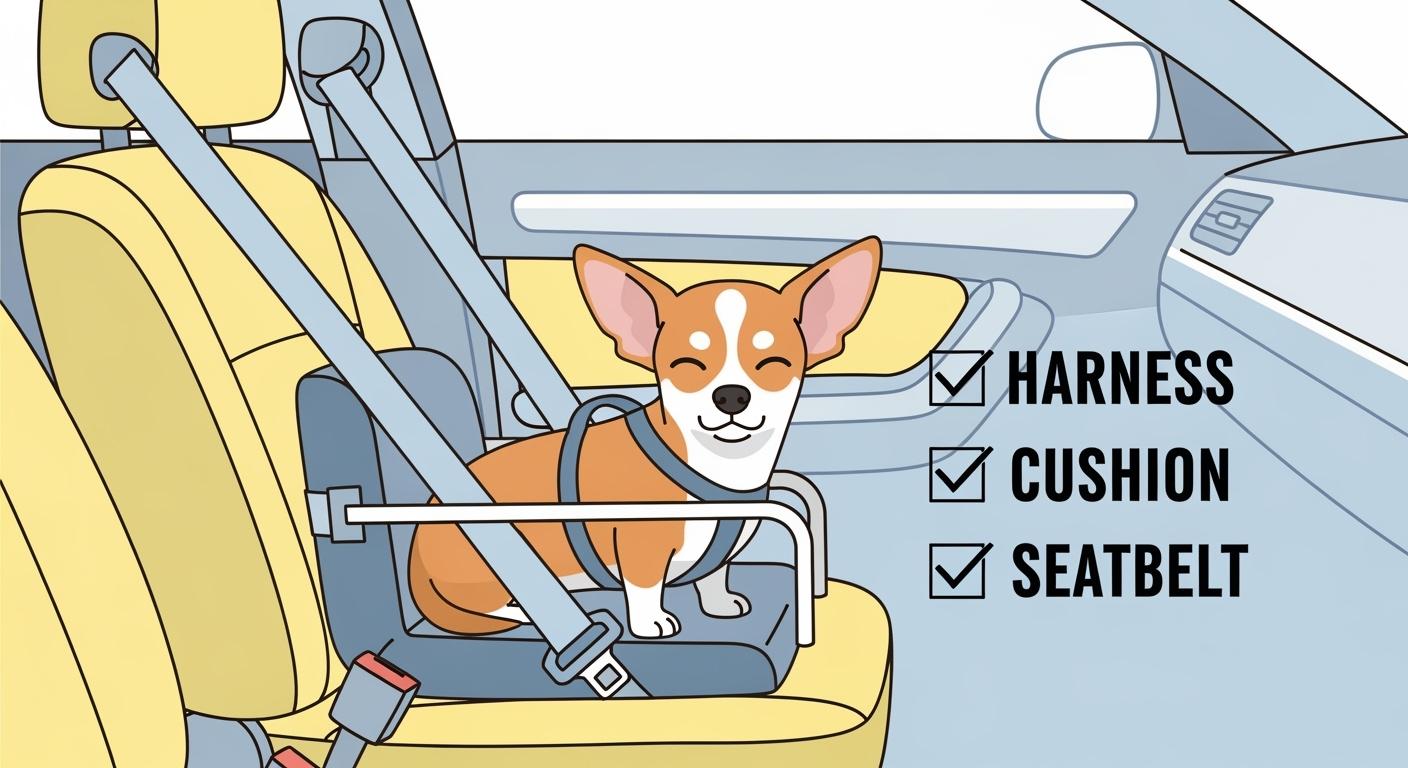
A pet dog booster seat can help a small dog sit higher, settle more easily, and stay contained during normal rides. It can also make cleanup easier when the inside gets muddy, damp, or covered in hair. What it should not do is create a false sense of crash protection. Before you buy, focus on rear-seat fit, stable placement, harness routing, entry height, and whether your dog can sit, turn, and settle without slumping or bracing.
If your dog struggles to stay calm in an open booster seat, a more contained travel setup may be a better match. For everyday rides, Always measure your dog first. Pick a booster seat that fits well. A good fit lowers the chance of wobble, tangling, rubbing, and return-worthy setup mistakes.
What a booster seat should really help with
The best use for a booster seat is everyday positioning and comfort. A good one should sit flat on the rear seat, keep your dog from sliding into the footwell, and give enough support that your dog can rest without leaning hard against one wall. It should also leave the seat-belt path and buckle access clear so setup stays simple.
Look for these basic signs of a better everyday setup:
- Your dog can sit, turn, and tuck in without perching on the edge.
- The base stays level instead of tipping toward one side.
- The tether clips to a body harness, not to a collar.
- The side walls support the body without closing off airflow.
- The cover can be removed or wiped down without a long reset.
Tip: Treat a booster seat as a comfort and positioning aid. Check fit and setup first, then check how your dog actually rides in it.
Fit checklist before you buy
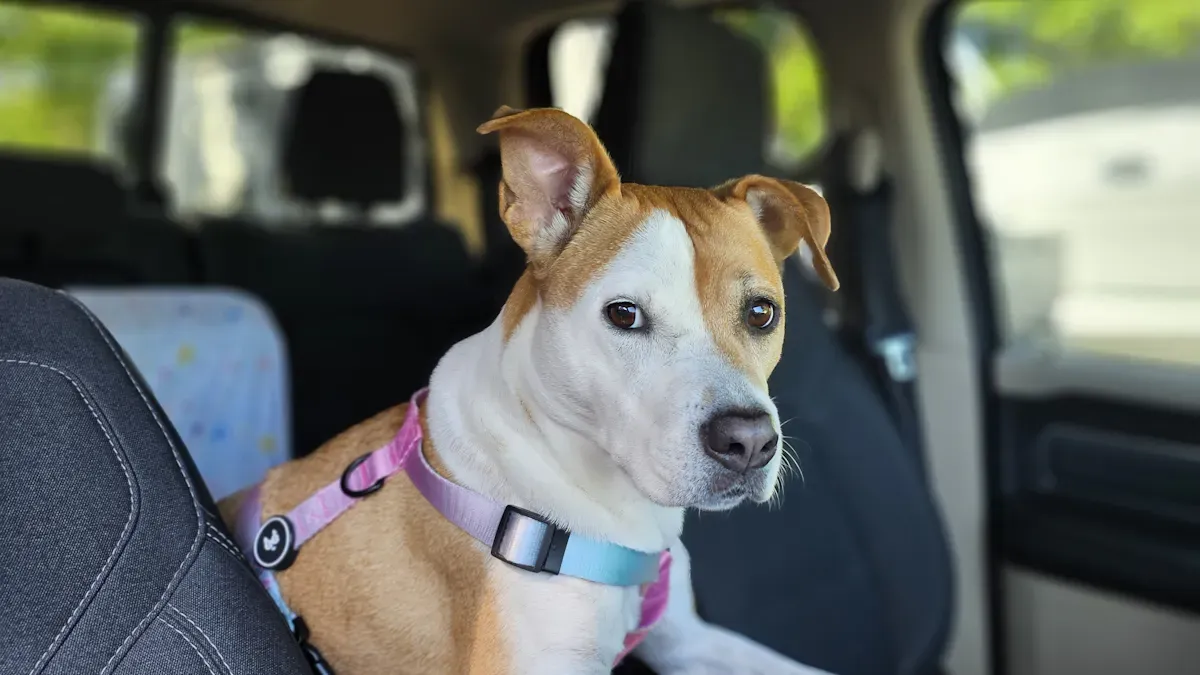
You do not need a long feature list to judge the best dog car seat. You need a short set of checks that tell you whether the seat fits your dog, fits your rear seat, and works with your daily routine.
- Check usable inside room. Your dog should be able to sit, turn, and settle without climbing onto the rim or curling into one narrow corner.
- Check wall height and entry. The seat should feel supportive, not confining. If the front edge is too high, many dogs brace, hesitate, or need lifting every time.
- Check the base shape. A flat, supported base is easier for a dog to trust than a hammock-like center that sags under body weight.
- Check rear-seat footprint. The seat should sit fully on the cushion instead of hanging over the edge or rocking across stitched seat contours.
- Check harness routing. The tether should work with a body harness and stay clear of the neck, face, and front legs.
- Check airflow and view. Raised walls can help a dog feel supported, but the seat should not trap heat or block most of the fresh air path.
- Check cleanup workload. Covers, liners, and seams should be easy to wipe, shake out, or remove after daily use.
| Check item | Pass signal | Fail signal | What to change |
|---|---|---|---|
| Inside room | Your dog can sit, turn, and rest without leaning hard on one side. | Your dog perches, slumps, or keeps readjusting. | Choose a better inside shape or a more supportive base. |
| Seat footprint | The base sits flat on the rear seat and feels steady by hand. | The seat tips, hangs over, or rocks on the cushion. | Recheck rear-seat fit or move to a different size. |
| Tether path | The tether clips to a harness and stays clear of the neck and legs. | The clip sits on a collar or crosses the face or shoulder line. | Use a body harness and shorten or reposition the tether. |
| Entry height | Your dog steps in or settles with little hesitation. | Your dog braces, paws at the edge, or needs lifting every ride. | Look for a lower front edge or wider opening. |
| Airflow | Your dog settles without overheating or heavy panting during normal rides. | The seat feels stuffy, enclosed, or heat-trapping. | Choose a more open wall design or lighter inner fabric. |
| Cleanup | Hair, dirt, and light spills can be removed without much effort. | Debris catches in deep seams or the cover is hard to remove. | Prioritize simpler covers and less fussy interior construction. |
Setup checks before the first ride
A product can look fine in photos and still fail in the car. Before the first longer trip, do a short driveway or neighborhood test. Install the seat in the rear seat, route the vehicle belt or strap path, then add the harness connection and watch how your dog settles.
Use this short setup routine:
- Push the installed seat side to side. It should feel anchored, not loose or springy.
- Clip the tether to a body harness and check that the clip stays low and clear.
- Let your dog enter, turn, and lie down once or twice before the car moves.
- Take a short ride with gentle turns and one calm stop.
- Recheck the seat after the ride for shifting, sagging, rubbing, or tangles.
For a more stable everyday setup, pay close attention to secure attachment. A booster seat that looks padded but slides across the seat is harder for a dog to trust and harder for you to use well.
Note: A calm short test ride tells you more than a long feature table. Watch posture, heat buildup, and tether position after the ride, not just before it.
Common mistakes and fast fixes
Most return problems come from mismatch, not from one single feature. The seat may be too small inside, too tall at the front edge, too soft in the center, or too awkward to install without covering the parts you need to use. Some dogs also dislike booster seats simply because the shape or opening makes entry stressful.
| Problem | Likely cause | Quick check | Fix |
|---|---|---|---|
| Seat shifts on turns | Poor rear-seat fit or weak base grip | Press side to side after install | Use a better-fitting base and recheck routing |
| Dog slumps or braces | Base sags or side support is poorly shaped | Watch posture during a short ride | Choose firmer base support and better inside room |
| Tether tangles | Clip is too high, too long, or routed across the body | Check clip position after entry and after a stop | Shorten the tether and keep it clear of the face and forelegs |
| Dog avoids getting in | Front wall is too high or opening is too narrow | Watch first entry without lifting | Choose an easier entry shape |
| Seat gets hot or stuffy | Too much padding or limited airflow | Feel the interior after a short ride | Pick lighter inner materials and a more open top edge |
| Cleanup takes too long | Fussy lining, deep corners, or hard-to-remove cover | Do one dry debris cleanup test | Prioritize simple liners and easier cover removal |
If your dog pants heavily, drools, whines, or cannot settle even after fit and setup changes, stop the ride and reassess the travel setup before the next trip. Never leave a dog alone in a parked car, even for a short stop.
FAQ
Is a booster seat the same as a crash-tested travel restraint?
No. A booster seat may help with positioning and comfort, but it is not the same thing as a crash-tested carrier or safety harness system.
Should a booster seat clip to a collar?
No. Use a body harness. Collar attachment can pull at the neck and usually gives poorer control of the tether path.
When is a booster seat the wrong choice?
If your dog cannot settle in an open elevated seat, keeps tangling the tether, or needs more containment, a different travel setup may fit better.
What should you recheck after the first few rides?
Recheck rear-seat stability, tether routing, entry comfort, heat buildup, interior sagging, and how easy the seat is to clean after normal use.






