
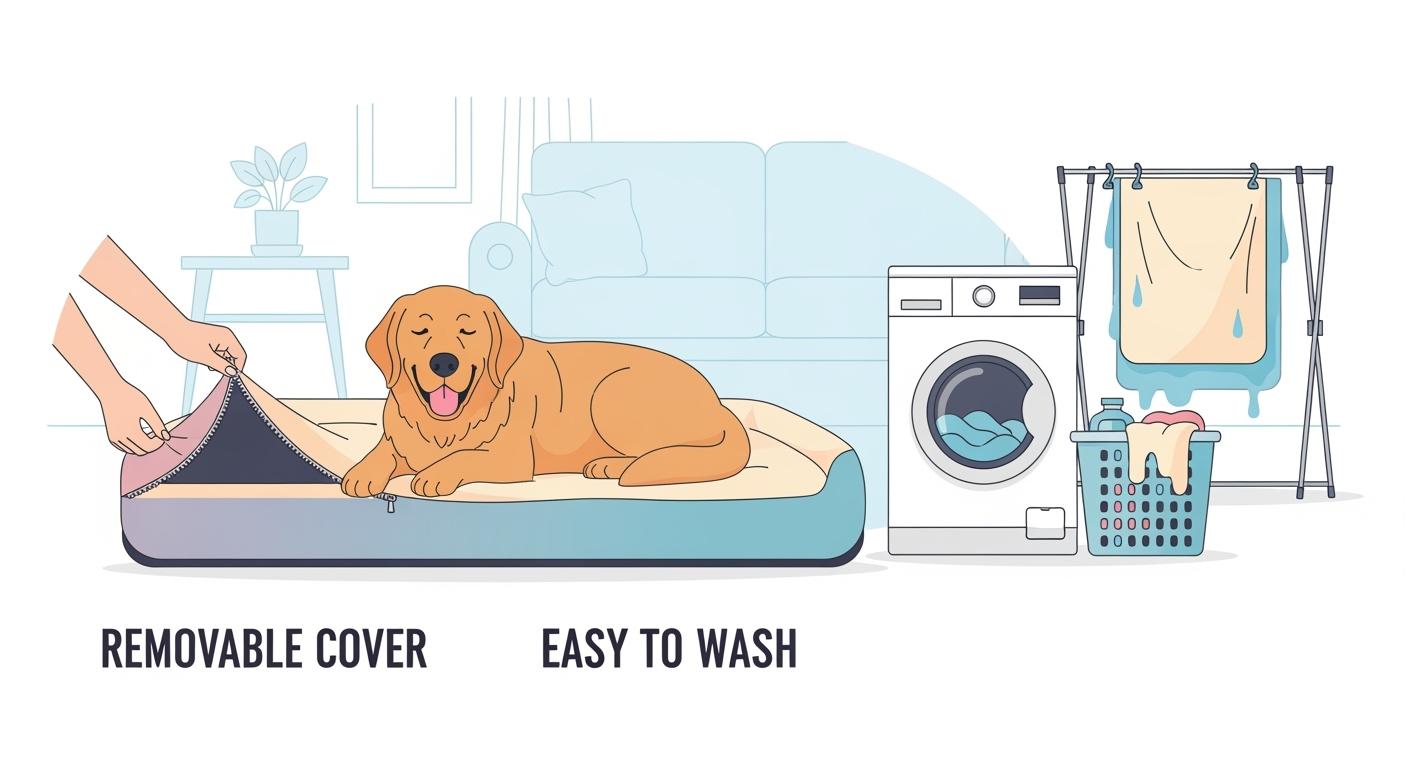
A large dog bed washable setup works when the cover comes off fast, the core dries fully, and the surface still supports your dog after repeat washes at home.
Note: This guide helps you choose a washable bed setup, not diagnose odor, itching, limping, or skin disease.
Key Takeaways
- For most indoor homes, a removable cover plus a waterproof liner is usually the easiest setup to clean often.
- A fully washable bed can work when accidents are frequent, but only when the support core dries fully before reuse.
- The best choice is usually the one you can remove, wash, dry, and reset without turning weekly cleaning into a chore.
What Makes a Washable Bed Easier to Live With
Cleaning convenience matters because a bed only stays usable when the routine fits ordinary life. A large dog bed can look soft and well made, but that does not help much if the cover is hard to remove, the liner traps moisture, or the whole reset takes longer than you can realistically manage every week.
If your dog already needs more joint support, an orthopedic dog bed setup usually makes the most sense when it combines a washable cover with a protected core. In normal use, the more important question is not whether the bed can be washed at all, but whether the setup still feels manageable after a few real cleaning cycles.
| Setup | Why it helps | Best use case | What to Watch |
|---|---|---|---|
| Removable cover | Fast weekly reset | Indoor dogs, routine shedding | Zipper strain, tight refit |
| Cover plus liner | Protects support core | Drool, wet paws, light accidents | Liner noise, trapped dampness |
| Fully washable bed | Whole unit can be cleaned | Frequent accidents, heavy soil | Slow drying, shape loss |
| Wipe clean shell | Fast spot cleanup | Outdoor entry zones | Often less plush |
For most large dogs, a removable cover or a cover plus liner gives the best balance of hygiene, comfort, and repeat use. When keeping the core dry becomes part of the decision, the difference usually comes down to how a waterproof core changes cleanup after wet paws, saliva, or light accidents.
If chewing or abrasion matters as much as washability, durability needs to be judged separately from simple fabric toughness. A bed built more like indestructible dog beds may hold up better to scratching or rough use and still be frustrating once you start washing, drying, and putting it back together. The same thing happens across many outdoor dog bed styles, where shell fabric, liners, and base construction can improve toughness without making the cleanup routine any easier.
Why the routine matters more than the label
Most washable beds sound simple before the first wash. The real difference shows up later, when the dog tracks dirt inside, the cover needs to come off quickly, and the bed has to be usable again without a long delay. A washable claim is only helpful when it still works inside a normal weekly routine.
What to inspect before you buy
Access matters because a washable claim means very little when the cover fights you every week. The right setup usually removes in one smooth motion, dries without hidden dampness, and goes back together without bunching.
| Check area | Why it matters | Pass signal | What to Watch |
|---|---|---|---|
| Cover opening | Determines real wash frequency | Wide zip path, easy corners | Short zip, snagging fabric |
| Liner access | Keeps core cleaner longer | Separate inner barrier | No barrier, hard refit |
| Core feel after pressure | Affects pressure relief | Even rebound, no hollow spots | Dips, edge collapse |
| Seam thickness | Holds dampness after wash | Dries evenly | Heavy corners stay wet |
| Base grip | Helps entry and exit stability | Stays planted | Slides on smooth floors |
If the biggest frustration is getting the shell off and back on, a dog bed with cover design usually tells you more about daily use than a styled product photo does. And in homes where mud, pollen, saliva, or accidents keep showing up, the wash routine often ends up closer to having to wash sooner than expected.
Common mistakes that make washable beds harder to live with
The biggest mistakes usually happen after the purchase, not before it. Owners often choose a bed that looks plush, then discover the cover is hard to remove, the core stays damp, or the wash routine is slow enough that cleaning gets postponed.
- Using heavily scented detergent can leave residue that some dogs find irritating.
- Reassembling the bed too early can trap moisture in the support core.
- Buying only for softness can reduce support for dogs that need steadier pressure relief.
Tip: The most common mistake is buying for surface softness alone, then skipping washes because the cover removal and reset routine is harder than expected.
How to See If the Wash Routine Really Works
Real performance matters because washable bedding only helps when the routine survives normal life. A bed that looks easy to wash once can still become annoying after repeat removal, drying, and reassembly.
Try the full routine before you commit
- Indoor dry run. Remove the cover, check the zip path, and refit it once while the bed is clean and dry. Watch whether corners twist, bunch, or resist reassembly.
- Loaded wash test. Wash the cover the way you expect to wash it in real life, then inspect seams, liner edges, and the support core area for moisture retention before reassembly.
- Three-day real rest test. Let your dog use the fully reset bed for three days and watch entry, turning, settling, and rising. Note whether odor, sliding, flattening, or avoidance returns quickly.
Keep notes for a few days
One wash cycle can look fine while the third one reveals the real weakness. A short record makes it easier to see whether the bed is actually easy to maintain or just manageable once in a while.
| Day | Removal ease | Dry by morning | Odor return | Body support | Bed use |
|---|---|---|---|---|---|
| Day 1 | Easy, fair, hard | Dry, slightly damp, wet | None, mild, strong | Even, slight dip, deep dip | Settles, circles, avoids |
| Day 2 | Easy, fair, hard | Dry, slightly damp, wet | None, mild, strong | Even, slight dip, deep dip | Settles, circles, avoids |
| Day 3 | Easy, fair, hard | Dry, slightly damp, wet | None, mild, strong | Even, slight dip, deep dip | Settles, circles, avoids |
What pass and fail usually look like after repeat washes
Repeat use matters because a bed can pass one wash and still fail in the weekly routine. For most homes, a good setup usually stays simple to remove, fully dry, and comfortable to settle on after several resets.
| Check item | Pass signal | Fail signal | Improvement plan |
|---|---|---|---|
| Cover removal | Easy path, no fighting corners | Snags, twisting, zip strain | Choose wider opening |
| Refit after wash | Smooth shell, even shape | Bunching, stretched corners | Use simpler shell design |
| Core dryness | No cool damp feel | Moist seams, heavy corners | Extend air dry time |
| Surface support | Dog settles evenly | Deep dip, edge slide | Upgrade support core |
| Odor control | Fresh after full dry | Musty smell returns fast | Check liner and core |
Tip: If a bed only feels washable when you have extra time and extra space, it usually will not stay clean on a normal weekly schedule.
When the Bed Stops Working Well

Damp seams, quick odor return, and skin friction
Persistent dampness matters because moisture retention often hides in seams and thicker fill long after the surface looks dry. A musty smell that returns quickly usually means the problem is still inside the bed, not just on the cover.
Disclaimer: A dog bed can support comfort, but it is not a treatment for arthritis, skin disease, ear disease, dental odor, or anal gland problems.
If your dog starts scratching more, licking the bed more, or smelling strongly even after a full wash and dry cycle, home laundering may no longer be the whole answer. A bedding issue can overlap with skin sensitivity, moisture retention, or a change in comfort that needs more than another wash.
| Failure sign | Likely cause | Fast check | Next move |
|---|---|---|---|
| Musty smell after drying | Hidden moisture in core | Press seams and corners | Dry longer or replace core |
| Dog licks or scratches bed | Residue or skin sensitivity | Check scent and touch | Rewash with mild detergent |
| Dog avoids resting there | Poor support or unstable base | Watch entry and turning | Change surface or base |
| Cover is always delayed | Routine too burdensome | Time one full reset | Choose simpler shell design |
| Core stays flattened | Fill fatigue | Check rebound after use | Upgrade support core |
When replacement makes more sense
Replacement matters because repeated washing cannot restore a support core that has already lost structure. When the bed smells clean but still sags, slides, or goes unused, the fit between dog, surface, and routine is usually the real problem.
- Replace the bed when the support core stays dipped after normal rest.
- Replace the bed when dampness keeps returning despite full drying time.
- Upgrade the setup when your dog is older, heavier, or slower to rise and the current surface no longer spreads load well.
FAQ
How often should you wash the cover?
For most homes, a weekly wash is a practical starting point, with faster cycles when your dog tracks dirt, drools heavily, or has accidents.
Is a fully washable bed always better?
A fully washable bed is usually better only when the whole unit can dry completely without leaving the support core damp.
Should you choose softness or support first?
For most large dogs, support comes first because a very soft surface can feel cozy at first and still fail once the dog turns, settles, and rises.
Choose the setup you can wash, dry, and reset without delaying the routine. Protect the support core when odor, wet paws, or light accidents are common. And when odor, scratching, or comfort changes keep returning, the bed may no longer be the only thing worth checking.
Disclaimer: This is a guide to bedding choice and cleaning fit, not a substitute for veterinary evaluation when comfort changes may be linked to pain, skin disease, or another medical cause.






