
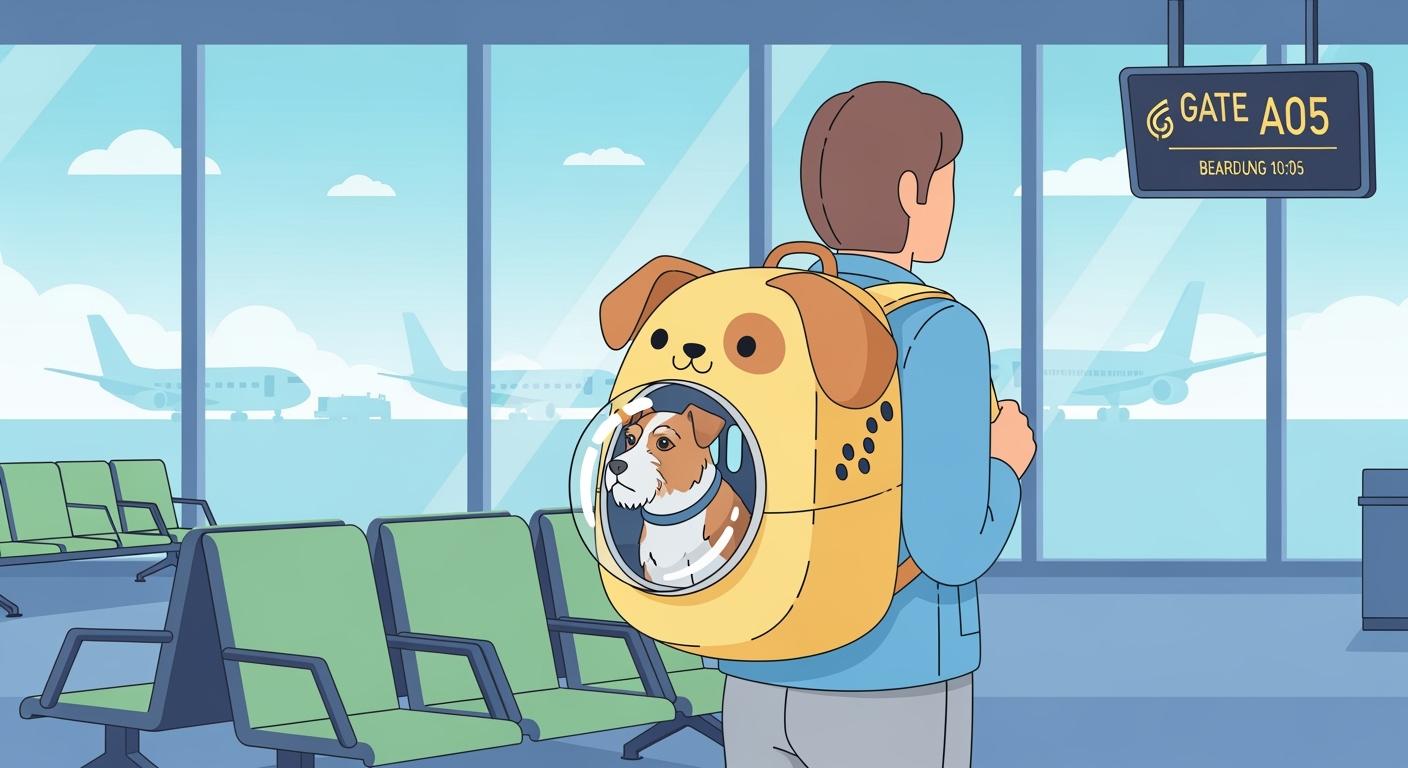
A dog carrier backpack airline approved choice should slide under the seat, keep vents open, and stay stable from check in to boarding.
In a real airport, the carrier that feels fine in your living room can start to sag at security, press on your dog when you set it down, or lose vent clearance once it is pushed under the seat. The useful question is not whether the label says airline approved. It is whether the carrier still works after packing, lifting, waiting, boarding, and stowing.
Note: A carrier label is only a starting point. For most flights, under seat fit, vent clearance, and calm handling matter more than the label alone.
Key Takeaways
- Real under seat fit matters more than marketing language, and most sizing mistakes become easier to spot once you run the same kind of fit and sizing checks you would use at home.
- Practice sessions usually reveal the real weak points before flight day, especially base stability, zipper security, and how quickly your dog settles after being carried and set down.
- A backpack works best when airport movement is the hard part and the shell still keeps usable room once it is stowed. If seat fit is tight, that tradeoff changes fast.
Where a Backpack Helps Most in the Airport
Why hands-free carry can make the terminal easier
Airport movement matters because every transition, security lines, escalators, gate waits, and boarding, puts pressure on the carrier in a slightly different way. A pet backpack carrier often feels easier when you need both hands free for documents, a rolling bag, or a quick stop at the relief area.
The tradeoff is that some backpack shapes hold up well on your back but lose usable room under the seat. For most owners, a backpack only stays practical for flying when the base remains level and the ventilation path still works after light compression.
| Airport task | Why it helps | What to Watch |
|---|---|---|
| Security line waiting | Hands free bag handling | Carrier leans when set down |
| Gate to seat transition | Weight stays close to body | Top panel loses headroom |
| Short terminal walks | Less arm fatigue | Shoulder load gets unstable |
| Quick stow under seat | Compact profile when packed light | Mesh presses closed too easily |
If your dog settles faster in an upright, close carry and the shell still keeps its shape under the seat, a backpack can work well. If the body collapses or twists once stowed, a softer in-cabin carrier usually makes more sense.
Why soft carriers still matter once you board
Under seat fit matters because the carrier has to work after boarding, not just while you are walking through the terminal. Soft hand carriers often compress more naturally, so they can keep more usable room when seat height is tight.
- Flexible walls can adapt to small seat differences.
- A lower profile often makes boarding easier.
- Soft interiors may help dogs settle sooner.
- Pockets can hold paperwork without changing the dog space too much.
You usually learn more by looking at your dog after stowage than before it. If the carrier keeps posture, airflow, and zipper security once it is under the seat, that option usually fits flying better, even if it feels less convenient in the terminal.
Backpack, soft carrier, or structured carrier?
| Carrier Type | Best Use Case | Main Benefit | What to Watch | Who Should Skip It |
|---|---|---|---|---|
| Backpack Carrier | Airport walking, short terminal transfers | Hands free movement | Can lose vent clearance under seat | Owners who need the softest seat fit |
| Soft Hand Carrier | Frequent cabin flying | Easier under seat adaptation | Less stable when overpacked | Owners who want long hands free carry |
| Structured Airline Carrier | Short calm trips, strong shape preference | Stable walls and base | Bulky profile, less forgiving fit | Most in cabin travelers on tight seats |
A backpack usually wins when airport handling is your hardest part. A soft hand carrier usually wins when seat fit is the deciding limit. A more structured carrier can help some calm dogs, but it often becomes the least forgiving option once cabin space gets tight.
The mistakes that usually show up before boarding
Most travel problems start with mismatch, not one dramatic failure. Owners often pick a carrier by published size alone, skip the home trial, or leave paperwork checks too late.
- Choosing by label only can lead to poor under seat fit.
- Ignoring zipper checks can raise escape risk in busy areas.
- Skipping carrier practice can increase stress on flight day.
- Waiting on paperwork can create last minute boarding problems.
Tip: The most common mistake is judging the carrier while it is empty. A bag can look excellent in the store and still fail once your dog, liner, and travel pouch are inside.
| Mistake | What usually happens | Better move |
|---|---|---|
| Carrier too tall | Pushes or catches under seat | Test stowage before travel day |
| Loose zipper routine | Dog noses at openings | Practice full close every lift |
| No acclimation sessions | Longer settle time at gate | Run short indoor and travel drills |
| Late document check | Stress at check in | The last review usually goes more smoothly when an airport checklist for flying is already part of your prep |
Federal travel guidance and airline pet programs usually expect you to verify airline rules in advance and help your dog get used to the carrier before travel. Veterinary travel guidance also tends to put more value on fit, ventilation, and calm acclimation than on last-minute fixes.
What Matters More Once the Carrier Goes Under the Seat
Flight day changes your evaluation because the carrier is no longer a product on a shelf. It becomes a moving load, a waiting space, and a temporary den, all within the same trip.
Seat fit decides more than airport convenience
The carrier has to work after boarding, not only on the walk to the gate. That means it should slide under the seat with light guidance, keep the base flat, and leave enough vent clearance for your dog to stay settled without being compressed into the roof or sides.
| Check Item | Pass Signal | Fail Signal | Fix |
|---|---|---|---|
| Carrier fits under seat | Slides in with light guidance | Needs force or catches | Reduce packed bulk or switch style |
| Base stays flat | Dog stays level after lift and set down | Slumps or tips | Add a firmer insert |
| Vents stay open | Mesh remains visibly clear | Panels press shut | Adjust load, bedding, or carrier type |
| Zippers secure | Closures stay fully aligned | Gap opens at corners | Recheck track and attachment points |
Measure the packed carrier, not the empty shell
- Measure your dog in a calm standing posture, then in a natural curled rest posture, because both positions matter in the cabin.
- Measure the outside of the carrier when the liner, leash, and travel items are already inside.
- Compare the loaded carrier with your airline rule, then use the same logic from a dog carrier backpack size checklist if the shape changes once it is packed.
- Run one real stow test at home under a table or bench of similar height, and watch whether your dog can still settle without the roof pressing down.
Tip: For most small dogs, the best measurement session is the one that happens after the dog has already spent a few calm minutes inside the carrier, because posture usually changes once they settle.
Practice with the packed carrier, not just the empty one
- Indoor settle test: Use the packed carrier at home for several short calm sessions across two or three days, and watch posture, recovery window, and zipper interest.
- Loaded movement test: Carry your dog through stairs, doorways, and short waits, then set the carrier down several times and check load stability and vent clearance.
- Real outing test: Take one longer trip that includes a car ride or public transit style wait, and note whether your dog can rest, turn, and resettle without heavy panting or constant shifting.
Record for three practice sessions before booking: settle time, vent clearance, base stability, zipper security, and after-carry posture. Before travel week, the final review usually feels clearer when a plane travel checklist sits beside your packing routine instead of replacing it.
The same four problems keep showing up
| Symptom | Likely Cause | Fast Check | Fix |
|---|---|---|---|
| Carrier bulges | Overpacked sides or rigid pockets | Remove nonessential items | Travel lighter or use a softer shell |
| Dog keeps shifting | Weak postural support | Press base after set down | Add a firmer insert or liner |
| Carrier slumps | Base lacks structure | Lift from floor and recheck shape | Use a flatter support panel |
| Dog seems hotter than expected | Reduced airflow after stowage | Inspect all mesh panels | Improve vent clearance or change carrier type |
You can avoid many flight-day problems by comparing the loaded carrier against real travel steps, not showroom impressions. If seat fit still feels uncertain, the broader under-seat comparisons in pet carriers for flying under seat fit usually make it easier to see where a backpack stops being the practical option.
Disclaimer: This guide is about carrier choice and travel preparation, not a diagnosis of breathing, orthopedic, or anxiety disorders. If your dog shows strain, pain, or ongoing distress, ask your veterinarian before you fly.
Signs a Backpack Carrier Will Be Harder to Fly With
Watch for slumping, blocked vents, and posture loss
A carrier can look acceptable until your dog is actually inside and the bag is packed the way you would travel. If the base slumps, the side walls collapse inward, or the vent panels lose clearance once the bag is stowed, that is already a warning sign. The same goes for posture. If your dog looks compressed, keeps shifting to find space, or struggles to settle after a short carry, the carrier may be too tall in the wrong places or too weak where support matters.
Stress usually starts before you board
Many dogs show the first signs of carrier mismatch long before they ever go under the seat. You may see longer settle time, zipper interest, repeated panting, or constant repositioning during practice sessions. Those signs usually tell you more than the product label ever will.
A short practice log makes the choice easier
| Session | Settle Time | Vent Clearance | Load Stability | After Carry Posture |
|---|---|---|---|---|
| Indoor practice | Calm quickly, slow, restless | Open, partly reduced, blocked | Level, slight lean, slump | Relaxed, tense, compressed |
| Terminal style walk | Calm quickly, slow, restless | Open, partly reduced, blocked | Level, slight lean, slump | Relaxed, tense, compressed |
| Longer outing | Calm quickly, slow, restless | Open, partly reduced, blocked | Level, slight lean, slump | Relaxed, tense, compressed |
If you want the simplest summary, choose the carrier that keeps shape, airflow, and calm posture at the same time. For most cabin trips, that means matching the carrier to your dog’s actual resting posture and the seat space you expect, then validating the choice with practice rather than hope.
FAQ
Can you use a dog carrier backpack for all airlines?
No, airline rules usually differ, so you should always confirm cabin dimensions and pet requirements with your specific carrier.
How do you calm your dog in a carrier during travel?
Most dogs settle better when the carrier is introduced over several calm sessions and the travel setup stays familiar, stable, and lightly packed.
What should you do if your carrier does not fit under the seat?
If the loaded carrier does not stow cleanly in testing, you should usually change the carrier style before travel rather than hope the gate process will be more lenient.
Disclaimer: A dog carrier backpack airline approved model is a travel tool, not treatment, behavior therapy, or medical clearance. When safety depends on health status, breed specific breathing limits, or stress tolerance, a veterinarian should guide the decision.






