
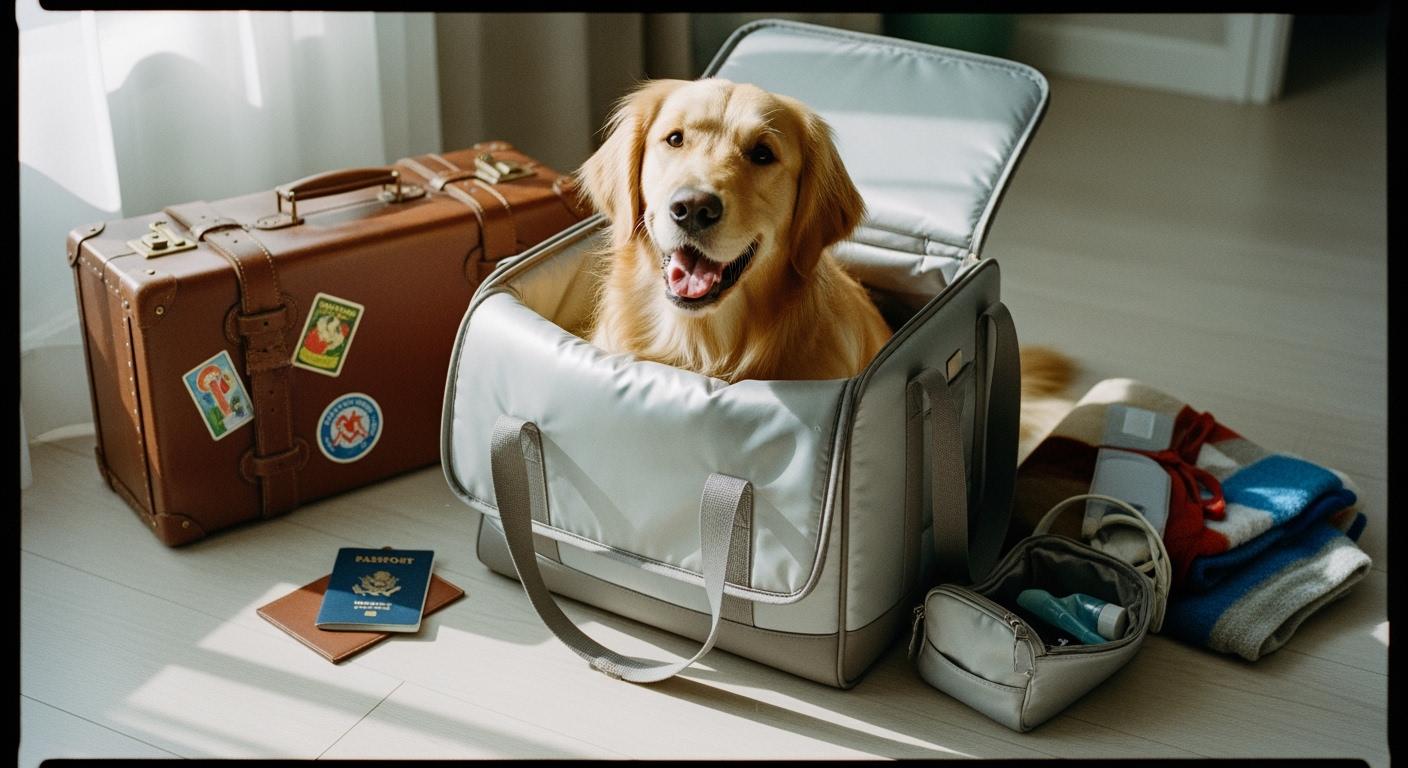
A soft-sided dog tote carrier picks up more mess inside than you see at a glance. Hair embeds in plush fibers. Drool soaks past the surface. Crumbs settle into corner seams. You wipe the visible spots and think it is clean. Then the odor shows up a few trips later. A carrier with a removable, smooth inner lining changes that equation — not by making mess impossible, but by keeping it on the surface where you can reach it and remove it before it becomes a problem.
Where Fixed Linings Trap Mess Before You Notice
The inner surface of a dog tote carrier endures a predictable assault every trip: shed hair, drool proteins, damp paw residue, treat fragments, outdoor dust. The question is not whether mess enters. The question is where it goes once it does.
Why Absorbent Fabric Hides the Problem
Plush and polyester-cotton blend linings feel soft to the touch, but that softness comes from fiber loft — countless tiny air pockets between strands. When a dog settles in with damp paws or drools during the ride, capillary action pulls moisture into those voids. The liquid spreads laterally through the fiber network before it ever beads on the surface. What you see is a small damp spot. What is actually happening is a shallow reservoir forming just beneath the fabric face.
Hair and debris compound the problem. Each shed strand has microscopic scale structures that catch on fiber loops — the same physical mechanism that makes velcro work. Once embedded, shaking the carrier out does not dislodge them. They stay trapped until you pick them out by hand or run the liner through a wash cycle. Meanwhile, drool proteins that soaked in earlier begin breaking down, and that is when the odor starts.
Walk your dog for ten minutes, place them in the carrier, then take them out and press a dry paper towel against the inner lining. If the towel comes away damp, the fabric is holding moisture below the surface — and whatever came with it.
Disclaimer: This check assumes a short-coated dog on a dry day. Double-coated breeds or wet-weather outings will introduce more moisture, and the towel test may read damp even with a well-designed liner. For those conditions, check the liner underside instead — moisture that reaches the foam or board beneath the fabric signals a lining that is not blocking penetration.
Seams, Folds, and the Corners You Cannot Reach
Every stitched seam inside a carrier creates a linear depression — a narrow channel where debris collects by gravity and vibration. During a car ride, road motion shakes crumbs and hair across the liner surface. When those particles hit a seam line, they drop in and stay. Wiping across the surface with a cloth skims right over the trough. The mess remains.
Fixed pads make this worse. A non-removable base pad is sewn or riveted to the carrier floor on at least two edges. Hair and moisture migrate under the pad through the open sides, then sit trapped between pad and carrier base — an area you cannot access without dismantling the carrier. Over weeks of use, that interstitial layer becomes a collection point for everything the surface-level wipe missed.
| Mess Source | Where It Gets Trapped | Better Design Direction |
|---|---|---|
| Hair & Debris | Plush fiber loft, seam channels | Smooth wipe-clean surface, fewer seams |
| Drool & Moisture | Absorbent fabric subsurface, under fixed pads | Moisture-resistant face fabric, removable liner |
| Crumbs & Dust | Corner folds, pad-to-base gap | Flat stable base, lift-out pad access |
A tote carrier whose interior design prioritizes cleanability uses fewer stitched seams across the primary contact surfaces and keeps the base pad detachable — so every surface you might need to wipe is reachable in under ten seconds.
What Changes When the Liner Comes Out and Wipes Clean
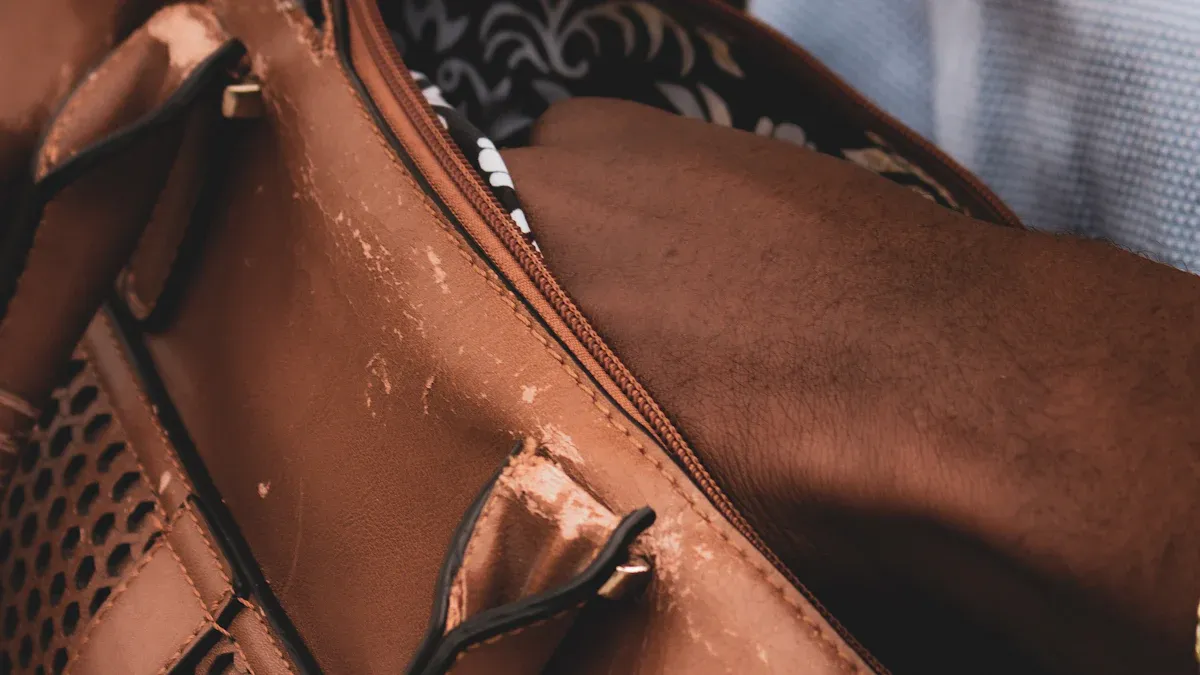
Surface Tension Versus Absorption
A moisture-resistant liner works on a simple physical principle: it presents a low-porosity face to whatever lands on it. Drool beads. Damp paw prints sit on top rather than wicking inward. Hair rests in the surface texture rather than embedding. This is not about making the carrier waterproof — it is about buying you a window where mess is still reachable with a single wipe.
The design difference shows up at the material selection stage. Fabrics with a tight weave and a coated or film-faced backer prevent moisture migration into the foam or board layer beneath. In production terms, that means the face fabric is bonded to a barrier membrane before cutting and stitching — a process that adds a step to manufacturing but eliminates the post-sewing waterproofing treatments that degrade after repeated washing. The result is a surface that performs the same on the fortieth trip as on the first.
After a typical errand run, remove your dog and run a microfiber cloth across the liner in one pass. If the cloth picks up visible debris and the surface feels dry to the back of your hand immediately after, the liner is doing its job. If you have to scrub or if the surface feels tacky, moisture has begun penetrating.
Lift-Out, Shake-Off, Wipe-Down
A removable liner changes the cleaning workflow from a multi-step contortion to a three-move routine: unclip the liner, shake debris into the trash, wipe both sides. The carrier shell itself needs only a quick pass with a damp cloth since most of the mess stayed on the removable surface. This is the same logic that makes carriers with structured, cleanable interiors outlast their plush-lined counterparts — the wear item is separate from the structural shell, so cleaning does not degrade the carrier frame.
Fixed linings flip this equation. You either spot-clean what you can reach — leaving residue in the blind spots — or you commit to washing the entire carrier, which stresses zippers, stitching, and structural panels with every cycle. A tote bag with a removable base pad keeps the high-wear cleaning focused on the part designed to handle it.
The flat base matters here in a specific way. When a carrier floor sags under the dog’s weight, the liner surface tilts toward the low point. Hair and crumbs slide into that depression — the same place the dog’s weight is concentrated. A rigid or semi-rigid base insert keeps the liner plane horizontal. Debris stays distributed. Nothing funnels into one hard-to-reach corner.
When This Design Matters Most — and When It Does Not
The value of an easy-clean liner scales with mess exposure. The more your dog carries the outdoors indoors, the larger the gap between a smooth removable liner and a fixed plush one.
Daily errand runners with dogs that shed heavily, drool on car rides, or have post-walk damp paws will notice the difference within the first week. The liner comes out every trip or two, shakes clean in seconds, and goes back in. For these users, a tote carrier whose interior design supports fast reset between outings means the difference between a carrier that always feels ready and one that gradually becomes a chore to use.
The advantage shrinks for occasional-use scenarios. A carrier that does one vet visit every two months with a small, low-shedding dog kept primarily indoors will not stress any liner design enough for the difference to matter. In that case, other design priorities like one-hand access or carry balance may matter more than liner removability.
Multi-dog households tilt the calculus back toward removable. Two dogs trading turns in the same carrier double the hair and moisture load per trip. A wipe-clean surface that resets in under a minute makes back-to-back use practical.
Disclaimer: Smooth moisture-resistant liners reduce the surface area available for mess to embed, but no liner design eliminates the need for periodic deep cleaning. If your dog has a health condition that increases urination frequency or saliva production, inspect the liner underside and base panel weekly — moisture that breaches the liner-to-base interface can reach foam layers that do not dry quickly, even with a moisture-resistant face fabric.
An easy-clean inner lining is not a promise of zero maintenance. It is a design decision that shifts the default from “mess disappears into the carrier” to “mess stays where you can see it and deal with it.” For anyone whose dog rides along more than once a week, that shift changes the daily experience of owning a tote carrier — from a piece of gear that slowly accumulates traces of every trip to one that resets in the time it takes to walk back through the front door.
FAQ
Can you machine-wash a removable tote carrier liner?
Most removable liners are machine-washable on a gentle cycle with cold water. Check the care label — some use a bonded membrane backer that degrades under heat, so air-drying extends liner life more than machine drying. Shake off loose debris before washing to keep hair from clogging the machine filter.
Does a smooth liner make the carrier less comfortable for the dog?
Not in a way that matters for tote-style carriers. The dog’s weight rests on the base pad, not directly on the sidewall fabric. A smooth liner face on the walls and floor simply means less fiber to snag claws or trap shed hair. If the base pad itself is thin, adding a washable fleece insert on top of the removable liner gives you both wipe-clean structure and a softer contact surface — and both layers still come out for cleaning.
How often should the liner be removed and cleaned?
For daily use with an average-shedding dog: shake out debris after every trip, wipe surfaces every two to three outings, and remove the liner for a full wash every one to two weeks. Increase frequency if your dog drools heavily, has outdoor access immediately before entering the carrier, or if you notice any odor between cleanings.
What is the first sign a fixed liner is failing?
Odor that returns within a day of cleaning. It means organic residue — drool proteins, urine metabolites, skin oils — has penetrated past the surface into foam or board layers where surface wiping cannot reach. At that point, the carrier shell itself needs deep cleaning or replacement.






