
A dog bed for camping has to do more than feel soft for five minutes. After a cold night, a muddy trail, or a damp campsite, the bed needs to keep your dog settled, block ground chill as much as possible, and clean up without turning the tent into a mess. The right choice depends on where your dog sleeps, how wet the site gets, and how much space you can spare.
| What matters most | Why it changes the decision |
|---|---|
| Warmth and insulation | Cold ground can make even calm dogs restless, especially overnight inside a tent. |
| Easy cleanup | Mud, sand, and wet fur are much easier to manage when the cover wipes down or comes off for washing. |
| Drying speed | A bed that still feels damp the next morning is harder to pack and less comfortable the next night. |
| Footprint | A bed that fits your dog but overwhelms the tent usually becomes a daily frustration at camp. |
Inside the tent or outside by camp?
Why the tent floor usually wins on cold nights
If warmth is the main problem, inside the tent is usually the easier answer. Even when the air feels mild before sunset, the ground can feel much colder after dark, and dogs often notice that before people do. A low-profile mat or cushioned bed on the tent floor can work well when your dog already likes enclosed sleeping spaces and you want to keep the setup predictable.
Many dogs settle better when the sleep spot stays close to their people and does not shift from night to night. If the rest of your dog camping kit already takes up most of the tent, check the bed footprint before the trip so the sleeping area does not end up cramped or half-blocking the door.
Tip: If your dog keeps moving off the bed inside the tent, check for cold spots under the pad, trapped grit, or a bed that bunches when your dog turns.
When an outside setup is easier to live with
Outside setups make more sense when dirt control matters more than maximum warmth. A muddy dog, a wet site, or repeated in-and-out traffic can turn the tent floor into the hardest part of camp to keep clean. In those cases, an elevated bed or a wipe-clean outdoor bed often saves time in the morning and keeps dampness farther away from the sleep surface.
If dew, wet grass, or light splash is part of the trip, it helps to think about which waterproof dog bed actually stays dry on wet ground before you trust a “waterproof” label. For longer stays or muddy campsites, an elevated outdoor dog bed with canopy can also make cleanup easier and keep the sleep surface off wet ground.
Which setup fits the trip best
| Feature | Tent-floor pad | Cushioned camping bed | Elevated outside cot |
|---|---|---|---|
| Warmth | Usually the best option for colder nights | Good if the fill stays dry and supportive | Less ground contact, but more airflow can feel cooler |
| Cleanliness | Harder to manage if your dog tracks in mud | Moderate, depending on the cover and fill | Usually the easiest to shake off and wipe down |
| Morning reset | Slower if dirt spreads across the tent floor | Moderate if it packs down cleanly | Fast if the frame is stable and the fabric dries quickly |
| Comfort feel | Low and familiar | Softer and more home-like | Firmer with a defined sleeping spot |
| Portability | Usually the lightest | Varies with thickness | Bulkier, but useful for base-camp style trips |
| Best match | Cold nights and shared tent sleeping | Mild weather and dogs that want cushion | Wet, dirty, or high-traffic campsites |
What changes once the bed leaves the tent
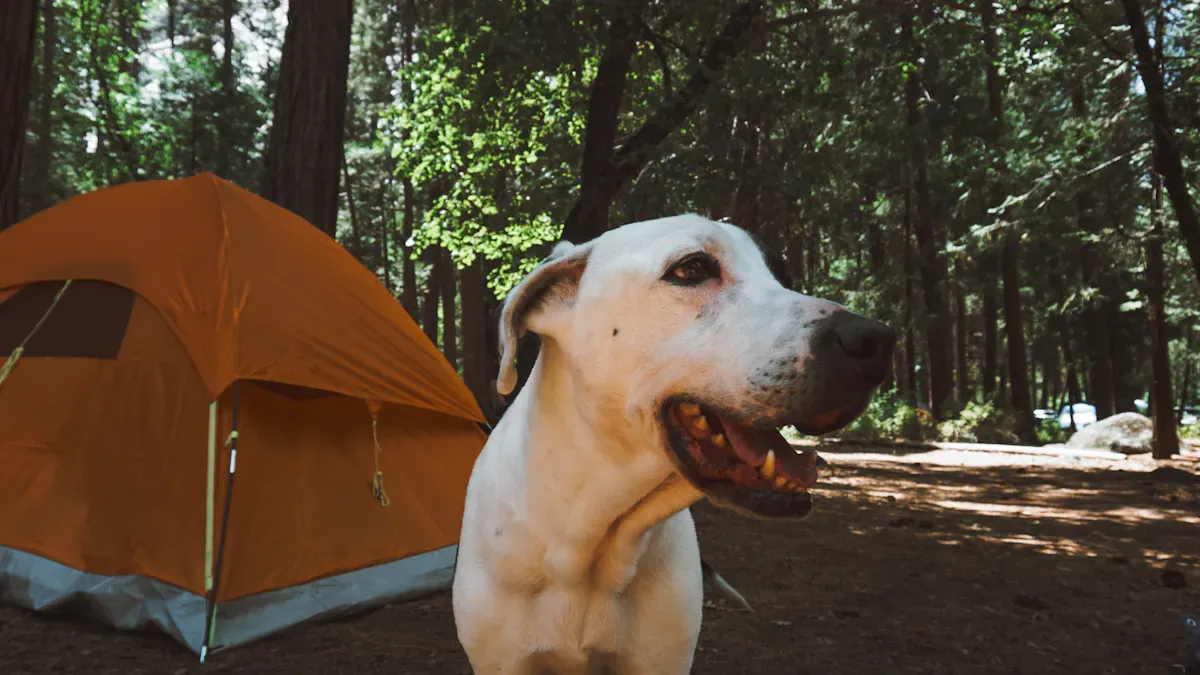
Warmth, damp ground, and bed size matter more than people expect
Once a bed moves outside, you lose the wind break and dry floor that the tent gives you. That makes moisture, uneven ground, and bed placement more noticeable. Bed size matters too. A setup that looks roomy at home can feel awkward when your dog turns, stretches, or tries to avoid a wet patch, which is why outdoor dog bed sizing and weather-ready features deserve a quick check before you pack.
If you are camping in mixed weather, the practical goal is simple: give your dog one place that stays drier, cleaner, and more predictable than the ground around it. That usually means choosing a surface that does not trap water easily, dries fully before packing, and still feels steady when your dog steps on and off.
Simple ways to keep an outside setup manageable
- Put the bed on the driest, flattest spot you can find instead of the most convenient corner of camp.
- Shake off sand, leaves, and loose dirt before they get ground into the fabric overnight.
- Dry the bed fully in the morning if dew or rain reached the surface or underside.
- Keep one sleep spot consistent so your dog does not have to relearn the setup each night.
Morning checks that tell you the setup is working
A camping dog bed does not need to look perfect in the morning. It does need to stay usable. If the underside is wet, grit is trapped in the fabric, or your dog keeps choosing bare ground instead, the setup is telling you something useful.
| Check item | Working signal | Trouble sign | What to do next |
|---|---|---|---|
| Dog stays on the bed overnight | Settles quickly and returns to the same spot | Circles, steps off, or sleeps elsewhere | Check temperature, surface feel, and placement |
| Bed stays dry enough to reuse | Surface and underside feel dry by morning | Damp fill, wet base, or musty smell | Move to a drier spot or switch to a faster-drying design |
| Surface stays reasonably clean | Dirt brushes off without grinding in | Grit sticks in seams or fabric texture | Shake out sooner and choose easier-clean materials |
| Setup resets quickly | Packs or wipes down without much effort | Takes too long or leaves a mess in the tent | Use a simpler bed style for the next trip |
Common mistakes that create bad nights
- Choosing by softness alone and ignoring whether the bed stays dry on real ground.
- Bringing a bed that fits the dog but not the tent or campsite layout.
- Assuming a dog will accept any raised cot without checking how they step on, turn, and settle.
- Packing the bed away while it is still damp, then expecting it to feel fresh the next night.
If your dog keeps circling or stepping off a raised setup, the issue is often height, wobble, or surface feel rather than stubbornness. That pattern shows up often when dogs avoid raised beds that do not match how they normally rest.
When to clean, repair, or replace the bed
Clean the bed after muddy trips and any time dirt or odor lingers in the cover. Repair or replace it when the fabric sags, the fill stays lumpy, the frame no longer feels stable, or the bed stays damp longer than it should for your usual conditions. Frequent travel also exposes weak fabrics quickly, so durable dog bed materials matter more when the bed gets packed, unpacked, and washed often.
The best dog bed for camping is the one your dog will actually use after the trail is over. For cold nights, a tent-floor setup usually gives you the easiest warmth. For muddy or wet campsites, a bed that wipes down fast and dries fully by morning is usually the better call.
- Test the setup at home before the trip so you can catch size, grip, and comfort problems early.
- Bring the bed style that matches the campsite, not the one that only looks comfortable in product photos.
FAQ
How often should you clean a dog bed for camping?
Clean it after muddy or wet trips, and wash removable covers whenever odor, grit, or dampness starts to linger.
Can a regular dog bed work at camp?
Sometimes, but outdoor-focused beds usually handle damp ground, dirt, and cleanup better than a standard indoor bed.
What if your dog refuses to sleep on the bed?
Check for cold ground, trapped grit, moisture, unstable footing, or a location your dog clearly dislikes, then adjust one factor at a time.
Note: If your dog has joint pain, skin irritation, or clear trouble settling outdoors, ask your veterinarian whether a different sleep setup makes more sense before the next trip.






