
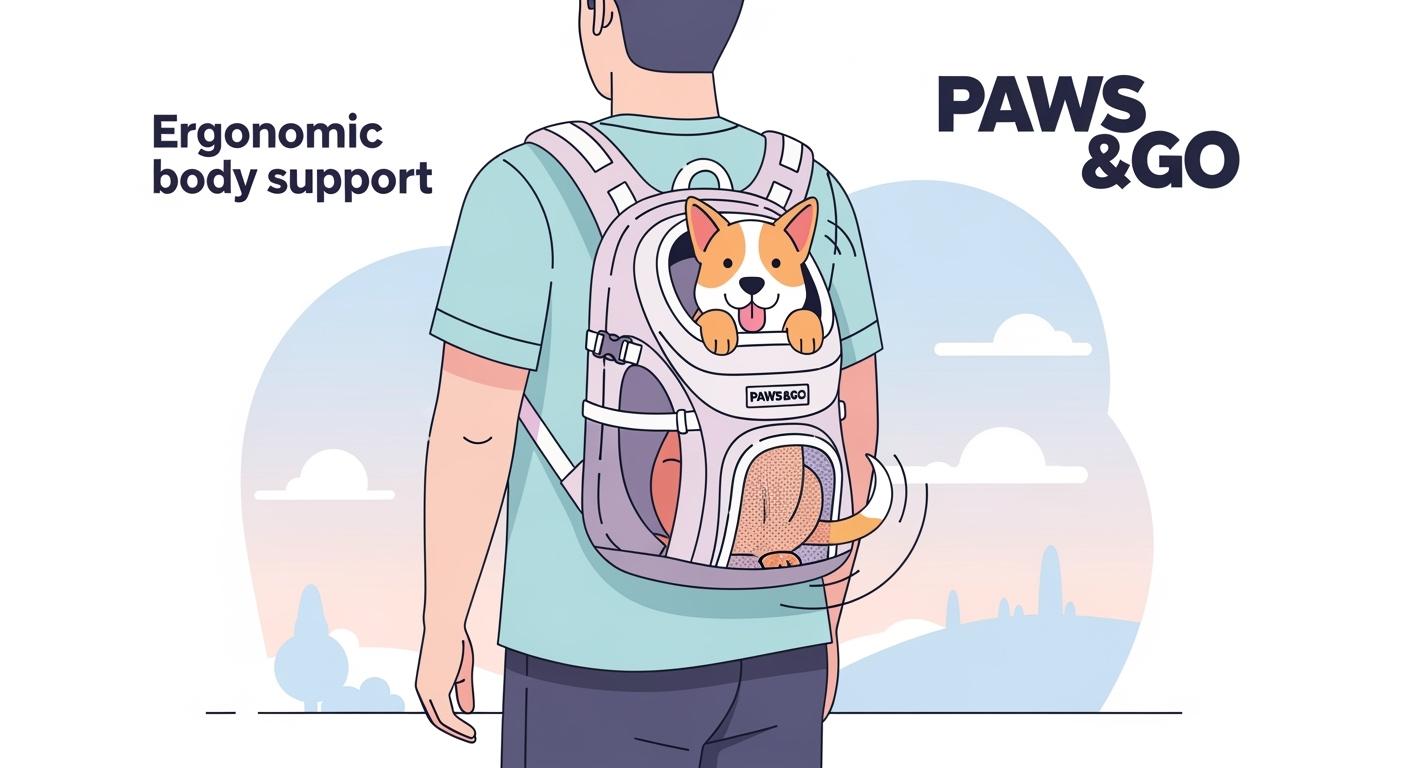
Most dog backpack carrier rubbing complaints start the same way: redness on the inner thighs after a 20-minute walk, or a dachshund that suddenly refuses to settle into a carrier it used to accept. The assumption is usually that the edges need more padding. But a dog backpack carrier with plush edge binding can still cause friction if the underlying problem is not the edge itself — it is where the dog’s body sits relative to that edge. A carrier that lets a dog hang into the leg openings turns every step into a low-grade abrasion cycle, regardless of how soft the opening feels to the hand.
That distinction changes what to look for. It shifts the conversation from “is this carrier padded enough” to “does this carrier hold the dog in a position where the openings cannot become pressure points.” When sizing and fit checks prioritize torso support over softness ratings, the same carrier geometry that prevents sagging also prevents rubbing.
Why Leg Openings Rub — The Support Problem Behind the Padding Problem
A dachshund in a backpack carrier is not a static load. Every step the human takes introduces a vertical oscillation — the carrier rises and falls, and the dog’s body responds by shifting. If the carrier’s base panel and torso support hold the dog in a stable upright position, the leg openings stay roughly where they were fitted. The dog’s thighs may brush the edges, but contact is light and intermittent.
The problem starts when torso support fails. The dog’s rear settles lower in the carrier. What was a light brush becomes firm contact. The leg opening edge now acts as a fulcrum: the dog’s body weight pushes down on one side, the carrier fabric resists on the other, and the narrow edge between them concentrates that force onto a small strip of skin and underlying tissue.
A narrow or stiff edge amplifies this effect because it cannot distribute the same load across enough surface area. But a wide padded edge under a sagging dog still sees concentrated pressure — the force has to go somewhere, and the lowest point of contact bears the most. This is the causal chain that turns a 15-minute carry into visible redness: torso sag → edge becomes load-bearing → cyclic motion from walking turns static pressure into dynamic friction → skin irritation.
The observable test is straightforward. After 10 minutes of carrying, remove your dog and run a finger along the inner thigh where the leg opening sat. If you feel a ridge or see a pink line that does not fade within 30 seconds, the edge is concentrating pressure. A carrier doing its job leaves no temporary imprint at all.
Note: A dog that keeps shifting position inside the carrier is not “restless” — the dog is trying to relieve pressure it cannot escape. That signal is a support failure, not a temperament issue.
| Failure Signal | Likely Design Cause | Better Design Direction |
|---|---|---|
| Redness or visible rub line on inner thighs | Narrow or stiff edge bearing body weight | Wider, padded edge with load-spreading geometry |
| Dog repeatedly shifts or tries to stand | Base panel sagging, torso support absent | Reinforced base with structured torso panel |
| Repeated licking of legs or belly after use | Raised seam or hard edge at contact point | Flat seams with soft binding, no ridge at the opening |
When a Short Walk Becomes a Long Irritation Cycle
Duration matters here. The friction mechanism described above does not produce visible damage in the first five minutes. But because the dog’s body weight keeps the edge in constant or near-constant contact, the micro-abrasions accumulate. A 30-minute walk applies hundreds of oscillation cycles to the same contact zone. If the dog cannot shift away from the edge — because the carrier lacks the internal space or structural support to allow it — the same millimeter of skin absorbs every cycle.
This is why some carriers feel fine in a living-room test and fail on the trail. The brief static test does not reproduce the rhythmic loading that actually causes the problem. A comfort map that tracks contact zones through a full walk cycle reveals what a stationary fit check misses — the dynamic pressure points that only appear during movement.
Dachshunds face an elevated risk here. The breed’s long torso and short leg geometry means a greater proportion of body mass sits forward of the leg openings. If the carrier’s torso panel does not extend far enough forward or lacks the stiffness to resist forward slump, the dog’s chest settles, the rear rises, and the leg openings pull upward into the groin area. The rub point moves to a more sensitive zone, and the same edge that caused mild thigh redness now presses into thinner skin with less natural padding.
What Design Details Actually Reduce Rubbing in a Dog Backpack Carrier

Edge Geometry: Width and Load Distribution
A wider leg opening edge is not wider for comfort’s sake alone. The functional reason is surface area. The same downward force from the dog’s body, spread across double the edge width, produces roughly half the peak pressure at any single point along the contact line. That is not a marketing claim — it follows directly from the mechanics of distributed loading.
But width alone has a limit. Once the edge becomes wider than the natural gap between the dog’s thigh and the carrier wall, the extra material bunches rather than spreads. A dachshund’s slender legs leave a narrow clearance window, and an excessively wide edge in that space can fold inward, creating a new pressure ridge. The functional sweet spot is an edge wide enough to distribute force but proportional to the leg clearance of the dog size the carrier is designed for.
Edge binding material also matters in a specific way. Soft binding reduces the coefficient of friction at the contact surface — less grip between fabric and skin means less shear force transmitted with each step. But if the binding compresses fully under load and bottoms out against the stiffer carrier body fabric beneath, the soft layer becomes cosmetic. The effective edge stiffness is the stiffness of the hardest layer in the stack. A useful check: press your thumb into the edge binding with roughly the weight of your dog’s torso. If you can feel the structural fabric through the padding before your thumb sinks halfway, that padding is not doing mechanical work under load.
Torso Support: The Structure That Keeps Edges Unloaded
The most effective rubbing prevention in a dog backpack carrier is not found at the leg openings at all. It is in the base panel and the torso support structure that determines whether the dog’s body weight reaches those openings at a meaningful angle.
A carrier with a rigid or semi-rigid base panel resists downward deflection. The dog sits on a platform that stays roughly flat, which means the dog’s rear stays at the height it was placed. The leg openings then serve their intended function — they are pass-throughs, not load-bearing edges. In a carrier without structured base support, the fabric stretches and sags over minutes of use. The dog’s body descends, and the leg openings become the new lowest point. They are now load-bearing by default.
The torso panel plays a complementary role. A panel that extends from the base to at least the dog’s mid-chest, with enough stiffness to resist forward slump, prevents the dog’s weight from rotating forward and concentrating at the front edge of each leg opening. A hiking carrier checklist that includes base deflection and torso panel coverage catches most design failures before a purchase happens.
The observable test for torso support: glance at the carrier’s base after 10 minutes of use. If the fabric panel below your dog has visibly stretched or sagged — use the seam line or a logo as a reference point — torso support is degrading, and the dog has settled further into the openings than the initial fit suggested. A well-structured base panel shows no visible deflection from its original line under the dog’s seated weight.
Seam Placement and Edge Finish
Where the seam sits relative to the contact zone determines whether stitching becomes a friction tool. A seam that runs directly along the inner edge of a leg opening — which is a cheaper and faster construction method — places a raised line of thread exactly where the dog’s skin presses hardest. In production terms, a flat-felled seam or a seam offset to the exterior side of the opening adds a sewing step but removes the ridge from the contact surface. Carriers built with exterior-offset seam construction eliminate the most common mechanical irritant without relying on extra padding to cover a construction shortcut.
Smooth, flat interior seams are easier to achieve in production when the pattern pieces are cut with seam allowance folded outward rather than inward — a manufacturing choice that costs no more in material but requires more precise cutting and an extra pressing step. It is the kind of decision that separates a carrier built to prevent rubbing from one built to meet a price point.
Tip: Run your hand along the inside edge of every leg opening before first use. If you feel even a slight ridge from a seam or a transition between materials, that ridge will be the first place your dog’s skin reacts after 20 minutes of movement.
When a Well-Designed Carrier Still Isn’t Enough
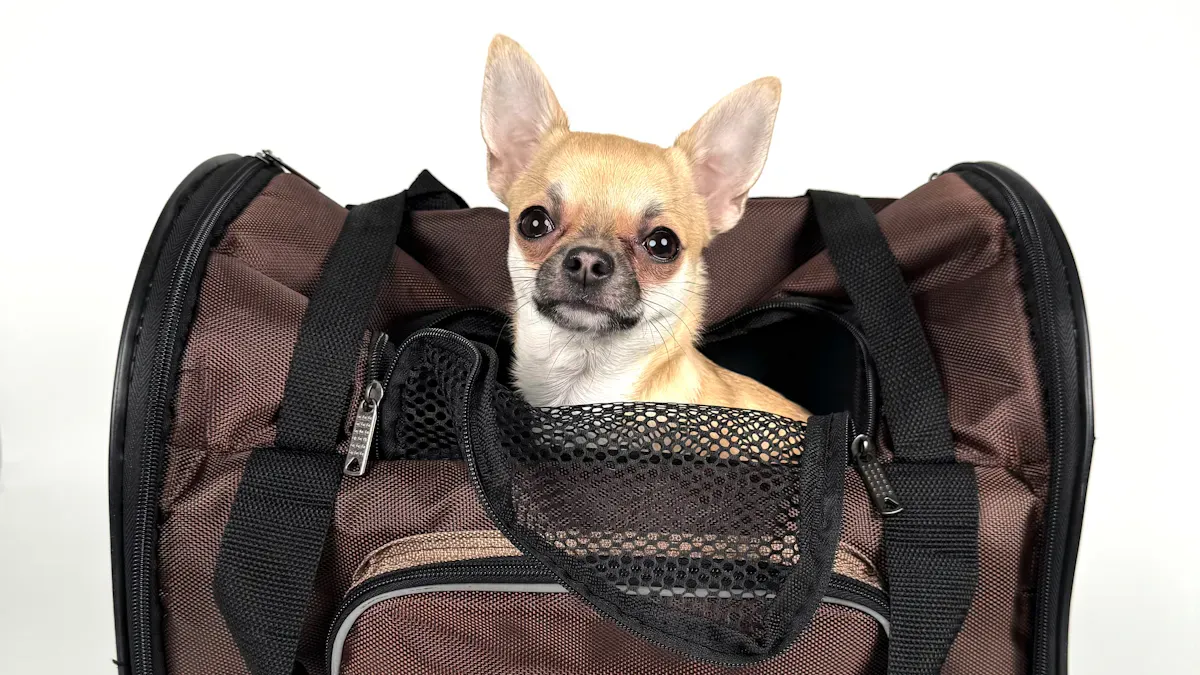
When the Dog’s Body Shape Defeats the Pattern Geometry
Every carrier is patterned for a range of body proportions. When a dog falls outside that range, even the best edge design and torso support cannot fully compensate. This is especially common with dachshunds, whose body length-to-leg-length ratio is an extreme outlier among small breeds.
A dachshund with a particularly deep chest and short legs may find that the torso panel of a carrier designed for “small dogs up to 15 pounds” stops too low on the chest to prevent forward rotation. The dog’s weight pulls the front of the carrier down, the rear tilts up, and the leg openings ride into the groin. This is not a design defect — it is a geometry mismatch. Matching a carrier to a dog by weight alone instead of by body length and chest depth is the single most common reason a well-reviewed carrier fails on a specific dog.
The practical test: with your dog sitting in the carrier, look at where the torso panel ends relative to the dog’s chest. If the top edge sits below the dog’s sternum, the panel cannot resist forward slump for that body length.
Heat, Moisture, and the Friction Multiplier
Sweat and humidity change the friction equation. A damp coat increases the coefficient of friction between skin and fabric. What was a low-friction interface in dry conditions becomes grippy when the dog’s body heat builds inside the carrier on a warm day. The same edge geometry that left no mark on a cool morning can produce redness on a humid afternoon — not because the carrier changed, but because the friction conditions did.
Checking ventilation panel placement and airflow paths before a warm-weather hike helps, but the more reliable safeguard is to shorten carry duration when conditions shift. If the air temperature plus humidity index is high enough that you would not wear a fleece layer, your dog’s coat is generating more friction inside the carrier than it would on a dry 60-degree day.
Disclaimer: These fit checks assume a smooth-coated dog where rub marks are visible on the skin. Double-coated breeds may show subtler pressure points that require hand-checking rather than visual inspection — run your fingers along the inner thigh and belly after use. If your dog’s chest shape falls outside the breed norms this carrier was patterned for — particularly dogs with a disproportionately deep chest or very short legs relative to body length — the standard torso support geometry may not catch every pressure point, and a carrier with an adjustable internal sling or belly strap is worth considering.
| Assessment Criteria | What to Check | Why It Matters for Rubbing |
|---|---|---|
| Base stability | After 10 minutes of carry, base panel shows no visible sag from original seam line | A sagging base lets the dog descend into leg openings, converting them from pass-throughs to load-bearing edges |
| Torso panel height | Panel reaches at least to the dog’s sternum when seated | A panel that ends too low cannot resist forward slump, which tilts the carrier and drives openings upward |
| Edge compression | Thumb-press edge padding at estimated body weight; structural fabric should not be felt through padding | Padding that bottoms out under load transmits force directly to skin through the stiffer carrier body fabric |
| Seam position | No raised seam line on the interior surface of any leg opening edge | An interior seam at the contact line acts as a concentrated friction ridge with every step cycle |
FAQ
How can I tell if my dog backpack carrier is causing rubbing before visible redness appears?
Run your finger along the inner thigh and belly immediately after removing your dog from the carrier. A ridge or warm line that persists for more than 30 seconds indicates the edge was bearing weight against that spot. Also watch for the dog licking the same area repeatedly after removal — licking targets a specific friction point before skin damage is visible.
Can I fix a carrier that causes rubbing by adding more padding?
Adding padding to the leg openings of a carrier that lacks torso support usually does not solve the problem. The padding increases edge width, which can help slightly with pressure distribution, but if the dog is still sinking into the openings, the extra material eventually compresses and the same concentrated load returns. Fix the support structure first — a folded towel under the dog inside the carrier can serve as a temporary base reinforcement to test whether torso sag is the root cause.
Does a carrier that prevents rubbing on a 20-pound dachshund also work for a 20-pound French bulldog?
Not necessarily. Body proportions drive fit more than weight. A French bulldog has a broader chest and shorter back relative to leg length compared to a dachshund. The same carrier may leave too much clearance around a bulldog’s legs while fitting a dachshund correctly, or vice versa. The torso panel height check described above is more predictive than the weight rating on the tag.
How long is too long for a dachshund to stay in a backpack carrier?
There is no universal number, but the friction cycle argument suggests doing a 10-minute check on every new carrier or new route. If the dog shows no ridge marks or restlessness at 10 minutes, extend to 20 and recheck. Most carriers that eventually cause rubbing produce a detectable signal — a pink line, shifting, licking — within the first 20 minutes. If you reach 30 minutes with no signals, the carrier is holding the dog in a position where the openings are not load-bearing, and longer durations become a question of hydration and bathroom needs rather than rubbing risk.






