
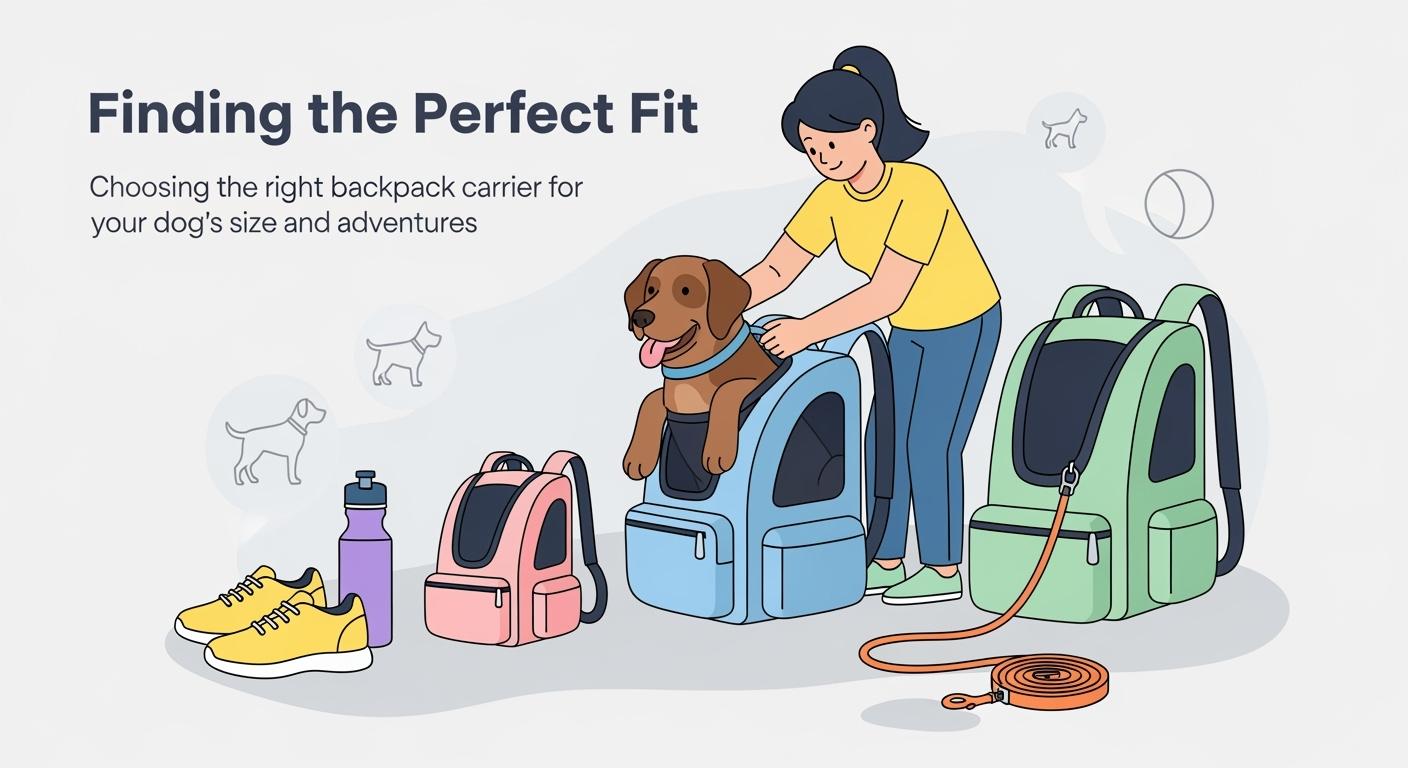
A dog backpack carrier should not be chosen by weight label alone. A carrier can look large enough from the outside, but still fail when the inside space is short, the base folds under the dog, the entry is too tight, or airflow is blocked once the dog sits inside.
The best fit depends on two things working together: the dog’s body shape and the way the carrier will be used. A calm dog on short city walks does not need the same structure as an active dog on longer outdoor trips. A medium dog that shifts often needs more base support, better weight balance, and stronger ventilation than a small dog that sits quietly for short carry segments.
This guide focuses on the product details that decide whether a backpack carrier works in real use: internal room, seated posture, base support, entry opening, ventilation, tether position, and activity level.
Start with internal space, not the weight label
Weight limits are useful, but they do not tell the full fit story. A dog may stay under the listed weight and still be too long, too tall, or too broad for the inside space. That is why the internal length, width, and height matter more than the outside shell size.
Measure chest girth, back length, and seated height before comparing carrier sizes. The carrier should allow the dog to sit or rest without being forced into a tight curl. A small comfort buffer helps prevent the head, neck, shoulders, and hips from being pressed into the carrier walls.
| Fit point | What to check | What can fail |
|---|---|---|
| Back length | Compare the dog’s back length with the internal carrier length. | The dog curls tightly or cannot keep a neutral resting posture. |
| Seated height | Check whether the head and shoulders have enough vertical room. | The neck bends downward or the lid presses on the head. |
| Chest and shoulder width | Check whether the dog can sit without shoulder compression. | The dog leans, twists, or resists staying inside. |
| Internal base area | Check whether the base supports the full sitting area. | The dog slides forward, slumps, or sinks into one side. |
A practical first check is simple: if the dog must fold tightly to fit, the carrier is not only uncomfortable; it also makes ventilation, balance, and longer carry time harder to manage.
Base support decides whether the dog stays stable
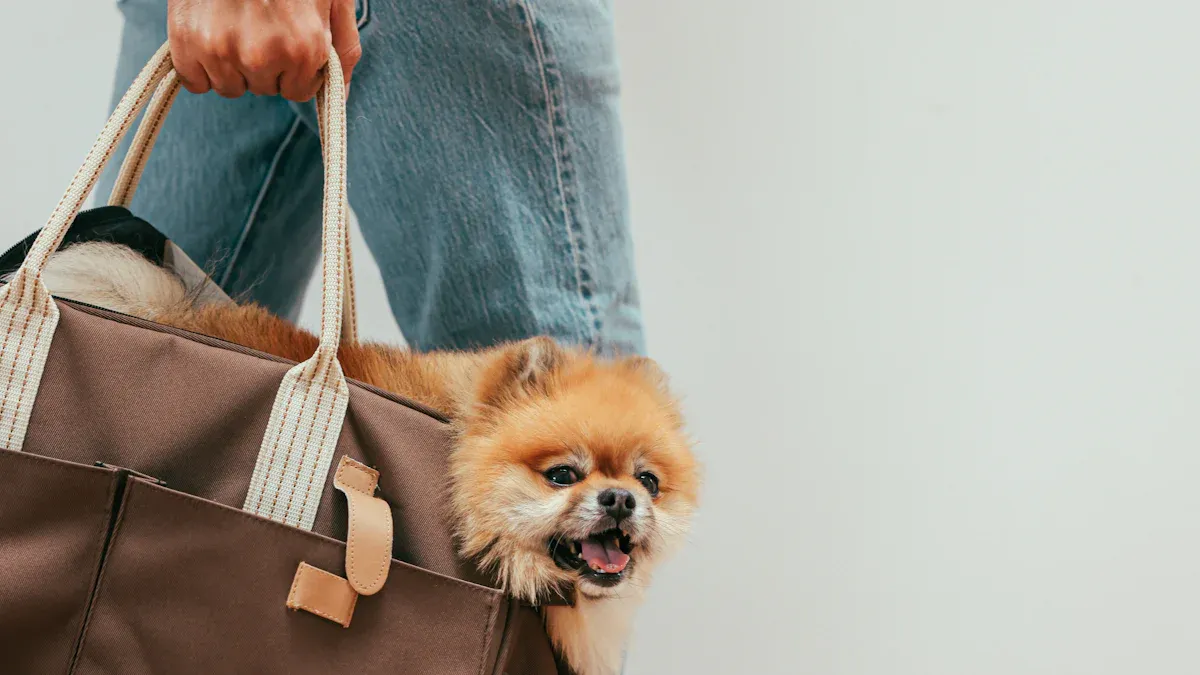
The base is one of the easiest parts to underestimate. A soft carrier may feel comfortable at first touch, but if the bottom panel bends under the dog’s weight, the dog cannot stay upright. Once the base sags, the spine curves, the hips slide, and the dog may press against the front or side wall.
A stronger base does not mean the carrier should feel hard. The better design is a firm support layer with enough padding to reduce pressure. The base should resist folding when the dog shifts, sits, or turns slightly inside the carrier.
| Carrier structure | Better result | Common failure sign |
|---|---|---|
| Firm bottom insert | Helps the dog sit evenly and reduces slumping. | The dog sinks into the middle or slides forward. |
| Stable side panels | Helps the carrier keep shape during movement. | The side wall folds inward and reduces usable space. |
| Wide shoulder and waist support | Helps reduce swing and makes the load easier to carry. | The carrier bounces, tilts, or pulls backward during walking. |
| Internal tether point | Helps limit sudden movement inside the carrier. | The dog turns too far, tries to climb out, or shifts the load. |
The dog backpack carrier structure should match the dog’s size range, not just the listed load capacity. A medium dog usually needs a firmer base and stronger body support than a very small dog, even if both fit under the same basic weight category.
Ventilation and entry design affect daily tolerance
Airflow matters because a backpack carrier covers more of the dog’s body than an open harness or leash setup. When mesh panels are too small, blocked by fabric, or pressed against the dog’s body, heat builds up faster. This is especially important for warm weather, active dogs, compact-faced breeds, and dogs that shift or pant easily.
The entry opening also affects tolerance. If the opening is narrow or positioned awkwardly, the dog may resist loading even when the internal size is technically correct. A wider opening, smoother zipper path, and less pressure around the legs can make the carrier easier to use without turning the product into a training problem.
| Design detail | Why it matters | Better product direction |
|---|---|---|
| Mesh placement | Air needs to reach the body, not only the top of the carrier. | Use open side and front ventilation where the dog actually sits. |
| Panel stiffness | Soft walls can collapse against the dog and block airflow. | Use structure that keeps mesh open during carrying. |
| Entry size | A tight opening can make loading stressful. | Use an opening that allows the legs and body to enter without twisting. |
| Closure layout | Poor zipper or buckle placement can press into the body. | Keep closures secure but away from pressure points. |
Ventilation should be checked after the dog is inside, not only when the carrier is empty. A carrier that looks breathable on a product photo can still feel hot if the dog’s body blocks the mesh or if the panels collapse during use.
Match activity level to carrier structure
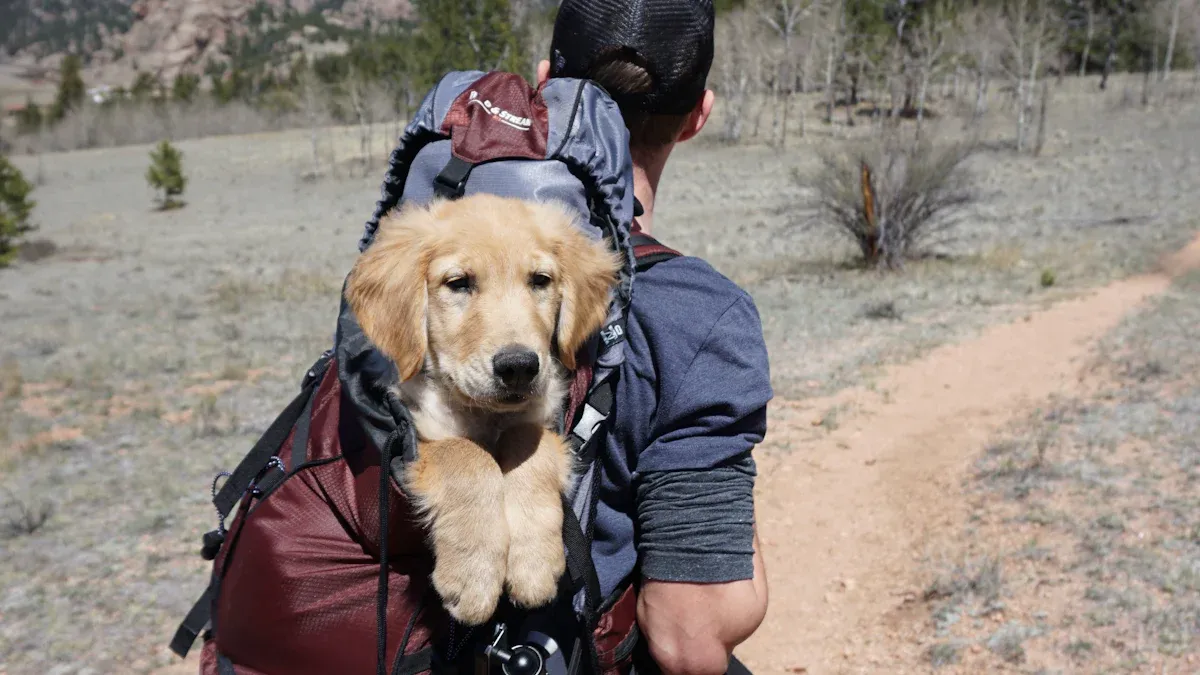
Activity level changes what the carrier must handle. A calm dog may sit quietly and need softer support, easy loading, and steady airflow. A more active dog may shift, lean, look around, and warm up quickly, so the carrier needs better stability, stronger base support, and more open ventilation.
Calm short-distance carry
For calm dogs and short city use, the most important details are easy entry, enough internal room, and a stable base that does not fold. Soft padding can help, but it should not replace structure. If the carrier is too soft, the dog may slump even during short sessions.
Moderate daily outings
For errands, commuting, and light outdoor walks, the carrier should balance comfort and support. The dog needs enough room to sit naturally, while the person carrying the pack needs shoulder and waist support that reduces sway. If the carrier moves too much with every step, the dog may shift constantly and become harder to carry safely.
Active outdoor use
For longer walks, trail approaches, or warmer outdoor conditions, the carrier needs firmer structure, stronger ventilation, and more frequent fit checks. A dog that gets warm easily or changes posture often should not be placed in a soft, narrow, or poorly ventilated backpack carrier.
| Use case | Carrier features that matter most | Designs to avoid |
|---|---|---|
| Short city carry | Easy entry, stable base, comfortable contact points | Small openings and thin bottom panels |
| Daily commuting | Internal room, shoulder support, ventilation, secure tether | Loose carriers that swing or tilt easily |
| Outdoor activity | Firmer base, open mesh, wide straps, better weight distribution | Collapsed mesh, weak structure, poor heat release |
| Older or sensitive dogs | Large entry, low stress loading, short carry segments | Tight entry, high compression, long carry time |
Fit checks before longer use
A short test carry helps show whether the carrier fails before a longer outing. The first test should check posture, breathing, heat, and carrier movement. The goal is not to force the dog to adapt to a poor structure. The goal is to confirm that the carrier supports the dog without creating obvious stress signs.
| Check | Pass sign | Fail sign |
|---|---|---|
| Posture | The dog sits or rests without tight curling. | The dog slumps, twists, or presses into one side. |
| Breathing and heat | Breathing stays normal and the dog settles inside. | Heavy panting, drooling, restlessness, or heat stress appears. |
| Carrier movement | The pack stays close to the body and does not swing heavily. | The carrier bounces, tilts, or pulls the dog off balance. |
| Entry and exit | The dog can be loaded and removed without twisting the legs. | The dog resists the opening or catches legs on the edge. |
| Tether position | The tether limits movement without pulling the neck. | The tether is too short, too high, or attached to the wrong point. |
For most carriers, a short first test is more useful than a long first trip. If the dog shows slumping, heat, escape attempts, stiffness, or repeated resistance, the product fit or structure should be reconsidered before longer use.
Common failure points and better design choices
Most backpack carrier problems come from the same few design mismatches. The carrier may be too small inside, too soft at the base, too warm, too hard to load, or too unstable on the person’s back. These problems often appear only after the dog is inside and the person starts walking.
| Real-use problem | Likely reason | Better structure or material choice |
|---|---|---|
| Dog curls tightly | Internal length or height is too small. | Use internal dimensions and a comfort buffer, not weight alone. |
| Dog sinks or slides | Bottom panel is too soft or narrow. | Use a firmer padded base insert with better edge support. |
| Dog overheats | Mesh area is too small or blocked by body position. | Use open ventilation where the dog’s chest and body sit. |
| Dog resists loading | Entry opening is tight or awkward. | Use a wider opening and smoother closure path. |
| Carrier swings during walking | Straps are narrow, loose, or poorly balanced. | Use wider padded straps, waist support, and closer body fit. |
| Dog tries to climb out | Interior feels unstable or tether position is wrong. | Use secure harness attachment and a structure that limits sudden shifting. |
These details are what make one carrier feel stable while another feels unsafe or uncomfortable. A good product direction starts with the real posture and movement problems a dog faces inside the carrier.
FAQ
Is weight limit enough to choose a dog backpack carrier?
No. Weight limit is only a starting point. Internal length, width, height, base support, and ventilation decide whether the dog can sit comfortably and breathe well inside the carrier.
What carrier structure is better for medium dogs?
Medium dogs usually need a firmer base, stronger side structure, wider shoulder straps, and better ventilation than very small dogs. A soft bottom may collapse under a medium dog even when the listed weight limit looks acceptable.
How do you know if a backpack carrier is too small?
The carrier is too small if the dog must curl tightly, cannot keep the head and shoulders comfortable, presses against the lid, or pants and shifts soon after being placed inside.
Why does a dog resist entering a backpack carrier?
Resistance can come from a tight entry opening, weak base support, heat buildup, pressure around the legs, or a previous uncomfortable experience. The carrier design should make loading smooth before the dog is expected to stay inside.
Which carrier features matter most for active dogs?
Active dogs need stronger base support, open ventilation, secure tether placement, wide padded straps, and better weight distribution. A carrier that swings or traps heat will usually fail faster with active use.
The right dog backpack carrier is not simply the one that matches the weight label. It is the one that gives the dog usable inside space, stable base support, enough airflow, smooth entry, and the right structure for the way the carrier will actually be used.






