
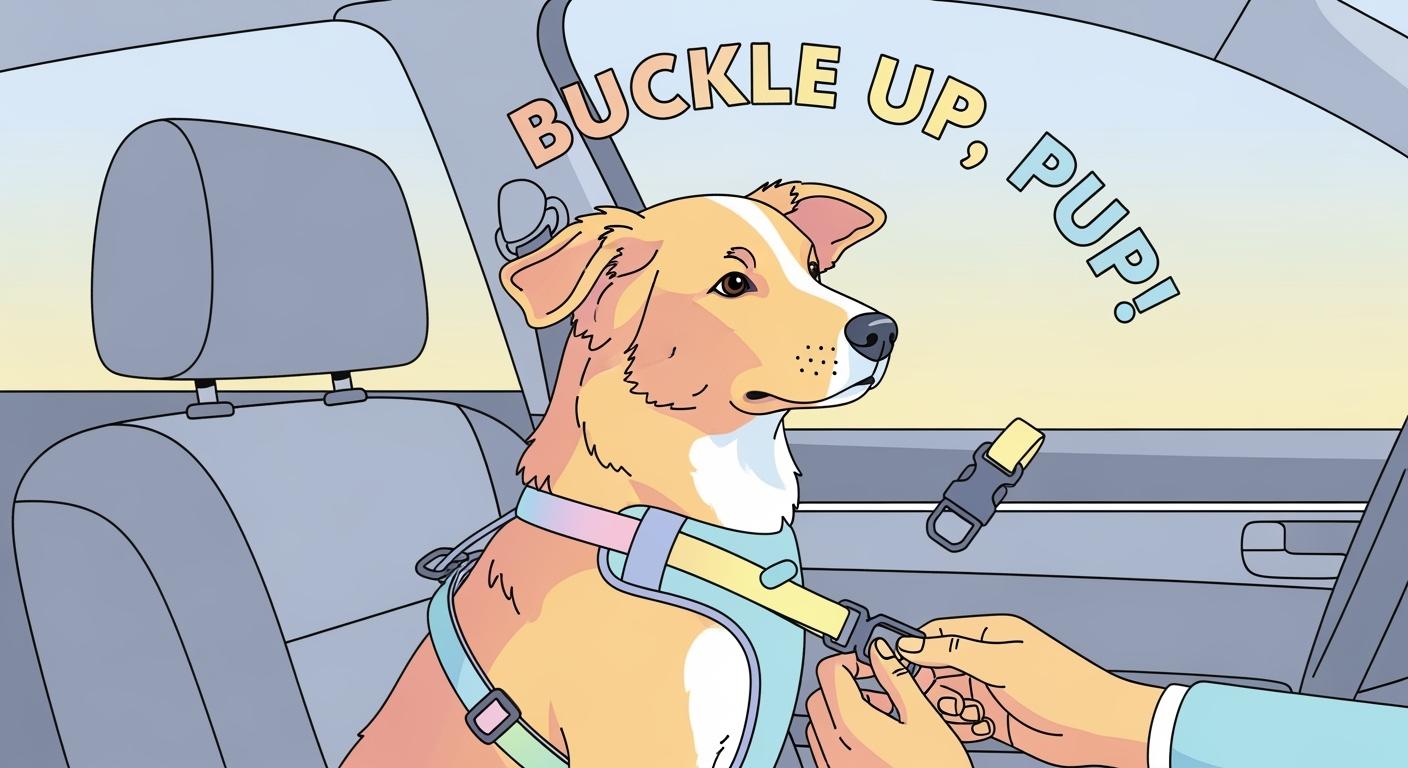
A car seat harness dog setup should do more than clip in fast. It should keep your dog in a predictable rear-seat position, stay flat across the chest, and limit the extra movement that can turn a routine stop into a mess of loose webbing and poor restraint.
A neat-looking install can still be the wrong one. If you are working through dog car seat safety and installation checks, pay close attention to fit, tether length, buckle access, and whether your dog stays centered after sitting down and settling in.
Key takeaways
- Check the harness on the dog first, then check the car connection.
- Judge the setup after your dog sits, turns, and settles, not right after you clip it in.
- Too much slack, a twisted belt path, or an off-center chest panel can make a setup less stable.
- Keep your dog in the rear seat and recheck the restraint before every trip.
Why a setup can look fine and still be wrong
Most problems show up after the first minute of real use. A harness can look snug while your dog is standing still, then shift toward the neck, rotate off center, or let the body drift too far forward once the dog sits down. That is why the short parked test matters more than the first impression.
The harness also has to match the dog’s shape. Chest depth, shoulder movement, coat thickness, and strap layout all change how stable the restraint feels in the car. If you are still comparing designs, dog harness size and material choices for daily walks can help explain why some styles stay flatter and calmer on the body than others.
Three common rear-seat setups
| Setup type | How it attaches | What works well | What to watch | Best fit |
|---|---|---|---|---|
| Buckle clip | Tether clips into the seat-belt receiver | Fast daily setup and easy removal | Slack can build up if the tether is too long or routed poorly | Short trips with a dog that settles quickly |
| Belt-loop | Seat belt runs through the harness path before buckling | Usually cleaner routing with less side-to-side drift | Takes longer to install and needs a careful strap check | Longer rides or dogs that stay mostly in one spot |
| Booster plus harness | Dog rides in a secured seat and connects to a harness tether | Better height for small dogs and a more defined ride zone | The base can wobble or tip if the seat is not anchored well | Small dogs that travel in a booster-style seat |
If you are still comparing boosters, covers, and related pet car travel gear, keep the final setup simple enough to inspect in a few seconds before every drive.
Tip: After clipping in, wait for your dog to sit down, turn once, and settle. That is when slack, twisting, and chest-panel drift usually become obvious.
Mistakes that cause most fit problems
The most common setup errors are not complicated. They are usually small misses that pile up: the tether clips to the wrong point, the strap path twists, the chest section rides up, or the dog has enough slack to step outside the intended ride zone.
- Wrong clip point: the restraint should load the body through the harness, not through the collar or a random loop.
- Too much slack: if your dog can reach the footwell, climb toward the front, or lean hard over the seat edge, the setup is too loose.
- Twisted strap path: twisted webbing is harder to inspect and can pull the harness off center.
- Bad chest position: when the chest section drifts upward or sideways, the harness often stops sitting where it should.
- Poor booster stability: a wobbly seat can make even a decent harness feel unstable.
Neck loading is another easy mistake to miss. A rear-seat restraint should work with a harness rather than a collar, and car tether harness versus collar safety is worth checking if you are not sure which connection point makes sense for your dog.
Fast troubleshooting
| Problem you notice | Likely cause | Quick check | First fix |
|---|---|---|---|
| Dog can reach the floor or front edge of the seat | Tether is too long | Pull the restraint by hand and watch the range of motion | Shorten the tether and retest |
| Harness rotates after the dog turns around | Chest fit is loose or the straps are uneven | Check whether the chest section stays centered | Recenter the harness and adjust both sides evenly |
| Webbing bunches near the buckle | Twisted routing path | Run your hand from anchor to harness | Unclip, flatten the webbing, and reconnect |
| Booster tilts when the dog shifts weight | Seat base is not secure | Push the base side to side before the dog gets in | Reinstall the seat before using the tether again |
| Harness rides up toward the throat | Wrong size, poor adjustment, or bad attachment point | Watch the harness while the dog sits and lies down | Refit the harness and confirm the correct clip point |
What a good setup looks like on a short drive
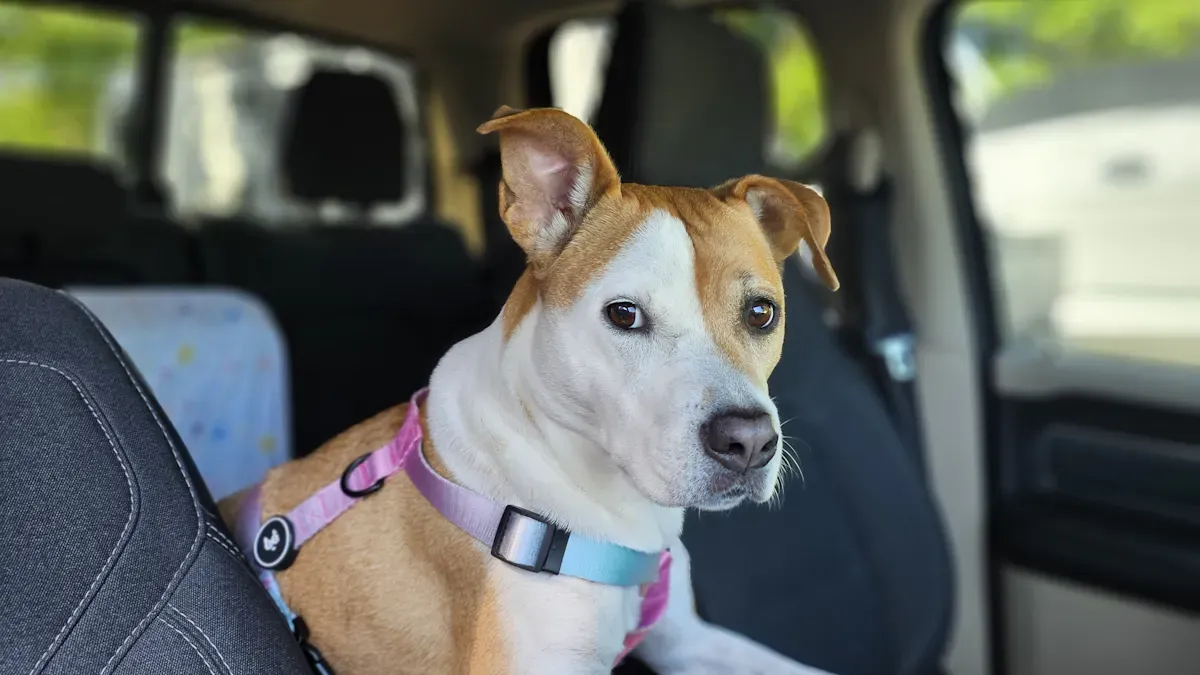
A good setup lets your dog sit or lie down naturally without roaming across the seat. The harness stays flat, the buckle stays reachable, and the tether limits motion without pulling the chest section up toward the neck. If you want another example of what to check before trusting the setup, dog seat harness fit checks before driving cover the same warning signs: throat crowding, twist, and too much forward slack.
How to set it up
- Put the harness on your dog and adjust it before you touch the seat belt or tether.
- Place your dog in the rear seat, then connect the restraint using the buckle-clip or belt-loop method recommended for that setup.
- Check that the webbing lies flat from the car anchor to the harness with no twists or bunching.
- Shorten the restraint until your dog can sit and lie down comfortably but cannot spill into the footwell or front-seat area.
- Do a parked test with gentle hand pressure and a short settle-in period before driving off.
If the harness works with a booster seat, make sure the seat itself is stable before you tighten the tether. For that part of the setup, car seat size, fit, and setup checks help you spot tipping, poor base support, and awkward buckle access.
Note: If your dog coughs, braces hard, or struggles to settle, stop and adjust the setup before the next trip.
Pre-drive checks that matter every time
The final check should take less than a minute. You are looking for a stable base, flat webbing, a centered chest section, and just enough restraint to keep your dog in a clear rear-seat zone.
| Check item | Pass sign | Problem sign | What to do |
|---|---|---|---|
| Buckle and anchor | Locks cleanly and stays easy to reach | Blocked, half-seated, or awkward to release | Reconnect before driving |
| Tether length | Dog can sit and lie down without roaming far | Dog reaches the floor, window edge, or front area | Shorten and retest |
| Harness position | Chest section stays centered and flat | Rides up, rotates, or pulls to one side | Refit the harness and even out the straps |
| Webbing path | Flat and untwisted from start to finish | Twists, bunching, or rubbing points | Unclip and reroute |
| Seat stability | Booster or seat base stays level | Base rocks, slides, or tips | Reinstall the seat before use |
| Dog after settling | Calm posture inside the ride zone | Leaning over the edge, tangling, or repeated bracing | Adjust fit and try another short test |
Replace worn webbing, damaged clips, or a harness that no longer fits your dog’s body. A good routine is simple: fit the harness, confirm the connection, watch your dog settle, and fix anything that shifts before the wheels start moving.
FAQ
How do you know if a dog car harness is too loose?
If the harness rotates, rides up, or lets your dog reach too far forward or down into the footwell, it needs adjustment.
Can a regular walking harness work in the car?
Some walking harnesses may still be a poor match for rear-seat restraint, so use car-travel gear only as directed and check how it behaves during a short test ride.
Where should a dog ride for better control in the car?
The rear seat is usually the better place for a harness-based restraint because it keeps the dog away from the driver area and front airbags.
What should you do if your dog chews the tether?
Stop using damaged gear, replace worn parts, and shorten the time between fit checks until you trust the setup again.






