
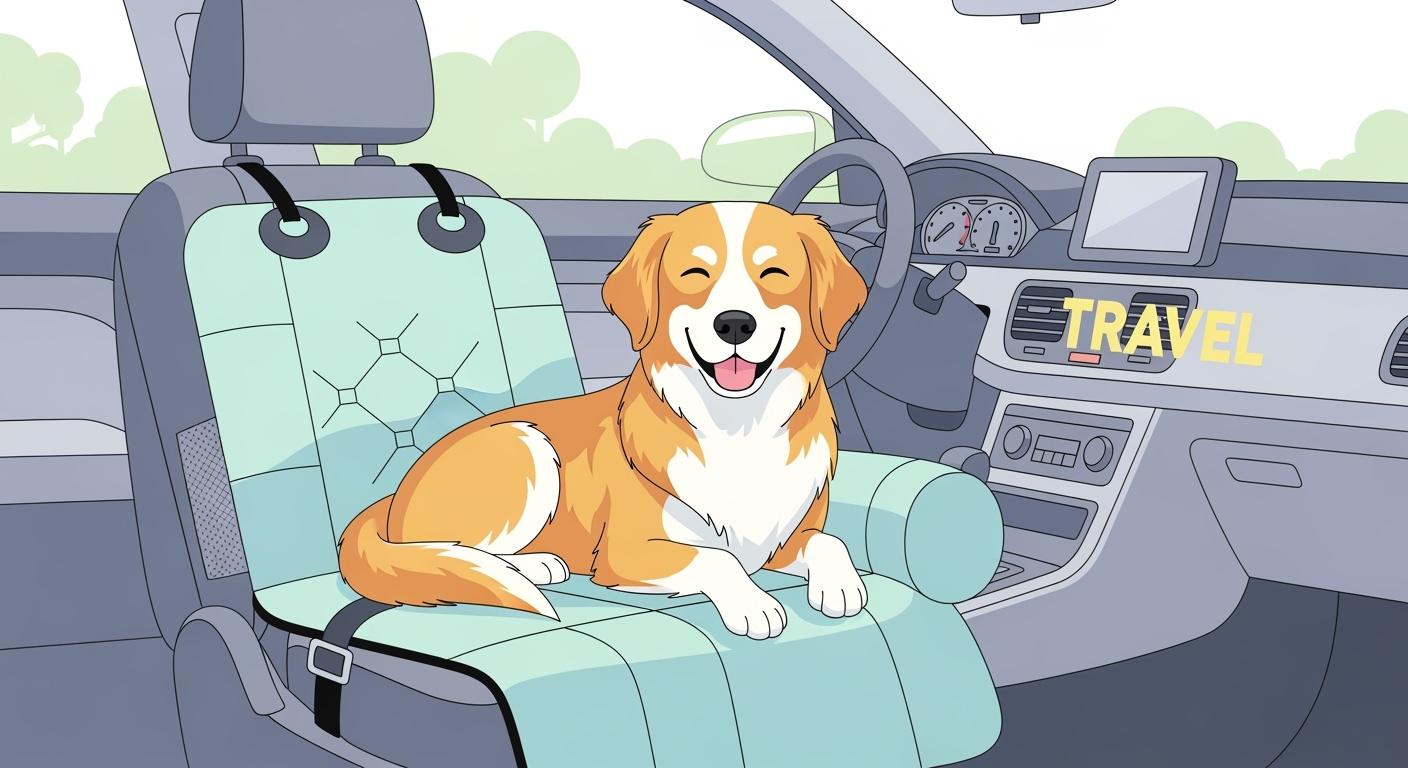
A seat cover for dog in car travel should do two jobs well: protect the seat and give your dog a surface that stays steady after the dog gets in, turns around, and settles. For calm dogs on short rides, a soft bench cover is often enough. For larger dogs, frequent trips, or dogs that pace and brace on corners, a hard bottom or hammock style usually works better because it stays flatter under shifting weight.
The best choice depends less on padding and more on how the cover behaves in real use. If it sags in the middle, blocks buckles, slides on the seat, or turns slick after mud and hair build up, it is not doing its job well even if it looks thick. If you are comparing pet car seat covers and mats, focus first on stability, buckle access, and how quickly the material cleans up after normal weekly use.
Which cover style fits your dog and your back seat
A flat bench cover is the simplest option when your dog already rides calmly and you still need easy access to passengers or child-seat hardware. A hard bottom design adds structure under the dog’s weight, which can help reduce that center dip many rear-seat covers develop over time. Hammock layouts create a barrier between the front and rear seats, which may help dogs that try to climb forward or step into the footwell.
| Cover style | Usually works best for | Main strength | Main tradeoff |
|---|---|---|---|
| Soft bench cover | Calm dogs, short daily drives, shared back seats | Quick to install, flexible, easy to remove and wash | Can bunch or sag with heavier or more active dogs |
| Hard bottom cover | Large dogs, restless dogs, longer drives | More even support and better shape retention | Bulkier to store and sometimes slower to reinstall |
| Hammock cover | Dogs that climb forward or need more containment | More coverage and blocks the front footwell gap | Can interfere with buckle access if the fit is off |
The tradeoffs in a dog bench vs hammock setup usually come down to passenger access versus coverage. Bench styles leave the rear seat more usable for people. Hammock styles give more protection and can help some dogs feel less exposed, but only if the straps stay tight and the buckle openings remain usable.
How to tell when a soft cover is no longer enough
A soft cover is still a solid option when it lies flat, your dog keeps footing during normal turns, and cleanup stays simple. It starts to fall short when the middle dips under your dog’s weight, the edges curl up after a few rides, or the cover shifts enough to expose upholstery. That usually shows up faster with larger breeds, repeated in-and-out jumping, or longer highway drives.
- Your dog slips while turning around or braces instead of settling.
- The middle collapses after your dog lies down.
- Wrinkles keep drifting over the buckle openings.
- The underside slides after dirt, hair, or moisture collect.
- Reinstalling the cover never gets it as flat as the first time.
If sagging is the main problem, a hard bottom dog seat cover usually makes more sense than simply buying a thicker soft one. If your household still needs armrest use or fold-down access, a rear seat cover with split-fold access can be easier to live with than a one-piece layout that has to be loosened every time the seat changes shape.
For very small dogs, a flat rear cover is not always the best answer. Some dogs ride more securely in dog car booster seats because the smaller space limits sliding and gives clearer side support.
Note: A cover protects upholstery, but it does not secure a dog by itself. Keep buckle paths clear so a restraint can still be used when your setup allows it.
Real-use checks before you trust any cover
Install the cover, smooth it out, then let your dog get in before you decide whether it works. Watch what happens after the dog turns, sits, and lies down. A cover that looks tidy while empty can fail fast once weight shifts to the center or one edge.
| Check item | Pass signal | Fail signal | What to do next |
|---|---|---|---|
| Cover lies flat | No dips, no curling edges | Wrinkles, center sag, lifted corners | Retighten straps or move to a more structured cover |
| Dog settles normally | Dog sits or lies down without bracing | Dog keeps shifting, slips, or avoids the spot | Check grip and support |
| Buckle access | Openings stay visible after movement | Buckles get buried or twisted | Realign the cover or change the layout |
| Surface grip | Paws stay planted on turns and stops | Surface feels slick after dust or damp paws | Clean the cover and recheck traction |
| Cleanup | Hair, dirt, and moisture come off without much effort | Hair embeds, stains linger, odors build up | Wash sooner or switch to a less absorbent material |
Problems worth fixing right away
Small annoyances usually turn into larger ones if you keep driving with the same bad fit. A bunching cover can hide buckles. A cover that slides can leave the dog scrambling for footing. A surface that stays damp or traps grit wears faster and can make the rear seat feel unstable.
| Problem | Likely cause | Quick check | Practical fix |
|---|---|---|---|
| Middle sag | Loose straps or not enough support | Press the center after your dog lies down | Retighten or move to a structured base |
| Cover slides on the seat | Dirty underside or slick upholstery | Lift one edge and check for dust, hair, or dampness | Clean both surfaces and reinstall tightly |
| Blocked buckles | Misaligned slots or drifting fabric | Reach the buckles after the dog shifts position | Smooth the fabric and reset the anchors |
| Poor paw grip | Worn fabric or residue on the surface | Run your hand across the cover after a trip | Clean it or replace the cover if the surface stays slick |
| Hard reinstall after washing | Stiff panels or twisted straps | Remove and reinstall once while the cover is dry | Store it flat and reset each anchor point one by one |
If mud, wet paws, or spilled water are the main problem, a waterproof dog seat cover is usually easier to manage than a plush fabric that traps debris. A seat cover for dog in car use is not better just because it feels thicker. It is better when it stays flat, keeps access clear, and still feels stable after repeated daily trips.
Cleaning habits and replacement signs
Weekly cleaning is usually enough for everyday use, with spot cleaning in between for mud, drool, or wet paws. Shake out loose dirt, vacuum trapped hair, wipe down waterproof surfaces, and let washable covers dry fully before reinstalling them. Leaving moisture underneath the cover is a common reason odors start building up around the rear seat.
Replace the cover when adjustment no longer solves the problem. Signs that matter include repeated middle sag, torn straps, curled corners that do not flatten out, buckle openings that drift out of place, and a surface that stays slick or worn after cleaning.
FAQ
Is a hammock cover safer than a bench cover?
It can be more contained for dogs that try to climb forward, but only if it stays tight and does not block the buckle openings.
How often should a dog seat cover be cleaned?
For daily use, a quick cleanup after messy rides and a more complete wash or wipe-down about once a week is usually a practical routine.
Can a seat cover be used with a restraint?
Yes, as long as the buckle path stays clear and the cover does not twist or hide the hardware after your dog moves.
When is a hard bottom cover worth it?
It is usually worth it when a soft cover keeps sagging, your dog shifts around a lot, or longer rides make the rear seat feel unstable.






