
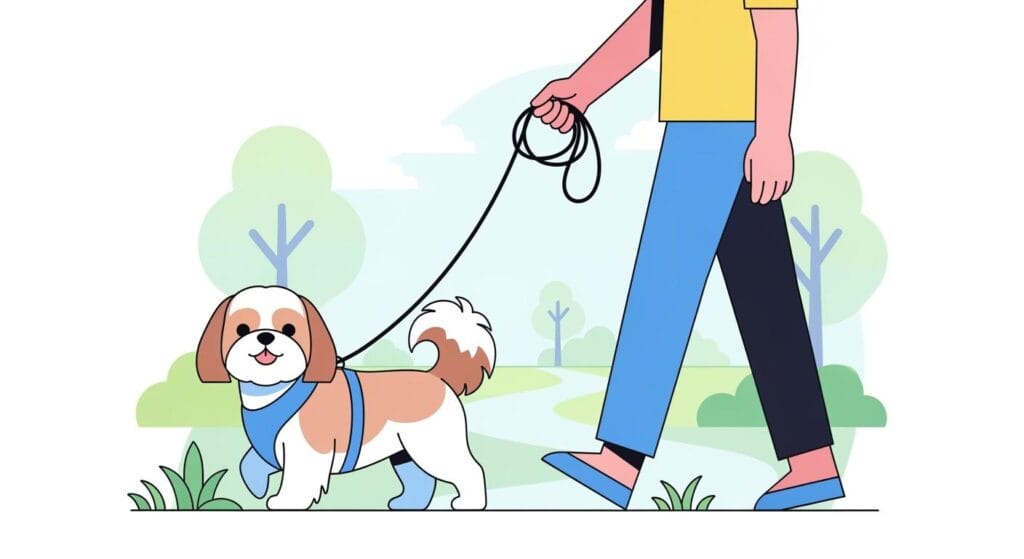
The best dog harness for Shih Tzu dogs is usually light, easy to put on, and gentle on a long coat. If the harness pulls facial hair, bunches the chest coat, or rides into the armpits after one short walk, it is the wrong shape even if the size label looks right.
For most Shih Tzus, the safest starting point is a step-in or other low-bulk harness with soft edges, light hardware, and enough adjustment to sit behind the front legs. That matters because the breed often has a compact frame, a full coat, and less tolerance for gear that has to be forced over the head.
If you are sorting through small-breed options, small-dog harness fit and comfort factors usually tell you more than a product label alone. Weight, strap width, and chest shape tend to matter more than marketing terms.
Why some harnesses work better on a Shih Tzu
Shih Tzus usually do best in a harness that spreads pressure across the chest without adding too much bulk. A short body can make oversized chest panels feel clumsy, while a thick coat can hide fit problems until the dog starts moving. The right harness should stay low on the chest, clear the shoulder area, and come off without leaving the coat flattened into knots.
You also want a setup that does not crowd the throat. If the front of the harness slides upward when the leash tightens, comfort drops quickly, especially on a small dog. A balanced harness and leash fit with the right leash length often feels steadier than changing the harness alone.
Note: If your Shih Tzu coughs, gags, or seems short of breath during walks, stop using the setup and ask your veterinarian to check both fit and airway comfort.
Step-in, overhead, and low-bulk styles
Step-in harnesses are usually the easiest match for a Shih Tzu because they avoid dragging the harness over the face and topknot area. They also make it easier to place the chest piece neatly before you buckle anything. Owners who want a faster routine often end up happier with small-dog step-in fit details, especially when coat care is part of the daily walk routine.
Overhead harnesses can still work, but only when the neck opening is generous and the dog does not mind the motion. If you have to squeeze the harness over the head or smooth the beard and chest coat every time, that style is probably adding work instead of solving it. Low-bulk easy-on designs sit in the middle. They can be very comfortable if the chest panel is short and the straps stay flat.
| Style | What usually works well | What to watch for | Best match |
|---|---|---|---|
| Step-in | No over-the-head motion, fast buckling, less facial hair disruption | Elbow clearance can be tight if the chest opening is small | Most Shih Tzus, daily neighborhood walks |
| Overhead | Can feel secure when the neck opening is wide and the straps stay light | Coat flattening, beard tangles, resistance during setup | Calm dogs that already tolerate gear well |
| Low-bulk easy-on | Less fabric, lighter feel, quicker coat reset after walks | Too little adjustment can make the fit drift sideways | Dogs that dislike heavy chest panels |
Looking at dog harness size and material choices for daily walks can also make it easier to judge whether a design is genuinely light or just looks small in photos.
Fit checks that matter more than the brand name
The best dog harness for Shih Tzu dogs should pass a simple movement test. It should go on without a struggle, sit flat across the chest, stay behind the front legs, and keep its position when your dog turns, sniffs, and stops. Before you tighten anything, a calm routine for putting a harness on before the first walk can prevent twisting, pawing, and rushed adjustments.
Focus on these points before you keep or return a harness:
- The neck opening should not scrape facial hair or force the dog to duck hard.
- The chest section should sit on the breastbone, not climb toward the throat.
- The straps should clear the armpits and let the front legs move freely.
- The buckle should be easy to reach without digging through coat.
- The full harness should feel light enough that it does not slump forward on a short body.
Comparing current dog harness styles can help you spot bulky chest panels, stiff strap paths, and hardware that looks too heavy for a Shih Tzu before you narrow the field further.
Keeping the coat neat under the harness
A good harness should not turn every walk into a grooming project. Brush the chest and underarm area before the walk if the coat mats easily, then check the same spots again when the harness comes off. If the coat springs back with a quick brush, the setup is usually manageable. If the coat stays clumped or damp under the straps, the design is probably too heavy or too tight for everyday use.
A simple routine helps:
- Brush the chest, underarms, and lower neck before putting the harness on.
- Place the harness slowly so hair does not get trapped under the edges.
- Run a finger under each strap after buckling to check for twisted coat.
- Remove the harness gently after the walk and brush the contact areas again.
If your dog already has frequent tangles, a lighter harness usually works better than adding more padding. Extra fabric can feel soft at first but still trap coat once the dog starts moving.
Signs it is time to switch styles
Refitting helps when a harness is close, but not when the basic shape is wrong. If the same problem keeps coming back after careful adjustment, switch styles instead of tightening harder.
| What you notice | Likely issue | What to change |
|---|---|---|
| Coat mats under the chest after short walks | Too much fabric or trapped hair | Try a lower-bulk design or a shorter chest panel |
| Dog resists when the harness comes out | Head entry is awkward or the fit pinches | Switch to a step-in style or widen the opening |
| Harness shifts to one side | Not enough adjustment or the body shape is a poor match | Refit once, then try a different layout if it keeps drifting |
| Shortened stride or rubbing behind the legs | Straps sit too close to the armpits | Choose a shape with better elbow clearance |
| Front panel rides upward on leash tension | Chest section is too long or too high | Use a lower chest position and lighter front coverage |
If your Shih Tzu walks comfortably for several outings, the coat stays mostly smooth, and the harness comes off without a struggle, you are probably close to the right answer. That matters more than whether the design is advertised as premium, tactical, or no-pull.
FAQ
What harness style usually works best for a Shih Tzu?
A lightweight step-in harness is often the easiest place to start because it avoids pulling hair over the head and usually creates less coat fuss.
Should a Shih Tzu wear a collar or a harness for walks?
For everyday leash walking, many owners prefer a properly fitted harness because it keeps leash pressure on the chest instead of the neck.
How often should I check the fit?
Check it before every walk for the first week, then keep checking anytime the coat length changes, the harness is washed, or your dog seems less comfortable.
Can a soft harness still be a bad fit?
Yes. Soft fabric can still rub, slide, trap coat, or ride into the throat if the shape is wrong for your dog’s body.
What matters more than the brand name?
On a Shih Tzu, chest position, strap path, overall weight, and how the coat looks after a walk usually matter more than the logo on the harness.






