
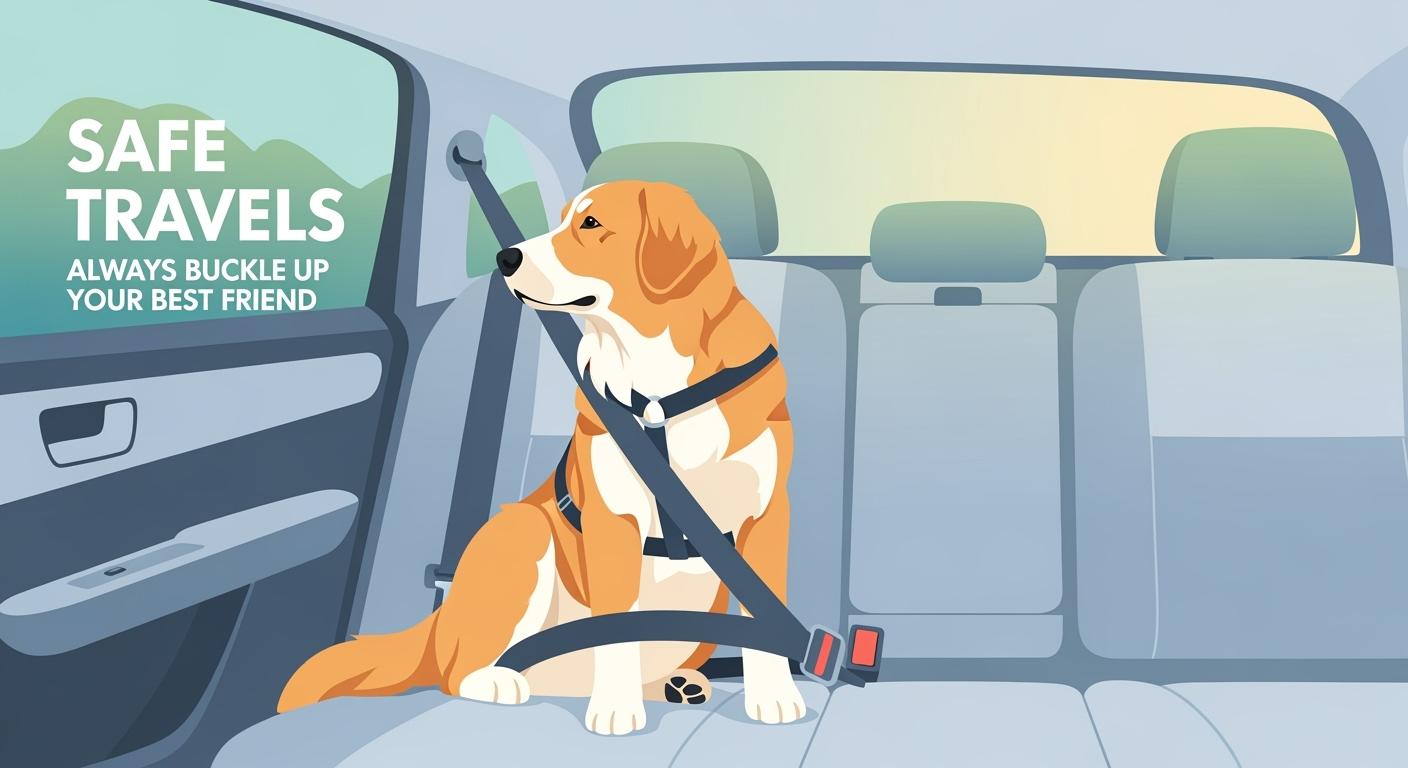
A big dog car harness can make rides safer, but only if the fit stays low on the chest, the belt path stays flat, and your dog cannot roam across the back seat. A loose setup may look comfortable while parked and still let a large dog surge too far forward in a sudden stop.
| Situation | What usually happens | What it means |
|---|---|---|
| Dog rides loose in the car | Movement is uncontrolled during turns, braking, and sudden stops | Higher risk for the dog and more driver distraction |
| Harness is attached but the belt path has slack | The restraint engages late and allows too much reach | Protection drops fast |
| Harness fits low on the chest with limited reach | The dog stays in one back-seat zone more consistently | Usually the safer everyday direction |
For most large dogs, the best starting point is the back seat, a harness clearly meant for vehicle restraint use, and enough adjustment to keep the chest supported without riding into the throat. If you are still sorting out panel shape and strap layout, dog harness size and material choices for daily walks gives a useful baseline before you judge a car setup.
When a big dog car harness is the right choice
A harness usually makes sense when your dog can settle in one rear-seat position, tolerate a snug fit, and move from sitting to lying down without the restraint twisting off center. The chest section should rest on the sternum and ribcage, not climb toward the neck, and the belt connection should keep your dog from reaching the front seats.
Large dogs often expose sizing mistakes that smaller dogs can get away with. Broad shoulders, deep chests, heavy coats, and long torsos all change how the same labeled size behaves once the car starts moving. If the harness looks fine while your dog is standing but shifts once they sit or lie down, measure a dog for a harness before you keep tightening straps by eye.
Tip: Extra strap length is not extra comfort in a car. It usually means more reach before the restraint starts doing its job.
Big dog car harness vs other travel setups
| Setup | Usually works best when | Main limit |
|---|---|---|
| Car harness in the back seat | Your dog can stay in one seat zone and the fit stays stable | Performance depends heavily on sizing and belt routing |
| Secured crate | Your dog settles better in enclosed space and the crate truly fits the vehicle | Takes substantial room and still needs stable tie-down placement |
| Seat or booster plus tether | The dog is small enough for the seat footprint and side support | Usually not a realistic long-term fit for big dogs |
If buckle routing or anchor placement still feels confusing, dog car seat safety and restraint setup covers the same vehicle-side logic that affects harness installs. Comparing dog harness styles can also make chest coverage, adjustability, and body shape compatibility easier to judge than a single product photo.
Fit checks that matter before every drive
Check the harness with your dog inside the car, not just on the floor at home. A setup can look neat while parked and still fail once your dog turns, braces, or lies down. Use the car seat itself as part of the fit test.
| Check item | Pass signal | Fail signal | Fix |
|---|---|---|---|
| Chest position | Chest panel sits low and centered | Straps crowd the throat | Resize or reposition before driving |
| Strap tension | A two-finger check is possible without large gaps | Harness hangs loose or leaves obvious pressure points | Rebalance all adjustment points, not just one strap |
| Belt path | Seat belt or attachment path stays flat | Twists, folds, or misrouting appear | Reconnect the restraint exactly as intended |
| Reach zone | Dog can sit and lie down but cannot cross the seat | Dog reaches the footwell or front seats | Reduce slack and remove extra tether length |
| Hardware | Buckle, adjusters, and connection point hold steady | Slipping, sticking, or bent parts show up | Replace the damaged component or the harness |
Hidden slack and twisted routing are common, especially when owners focus on the harness but not the buckle path. The same problems show up in dog car seat belt and harness fit checks when the connection looks fine at rest but shifts as soon as the dog loads the restraint.
Common big dog car harness problems and fast fixes
| Symptom | Likely cause | Fast check | Fix |
|---|---|---|---|
| Harness feels loose after a few minutes | Size is wrong or adjusters are slipping | Watch whether strap length changes during a short ride | Refit first, then replace if hardware will not hold |
| Chest section rides toward the neck | Harness shape does not match the dog’s body | Check where the load settles when the dog sits | Switch to a design that stays lower on the chest |
| Dog crosses the seat or reaches forward | Too much slack in the restraint path | See whether the dog can touch the front seat back | Shorten the usable range and remove extra tether length |
| Dog resists the harness in the car | Stress, poor fit, or too much movement once restrained | Test short parked sessions before driving | Reset with calm practice and recheck fit under motion |
| Adjusters or buckles feel rough | Wear, dirt, or failing hardware | Operate each point by hand before the trip | Clean if minor, replace if function is unreliable |
After any adjustment, take a short calm drive and watch what changes. A good setup lets a large dog lie down without the harness rotating, shortening one shoulder, or pulling upward into the neck.
Failure signs you should not ignore
A twisted path spreads load unevenly and makes the restraint harder to predict. If you run your hand along the connection and feel folds, bumps, or a section that loosened after buckling, stop and reset it before driving.
Throat crowding and rubbing
A car restraint should load the chest, not the neck. If the harness creeps upward, rubs behind the front legs, or leaves your dog panting unusually hard after a short ride, the current fit is not good enough. This is also why a collar is the wrong attachment point for car restraint use on a large dog.
A dog that never settles
Some dogs are restless because they are still learning the routine, but constant bracing, repeated turning, frantic panting, or trying to back out of the harness usually means something is wrong. Check fit first, then decide whether the issue is comfort, anxiety, or too much uncontrolled movement in the back seat.
When to replace the harness or switch setups
Replace the harness if webbing frays, the buckle sticks, metal parts bend, or the adjusters stop holding position under load. large dog harness durability checks become especially important when the same harness also sees regular walking use.
Switch away from a harness setup when you cannot keep the chest supported without crowding the throat, your dog panics through every ride, or your vehicle does not allow a clean restraint path. In those cases, a properly secured crate may be the better direction if it truly fits both your dog and your vehicle.
Note: If your dog has breathing limits, pain, heat sensitivity, or major travel anxiety, ask your veterinarian what type of restraint is reasonable before you force a longer trip.
FAQ
How snug should a big dog car harness be?
It should feel secure enough to stay in place, with a two-finger check used only as a starting point, not as the whole fit test.
Can you use a regular walking harness in the car?
Only if the manufacturer clearly states it is meant for vehicle restraint use, because many walking harnesses are built for leash handling, not car restraint.
Where should a large dog ride in the car?
The back seat is usually the safer position because it reduces access to the driver and avoids front airbag space.
How often should you inspect the harness?
Give it a quick fit and hardware check before every drive, and do a closer wear inspection whenever you notice slipping, rubbing, or stiffness in the buckles.
What if my dog wants to lie down during the ride?
That is fine if the harness stays centered, the chest remains supported, and the restraint still prevents the dog from crossing the seat or reaching forward.






