
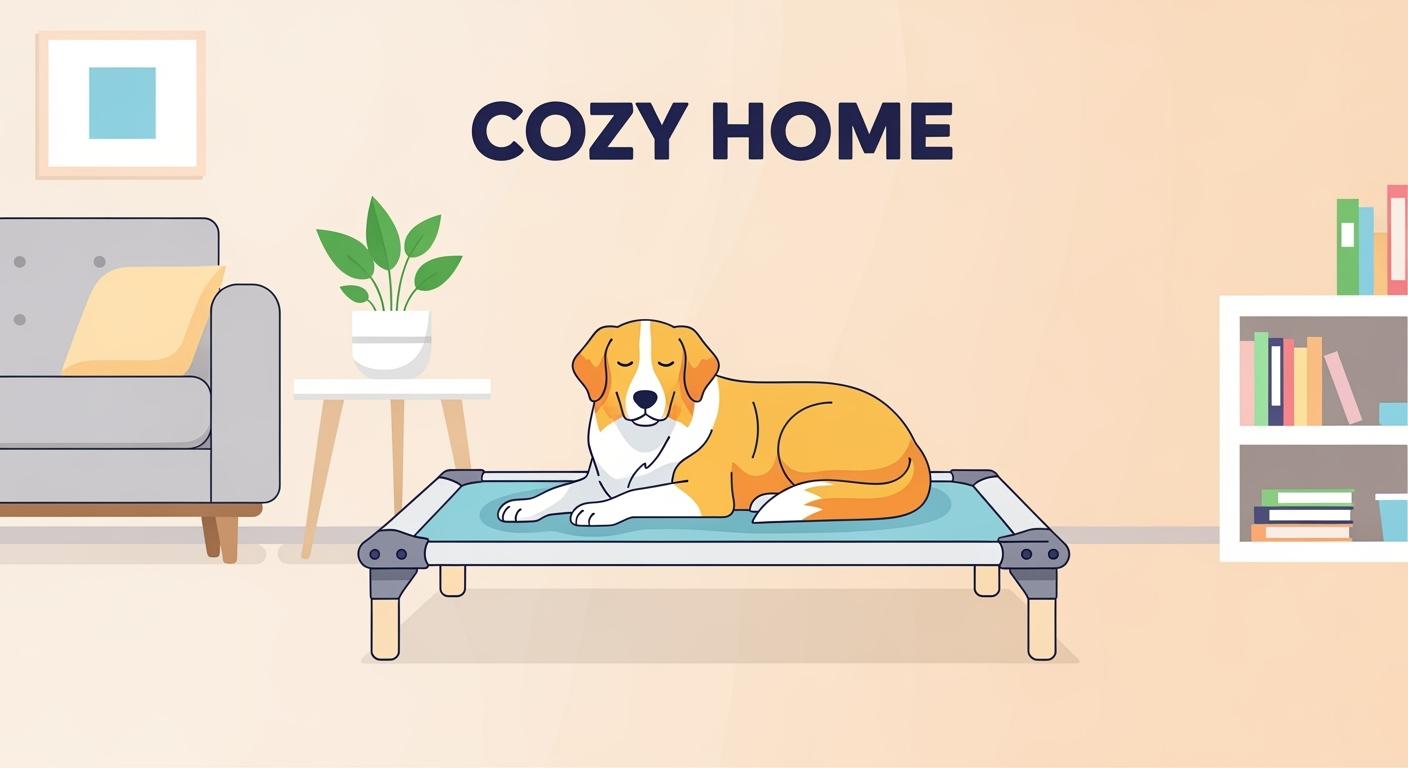
An elevated dog bed frame can work very well indoors, but only when the height, surface tension, and floor grip match your dog’s size and movement. Some dogs sleep better on a raised surface because it feels cooler, cleaner, and easier to keep dry. Others do better with a lower setup, especially if they hesitate on first contact or need more cushioning than a taut cot provides.
If your dog needs deeper cushioning instead of a stretched fabric surface, an orthopedic dog bed with washable covers and waterproof liners may be a better indoor choice.
Tip: Match the bed height to how your dog actually gets on and off furniture, not just to the listed size chart.
When an Elevated Dog Bed Frame Makes Sense
A raised frame is usually a good fit for adult dogs that like airflow under the bed, need a sleeping spot that stays off dusty or cold floors, or do better on a firm, even surface. It can also make daily cleaning easier because hair and dirt are simpler to reach around the frame.
- The bed stays steady when your dog steps on from the side.
- The center stays level when your dog turns or drops weight.
- The height is easy for your dog to use without hopping down hard.
- The fabric feels supportive rather than loose or hammock-like.
A lower setup is often better for puppies, very small breeds, and dogs with obvious mobility limits. If you are comparing entry height for a smaller pet, a small-dog elevated bed height can matter more than the frame material itself. The first step should feel easy, not awkward.
Fixed frame, folding frame, or floor bed?
| Setup | Best Use | Main Advantage | Main Tradeoff |
|---|---|---|---|
| Fixed elevated frame | Daily indoor use | Usually feels steadier and more durable | Takes up more floor space |
| Folding elevated frame | Occasional use or storage | Easier to move and store | May flex more at the joints |
| Low floor bed | Puppies, seniors, cautious dogs | Easiest entry and exit | Less airflow and more floor contact |
What Makes an Elevated Dog Bed Frame Feel Steady
Stability comes from three things working together: solid joints, feet that stay planted on your floor, and a sleep surface that does not sag too much in the middle. On hard flooring, the difference between secure and slippery often comes down to foot grip and how wide the frame sits under the bed. That is the same basic issue covered in bed frame grip on tile and wood floors.
Corner strength and frame shape
Look for a frame that feels rigid at each corner after assembly. Reinforced joints, a balanced leg spread, and hardware that tightens cleanly matter more than marketing terms. A bigger frame is not automatically safer. If the footprint is narrow for the bed size, a tall bed can still feel tippy when a dog steps on one edge.
Feet, floor grip, and surface tension
The feet should stay flat on wood, tile, or laminate without skating when pushed. Non-slip pads help, but they do not fix a narrow or uneven frame. The sleeping surface should also stay taut enough to support the chest and hips without a deep center dip. A steel frame elevated dog bed can be a practical option when you want a rigid base and easier wipe-downs, but it still needs to feel secure on your actual floor.
| Check Item | Pass Signal | Fail Signal | What to Do |
|---|---|---|---|
| Corner stability | No wobble when pressed | Clicks, shifts, or twists | Retighten hardware and recheck alignment |
| Leg contact | All feet stay planted | One foot lifts or slides | Add grip pads or move to a flatter spot |
| Surface tension | Even support across the middle | Noticeable sag at rest | Tighten or replace the fabric panel |
| Entry height | Dog steps on without bracing | Dog hops, scrambles, or backs away | Choose a lower frame |
| After cleaning or moving | Bed stays level | Frame rocks afterward | Reset the feet and inspect the joints |
Failure Signs That Matter
- One corner lifts when your dog steps onto an edge.
- The center sags enough to pull your dog toward the middle.
- The feet slide when your dog jumps on quickly.
- Your dog braces, paws at the surface, or steps off right away.
- The frame starts rocking after you move it for cleaning.
If your dog keeps circling the bed, choosing the floor instead, or settling beside it, do not assume they are being picky. Those behaviors often overlap with why some dogs avoid raised beds in the first place: unstable footing, awkward height, or a surface that does not feel right.
Note: For dogs with joint pain, weakness, or heat sensitivity, the best setup is the one they can use confidently every day, not the tallest or most heavy-duty frame.
How to Test an Elevated Dog Bed Frame at Home
- Assemble the frame fully where your dog will actually use it.
- Press each corner and push the bed lightly from the side to check for sliding.
- Let your dog place one front paw on the bed before encouraging a full step up.
- Watch what happens when your dog turns, lies down, and gets back up.
- Repeat the check after cleaning, folding, or moving the bed.
If the frame works but your dog still wants a more sheltered sleeping spot, a pet tent sized for turning space and ventilation may suit that preference better than an open cot.
FAQ
How often should you clean an elevated dog bed frame?
Wipe the frame as needed and wash the removable fabric or cover on the schedule recommended by the maker, usually more often if your dog sheds heavily or tracks in dirt.
Is an elevated dog bed frame safe on hardwood or tile?
It can be, but only if the feet stay planted and the frame does not twist or skate when your dog steps on from the side.
Is a taller frame always better for airflow?
No, because extra height can make entry and exit harder, especially for small, older, or cautious dogs.
What if my dog needs more support than a cot-style bed gives?
A lower, thicker bed may be the better choice when your dog needs softer cushioning and easier access.






