
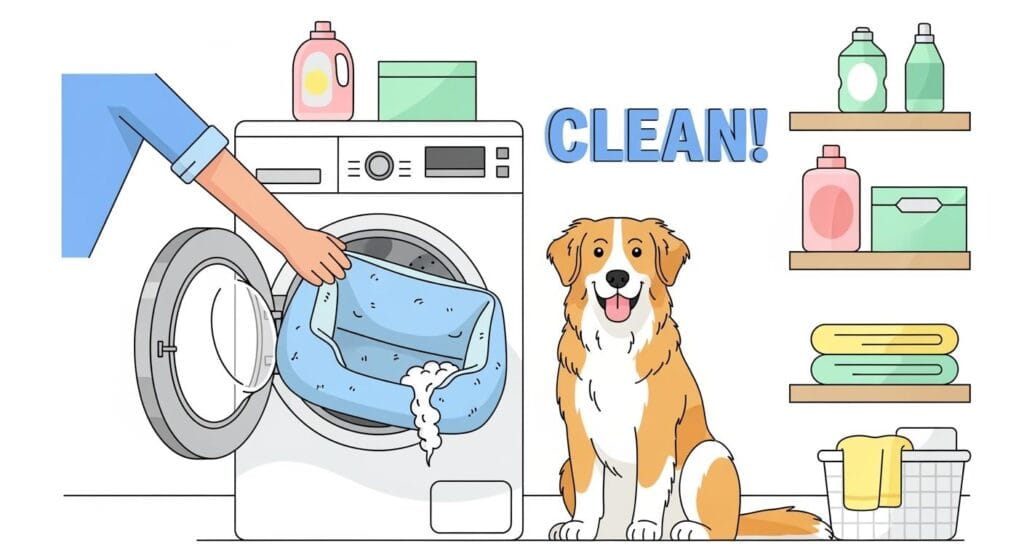
When your dog’s bed starts smelling sour after muddy paws, shedding, or an accident, the washing method matters as much as the detergent. A stuffed bed can come out fresh and usable, or it can come out lumpy and damp. Knowing how to wash a dog bed with stuffing helps you remove grime without ruining the fill.
Key Takeaways
- Wash a daily-use dog bed more often than a lightly used one. Many beds do well with cleaning every 1 to 2 weeks, while cleaner indoor setups can often go longer.
- Check the care label before washing the whole bed, the cover, or the insert. Stuffing type, size, and dryer tolerance change what is safe.
- Use spot cleaning for small messes, wash only the cover when the insert still smells clean, and save full-bed washing for heavier soil or lingering odor.
How to Wash a Dog Bed with Stuffing Without Damaging the Fill
When a full wash makes sense
Wash the whole bed when odor is coming from the insert, stains have soaked through the cover, or the bed feels grimy beyond the surface. This is common after repeated accidents, wet weather, or heavy outdoor use. Start by removing loose hair, dirt, and any solid mess with a vacuum, lint roller, or brush before the bed gets wet.
For beds that can handle a full wash, use a mild fragrance-free detergent and follow the care label for water temperature. If the bed is too large, too dense, or only barely fits the washer when dry, hand washing is often the safer choice.
- Fill a tub with enough water to cover the bed, using cool or warm water if the care label allows it.
- Add a small amount of mild detergent and mix it into the water.
- Press the bed through the water and gently scrub stained areas.
- Drain the tub and rinse until the water runs clear and the detergent smell is gone.
- Press out excess water without twisting the bed hard enough to distort the fill.
- Air dry completely, flipping and reshaping the bed as it dries.
Full-bed washing cleans more deeply, but it also carries the highest risk of clumping and slow drying. If the stuffing shifts, let the bed dry first and then break up the dense spots by hand. If the center still feels cool, heavy, or compressed, it is not dry yet.
Tip: Do not return the bed to use until the inside feels dry all the way through, especially in the center and corners.
When washing only the cover is enough
If the outer fabric looks dirty but the insert still smells clean and feels dry, washing only the cover is usually the better option. This protects the stuffing from repeated soaking and usually shortens drying time. Beds with a removable cover and inner barrier are easier to keep fresh over time, which is one reason a washable orthopedic bed with a waterproof liner often holds up better than a loose-fill bed with no inner protection.
Unzip the cover, shake out debris, and wash it as directed on the label. Cold or warm water and a low-heat dry are usually gentler than aggressive heat. Before putting the cover back on, make sure it has not shrunk and that the insert is still dry and evenly shaped.
When spot cleaning is the better call
Spot cleaning works best for small stains, drool, or one-off messes that have not soaked through the insert. Use a cloth or sponge with a small amount of detergent solution, then blot the area rather than scrubbing it hard. For urine or other organic messes, an enzymatic cleaner usually does a better job than extra detergent.
This method saves time and avoids soaking the fill, which helps prevent clumps and trapped moisture. It is a maintenance step, not a substitute for a deeper wash when odor has reached the stuffing.
Note: If the stain keeps returning with odor after spot cleaning, the mess has probably reached the insert and the whole bed or inner pad needs more attention.
Which cleaning method fits the mess?
| Cleaning Method | Best For | Risk to Stuffing | Drying Time | Odor Removal | Ease of Use |
|---|---|---|---|---|---|
| Whole-Bed Wash | Deep odor, soaked stains, heavy grime | High | Long | High | Moderate |
| Removable-Cover Wash | Surface dirt, light odor, routine cleaning | Low | Short | Moderate | Easy |
| Spot Clean | Small stains, drool, quick touch-ups | Very Low | Very Short | Low | Very Easy |
The right choice depends on where the mess is sitting. If the insert is still fresh, keep the wash on the outside. If odor or dampness has moved inward, a surface cleanup will not be enough. That same tradeoff shows up when owners compare waterproof wipe-clean vs removable-cover dog beds, because cleanup speed and deep-clean access are rarely the same thing.
Disclaimer: If your dog has open skin, persistent itching, or a strong urine odor that keeps returning, talk with your veterinarian while you sort out the cleaning routine.
Why stuffed beds clump, hold odor, and dry slowly
Why the fill gets lumpy
Stuffing clumps when wet fibers shift, compress, and dry unevenly. Loose polyester fill, cotton-like batting, and lower-density inserts are especially vulnerable. Overloading the washer, spinning too aggressively, or drying on high heat usually makes the problem worse. Even if the cover looks fine, the sleeping surface can end up uneven enough that some dogs stop using the bed comfortably.
Why odor lingers after washing
Smell often stays behind when the outer fabric gets clean but the inner fill still holds skin oils, dander, saliva, or accident residue. A bed can also smell musty if it dried too slowly after washing. Beds built with removable covers and moisture barriers usually recover better after repeated cleaning, which is one reason washable waterproof dog bed choices matter so much in real use.
- Hair and dander can settle deep into the fill.
- Body oils and drool can cling to the insert even after the cover is washed.
- Urine accidents often need an enzymatic cleaner instead of a second round of plain detergent.
- Slow drying leaves the bed smelling stale even when it looks clean.
Why drying takes longer than expected
Stuffed beds dry slowly because thick fill traps water in the center, especially when the bed is large or densely packed. The outside can feel dry while the middle still holds moisture. Beds that cannot tumble freely also dry unevenly, whether they are in a machine or laid flat indoors.
- Large beds hold more water and are harder to rotate evenly.
- Clumped fill creates dense wet pockets that dry late.
- Humid rooms and poor airflow slow the final stage of drying.
Mistakes that cause the biggest problems
Most cleaning failures come from a few repeat mistakes: washing the wrong part of the bed, using too much detergent, skipping debris removal, or rushing the drying stage. If seams split, covers pill, or the fill collapses after only a few cycles, the routine may not be the only problem. Some beds simply are not built for repeated laundering, which is why durability matters in dog beds that need to hold up and clean fast.
| Mistake | Real Consequence |
|---|---|
| Using heavy fragrance or too much detergent | Residue stays in the fabric and may irritate sensitive dogs |
| Skipping hair and dirt removal first | Odor and grit stay trapped after washing |
| Using high heat | Clumping, shrinking, or fabric damage |
| Reusing the bed before it is fully dry | Musty odor, trapped moisture, and faster material breakdown |
How to tell whether the bed is actually clean and ready to use
A bed is not finished just because the wash cycle is over. After you wash a dog bed with stuffing, check the shape, seams, smell, and dry feel before it goes back on the floor. That quick inspection matters more than squeezing in one extra wash.
Pass or fail checks before the bed goes back down
Use these checks right after drying. They help you catch problems while the bed is still easy to reshape, rewash, or patch.
| Check Item | Pass Signal | Fail Signal | Fix |
|---|---|---|---|
| Hair and debris removal | No visible fur, grit, or crumbs | Loose debris still stuck in seams or fabric | Vacuum or brush again before rewashing |
| Seam condition | Seams look flat and intact | Loose threads, gaps, or exposed fill | Patch or sew before the next wash |
| Shape after washing | Surface feels even and supportive | Lumps, flat zones, or twisted insert | Reshape by hand after the bed is dry |
| Dryness | Center and corners feel fully dry | Cool, heavy, or damp spots remain | Air dry longer with more airflow |
| Odor check | Only a clean fabric smell remains | Musty, sour, or urine odor is still present | Target the insert with an enzymatic cleaner or rewash as needed |
Tip: Press into the thickest part of the bed for a few seconds, then smell your hand. That is often the fastest way to catch hidden dampness or lingering odor.
Quick fixes for common post-wash problems
If something still feels off, use the symptom to decide the next step instead of washing the entire bed again by default.
| Symptom | Likely Cause | Fast Check | Fix |
|---|---|---|---|
| Bed feels lumpy | Stuffing shifted and dried unevenly | Press along the center and edges for dense spots | Break up clumps by hand once the bed is fully dry |
| Bed still smells | Odor remains in the insert or damp spots | Check the thickest areas, not just the cover | Use an enzymatic cleaner where needed and extend drying time |
| Bed feels cool or heavy | Moisture is still trapped inside | Squeeze corners and the middle | Air dry longer and flip the bed several times |
| Cover fits poorly after washing | Shrinkage or shifted fill | Zip it on without forcing it | Stretch and reshape gently, or dry on lower heat next time |
| Stain remains visible | Surface treatment was not strong enough | Look for a set-in ring or discoloration | Spot treat the area before another full wash |
Note: Rewashing a still-damp bed usually makes clumping worse. Dry it fully first, then decide whether another cleaning round is really necessary.
How to judge your routine over time
The best routine is the one that keeps the bed usable without beating up the materials. If your dog tracks in dirt, drools heavily, or has frequent accidents, you will probably need a shorter cycle than a calm indoor sleeper. The timing logic in how often to wash a dog bed and when to wash sooner is more useful than following the same calendar for every home.
If the same bed keeps drying slowly, trapping odor, or losing shape even when you wash it carefully, the construction may be the real limit. At that point, comparing dog bed styles by category can make it easier to decide whether a removable-cover design, a liner, or a different fill will suit your cleaning routine better.
How to wash a dog bed with stuffing comes down to three decisions: clean only what is dirty, keep the fill from staying wet, and check the bed before your dog uses it again. If you do those three things consistently, the bed usually stays fresher, lasts longer, and feels better to sleep on.
- Use spot cleaning for small surface messes.
- Wash the cover separately when the insert still smells clean.
- Reserve full-bed washing for deep odor, soaked stains, or dirt that has reached the stuffing.
FAQ
How often should you wash a dog bed with stuffing?
Most daily-use beds need cleaning every 1 to 2 weeks, but lightly used beds can often go longer if they stay dry and odor-free.
Can you use regular laundry detergent on a dog bed?
A mild fragrance-free detergent is usually the safer choice because strong detergent residue can irritate sensitive dogs.
Tip: Check the care label before using detergent, stain remover, or any dryer setting.
What should you do if the bed still smells after washing?
Check for hidden dampness first, then treat any accident area with an enzymatic cleaner and rewash only if the odor is still in the insert.






