
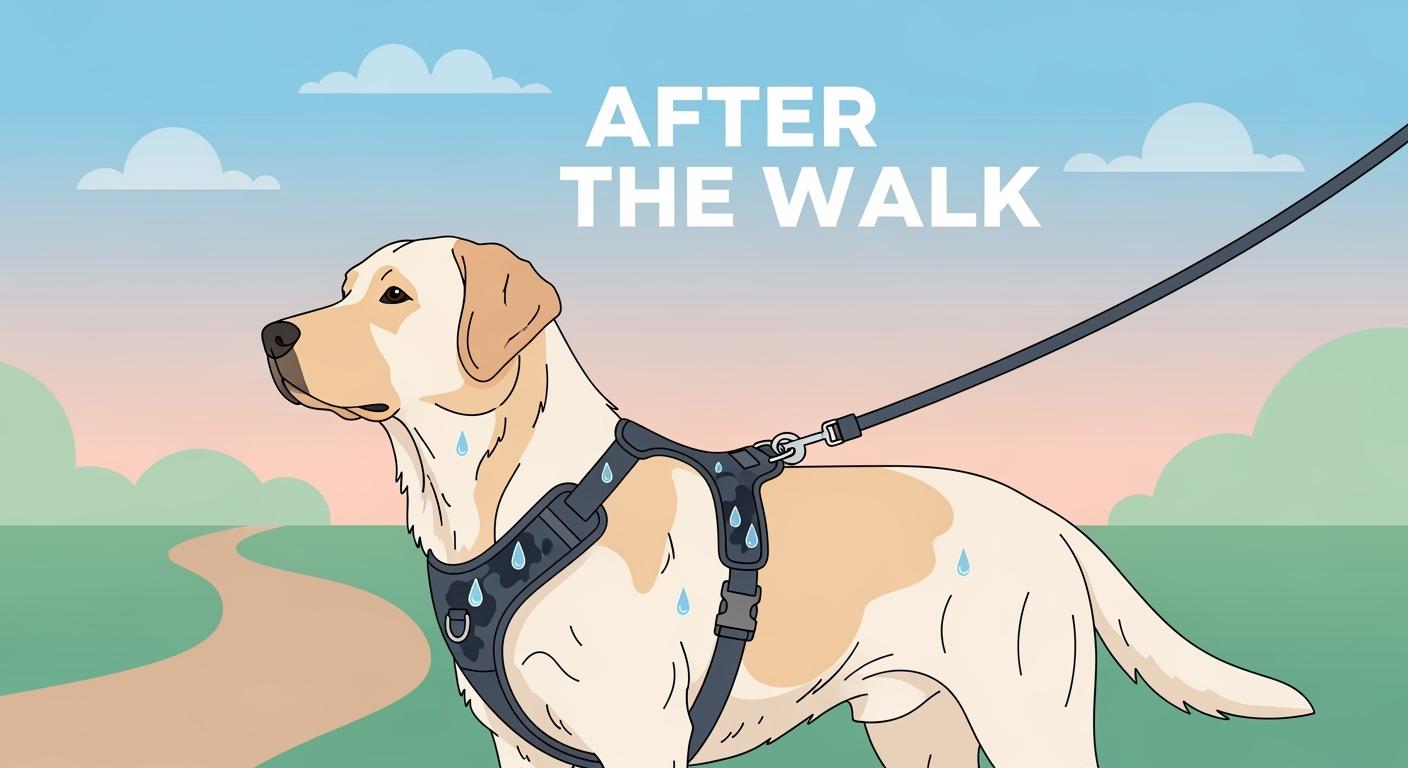
Wet walks can turn a large breed harness heavy, damp, and irritating. A dog harness large breed dogs can wear comfortably in wet weather should dry fast, stay centered, and avoid creating the same pressure spots every time the straps get soaked.
When your dog comes back from rain, puddles, or muddy grass, the real test starts. A harness can look fine on the shelf and still fail once water adds bulk, shifts the straps, and creates pressure hotspots in the same places on every walk.
Note: This guide is about harness choice and wet walk fit checks. It is not a diagnosis of skin disease, pain, or gait problems.
| Material | Why it helps | What to Watch |
|---|---|---|
| Nylon webbing | Light, durable, dries fairly fast | Can feel rough unlined |
| Polyester webbing | Quick drying, budget friendly | Can rub when edges are stiff |
| Neoprene padding | Soft feel on short dry walks | Holds heat and water longer |
| Mesh panels | Air flow, lower bulk | Can trap odor over time |
Key Takeaways
- For most wet weather walks, lower bulk webbing usually works better than thick padding because it dries faster and shifts less.
- Fit matters more than softness alone, because a wet harness can ride up, twist, or crowd the skin behind the front legs.
- If your dog needs more control, a balanced dog harness and leash setup usually matters more than simply adding extra padding.
When Faster Drying Matters More Than Extra Padding
Why drying speed changes the whole walk
Drying speed matters because a large dog gives the harness more body area to sit against, and wet gear often stays in contact for longer on every stride. Once water retention goes up, the harness usually feels heavier, colder, and less stable even if the dry fit seemed acceptable.
For most daily wet walks, simpler webbing or lighter panel designs reset faster than thick padded bodies. That is also why a durable build without a stiff fit usually matters more than the thickest chest panel when the harness has to handle repeat rain and mud.
When padding still helps and when it starts causing trouble
Padding can help when a dog needs softer edge contact on shorter, mostly dry outings. It becomes less helpful when the padding keeps water, swells slightly, and turns a clean fit into a shifting fit with repeat friction behind the front legs.
If your dog walks in frequent rain, a lower bulk design usually makes more sense than a softer-looking one. If your dog only gets occasional drizzle and has a short coat with sensitive skin, modest padding can still work when the edges stay smooth and the harness dries fully between uses.
| Harness style | Drying feel | Wet comfort | Best use case | What to Watch |
|---|---|---|---|---|
| Low bulk webbing | Fast reset | Usually light and stable | Daily wet walks | Edges must stay smooth |
| Padded body style | Slow reset | Often softer at first | Cooler dry weather | Can gain weight fast |
| Control focused style | Slowest reset | Mixed, depends on fit | Strong pulling dogs | May crowd shoulder reach |
If stronger control is part of the reason you are shopping, the same questions still apply once the harness gets wet. A no pull harness for large dogs only stays useful when it remains centered and readable after water exposure, not just when it is dry on the shelf.
Tip: The most common mistake is keeping a wet padded harness in rotation because it felt soft when dry. Repeat rubbing usually starts there.
What to Check Once the Harness Gets Wet
Fit should be judged after movement, because standing still hides most problems. The best dog harness large breed dogs can use in wet weather usually keeps the chest low, the straps quiet, and the forelimb path clear once damp.
| Check area | Why it matters | Pass signal | What to Watch |
|---|---|---|---|
| Neck base | High placement can add throat pressure | Sits low and steady | Rides upward when wet |
| Chest panel | Controls load path across the body | Centered on sternum area | Twists to one side |
| Behind front legs | Common pressure hotspot zone | No repeat rubbing | Damp rub line appears |
| Shoulder clearance | Supports normal shoulder extension | Easy forward reach | Shorter stride or crowding |
| Front attachment point | Affects redirection and balance | Stays low on chest | Climbs upward when wet |
Many owners start with a broad checklist, but the real answer usually gets clearer when the same wet-walk checks are compared against a fit and sizing guide for everyday walks. If the harness loses shoulder clearance or shifts its front attachment point once wet, that usually matters more than small differences in softness.
What usually changes first
Water often changes harness geometry before a dog shows obvious irritation. That is why you may first notice strap drift, ring movement, or a different chest position, then later see rubbing or reluctance.
A large dog can also magnify small fit errors because longer strides create more repeated movement through the same contact zones. If the harness stays quiet on the dog and does not shorten shoulder extension once wet, that is usually a strong sign you are close to the right choice.
Common Mistakes That Keep Coming Back on Wet Walks
Mistakes matter because wet fabric changes contact pressure. A harness that is only slightly off when dry can become much less forgiving when water retention adds drag and the dog starts pulling through turns or acceleration.
| Mistake | What happens in use | Better move | What to Watch |
|---|---|---|---|
| Too much soaked padding | More weight, slower reset | Try lower bulk webbing | Stays damp next day |
| Loose chest fit | Twist, drift, uneven load | Refit before wet test | Panel slides sideways |
| High front ring position | More chest instability | Choose lower chest geometry | Ring climbs upward |
| Overbuilt control style | Reduced easy movement | Use only when needed | Shorter forward reach |
| Ignoring next day feel | Repeat rubbing cycle | Check full reset overnight | Cold, stiff straps remain |
If you are narrowing down several styles, the result usually makes more sense once those wet-use problems are checked against a broader best dog harness for large dogs comparison. For most owners, the better choice is not the most supportive-looking harness, but the one that stays stable without creating new pressure hotspots.
Disclaimer: A harness can improve handling and comfort, but it is not a treatment for skin disease, pain, or breathing difficulty. If discomfort keeps returning, veterinary assessment matters more than another gear swap.
Use a Three-Day Wet Walk Test Before You Decide
This works best over three days, because drying and repeat comfort are part of the decision. One wet outing alone usually does not show whether the harness truly resets for daily use.
- Day one, dry baseline. Fit the harness indoors, walk a short normal route, and note chest position, shoulder clearance, and any early pressure hotspot.
- Day two, wet session. Use the same harness on a wet walk long enough to dampen the working surfaces, then check added bulk, strap drift, odor, and rubbing behind the front legs within a few minutes of finishing.
- Day three, reset check. Put the harness on again after overnight drying and see whether it feels ready, flexible, and neutral, or still cold, stiff, and slightly misshapen.
When a harness passes all three stages, it usually has the right mix of water retention, stability, and comfort for routine use. When it fails on day three, the material choice often matters more than another small strap adjustment.
| Check item | Pass signal | Fail signal | Improvement plan | What to Watch |
|---|---|---|---|---|
| Weight after walk | Still feels light | Noticeably heavier | Reduce padding volume | Bulk changes balance |
| Chest position | Centered and low | Rides or twists | Change shape, not just size | Front ring climbs |
| Skin contact | No warm rub line | Moist friction zone | Smoother edge, less bulk | Behind leg rubbing |
| Drying reset | Ready next day | Still damp or stiff | Choose faster drying material | Cold straps remain |
| Movement quality | Easy forward stride | Shorter or guarded gait | Open shoulder area | Crowded forelimb path |
Keep a short log before you keep or reject it
Record for three walks before you keep or reject the harness: route moisture level, added wet bulk, chest drift direction, rub point location, and next-day reset result.
| Walk condition | Added bulk | Chest drift | Rub point | Next day reset |
|---|---|---|---|---|
| Dry, damp, or soaked | None, mild, obvious | Centered or side drift | None, chest, armpit, neck base | Ready or still damp |
| Dry, damp, or soaked | None, mild, obvious | Centered or side drift | None, chest, armpit, neck base | Ready or still damp |
| Dry, damp, or soaked | None, mild, obvious | Centered or side drift | None, chest, armpit, neck base | Ready or still damp |
When the Harness Is Wrong for Your Wet-Walk Routine
Next-day reset is part of the buying decision
Next-day reset matters because many owners use the same harness on consecutive outings. A design that never fully dries, keeps odor, or stiffens after one wet session usually becomes a maintenance problem as well as a comfort problem.
If your household needs one harness for repeated daily use, a faster-drying shape often wins over a softer but slower-drying one. The same difference usually becomes obvious once you look at broader dog harness options through the lens of water retention, strap stiffness, and next-day feel instead of shelf appearance.
Note: Hang the harness in open air after every wet walk, then flex the straps before the next use. If the shape does not recover, the material is telling you something useful.
Some failure signs usually mean move on
Some signs usually mean the harness shape or material is wrong for your routine, not just slightly misadjusted. Repeated sour odor, stiff straps, visible rub lines, and upward ring travel tend to keep coming back even after cleaning.
If those problems repeat across several wet walks, the better move is usually a different construction, not more tolerance. Most owners do better when they stop chasing softness and start choosing lower water retention plus steadier movement.
FAQ
How do I pick the proper size for a dog harness large breed model?
Use chest and neck measurements first, then keep only the size that stays centered and low after a wet walk.
Is extra padding usually better for large dogs?
Extra padding usually helps only when it stays dry and smooth, because soaked padding can add weight and friction.
Can a front clip design work for wet walks?
A front clip design can work well when the front attachment point stays low on the chest and does not ride upward when damp.
What material usually dries fastest?
For most daily use, lighter nylon or polyester webbing with limited padding usually resets faster than thicker padded bodies.
When should I stop testing and call my veterinarian?
Stop testing if your dog shows skin injury, limping, coughing, breathing change, or clear avoidance of the harness.
- Choose the harness that stays centered, dries fully, and keeps pressure hotspots quiet after wet use.
- Use a three-day protocol so you judge fit, water retention, and next-day reset together.
- For most large dogs, better match usually beats more material, more structure, or more padding.
Disclaimer: This is a guide to harness choice and wet walk observation, not a substitute for veterinary diagnosis or hands-on rehabilitation assessment.






