

The best dog sling carrier for small dogs keeps your dog supported, cool, and settled on short errands, while making it obvious when another carrier style would work better.
A sling can feel easy at first and frustrating a few minutes later if the pocket sags, the opening gapes, or your shoulder starts taking all the load. The better choice is usually the one that keeps the body supported, the carry point steady, and the outing short enough to stay comfortable for both of you.
Note: A sling carrier is a carry tool, not a treatment or behavior fix. If your dog struggles because of pain, airway effort, panic, or repeated motion sickness, a veterinarian should guide the next step.
Key Takeaways
- A sling usually works best when your dog settles into close contact and stays in a supported, level position during a short outing.
- A tote often suits dogs that want more visual access, while a structured carrier usually helps more when you need longer wear or steadier support.
- Fit matters more than softness alone. The same support and size questions show up in dog sling carrier sizing and fit and across current pet sling and crossbody carrier styles too.
When a Sling Usually Works Best
Carry style matters because the same dog can look calm in one format and unstable in another. A sling usually works best when the outing is short, the dog likes body contact, and you want fast on and off handling without carrying a bulky frame.
A tote often gives more visual openness, which some dogs prefer, but it can swing when the base is soft or the load sits too low. A structured carrier usually helps more when you need firmer containment, a cleaner upright position, or longer wear time.
| Carrier Type | Feel in Use | Why it Helps | Best Use Case | What to Watch |
|---|---|---|---|---|
| Sling carrier | Close, light, fast access | Usually calms dogs that like body contact | Short errands, waiting lines, quick transitions | Shoulder fatigue, heat buildup, leaning out |
| Tote carrier | More open, easier peeking | Often suits curious dogs that dislike deep pockets | Urban errands, short transit use | Swinging base, lower containment, uneven carry |
| Structured handheld carrier | More stable, more enclosed | Usually improves posture support and containment | Longer outings, travel days, dogs needing firmer support | Bulk, slower loading, less body contact |
For most owners, the right question is not which carrier looks most premium. It is which format matches your dog’s tolerance for close contact, your own shoulder comfort, and the real length of the outing. The same difference is easy to see in a small dog tote carrier when the dog keeps leaning upward instead of settling lower in the sling.
Why some dogs settle quickly in a sling
Some small dogs relax faster when they stay close to your body and can feel steady contact on one side. That closeness can work well on short errands, especially when the dog already likes to be carried and does not keep pushing upward toward the opening.
Why the same setup can become tiring fast
A sling can stop working once heat builds, the base softens, or the load keeps sliding toward one shoulder. If you keep readjusting the carrier, supporting it with one hand, or shortening your stride to stay balanced, the setup is already becoming less practical than it first looked.
What to Check Before You Commit
Support matters because a sling that looks soft and cozy can still place the dog into a curled position or shift the full load onto one narrow point on your shoulder. Before you trust a sling for regular use, check structure, opening control, and the way the dog settles after the first few minutes.
| Check Item | Why it Matters | Pass Signal | Fail Signal | What to Watch |
|---|---|---|---|---|
| Pocket depth | Too deep often drops the chest and belly | Body looks supported and level | Dog sinks or curls inward | Neck opening should still stay controlled |
| Opening control | A loose edge usually increases escape risk | Dog can rest without pushing outward | Leaning, climbing, repeated pawing | Dogs that like to scan may prefer a tote |
| Load distribution | Poor balance usually tires the handler fast | Shoulder feels steady through the outing | Pinching, slipping, constant readjusting | Thin straps often feel worse over time |
| Fabric hand feel | Softness helps only when support stays intact | Fabric feels flexible but not floppy | Base collapses under the dog | Stretch can change support during use |
| Thermal load | Body contact can trap heat quickly | Dog stays relaxed and breathes normally | Panting, restlessness, heat seeking | Warm weather raises risk sooner |
The same comfort and cleanup questions also show up in small dog sling comfort checks, especially when the sling feels fine on day one and then becomes less usable after repeat errands and washing.
How to Test It on Real Errands
Testing matters because many sling problems only show up after movement starts. A quick try on at home is a useful start, but it rarely tells you enough on its own.
- Indoor fit check. Put the empty sling on, then load your dog and stand still for a moment. Watch for a supported back, controlled opening, and whether the carry point already feels too low.
- Loaded errand test. Walk a short real route such as a lobby, sidewalk, or short shop visit. Watch for sliding, twisting, heat buildup, and whether your dog settles instead of pushing up.
- Three day repeat use test. Repeat the same short carry on separate days before making the sling your default choice. Look for patterns in shoulder comfort, dog posture, and recovery after you set the dog down.
Record for three short outings before deciding: entry ease, posture quality, leaning out, shoulder load, and heat signal.
Features that matter more than extra padding
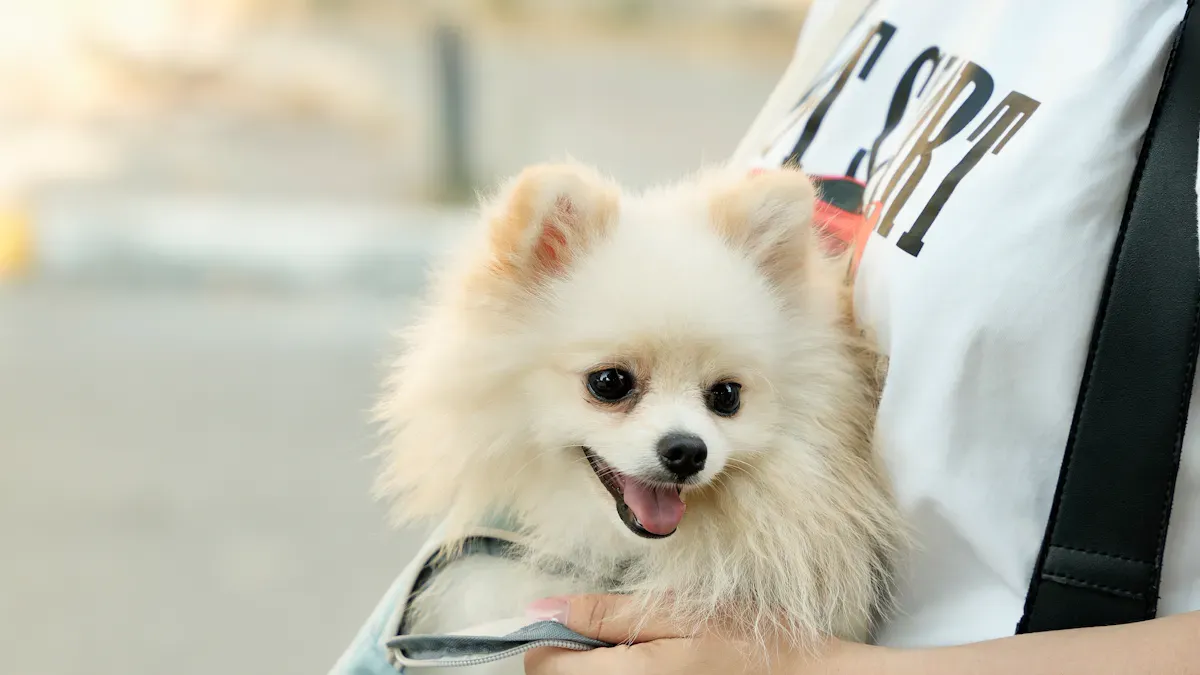
Comfort usually comes from support and balance first, not from bulk alone. A very soft sling can still fail if it collapses under the chest or lets the opening spread too wide.
| Feature | Why it Matters | Usually Best For | What to Watch |
|---|---|---|---|
| Adjustable strap | Helps place the dog higher and steadier | Owners sharing one carrier or changing layers | Adjustment should hold during movement |
| Supportive base fabric | Helps keep a level back position | Dogs that slump in very soft slings | Too much stretch can reduce support |
| Secure inner tether | Adds backup control during sudden movement | Dogs that shift or look outward often | It should support safety, not replace fit |
| Wide shoulder section | Usually improves load distribution | Owners carrying through longer queues or stations | Bulk alone does not fix poor balance |
| Easy wash fabric | Keeps repeat use realistic | Daily errands and frequent sidewalk use | Some soft fabrics hold heat and fur |
Once errands start turning into longer travel days, the same support questions often point toward a more structured setup, which is why they also matter in a small dog carrier bag used for longer carry times and tighter containment.
Failure Signs That Matter Most

Warning signs matter because dogs usually communicate poor carrier fit through posture and movement before they fully panic. The goal is to catch the mismatch early, not to train the dog to tolerate obvious discomfort.
| Symptom | Likely Cause | Fast Check | Improvement Plan | What to Watch |
|---|---|---|---|---|
| Sling slides down | Carry point sits too low or strap loses hold | Reset height and walk again | Raise the dog higher or change strap layout | Repeated slipping often means poor design match |
| Dog leans out | Opening control is too loose | Watch the first minute after loading | Use tether correctly or change carrier style | Persistent leaning usually favors a tote or structured carrier |
| Shoulder gets sore | Load distribution is narrow and uneven | Notice whether you keep readjusting | Use shorter carries or switch formats | Pain that builds each outing is a clear no |
| Dog feels hot | Thermal load is building between body and fabric | Check breathing, restlessness, and heat seeking | Stop the outing and cool down in shade | Warm weather usually shortens safe carry time |
| Body curls downward | Base support is too soft or too deep | Look for a dropped chest line | Choose firmer support or a different carrier | Posture problems rarely improve with use alone |
Disclaimer: A carrier should not be used to push through labored breathing, heavy panting, collapse, or escalating panic. Those signs call for stopping the outing and getting veterinary advice.
Common Mistakes and Real Consequences
- Choosing by softness alone often leads to a sling that feels cozy in hand but unstable in motion.
- Choosing by weight label alone often misses body length, chest shape, and how the dog actually settles inside.
- Using a sling for every outing often creates a mismatch once distance, heat, or waiting time increases.
- Ignoring repeated leaning or bracing usually turns a small fit issue into a safety issue.
Tip: The most common mistake is treating a sling like a universal carrier. If your dog never truly settles, the format is usually wrong even when the size looks acceptable.
If the sling itself seems acceptable but the loading routine still feels awkward, the same problem often becomes clearer in secure and comfortable dog sling carrying, where handling order and body position start affecting the result as much as the carrier shape does.
FAQ
How do you clean a dog sling carrier?
Most fabric slings can usually be washed on the care instructions, but you should still check the strap hardware, seam shape, and support after cleaning.
Can you use a dog sling carrier for puppies?
A puppy can often use a sling for short carries when the body stays supported and calm, but frequent squirming usually means the setup is not ready yet.
What size dog usually works best in a sling carrier?
Sling carriers usually suit toy and small dogs that can rest in a supported, contained position without the pocket collapsing or the opening spreading too wide.
A sling is usually the right call when your small dog settles into close contact, the body stays supported, and the outing is genuinely short. If you keep seeing leaning out, heat buildup, or one shoulder strain, a tote or structured carrier is often the better match.
- Choose the format that matches the errand, not the one with the most features.
- Test support and posture across several short outings before making it your default.
- Use the same log each time so your decision is based on repeatable signals, not first impressions.
| Dog Profile | Usually Better Setup | Why It Often Fits | What to Watch |
|---|---|---|---|
| Dog wants close body contact | Sling carrier | Often settles faster during short errands | Heat and shoulder load can build |
| Dog likes visual access | Tote carrier | Often reduces upward bracing | Base swing and lower containment |
| Dog needs firmer support | Structured carrier | Usually improves posture and stability | Bulk and slower handling |
Disclaimer: This guide is about choosing a small dog carry format for short errands. It does not replace veterinary evaluation when discomfort, breathing effort, or fear keeps showing up no matter which carrier you try.






