
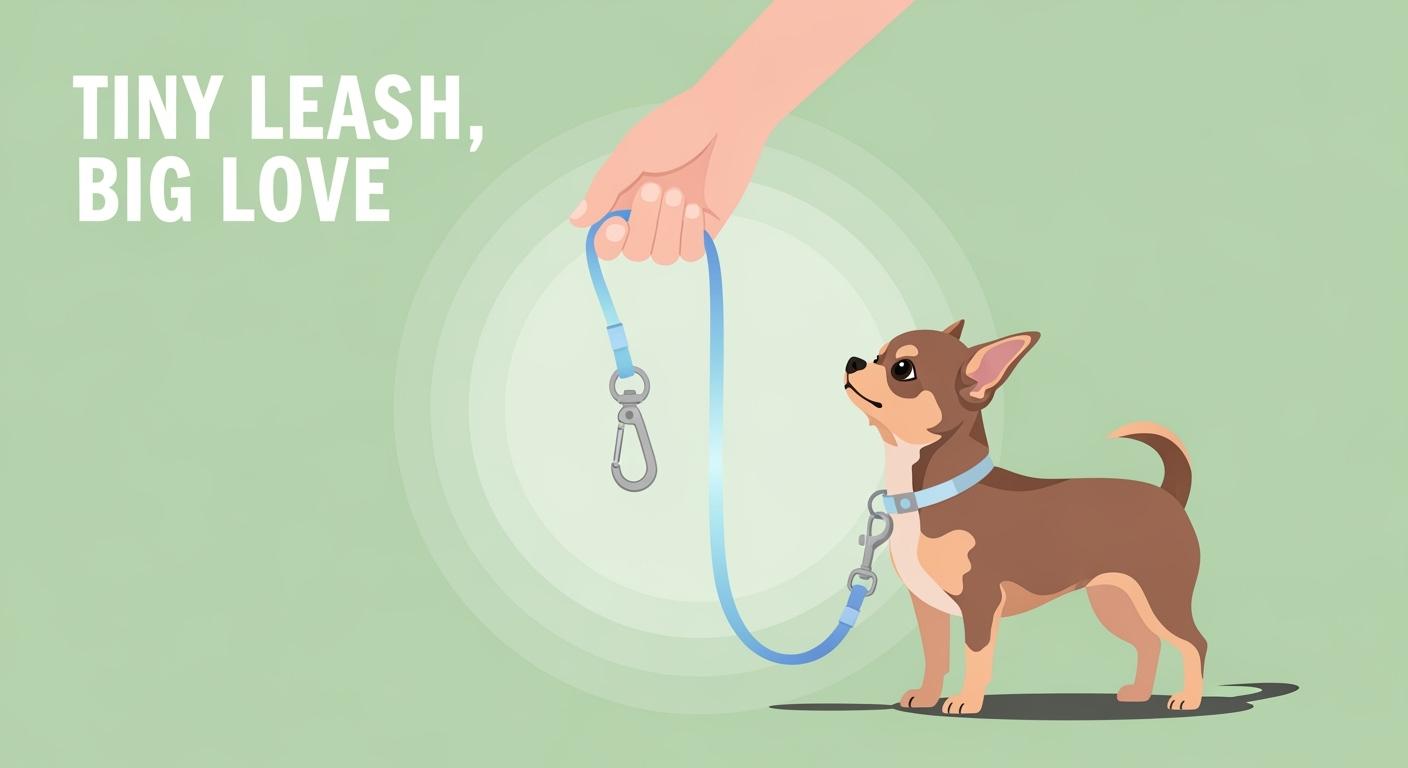
Choosing the best dog leash for small dogs looks simple until you notice how much a small frame reacts to the wrong setup. A leash can feel soft in your hand and still be too heavy at the dog’s end. A clip can seem secure and still swing, tap the chest, or hang lower than it should. For small dogs, weight and clip size matter because they affect drag, feedback, and how natural the walk feels. The better choice is usually the leash that feels quiet in use, not the one with the most hardware or the thickest strap.
Key Takeaways
- Choose a leash that feels light enough for daily use and does not make your small dog carry unnecessary weight at the clip end.
- Select a clip size that matches your dog’s frame and walking setup. A lower-profile clip usually creates less bounce and less distraction.
- Use a short fixed-length leash when you want clearer handling and more predictable control in everyday walks.
Why small dogs notice leash details faster
Weight shows up at the dog end first
Small dogs feel leash hardware sooner than many owners expect. What feels light in your hand can still feel bulky where the leash meets the harness or collar. That extra pull at the clip end can make the leash drag across the front of the body, swing during quick turns, or create a constant little bounce your dog has to walk through.
When you choose the best dog leash for small dogs, do not judge it by fabric feel alone. Pay attention to how much of the leash’s weight sits near the clip and how that weight behaves once the dog starts moving.
| What Goes Wrong | What You May Notice on Walks |
|---|---|
| Too much clip-end weight | The leash hangs heavily, taps the chest, or feels busy even on a calm walk. |
| Too much drag | Your dog slows, shakes the gear, or seems less natural in movement. |
| Too much movement from hardware | The leash swings or bounces during turns instead of staying quiet and easy to follow. |
Clip bulk changes comfort fast
Clip size matters because small dogs do not have much room for oversized hardware. A bulky clip can dangle low, knock against the front of the harness, or feel top-heavy when the dog changes direction. That does not mean the lightest clip is always the best. It means the clip should feel proportionate to the dog and to the walking setup you actually use.
- A smaller, cleaner clip profile usually feels less intrusive.
- The clip should sit securely without looking oversized for the dog’s frame.
- Heavy hardware may feel durable, but it can also make the leash end feel busy.
If you walk your dog in a harness, make sure the clip does not crowd the front attachment area or hang low enough to interfere with normal movement.
Handling should feel clear, not noisy
You need a leash that gives you clean feedback without turning every adjustment into a correction. Small dogs often respond best when the leash feels simple and predictable. If the leash is too long, too heavy, or too full of hardware, the handling can start to feel noisy. That makes it harder for you to guide the dog and harder for the dog to read what you want.
A good small-dog leash should feel present without feeling heavy. You want clear handling, not constant hardware movement.
Choose a setup that lets your dog move freely while still giving you enough control for sidewalks, turns, and close passing spaces.
Best Dog Leash for Small Dogs: weight, clip, and daily control
Comparing leash types by real use
When you look for the best dog leash for small dogs, compare each type by how it feels at the dog end, not just by feature lists. Material, clip bulk, length behavior, and everyday handling all matter once the walk actually starts.
| Leash Type | How It Usually Feels | Main Advantage | Main Tradeoff | Best Use |
|---|---|---|---|---|
| Standard flat leash | Simple, steady, and easy to read | Clear everyday handling | Less flexibility than adjustable styles | Routine daily walks and straightforward handling |
| BioThane-style leash | Clean and easy to wipe down | Good for wet or dirty conditions | Some versions feel stiffer than fabric leashes | Rainy walks, muddy routes, and travel use |
| Retractable leash | Gives more roaming distance | Freedom in open areas | Less predictable control in busy spaces | Calmer open environments only |
| Double-handle leash | More control points in the hand | Useful in tight or busy areas | Can add extra material or hand clutter | Urban walks and closer traffic control |
| Reflective leash | Similar to a standard leash with added visibility | Better visibility in dim light | Still needs the right weight and clip balance | Early morning or evening walks |
| Adjustable webbing leash | More flexible for changing situations | Useful when one walk includes different environments | Extra hardware can make the leash feel busier | Mixed routine and travel use |
| Hands-free leash | Useful when you need your hands free | Convenient for steady movement | Not every small dog likes the feedback style | Walking routes where steady pace matters |
You can see that the best everyday choice is usually the leash that stays simple, light at the dog end, and easy to manage in your real walking environment.
Everyday options and where they work best
Nylon and similar flat webbing leashes often work well because they stay light and easy to handle. Wipe-clean materials can be helpful when your route includes mud, rain, or repeated travel use. Reflective options make sense when you walk in low light, but visibility does not fix a leash that feels too heavy or awkward where it clips on.
When you pick a leash, think about your dog’s habits. A calm walker may do well with a simple flat leash. A dog that weaves, stops suddenly, or needs closer handling in busy areas may benefit from a leash that gives you quicker hand control without loading extra weight at the clip end.
Tip: The right everyday leash should feel easy to carry, easy to shorten when needed, and quiet at the dog end.
Control, drag, and comfort on normal walks
Small dogs often do best with a leash that gives clear handling without adding drag. That usually means a fixed-length leash or a setup that can behave like one when you need more control. If the leash is too long for the environment, it can create slack, tangling, and delayed feedback. If it is too heavy, the dog ends up carrying the downside of the leash instead of just following it.
A good small-dog leash should feel comfortable in your hand and low-drama on the dog. The clip should stay secure without bouncing. The strap should feel manageable without becoming thick or stiff. The overall setup should help the walk feel calmer, not busier.
Note: If the leash keeps swinging, dragging, or making your dog feel less natural in motion, the issue may be the setup itself, not your dog’s behavior.
Choosing the best dog leash for small dogs is mostly about balance: light enough for the dog, clear enough for you, and predictable enough for daily use.
Avoiding mistakes and quick leash checks
Common buying mistakes
Many owners buy a leash based on softness, color, or how strong it looks in the hand. That can lead to a setup that feels overbuilt for a small dog.
- Choosing a leash that feels sturdy in your hand but leaves too much weight near the clip.
- Using a bulky clip that knocks, swings, or hangs too low for the dog’s frame.
- Picking a leash length that feels flexible indoors but messy outside.
- Choosing material for appearance alone without checking how it handles wet weather or repeated use.
- Ignoring how the leash pairs with the dog’s harness or collar setup.
The best leash usually does not look extreme in any direction. It simply feels proportionate, easy to manage, and quiet in use.
Pass/Fail Checklist for leash setup
Before each walk, use this checklist to make sure your leash setup still feels right for your dog and your route.
| Check item | Pass signal | Fail signal | Fix |
|---|---|---|---|
| Leash feel | Dog moves normally without obvious drag | Dog slows, shakes the setup, or looks bothered by the leash end | Move to a lighter, simpler leash setup |
| Clip profile | Clip stays secure and low-drama | Clip swings, taps, or feels oversized | Use a smaller, cleaner clip profile |
| Leash length | You can guide the dog without constant slack management | Too much loose line, tangling, or delayed response | Shorten the setup for routine walks |
| Material condition | Strap feels smooth and intact | Fraying, stiffness, or rough spots show up | Replace before wear becomes a bigger problem |
| Handler grip | The leash stays comfortable and easy to control | The handle twists, slips, or feels awkward in motion | Switch to a handle style you can manage more naturally |
Troubleshooting leash fit and handling
If the leash feels wrong on walks, the fix is often simpler than buying a completely different category right away.
| Symptom | Likely cause | Fast check | Fix |
|---|---|---|---|
| Drag or bounce | Too much clip-end weight or too much movement from the hardware | Watch the leash where it meets the harness during a short walk | Reduce bulk at the clip end |
| Unclear feedback | Leash length or leash type does not suit the environment | Test the setup in a quieter route first | Use a simpler, more predictable setup for routine walks |
| Tangling | Too much slack or a leash that behaves unpredictably in tight spaces | Notice when the leash starts feeling messy | Shorten the leash or switch to a cleaner everyday format |
| Dog resists or feels busy at the front end | Clip bulk, drag, or an awkward pairing with the harness or collar | Check whether the clip sits cleanly where it attaches | Use a lighter clip or a better-matched setup |
Tip: Do a short real-walk test before calling the setup good. The leash should feel quieter after a minute or two, not more annoying as the walk goes on.
The best everyday dog leash is the one that helps both of you settle into the walk quickly. Small dogs usually tell you fast when the leash feels wrong. The important part is noticing what the leash is doing at the dog end, not just how it feels in your hand.
You should pick a leash that matches your small dog’s frame, walking style, and everyday route. The goal is not the most features. It is a setup that feels light, controlled, and easy to read on normal walks.
| What to Prioritize | What to Look For |
|---|---|
| Leash weight | Light enough that the dog does not seem to carry or fight the leash end |
| Clip size | Low-profile hardware that stays secure without feeling oversized |
| Length | A routine walking length that keeps handling clear and manageable |
| Overall feel | Quiet, predictable handling for both you and your dog |
If your dog seems uncomfortable, overwhelmed, or hard to guide, reassess the leash setup before assuming the problem is only training or behavior.
FAQ
What leash length works best for small dogs?
For everyday walks, a short fixed-length leash usually gives the clearest handling. It keeps the dog close enough for good feedback without creating constant slack to manage.
How do I know if a leash clip is too heavy?
Watch what happens at the dog end. If the clip swings, taps the chest, hangs awkwardly, or seems to make your dog move less naturally, it is probably more hardware than your setup needs.
Can I use a retractable leash for my small dog?
You can use one in calmer open spaces where extra distance is manageable, but it is usually less predictable in crowded or close-control environments. For routine walks, many small dogs do better with a simpler fixed-length setup.






