
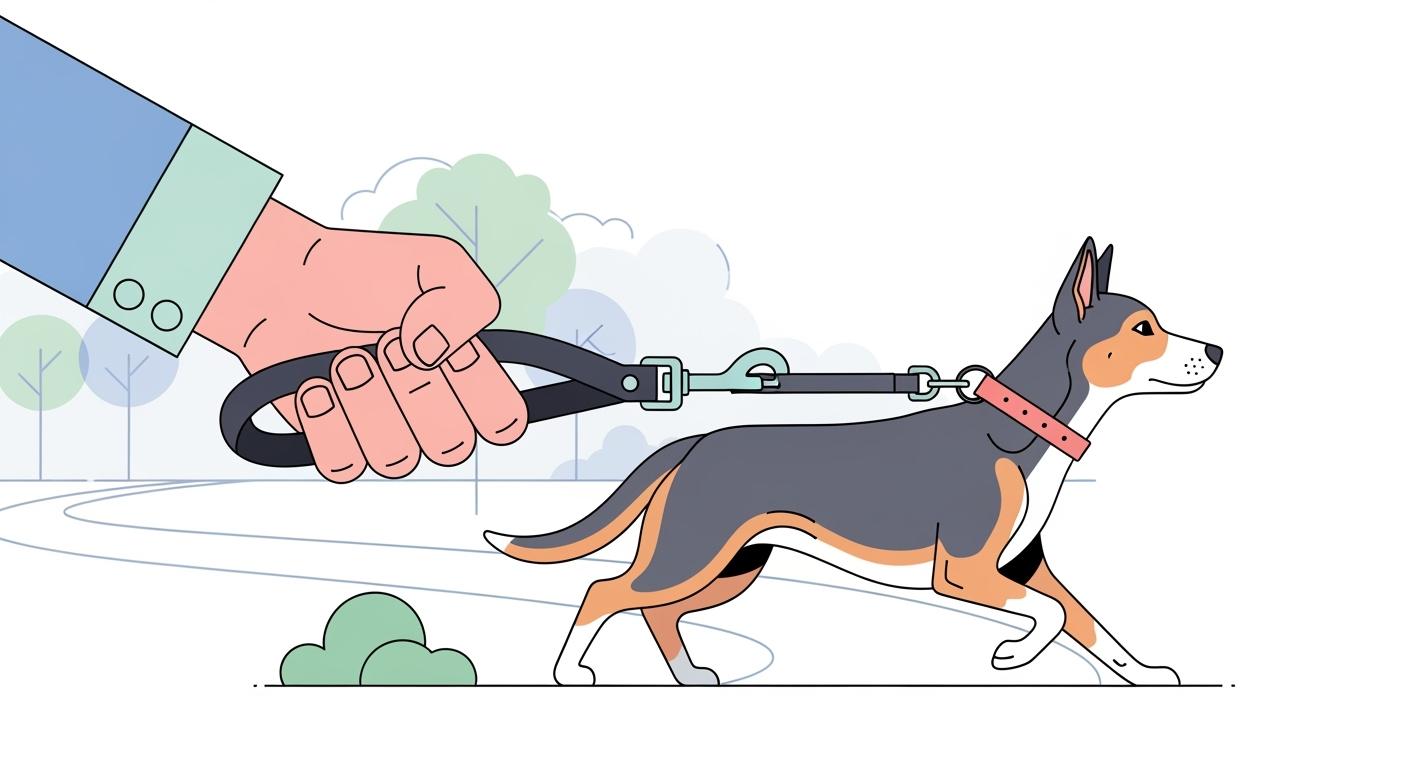
Choosing the best leash for a pulling dog means choosing the setup that lets you shorten distance fast, keep a secure grip, and stay readable when your dog surges. A leash can feel fine in the store and still react too slowly on a real walk if the line is too long, the handle slips, or the clip twists under tension.
Note: A better leash helps with control, but it still works best when the leash length, handling style, and dog setup match each other.
Key Takeaways
Choose a leash that lets you react quickly and hold steady when your dog pulls. Fixed lengths, secure grip, clean clip movement, and hardware that stays aligned usually matter more than extra features or long range.
What to Look for in a Leash for Pulling Control
The best leash for a pulling dog should do three things well: keep your dog near enough for quick control, feel secure in your hand, and stay attached without twisting or lagging under pressure.
Close-Control Length and Quick Handling
For a strong puller, shorter and more predictable usually works better than longer and more forgiving. A fixed-length leash in the common everyday range gives you a cleaner reaction window when your dog surges, changes sides, or heads toward a distraction. What matters most is whether you can shorten the working distance quickly without wrapping extra line around your hand.
Use this simple length guide as a starting point:
| Working Length | Practical Effect |
|---|---|
| 4 to 6 feet | Usually the easiest range for fast shortening and close everyday control |
| Adjustable short range | Useful when you want one leash to cover tighter and looser settings |
| Long line or very long leash | Better for distance work than for fast control on pulling walks |
A fixed-length leash in the 4 to 6 foot range usually gives you the clearest control. If your dog pulls fast, a longer line often delays your response and makes sudden changes harder to manage.
Grip Security and Comfort
Grip security matters because pulling force travels straight into your hand and wrist. A handle that slips, cuts into your palm, or feels awkward when you shorten up will make control worse even if the leash material is strong. Look for a handle shape and finish that stays stable when your dog changes direction.
These handle and material details usually matter most:
| Feature | Why it helps |
|---|---|
| Wider, flatter handle | Spreads pressure more evenly across the hand |
| Padded loop | Can feel easier on longer or more forceful walks |
| Textured or coated grip area | Reduces slipping when your hand is damp |
| Leather handle | Often feels secure and less slippery once broken in |
| Coated webbing | Can feel easier to grip and simpler to wipe clean |
| Balanced overall weight | Helps the leash feel quicker instead of clumsy in the hand |
Always test grip comfort before you commit. If the handle feels rough, too narrow, or slippery, it will become more noticeable once your dog starts pulling.
Clip Confidence and Twist Prevention
Clip confidence means the leash stays attached and readable under movement. A good clip should close cleanly, rotate if needed, and resist half-twisting when your dog changes sides. What you want is a clip that feels simple and reliable, not one that only looks heavy-duty.
Look for clip details like these:
- A secure snap or clasp that closes fully every time
- A swivel or anti-twist feature that actually moves smoothly
- Hardware that matches your dog’s size and pull strength without adding unnecessary bulk
Always check the clip before each walk. If it sticks, twists badly, or feels loose at the connection point, fix that before you head out.
Signs Your Leash Isn’t Working
If your leash setup keeps slowing your reaction, adding hand strain, or letting your dog get too far ahead before you can shorten up, it is not doing enough for pulling control.
| Sign | What it usually means |
|---|---|
| You keep feeding out more line than you want | Working length is too long for the dog’s current control level |
| The handle slips when your dog surges | Grip shape or material is not secure enough |
| The clip keeps half-turning or wrapping the line | Hardware is not staying aligned under movement |
| Your dog gets farther than expected before you can correct | Response distance is too delayed |
| Your hand or wrist feels sore very quickly | Grip pressure and leash weight are not working for you |
If you notice these patterns, change the leash, the length, or the full walking setup before the problem becomes your normal routine.
Pass/Fail Leash Checklist
Use this checklist to judge whether your leash is helping or making control harder.
| Check Item | Pass Signal | Fail Signal | Improvement Plan |
|---|---|---|---|
| Working length | You can shorten up quickly without wrapping extra line | Too much distance before you can react | Move to a shorter or more adjustable fixed length |
| Grip comfort | Handle stays secure without hand pain | Slips, cuts, or feels awkward under tension | Try a wider, padded, or better-textured handle |
| Clip security | Connection stays closed and aligned | Clip sticks, twists, or feels unreliable | Upgrade or replace the hardware |
| Quick-grab control | You can bring the dog in close fast | You fumble or lose time at crossings | Use a traffic handle or shorter working range |
| Twist resistance | Leash path stays readable during turns | Line wraps, flips, or spins often | Choose smoother swivel movement or simpler hardware |
| Material condition | Webbing and stitching feel strong and clean | Frays, weak spots, or stiff cracked sections | Retire the leash and replace it |
| Setup match | Leash and harness/collar work cleanly together | Pulling gets worse or response feels delayed | Recheck the whole walking setup, not just the leash |
Common Mistakes and Safety Boundaries
Many owners choose leashes by looks, thickness, or marketing language and only later notice that the setup reacts too slowly. A leash that is too long, too slippery, or too awkward in the hand can make pulling feel worse even when the material itself is strong.
- Do not choose by appearance alone if you have a strong puller.
- Avoid setups that delay your ability to shorten distance quickly.
- Check the full setup before every walk instead of trusting the clip and handle blindly.
Tip: If your dog pulls hard enough that you cannot hold the leash safely, shorten the route, simplify the setup, and work on control before adding more distance or distractions.
Disclaimer: This guide covers leash setup and handling checks. It is not a diagnosis for pain, medical issues, or behavior conditions.
Leash Features That Help or Hurt Pulling Control
Fixed-Length vs. Retractable Dog Leashes
You need a leash that gives quick control without adding delay. Fixed-length leashes usually feel steadier because the working distance stays readable. Retractable leashes change distance too easily, which can make a fast pull harder to manage and can create extra trip, burn, or snap-back risk when the line is under tension.
- Fixed-length leashes usually give cleaner, faster control.
- Retractable leashes often add more slack and more timing problems for strong pullers.
- Long, thin lines can be harder to read and easier to tangle around hands or legs.
- For dogs that lunge or surge, predictable length usually matters more than extra range.
For most strong pullers, a fixed-length leash gives the clearer response window. Retractable styles may feel convenient, but they usually make pulling control less immediate.
Traffic Handles, Hardware, and Quick-Grab Features
Traffic handles help when you need a second, closer grip near roads, crowds, or tight path sections. They work best when the main leash length is already manageable and the extra handle is easy to find without looking down. Good hardware should feel secure and easy to operate, but not oversized enough to turn the front of the setup into extra weight.
Use this table to compare common hardware styles and quick-grab features:
| Hardware Type | Security Feel | Best Use Case | What to Watch |
|---|---|---|---|
| Locking or screw-style clip | Very secure when closed correctly | Dogs with strong, repeated pulling | Slower to open if you need a quick switch |
| Trigger snap | Quick and familiar | Daily walking with active dogs | Check wear and closure feel often |
| Bolt snap | Simple and common | Lighter everyday use | May feel less reassuring for stronger pullers |
| Traffic handle | Fast close control | Road crossings, crowds, or tight spaces | Only useful if you can reach it quickly |
Reliable hardware and a useful quick-grab option can make strong pulling easier to manage, especially in places where you need to shorten the leash fast.
When Bulk, Stretch, or Awkward Grips Get in the Way
Some leash features sound helpful but create slower reactions in real use. Too much stretch can delay feedback. Bulky chain or oversized hardware can feel tiring. Hands-free setups can work for running, but they are usually slower for quick control when a strong puller changes direction suddenly.
Pick the setup that gives you the cleanest response, not just the one with the longest feature list.
| Leash Type | Pros | Cons | Best For |
|---|---|---|---|
| Fixed-Length | Steady control, easy to shorten | Less shock absorption | Everyday walks and stronger pullers |
| Retractable | More range when things are calm | Poorer control and more timing risk | Dogs that do not pull hard |
| Bungee | Softens sudden changes | Can feel vague if rebound is too strong | Active dogs that already stay fairly steady |
| Chain | Chew-resistant and durable | Heavier and rougher in the hand | Specific chew issues, not general comfort |
| Hands-Free | Convenient for steady movement | Less immediate control | Running or hiking with more predictable dogs |
Avoid leash types that reduce your reaction speed or make your grip less secure once the dog pulls.
Comparison Table: Best Dog Leash Types
This table compares leash features and pairings that commonly help or hurt quick control with pullers.
| Feature/Setup | Fixed-Length Leash | Retractable Leash | Bungee Leash | Padded Handle | Regular Handle | Leash + Flat Collar | Leash + Front-Clip Harness |
|---|---|---|---|---|---|---|---|
| Control speed | High | Low | Medium | Depends on leash | Depends on grip | Medium | Higher with good fit |
| Slack risk | Low | High | Medium | Low | Low | Medium | Low to medium |
| Quick-grab access | High | Low | Medium | High | Medium | Medium | High |
| Twist management | Usually simple | Often harder to read | Can vary with rebound | N/A | N/A | Depends on hardware | Depends on hardware and fit |
| Pulling suitability | Usually better | Usually worse | Mixed | Helps hand comfort | Mixed | Limited for stronger pullers | Often more helpful for redirection |
A fixed-length leash with a secure handle and a better-matched harness setup usually gives the clearest control for strong pullers.
Troubleshooting Table for Pulling Issues
Use this table to spot common pulling-control problems and what usually fixes them fastest.
| Symptom | Possible Cause | Quick Check | Solution |
|---|---|---|---|
| Dog pulls hard at the start | Too much distance or unclear setup | Check leash length and where the dog is clipped | Shorten the setup and simplify the walk |
| Leash burns or hand pain | Thin line or poor grip material | Inspect handle feel under tension | Switch to a wider, more secure grip |
| Dog chews the leash | Boredom, frustration, or weak material | Check damage and when chewing happens | Replace the leash and work on redirection |
| Handler loses grip | Handle slips or feels awkward | Test the handle with one quick shortening move | Choose a more secure, easier-to-hold handle |
| Dog lunges past your control point | You cannot shorten fast enough | Check for traffic handle or working range | Use a shorter, simpler setup |
| Persistent pulling | Leash choice and training do not match the dog | Review route, leash type, and handling routine | Adjust both equipment and training plan |
Pulling control improves fastest when the leash type, the walking setup, and the training routine work together.
Note: If your dog pulls hard enough that you feel unsafe or notice coughing, limping, or pain during walks, stop and reassess the full setup before continuing.
Leash Materials and Setup Choices
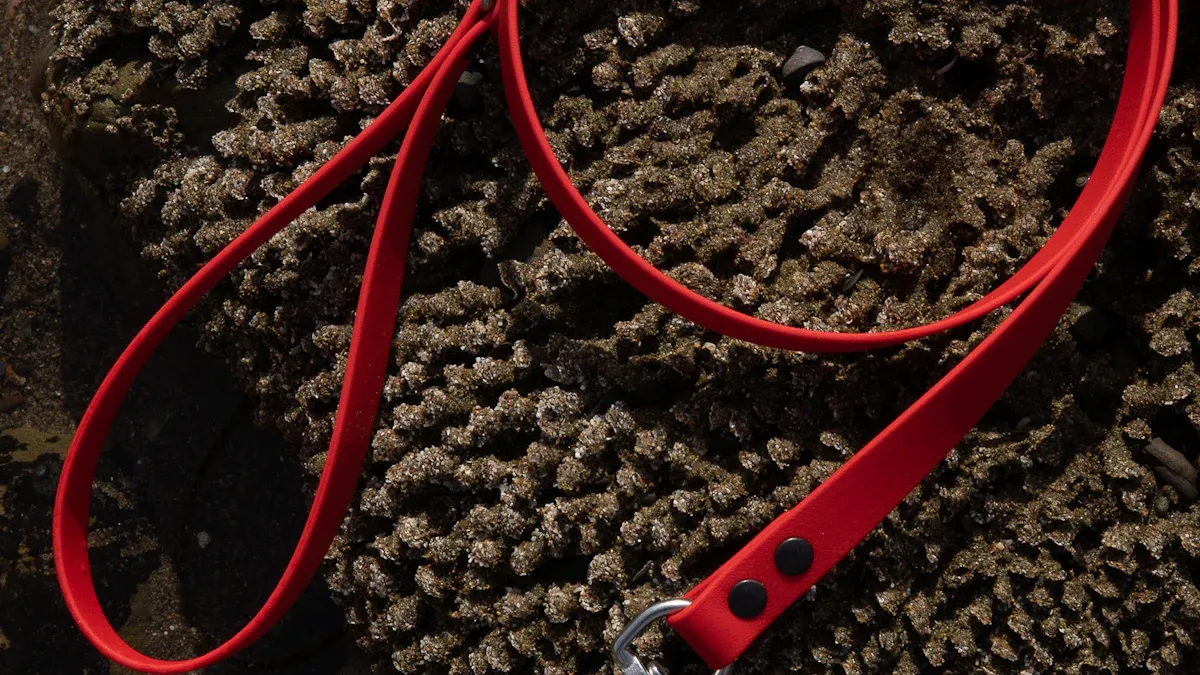
Webbing, Stitching, and Hardware Reliability
Always check the webbing and hardware before a walk. Material affects grip, cleanup, flexibility, and how quickly damage becomes obvious. The best choice is the one that stays readable in your hand, holds up to repeated pulling, and is easy enough to inspect often.
| Material | Durability Features | Feel in Use |
|---|---|---|
| Coated webbing | Resists moisture and wipes clean easily | Often feels grippy and easy to read |
| Leather | Can soften with use while staying strong | Often feels secure and stable in the hand |
| Nylon webbing | Lightweight and common | Varies widely depending on weave and handle finish |
How the leash is stitched matters just as much as the main material. High-stress spots near the clip, handle, and added traffic handle should feel flat, clean, and well reinforced. Loose stitching, rough edges, or stiff folds are all signs that the leash may not age well under repeated pulling.
| What to Inspect | Why it Matters |
|---|---|
| Clip-end stitching | This is where repeated pulling force often shows first |
| Handle-end stitching | Weakness here affects your control directly |
| Webbing edges | Fraying or cracking can spread quickly over time |
| Swivel or moving parts | These need to move cleanly without sticking or grinding |
Strong material and clean construction help the leash stay trustworthy. Always look for wear or hardware changes before each walk.
What the Leash Clips To: Collars, Front-Clip, and Dual-Clip Harnesses
What the leash clips to changes how much control you feel. A flat collar gives a very direct response but less help with pulling. A front-clip harness can add redirection. A dual-clip harness can give you more options when you want both front guidance and back-clip simplicity.
- A front clip can help turn the dog back toward you when pulling starts.
- A back clip often feels simpler for calmer walking.
- A dual-clip harness can give you more setup choices when you need them.
| Pros of Front-Clip Harnesses | Cons of Front-Clip Harnesses |
|---|---|
| Can give more redirection for pullers | Needs good fit to stay comfortable |
| Often helps you shorten control distance sooner | May tangle more easily with poor leash handling |
| Can make training feedback clearer | Not every dog likes the feel at first |
| Usually gives more help than a flat collar alone | Still needs setup checks and practice |
Front-clip harnesses can improve control for many pullers, but only when the fit is good and the leash handling stays clear.
Cleaning and Care for Dog Leashes
Clean your leash often enough that dirt, sweat, and grit do not hide wear or make the handle feel worse. Choose the cleaning method by material, use mild soap when appropriate, and let the leash dry fully before the next walk.
- Wash coated or nylon webbing often enough to remove grime and odor.
- Clean leather more gently and avoid soaking it unnecessarily.
- Let the leash dry fully before you store or reuse it.
- Keep a backup leash so you are not forced to use one that still feels damp or dirty.
Replace the leash if you see frayed webbing, loose stitching, weak clips, or any change that makes the setup feel less secure.
Tip: Clean and inspect your leash often enough that you can spot small problems before they become a control failure on a walk.
Disclaimer: This guide is about leash setup and use. It does not replace veterinary care or behavior assessment for dogs with pain, fear, or severe pulling issues.
When you choose the best leash for a pulling dog, focus on the checks that change control the fastest:
- Pick a length that lets you shorten distance quickly.
- Use a handle that stays secure without hand pain.
- Check that the hardware stays closed and readable under movement.
Use the checklist and tables above to judge whether your leash actually helps. For many pullers, a fixed-length leash and a front-clip harness setup make control feel clearer and faster.
| Dog Type | Recommended Leash Type | Key Considerations |
|---|---|---|
| Pullers | Fixed-length leash with secure grip | Keep response distance short and pair with a setup that improves control |
Choose the leash that keeps your dog manageable, your hand secure, and your reaction time clean on real walks.
Note: Recheck your leash before every walk and simplify the setup if pulling starts overwhelming your control.
FAQ
What leash length works best for a dog that pulls?
A fixed-length leash in the 4 to 6 foot range usually gives the quickest control for dogs that pull.
How often should you check your leash for damage?
Check it before every walk. Look for frayed webbing, loose stitching, weak clips, or any change in how the handle or hardware feels.
Can a harness help reduce pulling?
A front-clip harness can help some pullers by turning the dog back toward you and making your control feel clearer. Fit still matters.
Is a retractable leash safe for strong pullers?
For most strong pullers, no. Retractable leashes usually reduce quick control and increase slack, timing, and twist problems.
How do you clean a dog leash safely?
Clean it by material type, rinse off grit, and let it dry fully before reuse. A clean leash is easier to inspect and more comfortable to hold.
Note: This FAQ is about leash choice and setup checks. It does not replace veterinary or behavior advice when pulling is linked to pain, fear, or other ongoing issues.






