
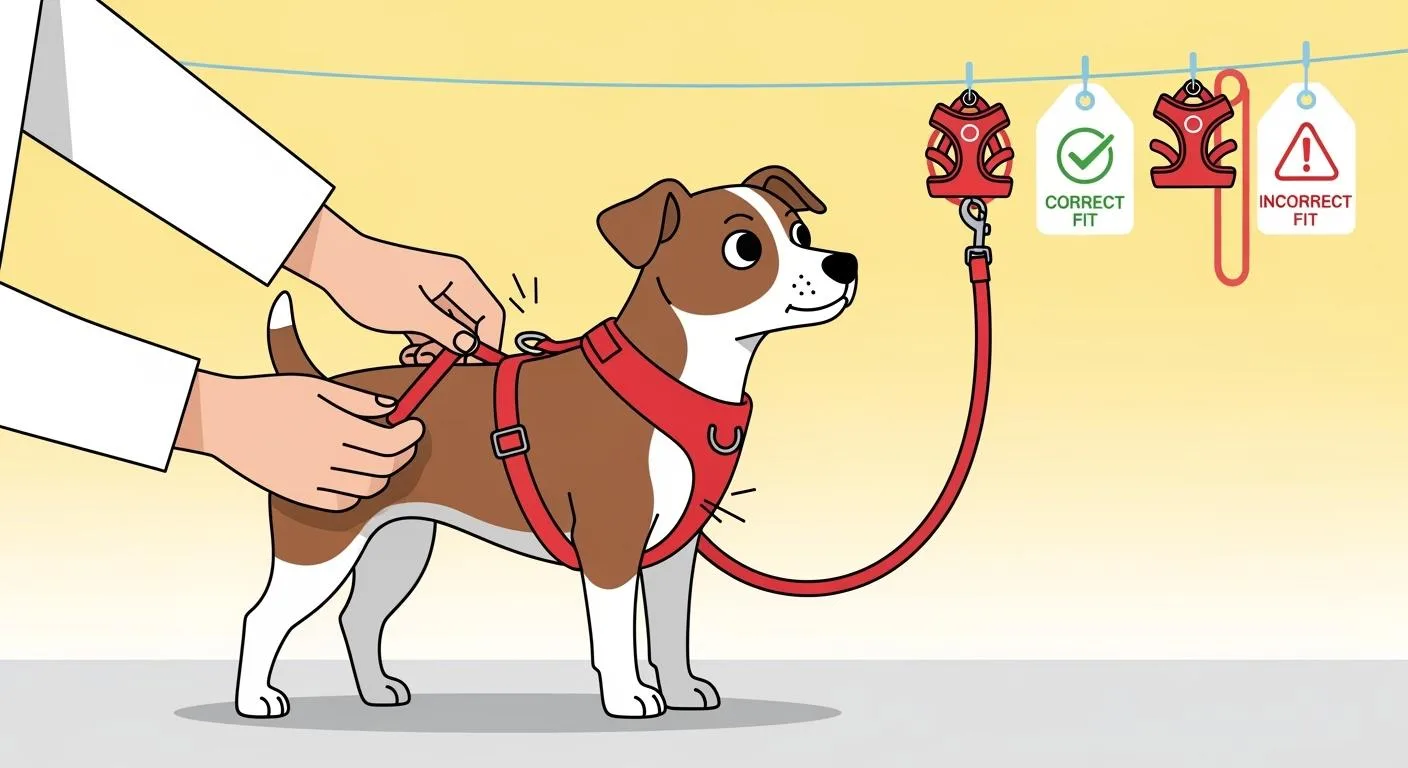
A small dog harness and leash set can look simple, but small dogs expose fit problems quickly. A clip that feels normal on a medium dog may pull too hard on a small chest. A strap that looks harmless on the table can rub behind the front legs. A loose neck opening can let the dog back out when the leash angle changes.
That is why a small dog harness and leash should be judged as one working system, not two separate accessories. The harness decides where pressure lands on the body. The leash controls the pulling angle, clip weight, and handling feel. If either part is wrong, the whole setup can fail during a real walk.
Key Takeaways
- Always measure your dog’s neck and chest first. Small dogs have less margin for sizing mistakes, so a slightly loose or high harness can become an escape risk.
- Check movement, not just still fit. A harness that looks fine while standing can rub, slide, or climb toward the throat once the leash tightens.
- Match the leash hardware to the dog size. Oversized clips and heavy webbing can pull the harness off balance on small dogs.
Small dog harness sizing fails when the body shape is ignored
Neck-base and chest measurements matter more than weight labels
You need to measure your dog at the neck base and the widest part of the chest. Weight can help narrow the size range, but it does not tell you where the straps will sit. Two small dogs with the same weight can have very different chest depth, shoulder width, coat thickness, and torso length.
A good small-dog fit starts with the harness sitting below the throat, clearing the shoulder movement path, and wrapping the chest without leaving large side gaps. If the front strap sits too high, leash tension can move pressure toward the neck. If the chest strap is too loose, the dog can twist, step back, or slip out.
Why standard size charts still cause poor fit
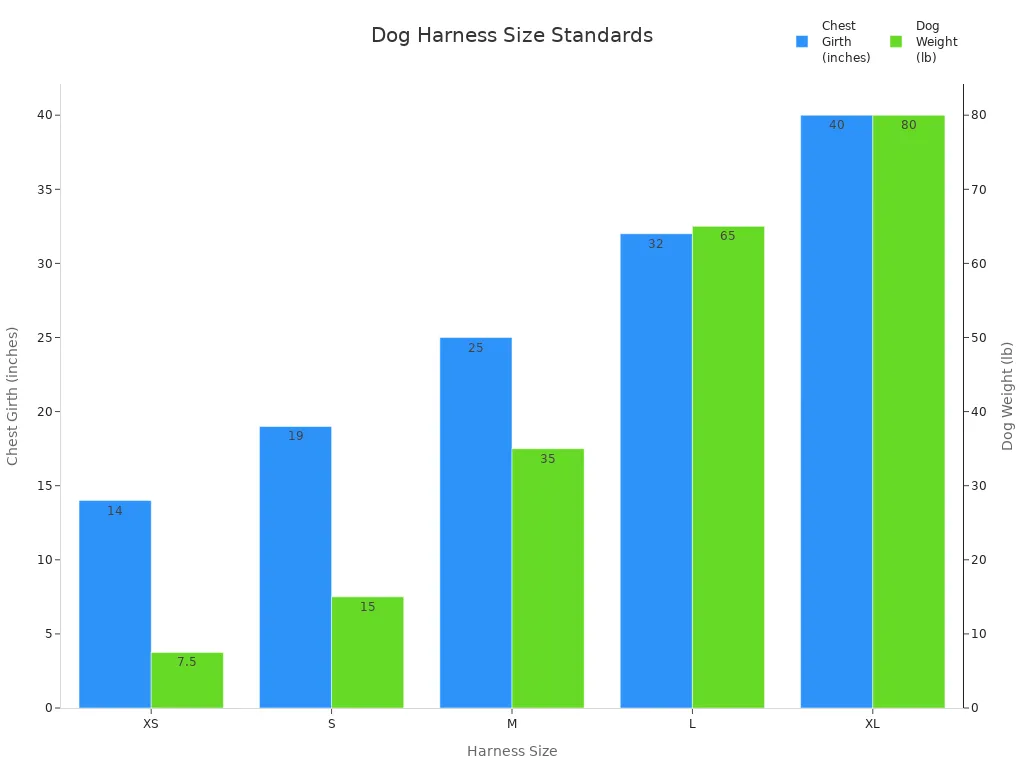
Size charts are useful only when the adjustment range and harness shape match the dog’s body. Small dogs are often grouped into XS or S sizes, but that does not mean the same harness works for a Chihuahua, toy poodle, pug, dachshund, or small terrier. Short bodies, deep chests, broad shoulders, and thick coats all change how the harness rests under leash tension.
| Fit point | Works better when | Fails when |
|---|---|---|
| Neck opening | Sits at the neck base without touching the throat | Rides high and presses upward when the leash tightens |
| Chest strap | Wraps the ribcage snugly without pinching | Leaves gaps that let the dog reverse out |
| Shoulder clearance | Lets the front legs extend without rubbing | Crosses too close to the armpit or shoulder joint |
| Torso length | Panel length matches the dog’s compact body | Vest or panel bunches behind the front legs |
| Leash clip weight | Clip stays proportionate to the dog’s size | Heavy hardware pulls the harness off center |
Back-out risk comes from harness shape, strap path, and leash angle
You want your dog to feel safe, comfortable, and easy to control on every walk. For small dogs, that depends heavily on how the harness and leash behave together. A harness may look secure when clipped on, but the real test happens when the dog stops, turns sideways, or pulls backward.
Back-out problems usually happen when the neck opening is too large, the chest strap sits too far forward, or the leash creates backward tension at the wrong angle. Small dogs can also escape when the leash clip is too heavy and drags the harness backward during movement.
Signs the setup is not stable enough
- The harness shifts sideways when the dog turns.
- The front section climbs toward the throat under leash tension.
- The dog can tuck the front legs and reverse out.
- The leash clip pulls the back ring down or off center.
- The chest strap loosens after a short walk.
An escape-resistant small dog setup needs a stable chest fit, proportionate hardware, and a leash angle that does not lift or twist the harness. Tightening the same straps again and again is not a real solution if the product shape does not match the dog’s body.
Rubbing and pressure happen when the product looks soft but moves badly
Soft padding does not automatically make a harness comfortable. A padded harness can still rub if the edge sits too close to the armpit, if the side strap crosses a high-friction area, or if the panel is too long for the dog’s body. Small dogs often show these problems quickly because the contact area is smaller and the straps sit closer to joints.
Where small harnesses most often rub
| Problem area | Likely cause | Better product direction |
|---|---|---|
| Behind the front legs | Side straps sit too close to the armpit | Shorter panel, cleaner strap path, softer edge binding |
| Lower neck | Front opening rides high under leash pull | Lower neck-base cut and more stable chest anchoring |
| Chest center | Panel twists or narrows under tension | Better chest shape and balanced attachment point |
| Belly strap area | Rough webbing or hard buckle edge | Smoother webbing, rounded hardware, softer contact finish |
| Back ring area | Oversized clip pulls the harness backward | Lighter leash clip and smaller dog hardware set |
For small dog harness and leash products, comfort depends on movement. A design that stays centered, clears the armpits, and keeps hardware light usually performs better than a bulky design that only feels protective in product photos.
Material and hardware choices should match small-dog movement

Light materials often work better than thick padding
Small dogs do not always need the thickest harness. Too much padding can trap heat, add bulk, and make the vest section sit awkwardly on a short torso. Lightweight mesh, smooth webbing, flexible edge binding, and breathable contact panels are often easier to tolerate during daily walks.
That does not mean the harness should be flimsy. The better direction is light but stable: enough structure to keep the chest panel centered, but not so much material that the dog shortens its stride or overheats.
Hardware should be secure without overpowering the dog
Leash clips, D-rings, buckles, and adjusters need to hold securely, but scale matters. Oversized metal clips can swing, knock against the dog’s body, and pull the harness off balance. Plastic hardware can reduce weight, but it still needs smooth edges and dependable closure.
| Component | Better for small dogs | Risky design |
|---|---|---|
| Leash clip | Light, secure, easy to attach | Large clip that drags the harness backward |
| D-ring | Centered and stable under pull | Ring position that twists the back panel |
| Straps | Smooth webbing with enough adjustment range | Stiff webbing that digs into small contact areas |
| Padding | Soft where pressure happens, minimal where heat builds | Thick padding that creates bulk and moisture retention |
| Edge finish | Soft binding that does not curl or scrape | Hard seams near the armpit or chest |
How to tell if the harness and leash design is actually suitable
A small dog harness and leash set is more reliable when it passes real movement checks, not just size checks. The product should stay centered while the dog walks, turns, slows down, and pulls lightly against the leash. It should also come off after the walk without red marks, damp pressure zones, or flattened hair where the straps rubbed.
| Real-use check | Pass signal | Fail signal |
|---|---|---|
| Short walk test | Harness stays centered and dog moves naturally | Harness twists, rides forward, or causes stiff steps |
| Backward tension test | Dog cannot reverse out through the neck opening | Neck gap opens and chest strap slides forward |
| Skin check | No redness behind legs, neck base, or belly strap | Red marks, rubbing, hair loss, or repeated scratching |
| Leash handling | Clip and leash feel proportionate to dog size | Hardware swings, pulls down, or makes the harness tilt |
| Heat check | Dog stays comfortable after normal wear time | Warm, damp, or irritated skin under padded areas |
The best small dog harness and leash design is not the one with the most features. It is the one that keeps pressure away from the throat, avoids rubbing points, stays stable under leash tension, and uses hardware that does not overpower the dog’s body size.
FAQ
What makes a small dog harness slip or twist?
Slipping usually comes from a loose chest strap, a large neck opening, poor panel shape, or leash hardware that pulls the harness off balance. If the harness moves when the dog turns or backs up, the fit is not stable enough.
Is a vest harness always better for a small dog?
No. A vest harness can spread pressure well, but it can also trap heat or rub if the body panel is too long or too bulky. Small dogs often need a design that balances coverage with shoulder freedom and airflow.
Why does leash hardware matter so much on small dogs?
Small dogs feel hardware weight more than larger dogs. A heavy clip can swing, pull the back ring down, and shift the harness during movement. Lighter, secure hardware usually creates a better walking setup.
How should a small dog harness fit around the neck?
It should sit at the neck base, not high on the throat. The opening should be snug enough to prevent backing out, but not so tight that it presses upward when the leash tightens.
What is the biggest product mistake in small dog harness and leash sets?
The biggest mistake is treating the harness and leash as separate products. In real use, the leash angle, clip weight, harness shape, strap path, and material all work together. If one part is wrong, the whole setup can fail.






