
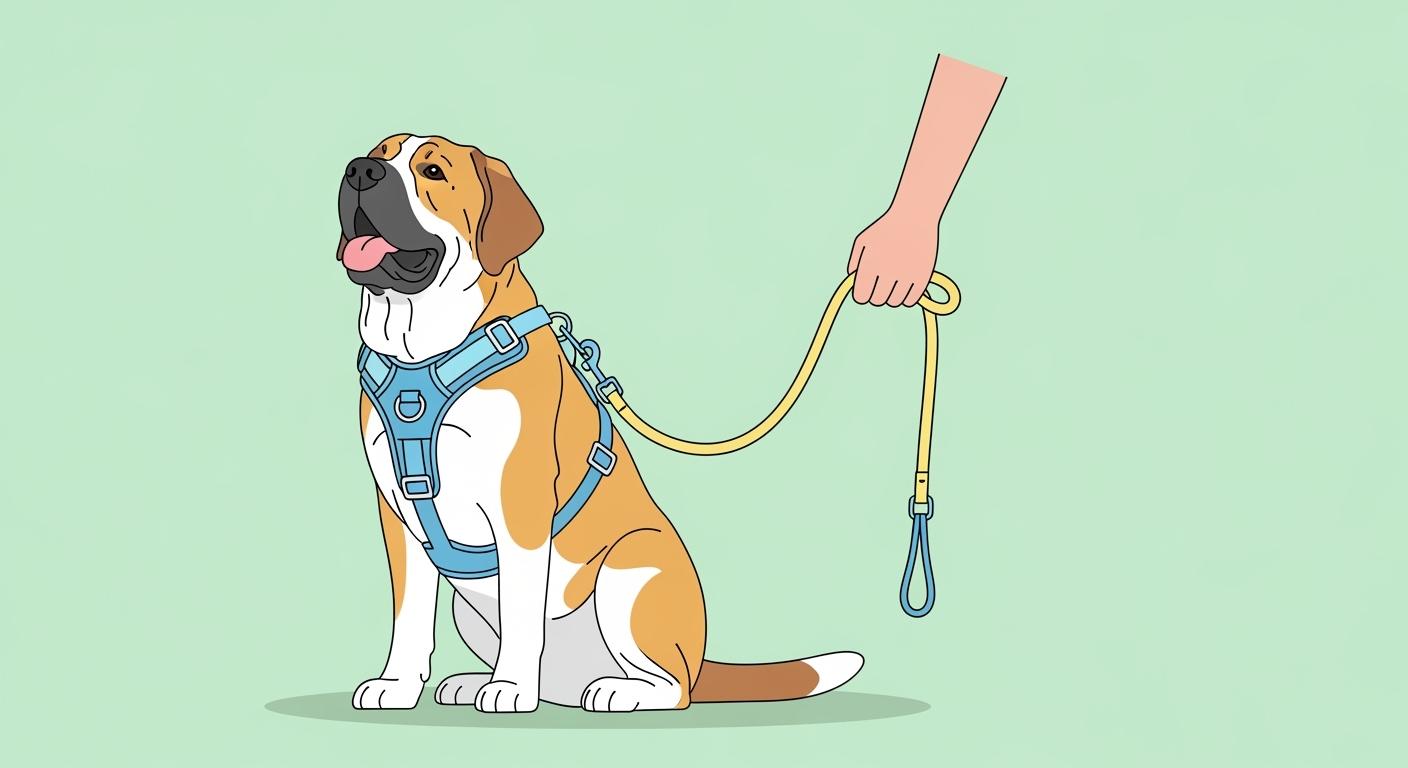
Choosing a large dog harness and leash set usually gets easier when you compare fit, clip balance, leash feel, and real walk behavior together.
On a real walk, the problem is rarely the harness alone or the leash alone. A setup can look fine indoors and still feel slow, rough, or off center once a large dog surges toward a scent, leans into a turn, or tightens the line through a busy sidewalk. For most owners, the useful question is simple: is the matching set still doing the job, or is one part of the setup now holding the walk back?
Disclaimer: This article is about walking setup choice and everyday control. It is not a diagnosis for pain, fear, airway trouble, or gait change.
Key Takeaways
- A matching set is often enough for calm routes and steady walkers, but stronger pullers usually benefit from a steadier load path and a more comfortable handle.
- For most large dogs, the best upgrade decision comes from watching clip balance, harness centering, and hand comfort during normal walks, not from appearance alone.
- If coughing, repeated freezing, shortened stride, or sudden avoidance show up, a better setup may help, but a veterinarian or qualified behavior professional matters more than new gear.
When the Set Leash Is Still Doing the Job
A matching set usually works when your dog walks at a steady pace, the route stays predictable, and the leash does not create a harsh feel in your hand. In those cases, visual matching is not the point, functional balance is.
If you are still sorting out harness shape first, the broader tradeoffs in harness size and material choices for daily walks often matter before you swap leashes.
| Setup | Usually works best for | What feels better in use | What to watch |
|---|---|---|---|
| Full matching set | Short, calm, repeatable routes | Simple grab and go use | Handle fatigue, light hardware, leash twist |
| Harness with steadier everyday leash | Large dogs that lean, surge, or speed up outdoors | Cleaner timing and firmer hand feel | Extra bulk if the leash is too stiff |
| Harness with lighter backup leash | Very short outings with low pull pressure | Less hand weight, easier storage | Less comfort under sudden load |
Note: For most large dogs, the included leash is acceptable when the walk stays calm. Once the route becomes faster or more crowded, leash feel and clip balance usually matter more than whether the set matches.
What to Watch on a Real Walk
Check Whether the Clip Stays Balanced
Clip balance matters because a heavy or awkward clip can pull the harness off center before the dog does anything dramatic. When the clip, ring, and webbing do not stay aligned, the load path usually becomes less predictable during turns and quick stops.
This is where front clip or dual clip choices for big dogs become practical, not theoretical. If your dog changes behavior by environment, the better option is often the one that keeps the chest stable and the handler readable, not the one with the most hardware.
| Check | Pass signal | Why it matters | What to watch |
|---|---|---|---|
| Clip sits flat | Ring and clip stay aligned | Cleaner force transfer | Rattling, tilt, dragging |
| Harness stays centered | Chest panel holds position in turns | Less rotation, less rubbing | Side drift after leash tension |
| Turn response | Dog follows without sudden swing | Better steering timing | Delayed response or overcorrection |
| Stop and settle | Line goes tight, then quiet | Shows balance under load | Harness keeps shifting after the stop |
Notice How the Leash Feels in Your Hand
Handle comfort matters because leash force travels straight into your hand, wrist, and shoulder. A leash that feels merely acceptable for two minutes can become the weak point by the middle of a normal route.
The most useful comparison is not soft versus firm in isolation. It is whether the leash lets you shorten distance cleanly, maintain grip with less strain, and recover quickly after one hard pull.
| Feature | Why it matters | Usually better for | What to watch |
|---|---|---|---|
| Softer handle surface | Reduces hot spots in the hand | Longer daily walks | Too soft can feel vague when wet |
| Steadier webbing body | Improves timing on turns and stops | Strong, forward dogs | Too stiff can feel bulky indoors |
| Moderate leash weight | Keeps the setup readable | Mixed pace routes | Too heavy can pull the harness line down |
| Clear grip shape | Helps fast regrips near distractions | City and park transitions | Narrow edges can dig into the hand |
If your route changes by environment, the leash choice often changes with it. A shorter handling pattern usually feels steadier on tighter routes, while more open routes may tolerate more line length, a tradeoff explained well in leash length choices for crowded and open areas.
Test It on the Route You Actually Walk
The best way to judge a setup is to test it in the order your dog actually experiences it. Start easy, then add normal load, then repeat across several ordinary walks.
- Indoor fit check. Fit the harness, clip the leash, walk a few slow turns, and watch for twisting, chest drift, or shoulder crowding before you ever leave the house.
- Loaded neighborhood walk. Use your normal route and watch one pull event, one stop, one turn, and one distraction recovery. The key question is whether the harness recenters quickly and whether the leash still feels manageable in your hand.
- Three day real route check. Repeat the same everyday route pattern for three days and note whether rubbing, handler fatigue, or off center drift gets better, stays the same, or becomes more obvious.
Tip: The most useful setup test is boring on purpose. Use the same route, similar pace, and the same handling style so the differences come from the gear, not from a new environment.
Keep a Simple Walk Log
Record one short note after each walk before you decide that the set leash is fine or that an upgrade is necessary.
| Route and date | Harness centering | Clip balance | Hand comfort after the walk | Recovery after one distraction |
|---|---|---|---|---|
| Example entry | Stable, slight drift, major drift | Quiet, twisty, heavy | Comfortable, warm, sore | Quick, delayed, messy |
For a wider setup baseline, comparing your notes against a more complete harness and leash setup checklist for walks usually makes the decision clearer.
Signs It Is Time to Replace the Leash
Failure signs matter because large dogs make small setup weaknesses obvious very quickly. If the leash stretches your timing, pulls the harness off line, or leaves your hand sore after a routine walk, the issue is usually functional, not cosmetic.
| Symptom | Likely cause | Fast check | Better next move | What to watch |
|---|---|---|---|---|
| Harness rotates in turns | Unstable load path | Watch chest panel on one stop and turn | Try steadier leash balance first | Repeated shoulder rub |
| Handle feels harsh quickly | Grip shape or webbing feel is wrong | Notice hand comfort halfway through the walk | Switch to a more comfortable everyday leash | Wrist tension after routine routes |
| Dog pulls harder with back attachment | Too much forward leverage | Compare one calmer route to one busy route | Use a front or dual attachment option when needed | Loss of steering near distractions |
| Clip drags the ring down | Clip is too heavy or awkward | Hold the setup before the walk starts | Use a better balanced leash clip | Off center harness position |
| Dog shortens stride | Gait restriction or chest crowding | Watch from the side during a calm walk | Refit or change harness shape | Stiff movement or refusal to turn |
Common Mistakes That Hide the Real Problem
- Keeping a matching leash because it looks tidy even when the hand feel is already telling you it is too harsh.
- Blaming the harness shape first when the leash clip is actually what keeps dragging the setup off center.
- Testing indoors only, then assuming the route, speed, and distraction level will not change the result.
- Expecting a no pull label to solve pulling without training, route management, and reward timing.
Note: The most common mistake is treating matching appearance as proof of functional balance. For large dogs, real control usually comes from centering, handler comfort, and clean recovery after one hard pull.
Disclaimer: If your dog coughs, freezes, shows repeated gait restriction, or panics when the line tightens, stop testing gear and involve a veterinarian or qualified behavior professional.
For most owners, the practical answer is simple. Keep the set leash if the harness stays centered, the clip feels balanced, and your hand still feels fine after a normal route. Upgrade when the walk tells you the setup is late, harsh, or unstable, then compare the result against the broader pet harnesses and leashes for daily walks category only after you know which part of the setup is failing.
- Match the setup to the walk, not to the package.
- Judge large dog gear under real load, not by indoor fit alone.
- Choose the option that stays centered, feels manageable, and helps you recover cleanly after distraction.
FAQ
Should you replace the matching leash right away?
Not always. The included leash is often fine when your dog walks calmly and the route does not expose balance or grip problems.
What matters more for large dogs, harness shape or leash feel?
Both matter, but leash feel often reveals the first real world weakness because it changes your timing, grip, and recovery on the walk.
Is a front attachment always better for large dogs that pull?
No. A front attachment usually helps when steering is the problem, but it still has to stay centered and allow free movement.
How long should you test a new setup before deciding?
A few repeated walks across about three days usually show whether centering, hand comfort, and distraction recovery are improving or not.
When should you stop changing gear and ask for outside help?
When pulling comes with coughing, fear, freezing, repeated gait change, or escalating lunging, outside help usually matters more than another gear swap.
Note: The right walking setup usually feels quieter, steadier, and easier to read, not necessarily heavier, tighter, or more technical.






