
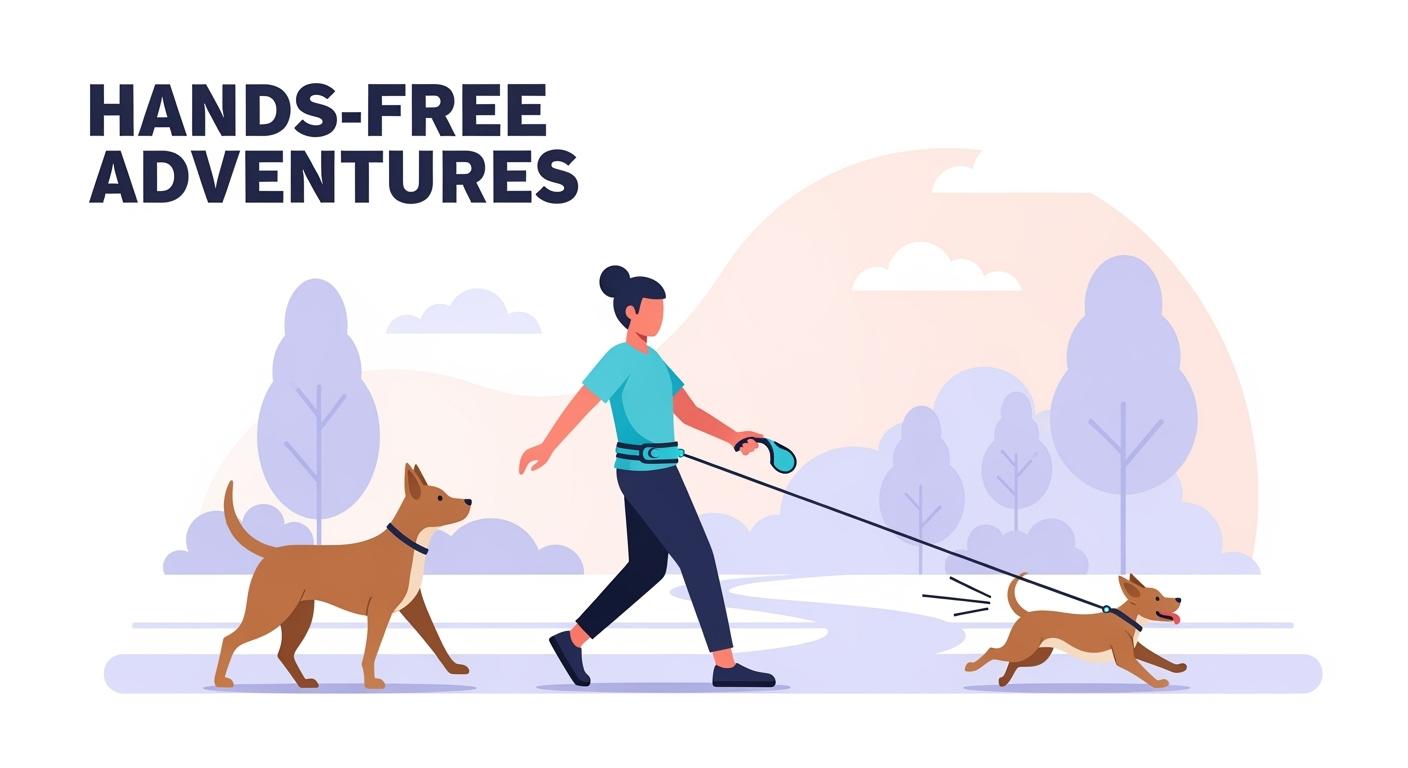
A hands-free leash can feel easy and efficient on the right dog. It can make walking, jogging, or carrying small items more comfortable when your dog keeps a steady line and does not surprise you with hard lunges. But that convenience disappears fast when the dog pulls suddenly, zigzags across your path, or takes longer to recover after a trigger. The real question is not whether hands-free looks modern. It is whether your dog’s actual walking behavior leaves enough margin for delayed reaction, body drag, and belt-based force.
| Benefit | Description |
|---|---|
| Hands-Free Convenience | You can carry water, manage clothing, or move more naturally when the dog already walks with a steady rhythm. |
| Posture and Load Distribution | A waist setup can feel easier than constant hand grip, but only if the dog is not creating repeated jolts through your body. |
| Routine Walking Efficiency | It works best when the dog holds position well enough that you do not need instant hand-led redirection every few seconds. |
Key Takeaways
- Hands-free leashes are easy to use with calm dogs. They make the most sense when the dog already walks with low leash tension and good recovery after distractions.
- If your dog pulls hard, startles easily, or changes direction suddenly, handheld leashes give you faster control and a cleaner emergency response.
- Do not judge readiness by one calm stretch of walking. Check starts, turns, passing triggers, and how quickly the dog settles after excitement.
Hands Free Leash Dog vs Handheld Leash: What Really Changes?
You want to pick the right leash for your dog’s walking style. Calm dogs and sudden pullers need different setups. A hands-free leash dog setup works best when your dog already stays in a predictable lane, responds well to your pace, and does not need constant quick corrections. A handheld leash gives you a more direct way to shorten distance, guide the dog back into position, or stop a poor decision before it becomes a full lunge.
Key differences and use cases
A waist leash is mostly about rhythm and efficiency. It fits walks where the dog is not using much of your body to steady itself. That can work well for calm neighborhood walks, controlled jogs, or longer steady outings where your dog already understands loose-leash expectations.
A handheld leash is more about fast decision-making. It gives you a shorter path between what the dog does and how quickly you can respond. That matters when the dog gets overstimulated, pulls toward greetings, locks onto movement, or suddenly cuts across your path.
Tip: If your dog is still learning leash manners or becomes intense around triggers, start with a handheld leash. Move to hands-free only after the walking pattern is already stable.
Here is a quick look at how the most common leash choices compare in everyday walking:
| Use Case | Hands-Free Leash | Handheld Leash |
|---|---|---|
| Calm neighborhood walk | Usually works well if the dog holds a steady line | Still useful if you prefer closer control |
| Jogging or steady-paced walking | Good when the dog matches pace and does not surge | Better if you need frequent pace checks or resets |
| Busy sidewalk or crossing triggers | Less margin if the dog reacts suddenly | Usually safer because you can shorten and redirect faster |
| Dog still learning leash manners | Usually too early unless the environment is very controlled | Better starting point for clearer timing and feedback |
Pros and cons for calm dogs and sudden pullers
A hands-free leash dog setup works well for calm dogs because you can keep a steady rhythm and reduce hand strain. It also makes it easier to carry small items or walk without gripping the leash the whole time. That said, the same setup becomes harder to manage when the dog pulls, stops sharply, or changes direction without warning. The delay between the dog’s action and your physical response becomes much more important.
Here are the main tradeoffs for sudden pullers:
| Advantages | Disadvantages |
|---|---|
| Convenient for steady jogging or hiking | Less immediate control when the dog lunges or cuts sideways |
| Reduces hand strain on longer outings | Not ideal for strong pullers or dogs with poor trigger recovery |
| Can support consistent pace work | Body drag can turn one bad pull into a full balance problem |
Note: Puppies, reactive dogs, and dogs with inconsistent leash manners usually need more direct control than a waist setup gives.
Comparison table: hands-free, handheld, traffic lead
You can use this table to compare the three main leash types. This helps when the question is not just convenience, but real control under stress.
| Leash Type | Use Case | Main Benefit | Main Watchout | Who Should Skip It |
|---|---|---|---|---|
| Hands-Free Waist | Jogging, hiking, steady everyday walks | Frees your hands and supports a regular pace | Delayed reaction if the dog lunges or changes direction fast | Strong pullers, reactive dogs, dogs with poor recovery after triggers |
| Handheld | Everyday walks, training, mixed environments | Fast control and easier redirection | Can cause hand fatigue on longer outings | Handlers who specifically need hands free for movement or gear |
| Short Traffic Lead | Busy streets, crossings, crowded spaces | Keeps the dog close and reduces extra slack | Not comfortable for long general walks | Dogs that only need relaxed distance walking |
- Hands-free leashes make the most sense for dogs that already walk cleanly.
- Handheld leashes work best when the dog’s behavior can change quickly.
- Traffic leads are most useful when you need short-range control, not all-day freedom.
What Changes When Dogs Pull Suddenly
Handler safety and body drag
You face new risks when your dog pulls suddenly during a walk. A hands free leash dog setup can feel fine until the first real lunge. Then the force does not just go into your hand. It goes through your waist, hips, and balance. If the dog pulls across your body instead of straight ahead, the problem gets worse because the force rotates you as well as drags you.
This is why a waist setup is not only a leash choice. It is a body-control choice. Larger dogs, sudden pullers, and dogs that zigzag or lunge at passing triggers leave much less margin for error.
Safety Tip: If you feel strain, frustration, or fear during walks, pause and reassess your setup. This blog does not offer medical advice. If you have mobility limits or your dog shows strong reactivity, consult a professional trainer or veterinarian.
Pass/Fail checklist for hands-free walking
You need to evaluate your dog’s readiness for hands-free walking based on actual behavior, not just on size or breed. Use this checklist before you commit to a waist setup.
| Check Item | Pass Signal | Fail Signal | Fix |
|---|---|---|---|
| Start-of-walk behavior | Dog can leave calmly without immediate pulling | Dog surges forward as soon as the walk starts | Use handheld and rebuild calmer starts |
| Loose-leash rhythm | Dog holds a fairly steady line beside you | Repeated tension or sudden lane changes | Practice loose-leash walking before going hands-free |
| Recovery after distractions | Dog reorients within a few seconds | Dog stays locked on and keeps pulling | Train farther from triggers and stay handheld |
| Cross-body pulling | Dog rarely cuts hard across your path | Dog zigzags or sweeps sideways often | Use handheld for better line control |
| Public calmness | Dog can move through normal outings without big reactions | Dog lunges, vocalizes, or spikes easily | Do not use a waist setup yet |
Step-by-Step: Start in quiet areas with a handheld leash. Build calm walking, test short predictable stretches, then try brief hands-free segments only after the dog is already stable.
Common mistakes and real consequences
Many handlers make mistakes when using hands-free setups with sudden pullers. The most common one is treating the gear as the solution instead of the dog’s walking pattern. Another is choosing by size label alone without checking belt stability, clip quality, or how the line behaves when the dog moves across the body.
Here are some risks you may face:
| Risk Type | Description |
|---|---|
| Body Drag | The dog pulls through your hips and balance instead of only through your hand. |
| Malfunctions | Weak clips, poor stitching, or bad belt fit can fail when force spikes suddenly. |
| Tangling | The line can wrap or cross awkwardly if the dog changes direction fast. |
| Slow Redirection | You may not shorten distance or change angle quickly enough during a bad moment. |
| Handler Overconfidence | Feeling hands-free can tempt you to use the setup before the dog is truly ready. |
Note: Always check your leash and harness before each walk. If your dog still pulls or reacts suddenly, use a handheld leash for better control.
Failure Signs and Troubleshooting
You may notice problems when using a hands free leash dog setup, especially if your dog pulls hard or reacts to distractions. Repeated jolts, sideways pulling, or poor recovery after a trigger usually mean the current setup is not working well. The problem is not only the dog’s strength. It is also the time it takes for your body and belt setup to catch up with the dog’s decision.
Troubleshooting table: symptoms, causes, fixes
| Symptom | Likely Cause | Fast Check | Fix |
|---|---|---|---|
| Repeated jolts | Dog pulls or lunges faster than the setup can absorb cleanly | Watch for hard leash spikes instead of steady tension | Return to handheld and rebuild loose-leash skills |
| Sideways pull | Dog zigzags or leash line is crossing your body | Notice whether the pull rotates you instead of only stopping you | Recenter the setup or switch back to handheld |
| Poor recovery after triggers | Dog is not ready for that environment | See if the dog stays excited long after the trigger passes | Train in quieter areas and add difficulty more slowly |
| Belt setup worsens control | Gear too loose, bouncy, or badly positioned | Feel for shifting belt or excess bounce when the dog changes speed | Tighten fit or stop using that setup |
Adjusting gear and technique
You can improve control by making small changes, but only up to a point. A more secure waist fit, cleaner leash path, and better reward timing can make a calm dog setup smoother. They will not turn a sudden puller into a safe hands-free dog by themselves. If the dog keeps creating body drag, do not keep solving it with more optimism and tighter belts.
When to switch back to handheld
You should switch back to a handheld leash if you feel off balance, notice back or hip strain, or cannot redirect your dog quickly. Crowded areas, street crossings, and surprise triggers need faster control. If your dog lunges at distractions or the hands free leash dog setup keeps making bad habits more obvious, a handheld leash is the safer choice.
Note: If you feel pain, frustration, or fear during walks, pause and reassess your setup. This blog does not give medical advice. Talk to a trainer or veterinarian if you have concerns about your dog’s behavior or your own mobility.
You should match your leash choice to your dog’s real walking pattern, not just to the activity you want to do. Calm dogs can do well with hands-free setups because the line stays predictable. Sudden pullers usually need more direct control. If the setup makes you slower, less balanced, or less confident, it is not the right one for that stage of training.
FAQ
Can you use a hands-free leash with a puppy?
Usually not at first. Puppies need close supervision, fast feedback, and simpler leash handling. Start with a handheld leash and build steadier walking before trying hands-free setups.
What should you do if your dog suddenly pulls while hands-free?
Stop moving, regain your balance, and shorten the situation instead of trying to push through. If the same problem repeats, switch back to handheld and treat that as a setup issue, not just a one-off accident.
Tip: Practice loose-leash walking in quiet areas before trying hands-free setups.
Is hands-free walking safe for people with mobility issues?
It may not be the best starting point. A waist setup transfers pulling force into your whole body, so it is worth discussing with your doctor or physical therapist before using one regularly.
This blog does not give medical advice. Always put your safety first.






