
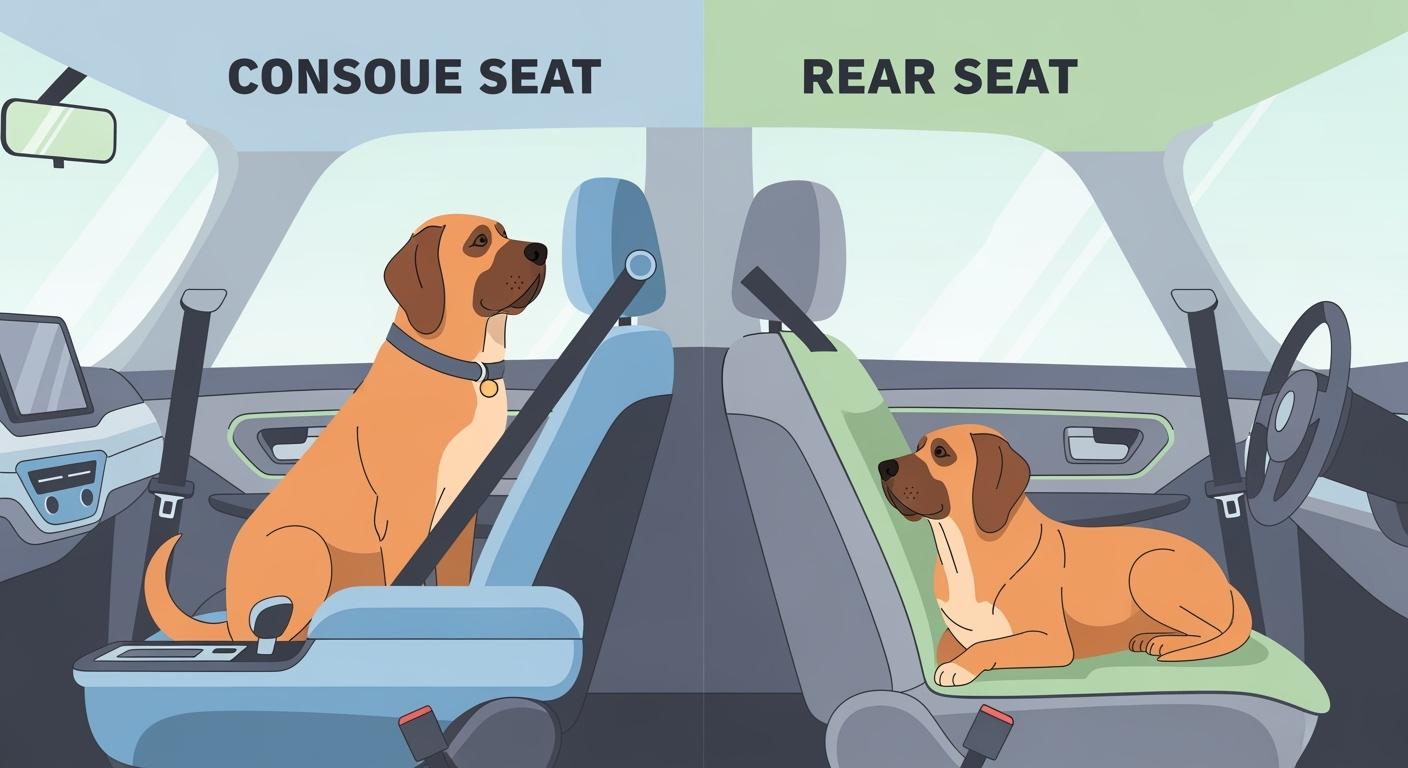
Searching for an extra large dog console car seat usually means you want a big dog close without turning the drive into a wrestling match. The problem is that most console seats are built for small dogs, not broad shoulders, long bodies, or dogs that need room to brace and settle. For most extra large dogs, a rear-seat setup is the safer and more comfortable choice.
Key Takeaways
- An extra large dog console car seat is usually too small to support a natural sitting or resting posture.
- If your dog hangs over the edge, blocks controls, or cannot settle, the setup has already failed the fit check.
- Rear-seat beds, boosters, carriers, or harness-based restraint setups usually give extra large dogs a wider, more stable footprint.
Why console seating usually fails for extra large dogs
A console seat can work for a very small dog that curls up neatly and stays inside the supported area. Extra large dogs usually do the opposite. They sit tall, spread their weight across a wider base, and need more room to turn, lie down, or brace during stops. The front console area also keeps them closer to airbags, cup holders, gear controls, and your driving space.
If you are comparing rear-seat height, materials, and footprint before switching setups, dog car booster seat sizing and materials helps frame the main fit differences.
Console seat vs. rear-seat options
| Setup | Usually Works Best For | Main Strength | Main Limitation |
|---|---|---|---|
| Console seat | Small dogs with compact resting posture | Keeps the dog close | Very limited space and driver-area interference |
| Rear-seat booster | Dogs that fit fully inside the seat and stay calm | Better seat footprint and visibility | Still not ideal for many extra large dogs |
| Rear-seat bed or hammock setup | Large dogs that need room to lie down and shift weight | Wider, flatter resting area | Needs a clear restraint plan |
| Rear-seat carrier or crate-style setup | Dogs that travel better with more containment | More structure and clearer boundaries | Requires enough rear-seat or cargo space |
For many owners, the real choice is not between one console seat and another. It is between forcing a bad front-seat fit and moving the dog to a layout that actually matches the dog’s size. The tradeoffs in car seats, seat belts, and carriers for dogs become clearer once containment and space matter more than proximity.
Fit checks that matter before you drive
The fastest way to judge an extra large dog console car seat is to stop looking at the label and watch the dog in the actual car. A workable setup should let your dog get in, turn, and settle without hanging off the sides or pushing into the front controls. If any of those basic checks fail, the console is not the right place.
| Check Item | Pass Signal | Fail Signal | What To Do |
|---|---|---|---|
| Dog fits fully inside the supported area | Body stays inside the seat with room to reposition | Chest, hips, or legs hang over the edge | Move to the rear seat |
| Restraint path stays clear | Harness and tether sit flat without twisting or pinching | Clip path crowds the dog or tangles near the console | Change the layout or restraint routing |
| Console area stays usable | Gear controls, arm movement, and cup holders stay clear | Dog blocks or bumps the controls | Use a rear-seat setup |
| Dog settles within a few minutes | Dog lies down or sits calmly | Dog braces, paces, whines, or keeps shifting | Try a larger rear-seat footprint |
| Base stays stable through movement | Seat stays planted during loading and light pushing | Seat tips, rocks, or slides | Do not use the console position |
Before you trust any footprint, reviewing measurements that prevent tipping and sliding is useful because a setup that looks fine at rest can still fail once the dog shifts weight.
Tip: Check fit with the dog inside the car, not on the floor at home. Console width, seat angle, and driver clearance are what matter.
What usually goes wrong when the dog is too big
Crowding and unstable posture
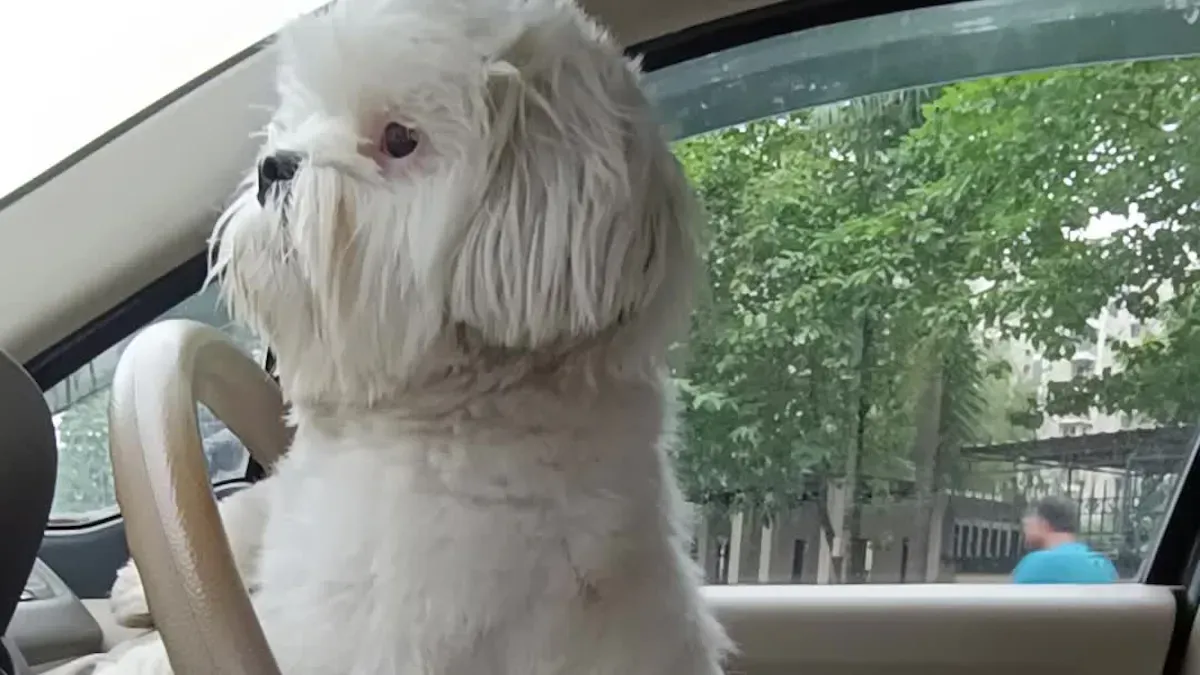
When an extra large dog is too big for the console, posture is usually the first problem. The dog curls too tightly, braces with the front legs, or keeps sliding weight from one side to the other. That constant adjustment is a sign that the seat is not giving enough support for normal travel movement.
Blocked controls and awkward restraint routing
A large body in a small front-space footprint creates practical problems fast. The dog can press against the gear area, take away your arm space, or force the tether into a bad angle. If the harness clip point only works when the dog is sitting one exact way, the setup is too cramped to be reliable.
Stress that builds during the ride
Some dogs do not panic right away. They simply never settle. They pant, keep turning, lean on you, or try to climb into a different position. That may look like clingy behavior, but it is often a fit problem. The rear seat usually lowers that pressure by giving the dog a flatter and less crowded place to rest.
If buckle access keeps disappearing under padding or side walls, easier buckle access versus more cushion shows why more softness is not always the better answer.
What usually works better in the rear seat
For extra large dogs, the rear seat usually gives you more flexibility. A bed or hammock-style setup can create a broader resting surface. A booster may work for a dog on the lower end of the size range if the dog still fits fully inside it. A more structured carrier or crate-style layout can make sense when the dog travels better with defined boundaries.
When restraint routing is the bigger problem, dog car seat safety and restraint setup covers anchor placement and harness connection logic in more detail. If you want to compare footprints and layouts directly, rear-seat pet car seat options is the most relevant product starting point.
Common mistakes to avoid
- Buying by product title alone instead of checking the dog’s actual resting size in the car.
- Assuming closeness equals safety even when the dog blocks controls or cannot settle.
- Treating softness as the main goal when stability and restraint routing matter more.
- Ignoring repeated shifting, bracing, or leaning because the dog seems quiet.
Note: If your dog shows repeated breathing strain, motion discomfort, or trouble getting comfortable even in a larger rear-seat setup, stop and talk with your veterinarian before longer trips.
FAQ
Can an extra large dog use a console car seat safely?
Usually not, because most console seats do not provide enough width, stability, or clearance for an extra large dog’s body.
How can I tell the console setup is too small?
If your dog hangs over the edge, blocks controls, braces through turns, or never settles, the setup is too small.
What is usually the better alternative?
A rear-seat bed, booster, carrier, or harness-based travel setup usually works better because it gives the dog more space and a more stable base.






