
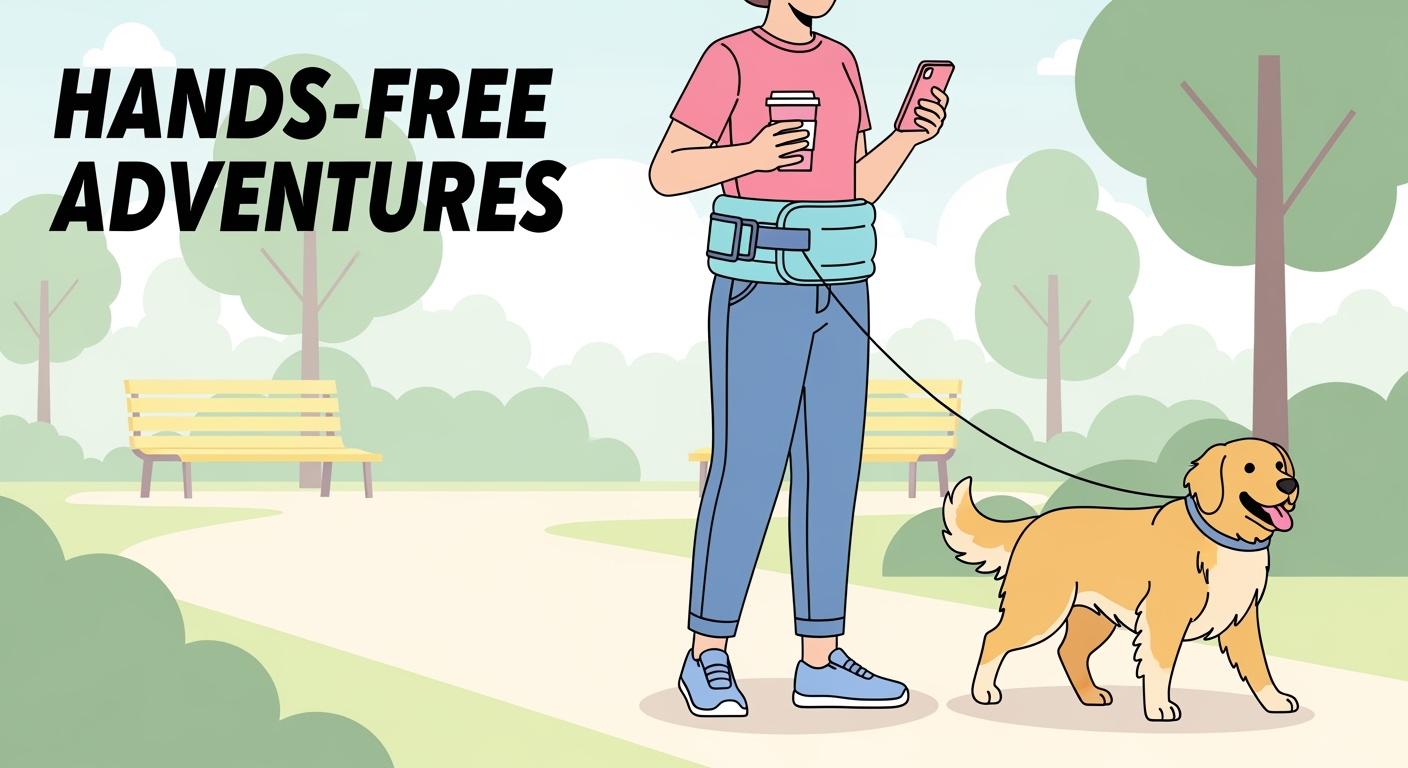
A dog hands free leash should make everyday walks easier without making quick control harder. The material matters, but the belt feel, clip security, and route fit matter just as much. A leash that feels fine on a quiet path can feel awkward on a crowded sidewalk if the belt shifts, the webbing twists, or the clip feels bulky.
This guide keeps the focus on practical checks you can do before you buy: how the belt sits, how the leash moves, how easy it is to shorten, and how the material handles sweat, dust, or light rain. Pick a hands-free leash that fits your dog’s size.
This is a daily-walk fit and materials guide. It does not replace training help or veterinary advice. If your dog coughs, struggles to move comfortably, or reacts badly to leash pressure, stop and reassess the setup.
What a hands-free leash should help you do
Move comfortably without losing quick control
The best setup should free your hands for normal walking, but it should also let you shorten the leash fast. If the belt sits too high, slides across your waist, or makes the leash path cross your legs, walks feel less controlled instead of easier.
A good starting question is simple: does this leash help on your usual route? Open trails, park paths, and steady-paced walks usually allow more freedom. Busy crossings, tight sidewalks, and reactive-dog situations usually need a fast grab point or an easy switch back to hand-held use.
Match the route, not just the product label
Many products sound versatile, but route fit matters more than labels such as running, hiking, or everyday. A belt that feels stable on a straight walk may bounce on stairs or twist when your dog changes sides often. A smooth material that wipes clean easily may still feel too stiff if you need lots of quick shortening.
If you are comparing options, think about how the best hands-free dog leash should behave on your most common route, not just in ideal conditions.
Materials that make walks easier
Choose materials by cleanup, grip, and feel
For most buyers, the material question comes down to three things: how it feels in your hand, how it handles dirt or moisture, and whether it stays easy to manage after repeated use. Smooth coated webbing is usually easier to wipe clean. Standard woven webbing often feels lighter and more flexible. Added belt padding can improve comfort, but too much bulk can make the waist section feel warm or slow to adjust.
| Material direction | Usually helps with | Check before buying |
|---|---|---|
| Smooth wipe-clean webbing | Faster cleanup after damp or dirty walks | Make sure it does not feel too stiff for quick shortening |
| Standard woven webbing | Lighter everyday handling and softer movement | Check for rough edges, twisting, and odor hold after washing |
| Padded belt section | Better waist comfort on longer walks | Make sure the padding does not trap heat or add too much bulk |
Hardware matters as much as the webbing
Good material cannot compensate for weak hardware. Before buying, check whether the clip closes smoothly, whether the buckle feels secure, and whether the adjuster holds position after you pull on it. If the belt slips loose easily or the clip feels oversized for your dog’s harness ring, daily use gets annoying fast.
A hands-free leash works better when the belt, clip, and adjuster all feel easy to use in one quick motion. If one part slows you down, the whole setup feels less practical.
Fit and comfort checks before daily use

Waist fit check
Put the belt where you would normally wear it and walk a short indoor route. The belt should stay in place without rolling, pinching, or riding up. If it shifts every time your dog changes direction, the setup may feel tiring even before you leave home.
Leash path check
Let the leash hang in a normal walking position. It should not brush your knees constantly, drag under your feet, or wrap around the front of your body when your dog moves from one side to the other. Shortening the leash should feel quick and predictable, not stiff or awkward.
Clip and grab check
Open and close the clip several times. Then hold the leash where you would reach in a hurry. If you cannot find that grab point easily, the setup may be harder to use in real traffic or crowded areas than it looked on the page.
| Check | Pass signal | Fail signal |
|---|---|---|
| Waist belt | Sits flat and stays stable during a short walk | Twists, rides up, or digs into one spot |
| Leash movement | Shortens quickly and does not cross your stride | Tangles, drags, or feels slow to adjust |
| Clip and buckle | Close smoothly and feel secure | Stick, wobble, or feel unreliable |
| Cleanup | Wipes or washes without staying damp for long | Holds dirt, odor, or feels slow to dry |
Common buying mistakes
Choosing by material name alone
Material names sound important, but daily comfort depends on the full setup. A wipe-clean leash can still feel awkward if the clip is too heavy. A soft belt can still be frustrating if the adjuster slips. Judge the whole system, not only the material description.
Ignoring quick-shortening needs
Some buyers focus on comfort and forget traffic control. If your walk includes driveways, bikes, other dogs, or narrow paths, you need a setup that can be shortened fast. This is one reason many people keep comparing options for the best hands-free dog leash even after finding a material they like.
Using one setup for every situation
A hands-free leash can work well for calm daily walks, but it is not the answer for every dog and every route. Strong pullers, crowded streets, and dogs that lunge suddenly may still need closer hand control. The leash should support safer handling, not remove your attention.
FAQ
What material is easiest to clean on a hands-free leash?
Smooth coated webbing is often easiest to wipe down after damp or dirty walks. Still, the real test is whether the leash dries well and feels easy to handle again after cleaning.
Is a padded belt always more comfortable?
Not always. Padding can improve comfort on longer walks, but bulky padding can also feel warmer and slower to adjust. Check both comfort and control before choosing.
When is a hands-free leash less useful?
It is usually less useful when your route is crowded, your dog pulls hard, or you need frequent close control. In those situations, fast grab access matters more than hands-free convenience.






