
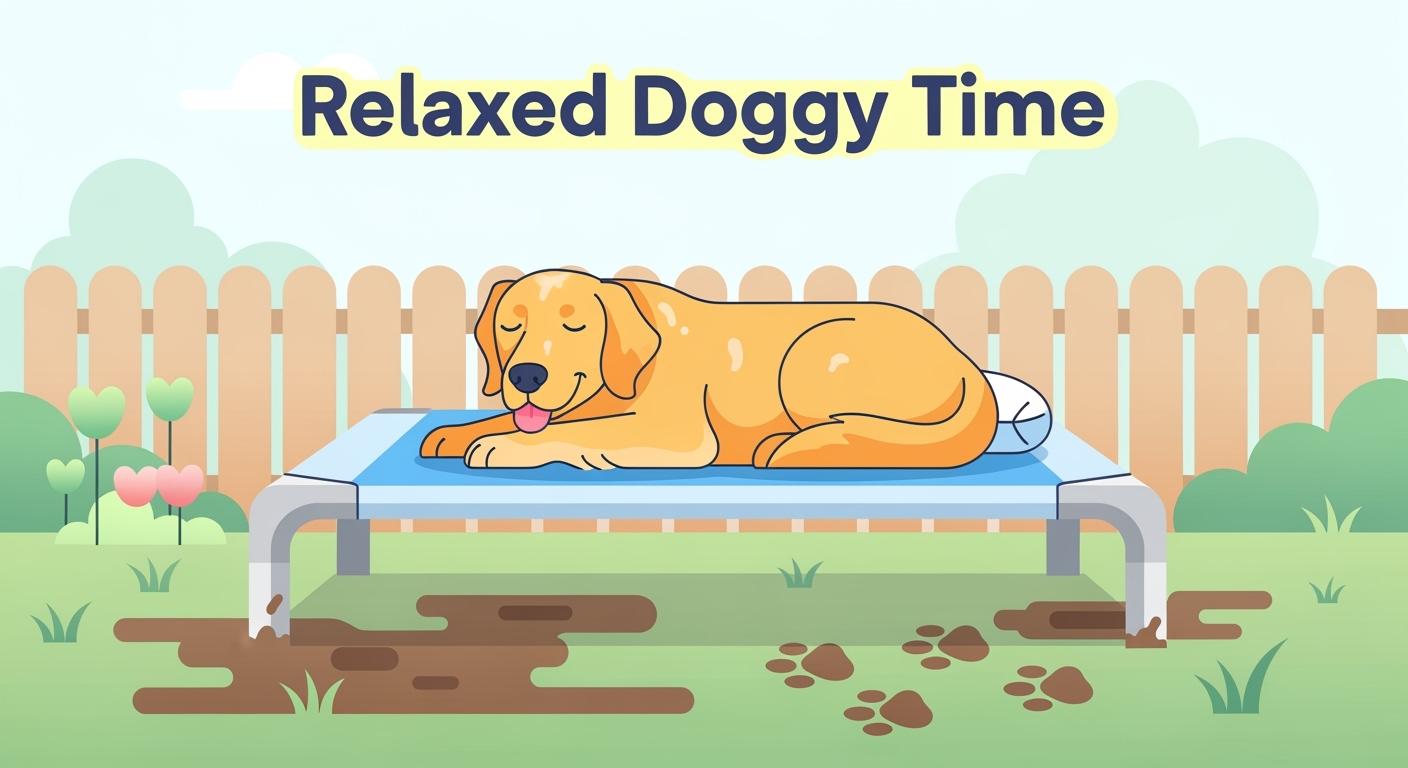
A dog cot bed outdoor lifts your dog above wet grass, hot pavement, and mud. That sounds simple. But the difference between a cot that works and one that does not comes down to what fails first: the mesh, the frame, or the placement. Floor-level beds absorb ground moisture within minutes of contact. The fabric holds it. The padding traps it. Your dog gets up wet and tracks the mess inside. An elevated cot breaks that chain, but only if the surface stays taut, the frame stays stable, and the bed sits somewhere the airflow actually helps.
Why Ground Contact Ruins Outdoor Rest Spots
Moisture, Heat, and the Floor-Bed Trap
A regular bed placed directly on grass, dirt, or patio stone inherits whatever the ground is doing. After rain or morning dew, the underside wicks moisture into the padding. The bed never fully dries because no air moves beneath it. Your dog lies down on a cool, damp surface that gradually warms from body heat — and the moisture stays put.
Sun makes it worse. A dark fabric bed on a hot patio absorbs radiant heat from below and above. The surface temperature climbs fast enough that dogs avoid it entirely. You see them choose the concrete instead. That is not a preference. It is thermal avoidance.
These are not rare edge cases. They are what happens when a bed has zero separation from the ground.
| Ground Condition | What Happens to a Floor Bed | Why It Matters |
|---|---|---|
| Damp grass (dew, rain) | Underside wicks moisture into fill; stays wet for hours | Dog lies on a cold, damp surface; mold risk rises |
| Hot patio (direct sun) | Fabric absorbs heat from below and above; no airflow relief | Surface becomes too hot to lie on; dog avoids the bed |
| Mud, sandy soil | Debris packs into fabric weave; scrubbing pushes it deeper | Bed becomes a dirt reservoir; cleanup takes longer each time |
| Uneven or sloped ground | Bed shifts, bunches, or slides; dog cannot settle | Rest quality drops; dog seeks flatter, harder surfaces instead |
What Happens When Moisture Cannot Escape
Trapped moisture does two things. It feeds odor-causing bacteria inside the fill, and it softens fabric fibers over time. A bed that stays damp through repeated use cycles starts to smell even after washing. The odor is not on the surface. It is in the padding.
Floor beds in humid climates can stay damp for days between uses. If your dog goes outside multiple times, the bed never fully recovers. Each cycle adds more moisture on top of what is already there. The result is a bed that feels clammy to the touch and smells faintly of mildew — even if the cover looks clean.
An elevated cot eliminates the moisture trap by design. There is no underside pressing into wet ground. No fill to hold water. The mesh surface is the whole bed, and air moves across both sides at once. That single structural difference — the open underside — changes how fast the bed dries, how cool it stays, and whether your dog actually uses it.
What Fails First on an Elevated Dog Cot
Mesh Sag and the Loss of Support
The mesh surface is the cot. When it sags, the cot stops being a bed and becomes a sling. Your dog sinks into a hammock shape that curves the spine and concentrates pressure along the edges of the frame. That is worse than the ground in some ways — at least the ground is flat.
Mesh sags for two reasons. The fabric itself has too much give for the dog’s weight, or the tensioning system that holds it to the frame loosens over time. Cheap mesh stretches permanently after a few weeks of use. A 60-pound dog can turn a taut surface into a bowl shape within a month if the material lacks enough denier or the weave is too open. Once the sag sets in, retightening rarely fixes it. The fabric has already deformed.
What to watch: after the first week, press the center of the mesh with your palm. It should resist and rebound immediately. If it gives more than an inch and stays indented, the material is already failing. That only accelerates from there.
Frame Wobble on Soft or Uneven Ground
The frame legs are the only thing between your dog and the dirt. On a patio or deck, they sit flat and hold. On grass, loose soil, or sandy ground, the legs sink at different rates. One corner drops half an inch. The bed tilts. Your dog feels the instability and hesitates to step on.
This matters more for camping than backyard use. Campsites are rarely level. A cot with narrow, unconnected feet will wobble on anything softer than packed earth. Wider feet or a frame design that links the legs reduces the problem — but not all cots have either. The stability difference between a cot that fits the ground and one that fights it shows up within the first setup.
Wobble also stresses the frame joints. A steel frame that rocks repeatedly against uneven ground eventually loosens at the connection points. The failure is gradual — a little more play each time — until one corner collapses under load.
Heat Buildup Without Shade
Airflow cools, but it has limits. Place a cot in full sun on a 90-degree day and the mesh still heats up. The open underside helps — the surface will be cooler than a floor bed on the same patio — but direct solar radiation overwhelms convection at high temperatures. The mesh becomes uncomfortably warm, and the metal frame gets hot enough to touch.
A cot in shade works. A cot in partial shade with a breeze works well. A cot in full afternoon sun does not, regardless of how breathable the mesh is. The materials that hold up best outdoors are the ones that resist UV degradation while drying fast — but no material cancels direct sun.
| Failure Point | Early Signal | What Happens If Ignored |
|---|---|---|
| Mesh sag | Center gives more than 1 inch under palm press | Spine curves; dog avoids the cot; fabric tears at frame edge |
| Frame wobble | Cot rocks when dog steps on; one leg sinks into soil | Joint loosening; sudden corner collapse; dog refuses to use it |
| Heat buildup | Mesh feels warm to touch in shade; frame too hot to hold | Dog lies on ground instead; surface temp exceeds safe contact range |
| Odor retention | Smell returns within hours of washing; mesh holds dampness | Bacteria embedded in fabric weave; replacement needed, not just cleaning |
Where an Elevated Cot Works — and Where It Does Not
Scenarios Where the Cot Earns Its Place
Shaded patios, backyards with damp grass, campsites with packed soil, and sandy beach setups all play to the cot’s strengths. In each case, the elevation solves a specific ground-contact problem that a floor bed cannot fix.
| Environment | Performance Difference | Main Limitation |
|---|---|---|
| Shaded patio | Airflow keeps surface near ambient temp; dries fast after rain | Needs shade; direct sun overrides cooling effect |
| Damp backyard grass | Elevation breaks moisture contact; no soggy fill to manage | Frame feet sink if ground is soft; check after heavy rain |
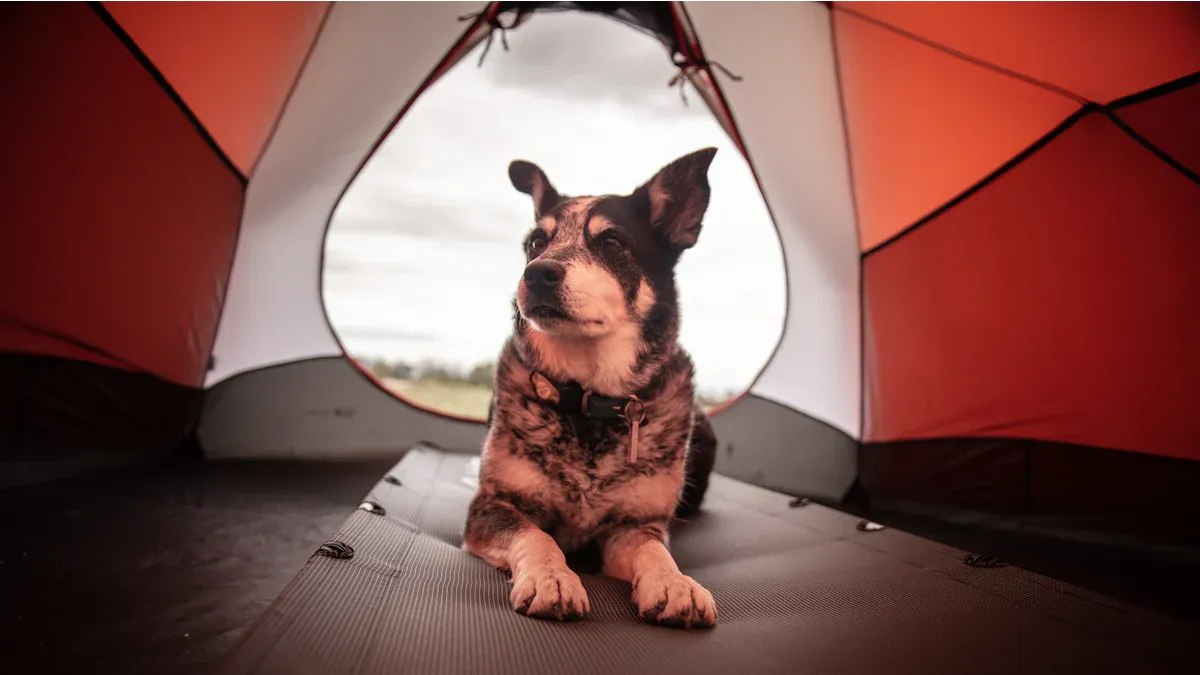
| Camping (packed soil) | Portable dry spot; keeps dog off cold or wet ground overnight | Worthless on sloped sites; frame must sit near-level |
| Beach / sandy areas | Mesh shakes off sand; does not trap it like fabric or foam | Salt and sand abrade mesh faster; rinse after each trip |
Dogs who prefer stretching out on flat, cool surfaces tend to take to a cot quickly. The hammock-like give suits dogs that sprawl rather than curl. The suspended surface also reduces pressure points compared to hard ground — not as much as an orthopedic foam bed, but meaningfully more than packed dirt or concrete. The difference between a dog that settles on a cot and one that paces all night often comes down to whether the setup matches the terrain.
When a Cot Is the Wrong Tool
Full sun with no shade option. Extreme heat where even shaded surfaces stay above safe contact temperature. Dogs with joint conditions that need deep, conforming cushion rather than a suspended surface. These are hard stops, not preferences.
A cot gives firm, even support. That is great for a healthy dog that wants a cool spot. It is not enough for a senior dog with hip dysplasia who needs foam that distributes weight across a contouring surface. The cot’s support is real — it just works differently. Think firm hammock, not mattress.
Dogs who struggle to step up onto a raised frame — very small breeds, seniors with mobility loss, puppies still building coordination — may need a lower entry or a ramp. A 7-inch step is trivial for most medium and large dogs. For a 5-pound Chihuahua with short legs, it is a barrier. And if the ground itself is unstable — loose sand, deep mud, steep slope — no cot frame will compensate. The bed becomes a liability. The choice between a ground pad and a cot on wet campsites is rarely about comfort alone. It is about whether the surface underneath can hold the frame.
Materials That Determine How Long the Cot Lasts
The frame material sets the baseline. Powder-coated steel resists rust better than bare or painted steel, but the coating eventually chips at joint friction points. Once bare metal is exposed outdoors, rust follows — slowly in dry climates, quickly anywhere humid. Aluminum frames avoid rust entirely but cost more and can bend under heavy, sudden loads that steel would shrug off.
The mesh fabric matters just as much. Vinyl-coated polyester sheds water aggressively and cleans with a wipe. It also runs hotter in direct sun — the coating blocks breathability. Uncoated polyester mesh breathes better but absorbs more moisture and holds odor longer. The trade-off between breathability and water resistance in cot mesh is not something a spec sheet resolves. It depends on where and how the cot gets used.
UV resistance is the silent factor. Mesh left outside degrades under sunlight whether it looks damaged or not. The fibers weaken before the color fades. A cot that spends every weekend on a sunny patio may look fine at six months and tear under a 50-pound dog at seven. The failure is sudden because the degradation was invisible.
In practice: a cot’s outdoor lifespan depends less on the brand than on whether it stays dry between uses and stays out of direct sun when not in use. Two cots of identical build can last one season or three, based almost entirely on whether they are stored covered or left exposed.
Design Details That Change Daily Use
Surface Height and What It Actually Affects
Most cots lift the sleeping surface 7 to 9 inches off the ground. That is enough to clear wet grass and most puddles. It is not enough to stop a determined dog from tracking mud onto the mesh — but the mud dries and brushes off instead of soaking in.
The height also controls how much air moves underneath. At 7 inches, airflow is decent on a breezy day and minimal on a still one. Taller cots — 10 to 12 inches — pull more air but become harder for smaller or older dogs to access. There is a trade-off. The optimal height depends on the dog more than the weather.
Frame Feet and Ground Grip
Rubber-capped feet prevent sliding on smooth patios and decks. On grass or dirt, they do almost nothing — the grip comes from the foot digging in, not the rubber. Wide, flat feet resist sinking better than narrow pegs. If the cot will sit on soft ground more often than hard surfaces, foot shape matters more than foot material.
The difference between a cot that stays put and one that slides is often just the feet — a detail easy to overlook until the bed shifts under your dog mid-step.
Portability and Frame Design
A cot that folds flat and weighs under 15 pounds travels easily. One that requires tools to break down does not. For camping and beach trips, the difference between a cot that gets used and one that stays in the garage is how fast it sets up and how small it packs. Some frames fold in one motion. Others need four corner releases and a wrestling match. Both hold a dog just fine. One actually makes it into the car.
Weight capacity on the label is not the same as real-world stability. A cot rated for 150 pounds may hold the weight but wobble noticeably under an 80-pound dog that shifts suddenly. The rating tells you the frame will not collapse. It does not tell you whether the cot feels secure to the dog stepping onto it. Dogs read instability faster than humans do. If the bed moves, they avoid it — regardless of what the tag says.
FAQ
Does an elevated dog cot replace an indoor bed?
Not for most dogs. The mesh surface provides firm, flat support with no cushioning — functionally different from the conforming fill of an indoor bed. A dog that sleeps on a cot outdoors all afternoon may still want a softer surface at night. The two serve different rest needs and are not interchangeable.
Will the mesh tear from claws?
Most cot-grade mesh resists casual claw contact during normal lying down and shifting. It is not claw-proof. Dogs that dig at their bedding before settling — common in some terriers and huskies — can snag and tear the surface over time. If your dog scratches at a bed before lying down, check the mesh weekly for pulled threads.
How much assembly is realistic for camping?
A fold-out frame with pre-attached mesh takes under two minutes to set up and requires no tools. Frames that need corner bars inserted into sleeves take longer — five to ten minutes — and are harder to manage alone while holding a leash. For camping, the faster setup usually wins, even if the cot is slightly heavier.
Can two dogs share one cot?
Only if the combined weight falls well under the rating and both dogs are calm sleepers. Two dogs that shift positions independently create unpredictable load distribution. The frame experiences twisting forces it was not designed for. Split the load across two cots whenever possible.
Does mesh color matter for heat?
It matters less than shade does, but dark mesh absorbs more radiant heat than light mesh in direct sun. In the shade, color makes almost no measurable difference. The bigger variable is whether the cot is in the sun at all.






