
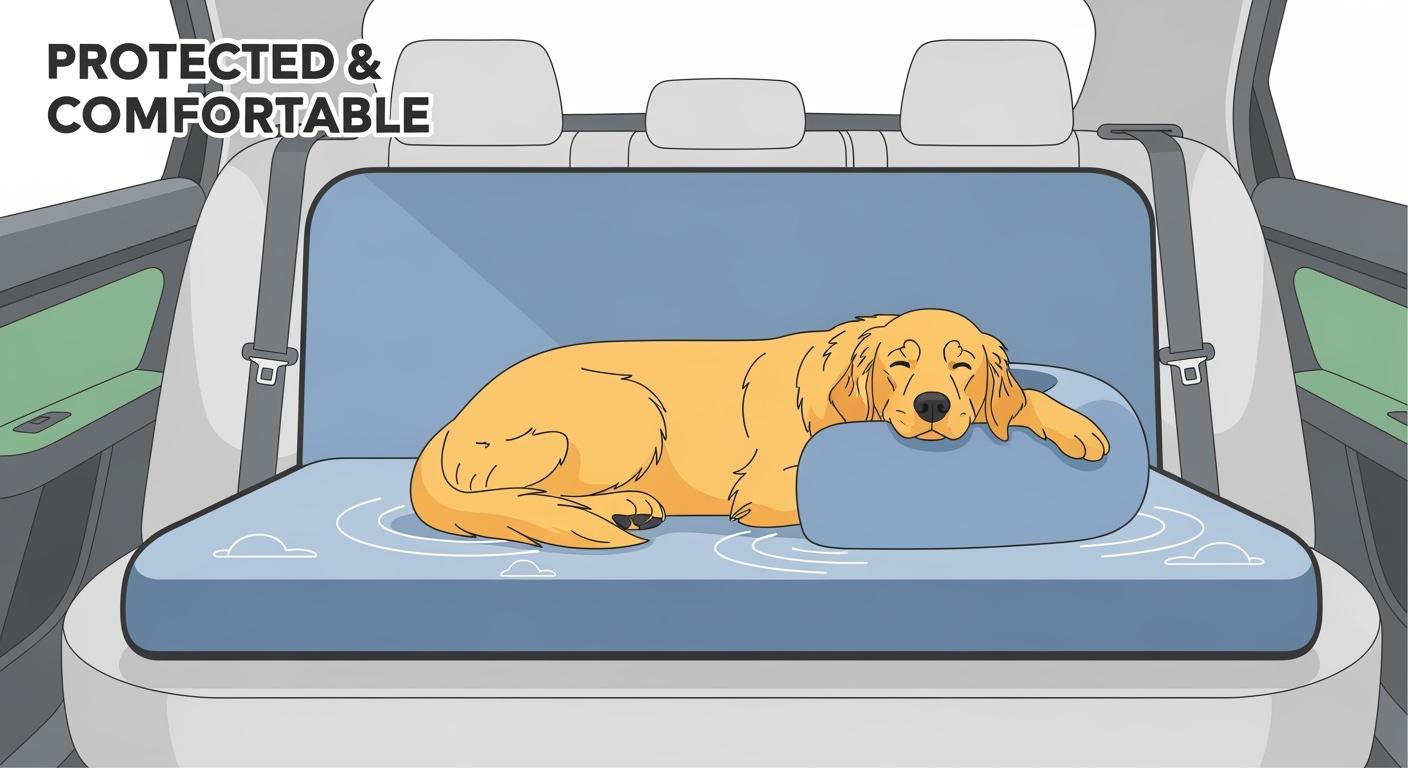
A dog jumps into the back seat after a rainy walk. Within minutes, the bed under it feels damp. An hour later, the car seat underneath is wet too.
That is the soak-through problem most back-seat dog beds share. Plush fabric pulls water in. Body weight presses it deeper. The cushion core stays wet and transfers moisture straight to the upholstery. The bed that was supposed to protect the seat becomes the thing that ruins it.
This is not about finding a bed with more features. It is about understanding why moisture makes it through in the first place — and which layers actually stop it.
Why Wet Paws Turn a Back-Seat Bed Into a Sponge
Rain, Mud, and Beach Trips Create the Conditions
Wet coat. Sandy paws. Mud caked between pads. A dog coming off a trail, out of a lake, or in from a downpour brings a surprising amount of water into the car. A medium-sized dog with a wet coat can carry half a cup of water or more into the back seat. That water does not sit on top — it gets pressed in.
Short-haired breeds tend to dry faster and deposit less onto the bed surface. Long-haired and double-coated dogs hold more water in the coat, which releases gradually as body heat warms the fabric. Either way, the bed’s top layer is the first thing that gets wet. What happens next depends on what is under it.
The Path From Surface to Car Seat
Most car beds use a plush or quilted top. It looks like cushioning. But soft fabric with deep seams and stitched channels does something predictable: it channels water inward.
When a dog lies down, body weight compresses the surface. Moisture trapped in the top fabric gets squeezed through stitching holes, zipper gaps, and seam junctions. The cushion underneath absorbs it. Once the core is wet, air cannot reach it easily — so it stays wet. Over time, the underside of the bed becomes damp, and that dampness transfers directly to the car’s upholstery.
A useful distinction: water-resistant means the fabric beads water on contact but eventually lets it through under pressure. Waterproof means there is a physical barrier — a liner or coating — that blocks moisture even under load. Most beds labeled as car-safe rely on resistance alone. That works for a few drops. It does not hold up under a wet dog.
Note: Even beds marketed as waterproof can leak at the seams. Stitching punctures the barrier layer. A bed with a waterproof liner but unsealed seams still transfers moisture — just more slowly.
Where the bed meets the seat matters too. Back seats have creases between the bottom cushion and the backrest. If the bed slips into that gap, the wet underside presses directly against fabric upholstery that has no protective layer at all. The result is a wet patch right in the seam of the car seat — the hardest spot to dry.
How common surface materials behave under real use:
| Material | Main Failure | Where Moisture Ends Up |
|---|---|---|
| Quilted polyester with stitch channels | Water enters through needle holes and seam gaps under body weight | Cushion core, then car seat |
| Non-woven felt or fleece top | Absorbs and holds moisture; dries slowly; develops odor | Trapped in top layer and core |
| Coated fabric with sealed seams | Surface stays waterproof but becomes slick; dog slides during turns | Moisture pools on top if bed is angled |
The Layers That Matter: Surface, Core, Base
The Top Layer Decides Whether Water Sits or Soaks
A top layer that feels soft usually means fibers designed to trap warmth. Those same fibers trap water. That is the tradeoff. A denser, smoother top — polyester microweave, tight-woven oxford, or coated ripstop — sheds moisture faster but feels less plush to the touch.
The question is not which is better. It is which failure you are willing to accept. A soft top that holds water means the bed needs drying time between uses. A slicker top that repels water means the dog may shift during turns. Neither is perfect. The right choice depends on how wet the dog typically gets and how long the ride is.
Seam placement makes a surprising difference. Seams that run across the width of the bed — where the dog’s body crosses them — get compressed and pulled open over time. Seams running lengthwise bear less direct weight. The difference in how fast a bed starts leaking can come down to seam direction alone.
The Core Holds What Gets Past the Surface
Once moisture reaches the cushion core, drying becomes difficult. Most car-bed cores are foam or polyester fill — both hold water. A wet core adds weight, stays cold, and develops a musty smell within a few days if not fully dried.
A moisture-blocking liner between the top cover and the core changes this. It does not keep the top dry, but it keeps the core dry. The bed cover can be removed and washed while the core remains unaffected. This is a simple idea that many designs skip — a waterproof liner adds little cost and prevents the most stubborn problem.
The Base Decides Where the Wet Spot Lands
A non-slip base is not just about keeping the bed from sliding under the dog. It is about keeping the wet underside from shifting into the seat crease. When a bed slides forward during braking or side-to-side during turns, any damp patch on the underside gets wiped across the upholstery. A bed that stays put restricts the damage to one location — which is easier to clean and easier to air out.
Back-seat fit matters more than most buyers assume. A bed that is too narrow leaves the side bolsters exposed. One that is too wide bunches up against the doors and creates folds that trap moisture. The bed should sit flat across the entire seating surface with no overhang.
Buckle Access and the Moisture Connection
Restraint routing is not separate from moisture control. If the bed covers the seat belt buckles, the owner has to lift or fold it to clip in a harness. That breaks the flat seal between bed and seat — and creates a path for water to reach the upholstery at the buckle point. Keeping the seat protected means keeping the bed in place, flat, every time.
Cutouts or flap openings for buckle access matter. But they matter more for consistency than convenience — a bed that gets repositioned before every trip is a bed that lets moisture through at the reposition points.
When a Back-Seat Dog Bed Works — and When It Does Not
A back-seat dog bed handles the most common scenario well: a dog returning from a walk with wet paws or a light misting of rain. The amount of moisture is limited to the surface of the coat and the bottom of the paws. A water-resistant top layer catches most of it. A washable cover lets the owner reset the bed before the next trip.
A bed built with quick-dry surface materials and a sealed core can go from wet to dry in a few hours — fast enough for a round trip. The key is that the moisture never reaches the cushion. If the core stays dry, the bed resets quickly.
These beds work for dogs that ride on the back seat with a harness restraint. The flat surface leaves room for the tether to pass through or around the bed. A properly sized bed stays stable enough that the restraint routing does not need adjustment mid-ride.
A bed that doubles as a travel seat and home bed is designed for exactly this level of use — moderate moisture, daily reset, flat-staying placement.
Poor Fit: Soaking Wet Coat, Urine, Heavy Chewers, Crash Needs
These beds are not built for dogs that climb in after swimming. A fully saturated coat releases water over 20–30 minutes, and the volume overwhelms what a water-resistant top can bead off. Water reaches the core. At that point the bed needs a full wash and dry cycle — not practical between errands.
Urine is a separate category of failure. It soaks through top layers faster than surface water because it is warm and the volume arrives at once. It penetrates seams, enters the core, and leaves an odor that is hard to remove even with washing. A back-seat bed is not a solution for incontinence or puppies still being house-trained.
Dogs that chew or dig at bedding will tear the top layer. Once the cover is compromised, moisture reaches the core directly — and the tear itself becomes a collection point for dirt and hair. A bed with a torn surface cannot block moisture at all.
These beds add zero crash protection. They sit under the dog; they do not restrain the dog. A crash-tested harness or carrier is still required. The bed should accommodate restraint routing — nothing more.
| Situation | Why the Bed Fails | What Works Instead |
|---|---|---|
| Post-swim or heavy rain | Sustained water release overwhelms surface resistance; core gets wet | Waterproof mat with sealed edges plus towel dry first |
| Urine accident | Warm liquid penetrates seams and reaches core before it can be wiped | Waterproof liner with sealed seams; disposable absorbent pad underneath |
| Dog chews or digs at fabric | Torn cover exposes core; tear site collects debris and channels moisture inward | Chew-resistant mat or hard-surface platform |
| Crash protection needed | Bed provides comfort only; no structural restraint in a collision | Crash-tested harness or secured travel crate |
Design Details That Change Daily Performance
Cover Removal: Zipper vs. Fixed
A removable cover matters more than most people think — not just for cleaning, but for drying. A cover that unzips can be hung separately. The core can be stood on edge to air out. Both dry faster apart than together. A fixed cover traps moisture between the fabric and the cushion, which extends drying time and encourages mildew.
Zipper quality matters here. A zipper that snags or separates after a few washes turns a washable cover into a permanent one. The difference between a bed that lasts two years and one that lasts six months sometimes comes down to the zipper alone.
Surface Texture vs. Grip
A smooth, wipeable surface sheds water effectively but offers little traction. When the car brakes or turns, the dog’s paws slip — and the dog compensates by bracing, which shifts the bed under it. A textured surface holds the dog in place better but traps more dirt in the texture pattern.
There is no material that optimizes both. A coated fabric with a light grain pattern is the most common compromise. It beads water on the surface while providing enough friction that the dog does not slide during normal driving. Sudden stops will still cause movement; no surface texture eliminates that entirely.
Edge Design: Bolsters vs. Flat
Bolstered edges create a contained space — the dog settles in a defined area. That helps keep moisture in one zone. But bolsters add seams, and each seam is a potential leak point. Flat beds have fewer seams and lower failure risk, but moisture can spread across the entire surface more easily.
The tradeoff is containment versus simplicity. Bolstered beds keep the dog centered and the moisture localized. Flat beds are less likely to leak at the seams but let water travel.
In practice: A bed with sealed seams at the bolster attachment points and a flat, waterproof center panel gives you the containment benefit without adding leak paths where the dog’s weight sits heaviest.
FAQ
How quickly does a back-seat dog bed dry after a wet-dog trip?
It depends entirely on whether the core got wet. If only the top cover is damp, hanging it in moving air dries it in two to four hours. If moisture reached the cushion core, drying can take 24 hours or more — and may never fully happen if the core is foam wrapped in a non-removable cover. The speed difference between surface-damp and core-wet is the single biggest factor in whether a bed develops odor over time.
Can a back-seat bed work with a hammock-style seat cover?
Stacking a bed on top of a hammock cover usually makes moisture problems worse. The hammock traps humid air underneath, and the bed’s underside cannot dry between trips. If both are used together, the bed needs to be removed and aired out after every wet ride. Otherwise the trapped moisture creates odor in both the bed and the hammock.
Does the bed need to be removed between trips, or can it stay in the car?
It can stay in place if it is dry. A bed left in the car with a damp core or damp underside breeds mildew within a few warm days. If the dog rides wet frequently, removing the bed and standing it on edge to air out after each trip extends its usable life significantly. Leaving it flat in the car between wet rides is the fastest way to ruin both the bed and the upholstery underneath.
What is the difference between a car-specific dog bed and a regular bed thrown on the back seat?
A regular dog bed has no non-slip base designed for vehicle upholstery, no buckle-access cutouts, and typically no moisture barrier between the top layer and the core. It slides into the seat crease, blocks the buckles, and transfers moisture straight through. A car-specific bed addresses those three failure points — base grip, restraint access, and core protection — as a system, not as separate features.






